“Grain-free” dog food sounds like a healthier, cleaner choice—but many owners (and plenty of vets) have mixed feelings about it. Some dogs do great on grain-free diets. Others don’t need them at all. And there’s a very real reason vets have become more cautious over the last few years: concerns about certain diet patterns and heart health.
This guide breaks down what grain-free and grain-inclusive really mean, what veterinarians commonly recommend in everyday practice, how to choose a safe and high-quality food either way, and when you should involve your vet instead of guessing.
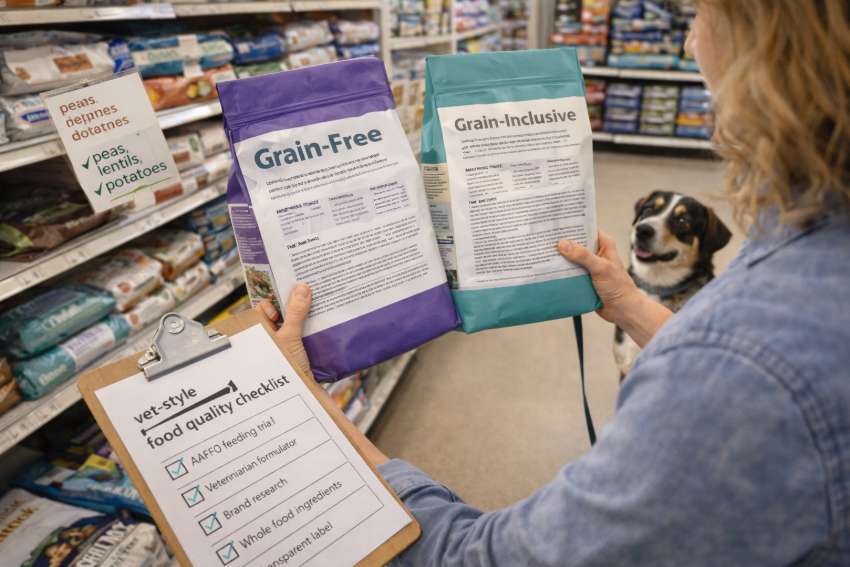
1. Grain-Free vs Grain-Inclusive: What’s the Actual Difference?
Grain-inclusive foods use grains like rice, oats, barley, corn, or wheat as part of the carbohydrate and fiber source.
Grain-free foods replace grains with other carbohydrate sources—often potatoes, sweet potatoes, peas, lentils, chickpeas, or other legumes (“pulses”).
Grains are not “fillers” by default: many provide digestible energy, fiber, and nutrients.
Grain-free is not automatically low-carb: it often still contains plenty of starch—just from different sources.
Grain-free is not automatically allergy-friendly: most food reactions are to proteins, not grains.
2. What Do Vets “Really Say” in Practice?
In most routine cases, many vets say something like: “If your dog is healthy and doing well on a complete and balanced diet from a reputable company, you don’t need grain-free.”
They also commonly add: “If you do choose grain-free, choose carefully—and don’t choose it just because it sounds healthier.”
Why the cautious tone?
Most dogs don’t medically need grain-free unless there’s a specific reason (like a diagnosed allergy or a vet-directed elimination diet).
Some diet patterns have been associated with diet-related dilated cardiomyopathy (DCM)—a serious heart muscle disease—especially certain “non-traditional” formulas that often rely heavily on peas/lentils/potatoes.
Marketing terms can distract from what matters: nutrition expertise, quality control, and feeding trials are more meaningful than buzzwords on the front of the bag.
3. The DCM Question: Is Grain-Free “Bad” for the Heart?
This is where the internet gets loud—and where a calm, practical view helps.
What we know (in plain English)
The concern is not simply “grains vs no grains.” Many experts suspect the bigger issue may involve certain ingredient patterns (especially heavy use of pulses/legumes) and how diets are formulated.
Not every grain-free food is risky. Diet quality and formulation matter.
Not every dog on these diets gets DCM. Risk likely depends on genetics, diet composition, and time on the diet.
What vets commonly recommend because of this uncertainty
If your dog is on a grain-free diet for no medical reason, many vets suggest switching to a well-made grain-inclusive diet, especially if the grain-free formula is legume-heavy.
If your dog must be grain-free (for a specific reason), many vets recommend choosing a diet from a manufacturer with strong nutrition expertise and robust quality control—and discussing whether heart screening is appropriate for your dog.
4. When Grain-Free Can Make Sense
Grain-free isn’t “never.” It can be appropriate in specific situations—ideally with guidance.
Good reasons to consider grain-free
Vet-directed elimination diet trial (to investigate suspected food allergy/intolerance)
Confirmed sensitivity to a particular grain ingredient (less common than many owners think)
Specific therapeutic goals where a particular formula happens to be grain-free and medically appropriate
Situations where grain-free is often NOT necessary
“My dog is itchy, so grains must be the problem” (itch is more often environmental allergies, parasites, or skin infection)
“Grains are fillers” (many grains are digestible and widely used in well-researched diets)
“Wolves don’t eat grains” (pet dogs are not wolves, and dog food is formulated nutrition, not imitation prey)
5. Common Ingredients to Avoid (or Treat as Yellow Flags)
You’re not trying to fear ingredients—you’re trying to avoid predictable patterns that can be harder for some dogs.
5.1 If you’re worried about diet-associated DCM
Pulses/legumes very high on the ingredient list: peas, lentils, chickpeas, pea protein, pea fiber (especially multiple “pea” items listed separately)
Potatoes/sweet potatoes used as major replacements in certain non-traditional formulas
“Boutique” or “exotic” formulations with limited nutrition oversight (especially if they also lean heavily on pulses)
5.2 If your dog has a sensitive stomach
Very high-fat recipes (can trigger GI upset in sensitive dogs)
Too many protein sources in one formula (harder to identify triggers)
5.3 If your dog has true food allergy concerns
Random ingredient switching without a structured plan (this often delays the answer)
Treat overload (treats can sabotage any diet trial)
6. What to Look For in a High-Quality Dog Food (Grain-Free or Grain-Inclusive)
Veterinary nutrition guidance tends to focus less on “grain-free” and more on whether the food is properly formulated, tested, and consistently manufactured.
6.1 The “reputable manufacturer” checklist
Clear nutrition adequacy statement: complete and balanced for your dog’s life stage
Qualified nutrition expertise: a credentialed nutritionist involved in formulation
Strong quality control: ingredient sourcing and finished-product testing
Evidence and research culture: feeding trials and published nutrition work are a good sign
6.2 Match the food to your dog’s life stage and lifestyle
Puppies: need growth-appropriate nutrition (especially large-breed puppies)
Adults: focus on steady weight, stool quality, and skin/coat health
Seniors: consider joint support, muscle maintenance, and digestibility
Active dogs: may need higher calories and protein, but not necessarily grain-free
7. A Practical Decision Guide: Should You Feed Grain-Free or Grain-Inclusive?
Choose grain-inclusive by default if:
Your dog is generally healthy and you don’t have a specific reason to avoid grains
You want the simplest “safe mainstream” option
You’re concerned about diet-associated DCM and want to minimize uncertainty
Consider grain-free only if:
Your vet recommended it for a structured diet trial or a specific health reason
Your dog has documented issues that improved on a carefully selected formula
You’re willing to be picky about manufacturer quality and ingredient patterns
If you’re currently feeding grain-free and your dog seems fine
Don’t panic-switch overnight. Sudden changes can cause diarrhea and stress.
Review the ingredient list. If it’s heavily pulse-based, discuss a safer alternative with your vet.
Consider a check-in. Especially if your dog is a larger breed, has low energy, cough, fainting episodes, or exercise intolerance.
8. How to Switch Foods Safely (Without Causing Digestive Upset)
For most dogs, a slow transition helps the gut adapt.
Days 1–3: 75% old food + 25% new
Days 4–6: 50% old + 50% new
Days 7–10: 25% old + 75% new
Day 11+: 100% new
If your dog has a very sensitive stomach, stretch the transition to 14 days and keep treats simple and consistent during the change.
9. When to Talk to a Vet (Instead of Guessing)
Food debates are optional. Medical red flags are not. Contact your vet promptly if you notice:
Repeated vomiting or diarrhea, or diarrhea lasting more than 48 hours
Weight loss, poor appetite, or lethargy
Chronic itching with ear infections or skin redness (possible allergy workup needed)
Possible heart-related signs: decreased stamina, coughing, breathing difficulty, fainting/collapse
If your dog has been on a legume-heavy or non-traditional diet long-term and you’re concerned, your vet may discuss diet changes and whether heart screening (like an echocardiogram) is appropriate.
Final Thoughts: Most Dogs Don’t Need Grain-Free—Quality and Fit Matter More Than Buzzwords
What vets “really say” is usually simple: choose a complete and balanced diet from a company with real nutrition expertise, match it to your dog’s needs, and don’t get pulled around by marketing trends. Grain-inclusive diets are a solid default for most dogs. Grain-free can be useful in specific cases, but it’s not automatically healthier—and it deserves a more careful selection process.
Your action step: If your dog is healthy and you’re choosing a new food today, start with a reputable grain-inclusive formula. If you think your dog truly needs grain-free, involve your vet so you’re solving the right problem (allergy, digestion, or medical need) with the safest plan.