Some dogs can eat almost anything and seem fine. Others get soft stools, gas, vomiting or itchy skin every time their diet changes. If your dog has a sensitive stomach, choosing the right food can make the difference between daily messes and a happy, comfortable pet.
This guide is for dog owners in the US and Europe who want to:
Understand what “sensitive stomach” really means
Recognize signs that food may be part of the problem
Know which types of dog food are usually gentler on digestion
See common trigger ingredients to avoid
Switch foods safely without upsetting your dog’s gut even more
Important: chronic vomiting, diarrhea, weight loss or pain always needs a vet check. Diet helps, but it’s not a substitute for proper medical care.
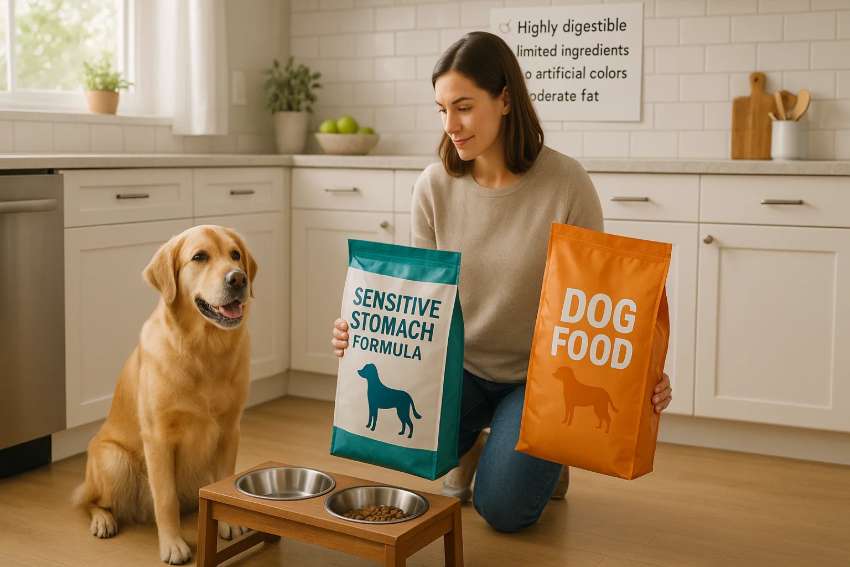
1. What Does “Sensitive Stomach” Actually Mean?
“Sensitive stomach” is not a diagnosis; it’s a description of symptoms linked to digestion. Your dog might:
Have frequent soft stools or diarrhea
Vomit occasionally, especially after eating
Have lots of gas and rumbling noises from the belly
Refuse food sometimes, then eat again later
Have a dull coat or lose weight if the problem lasts
These signs can have many causes:
Eating too fast or too much at once
Sudden changes in diet
Food intolerances or allergies
Infections, parasites or chronic diseases
A “sensitive stomach” diet is designed to be:
Gentle on digestion
Consistent (few sudden changes)
Balanced with the right nutrients for your dog’s age and size
2. When to Call the Vet Before Changing Food
Always talk to a vet first if your dog has:
Blood in stool or vomit
Repeated vomiting (more than once or twice in a day)
Severe diarrhea lasting more than a day
Lethargy, fever or obvious pain
Weight loss or dramatic change in appetite
Once serious problems are ruled out or treated, your vet may recommend trying:
A sensitive stomach formula
A limited ingredient diet (LID)
A hydrolyzed protein or prescription diet for more complex cases
3. Core Features of Good Sensitive-Stomach Dog Food
While every dog is different, many sensitive-stomach diets share some common design ideas:
3.1 Highly digestible ingredients
Animal proteins and carbohydrates that are easy to break down
Moderate fat levels (not extremely high)
Simple ingredient lists where possible
3.2 Balanced fiber
Soluble fiber (from ingredients like beet pulp or certain grains) can help firm the stool.
Insoluble fiber (from some vegetables) can help regulate bowel movements.
Too much fiber can cause gas; too little can cause loose stools – you want the middle ground.
3.3 Consistent formulation
Reputable brands keep nutrient levels and ingredients stable between batches.
Cheap foods sometimes change ingredients more often, which can upset sensitive dogs.
3.4 Appropriate life stage and size
Puppy formulas must support growth and have different nutrient profiles than adult food.
Large-breed dogs often need specific calcium and calorie levels to protect joints.
4. Types of Dog Food for Sensitive Stomachs
You can find sensitive-stomach options in most major dog food types. Each has pros and cons.
4.1 Dry kibble
Convenient, easy to measure and store.
Look for labels mentioning “sensitive stomach”, “limited ingredient” or “digestive care”.
Some kibbles include prebiotics or added fiber for gut health.
4.2 Wet (canned) food
Higher moisture content can be easier on some dogs’ digestion.
Softer texture helps dogs with dental issues.
Can be richer, so portion control is important to avoid overfeeding.
4.3 Fresh / gently cooked diets
Some dogs do very well on fresh, gently cooked diets with simple ingredients.
Quality can be excellent, but they are usually more expensive.
Must be properly balanced – avoid random home recipes unless a vet nutritionist designs them.
4.4 Prescription or veterinary diets
Formulated for diagnosed digestive diseases or severe sensitivities.
Often use hydrolyzed proteins or very specific ingredient combinations.
Only needed when your vet recommends them – not for every mildly sensitive dog.
5. Common Ingredients That Trigger Sensitive Stomachs
Each dog’s triggers are unique, but these ingredients commonly cause trouble in dogs with sensitive digestion:
5.1 Sudden “table scraps” and high-fat foods
Leftover fried foods, bacon, sausage, fatty meats
Skin from chicken or turkey
Heavy, greasy human meals
Large amounts of fat at once can upset the stomach and, in extreme cases, contribute to pancreatitis. For sensitive dogs, it’s safest to avoid table scraps entirely.
5.2 Dairy (milk, ice-cream, cheese in large amounts)
Many adult dogs are lactose intolerant.
Dairy can cause gas, diarrhea and discomfort.
Small amounts of some cheeses are tolerated by some dogs, but sensitive dogs may still react.
5.3 Certain protein sources
Some dogs react poorly to common proteins like beef or chicken.
Others struggle with lamb, pork or certain fish.
In these cases, vets may suggest a novel protein (e.g. duck, venison, turkey, fish) or a hydrolyzed diet.
5.4 Certain grains and plant ingredients
Some dogs do fine on rice, oats or barley but react to wheat or corn.
Others do well on grain-free diets but react to certain legumes (peas, lentils, chickpeas).
“Grain-free” does not automatically mean “better for sensitive stomachs”; each dog is different.
5.5 Artificial colours, flavours and excess fillers
Brightly coloured kibbles and artificial dyes are unnecessary for dogs.
Some dogs may react to additives or low-quality fillers.
Choosing foods with fewer unnecessary extras can help some sensitive dogs.
6. Ingredients That Often Help Sensitive Stomachs
Again, every dog is different, but many sensitive-stomach foods include:
Easily digestible carbohydrates: rice, oats, some potato sources.
Moderate-fat animal proteins: chicken, turkey, some fish, eggs (if tolerated).
Prebiotics: ingredients that feed “good” gut bacteria.
Probiotics (in some diets): live or stabilized beneficial bacteria to support digestion.
Gentle sources of fiber: beet pulp, pumpkin, some vegetable fibers.
Your vet may also recommend specific supplements (like probiotics or digestive enzymes) based on your dog’s condition.
7. How to Safely Switch Your Dog to a New Food
Even the perfect sensitive-stomach food can cause problems if you switch too fast. Use a slow transition:
Days 1–2: 75% old food, 25% new food
Days 3–4: 50% old food, 50% new food
Days 5–6: 25% old food, 75% new food
Day 7+: 100% new food (if stools stay normal)
Watch for:
Changes in stool quality (looser or firmer)
Gas, vomiting or scratching
Energy level and appetite
If your dog reacts badly, slow the transition or talk to your vet about trying a different formula.
8. Portion Size, Feeding Schedule and Other “Hidden” Factors
Sometimes the problem is not what you feed, but how you feed.
8.1 Overfeeding
Too many calories can cause soft stools and weight gain.
Always measure food – don’t just “fill the bowl”.
Adjust for treats: treats + food together should not exceed your dog’s daily needs.
8.2 Feeding frequency
Many sensitive dogs do better on two or three smaller meals per day instead of one large meal.
Very small breeds may need more frequent small meals to avoid nausea from an empty stomach.
8.3 Eating too fast
Fast eaters swallow air and may vomit or get bloated.
Slow feeder bowls, puzzle feeders or dividing meals into smaller portions can help.
9. Sample Approaches for Different Types of Sensitive Dogs
Here are a few example scenarios to help you think about your own dog:
9.1 The dog with mild soft stools after random treats
Keep the main diet the same.
Remove table scraps and fatty treats completely for a few weeks.
Use simple, single-ingredient treats (e.g. plain air-dried meat) if tolerated.
9.2 The dog with recurring loose stools on standard food
Talk to your vet; rule out parasites or infections.
Switch slowly to a sensitive stomach or limited ingredient diet.
Keep a diary of stools and ingredients to find patterns.
9.3 The dog with skin and stomach issues
Ask your vet about possible food allergies.
Consider a novel protein or hydrolyzed veterinary diet trial if recommended.
Do not feed any other foods, treats or table scraps during the trial.
10. Final Thoughts: “Best Food” Means “Best for Your Dog”
There is no single brand or recipe that works for every sensitive dog. The best dog food for sensitive stomachs is the one that:
Fits your dog’s age, size and health needs
Uses ingredients your individual dog can digest comfortably
Produces consistent, well-formed stools and good energy
Can be fed long-term without constant changes
Work with your vet, read ingredient lists, switch foods slowly and watch your dog’s response. Over time, you’ll discover which formulas – and which ingredients – keep your dog’s stomach calm and their tail happily wagging, meal after meal.