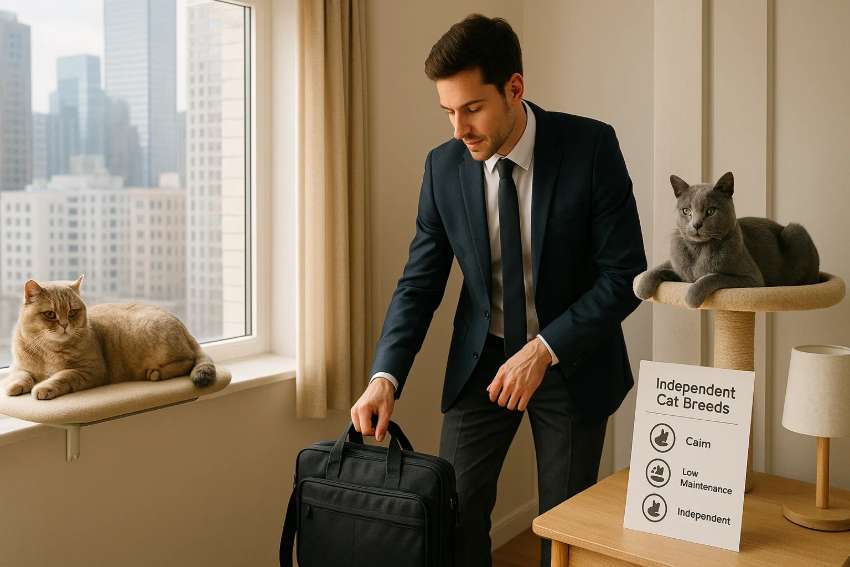
Long workdays, commutes and business trips don’t mean you can’t share your life with a cat – but they do change which type of cat will be happiest with you. Some cats want endless attention and constant company. Others are more independent: they enjoy affection, but they’re also content to nap, watch the world from the window and entertain themselves while you’re away.
This guide focuses on independent, relatively low-demand cat breeds that often suit busy professionals, plus:
What “independent” really means in cat behavior
Specific breeds that tend to cope well with alone time
How to set up your home so an indoor cat doesn’t get bored
When a second cat might be a good idea – and when it’s not
1. What “Independent Cat” Actually Means
“Independent” doesn’t mean “doesn’t need you” or “is fine being ignored”. Even the most self-contained cats still need:
Daily food, fresh water and clean litter boxes
Human interaction and gentle affection
Play and mental stimulation
Regular vet care and safe indoor spaces
An independent cat is more likely to:
Cope calmly if you work long hours (assuming basic needs are met)
Enjoy quiet time alone, rather than demanding constant attention
Be content to sleep, observe and explore instead of pacing or crying at the door
Personality matters as much as breed. Think of the breeds below as tendencies, not guarantees.
2. British Shorthair: The Calm, Self-Contained Companion
British Shorthairs are often described as the “teddy bears” of the cat world – solid, relaxed and dignified.
Why they suit busy professionals
Calm temperament: many are laid-back, less likely to demand constant play.
Independent but affectionate: they often enjoy being near you without needing to be on you 24/7.
Quiet nature: typically not very vocal compared with some talkative breeds.
Easy coat: short, dense fur that needs regular brushing but not intensive grooming.
Things to keep in mind
They can be prone to weight gain – you’ll need to manage diet and encourage play.
They may not be “lap cats” all the time; think companion, not clingy shadow.
3. Russian Blue: Quiet, Graceful and Routine-Loving
Russian Blues are known for their elegant blue coats and reserved personalities.
Why they suit busy lifestyles
Moderately independent: many enjoy calm routines and are happy to relax alone.
Quiet voice: often less vocal than some other breeds.
Clean, orderly habits: many are neat and appreciate a stable environment.
Short double coat: plush but relatively low-maintenance with weekly brushing.
Things to keep in mind
They can be reserved with strangers; early positive socialisation helps.
They often bond strongly with one or two people – which can be wonderful if you live alone.
4. American Shorthair & European Shorthair: Adaptable “Everyday” Cats
American Shorthairs (in the US) and European Shorthairs (in many parts of Europe) are classic, sturdy cats with mixed working and companion backgrounds.
Why they’re good for professionals
Balanced temperament: typically not extreme in clinginess or aloofness.
Adaptable: many adjust well to apartments or houses as long as basic needs are met.
Short coat: simple weekly grooming, minimal fuss.
Diverse personalities: rescues and reputable breeders can match you with a cat described as “easygoing” or “independent”.
Things to keep in mind
Because they’re a broad type, you’ll find everything from lazy loungers to active hunters – ask about the individual cat’s energy level.
Indoor-only cats still need climbing spots, scratching posts and playtime when you’re home.
5. Norwegian Forest Cat & Maine Coon: Independent but Social Giants
If you love big, fluffy cats and have the space, some semi-longhaired breeds can also be good for busy owners, as long as you accept grooming as part of the deal.
Norwegian Forest Cat
Strong, confident cats originally adapted to outdoor life in cold climates.
Often independent and capable of entertaining themselves.
Enjoy human company but are not always demanding lap cats.
Maine Coon
Friendly “gentle giants” that often enjoy being around people without constant contact.
Typically good at finding their own entertainment with climbing and exploring.
Shared considerations
Grooming: long coats need regular brushing to prevent mats.
Space: large bodies benefit from sturdy cat trees and solid furniture.
Attention: they are independent, but not decoration – they still need interaction when you’re home.
6. Chartreux and British-Type Mixes: Quiet, Observant Housemates
The Chartreux (a French breed) and some similar British-type mixes are often calm, thoughtful cats that make excellent low-drama housemates.
Why they can work for busy owners
Often quietly follow you from room to room rather than demanding your lap constantly.
Typically not extreme jumpers or chaos-makers if given scratching posts and resting spots.
Solid bodies and short coats – easy to groom, comfortable to live with.
If you’re adopting, look for descriptions like “calm”, “laid-back”, “easygoing” or “independent but friendly” – those are personality clues that matter more than the exact breed label.
7. Should Busy Professionals Get Two Cats Instead of One?
A common question is, “I work long hours – should I adopt a pair so they’re not lonely?”
When a pair can be a great idea
Littermates or bonded pairs: cats that already live together and get along well.
Play-focused young cats: they can burn off energy with each other, not just with you.
Rescue recommendation: shelter staff sometimes know which cats really do better with a feline friend.
When one cat may be better
You live in a very small space with limited vertical territory.
You’re brand new to cat ownership and want to learn with one cat first.
You’re adopting an older cat who prefers being the only pet.
The key is to consider the specific cats. Some are happier as solo companions; others thrive in pairs. Always ask the shelter or breeder what they recommend based on personality.
8. Setting Up an Independent Cat-Friendly Home
Even independent cats can become stressed or bored if the environment is empty. A “busy professional” cat setup should include:
8.1 Vertical space
Cat trees and shelves near windows for safe “bird TV”.
High resting spots where your cat can observe without being disturbed.
8.2 Scratching and climbing
At least one sturdy scratching post in each main area.
Different textures: sisal, cardboard, carpet.
8.3 Interactive feeding and toys
Slow feeders or puzzle feeders so mealtime becomes a mental game.
Safe toys left out (balls, soft mice, track toys) for solo play.
8.4 Predictable routines
Try to feed and play at roughly the same times each day.
Build a short evening ritual: 10–15 minutes of play, then cuddles, then bed.
This structure helps independent cats feel secure even if your work schedule is demanding.
9. Red Flags: Breeds That Often Need More Time and Interaction
Any cat can be clingy or independent, but in general, busy professionals should be cautious with:
Very social, high-energy breeds (e.g. many Oriental-type cats, Siamese, some Bengals)
Often vocal and people-focused; can become frustrated if left alone too long.
Breeds known to bond intensely with one person and dislike long periods without them.
Cats with known separation anxiety – ask rescues if a particular cat struggles when alone.
These cats can still live with busy professionals if you’re willing to invest in cat sitters, interactive cameras, and extra enrichment – but they’re not the “set it and forget it” personalities some people imagine.
10. How to Choose the Right Cat as a Busy Professional
Whether you’re looking at purebred kittens or shelter adults, use these questions as a checklist:
How many hours will my cat be alone on a typical weekday?
Can I commit to at least two short play sessions and brief affection time every day?
Does this breed (or individual cat) tend to be calm and independent rather than intensely needy?
What does the breeder or rescue say about this cat’s energy level and attachment style?
Do I have the budget for automatic feeders, cat furniture and occasional pet-sitting if I travel?
The best “independent cat” for a busy professional is not the one who doesn’t care about you. It’s the cat who:
Feels secure and content in a well-set-up home
Can relax calmly while you’re at work
Greets you with trust, affection and quiet companionship when you finally come home
Choose thoughtfully, set up your environment well, and you’ll have a feline roommate who fits your schedule – not fights it.