Why Older Reptiles Need Reliable Heat
Reptiles are ectothermic animals, meaning they rely on external heat sources to regulate their body temperature. Unlike mammals, they cannot generate enough internal heat to maintain a stable body temperature.
As reptiles grow older, they may become less efficient at moving between warm and cool areas, digest food more slowly, or spend longer periods resting. Stable heating can help support normal digestion, immune function, muscle activity, and overall well-being.
Although older reptiles often benefit from dependable warmth, they still require a temperature gradient so they can choose the temperature that best suits their needs.
How Heating Pads Work
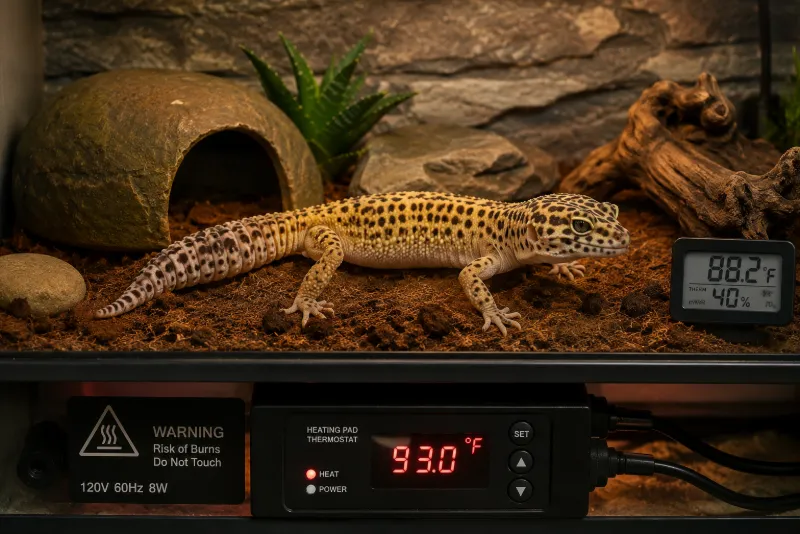
A reptile heating pad, often called an under-tank heater (UTH), produces gentle radiant heat that warms the enclosure floor. The heat passes through the enclosure base and creates a warm basking area without producing visible light.
Most heating pads are designed to heat only part of the enclosure, allowing the reptile to move between warmer and cooler zones throughout the day.
Benefits of Heating Pads for Senior Reptiles
| Benefit | Why It Matters |
|---|---|
| Supports digestion | Warm body temperatures help digestive enzymes function efficiently. |
| Improves comfort | Gentle warmth may encourage natural resting behavior. |
| Maintains activity | Proper temperatures support normal movement and feeding. |
| Reduces temperature fluctuations | Provides consistent warmth during cooler periods. |
| Works day and night | Produces heat without disturbing normal light cycles. |
Features to Look for in a Heating Pad
Choosing the right heating pad is more important than selecting the highest wattage. Look for products designed specifically for reptiles and pair them with appropriate temperature controls.
Compatible with an external thermostat
Even heat distribution across the pad
Durable waterproof construction
Proper size for the enclosure
Reliable adhesive backing (if required)
Designed for continuous operation
Avoid products intended for humans or household use, as they may reach unsafe temperatures for reptiles.
Always Use a Thermostat
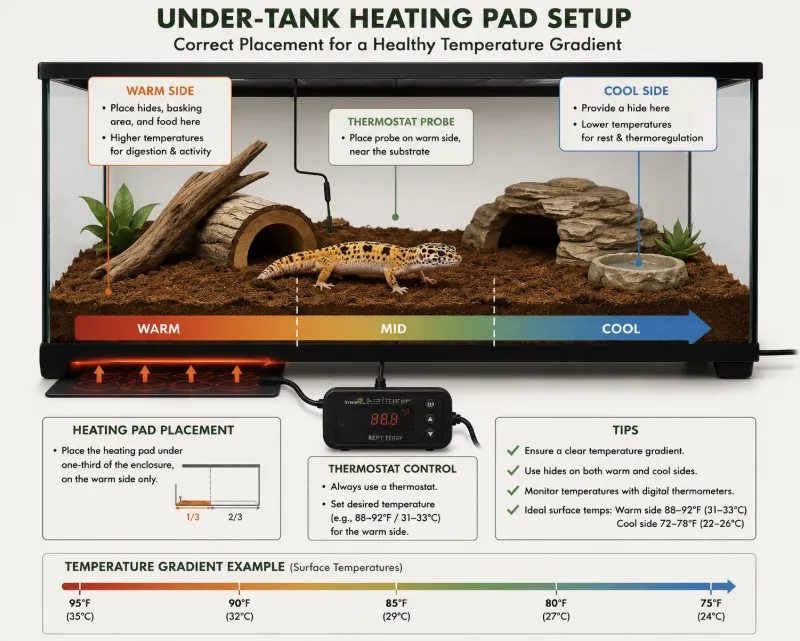
A thermostat is one of the most important safety devices for any reptile heating pad. Without temperature regulation, some pads can become much hotter than the target enclosure temperature.
The thermostat monitors the temperature through a probe and adjusts the heating pad automatically, reducing the risk of overheating.
For additional accuracy, many keepers also verify temperatures using a digital thermometer or infrared temperature gun.
Heating Pad Placement
Proper placement is essential for both safety and effectiveness.
Install the pad on the outside bottom or side of the enclosure, following the manufacturer's instructions.
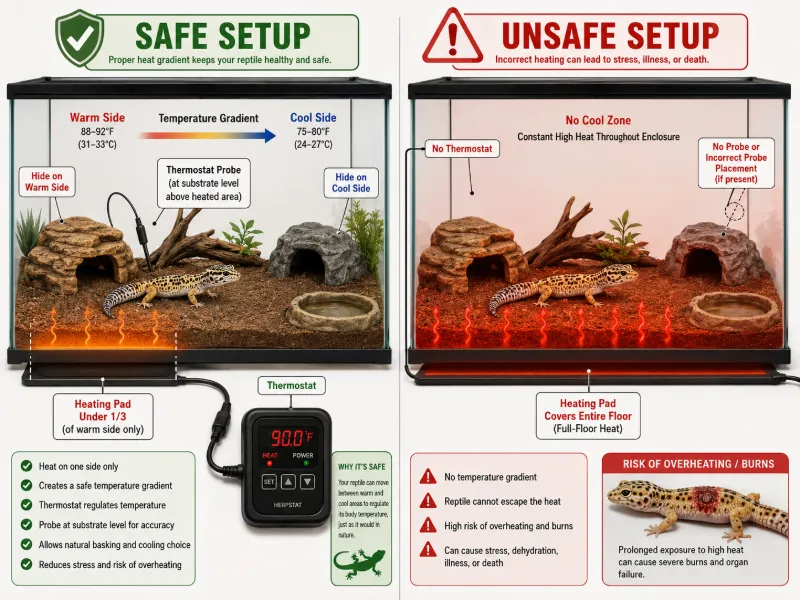
Cover only one-third to one-half of the enclosure floor to create a thermal gradient.
Never place the heating pad inside the enclosure where the reptile can touch it directly.
Provide multiple hiding places on both the warm and cool sides.
This arrangement allows older reptiles to regulate their body temperature naturally.
Recommended Temperature Ranges
Temperature requirements vary among species, so owners should always research the needs of their specific reptile.
| Reptile Group | Typical Warm Side | Cool Side |
|---|---|---|
| Leopard Geckos | 31–33°C (88–91°F) | 24–27°C (75–81°F) |
| Corn Snakes | 28–30°C (82–86°F) | 23–25°C (73–77°F) |
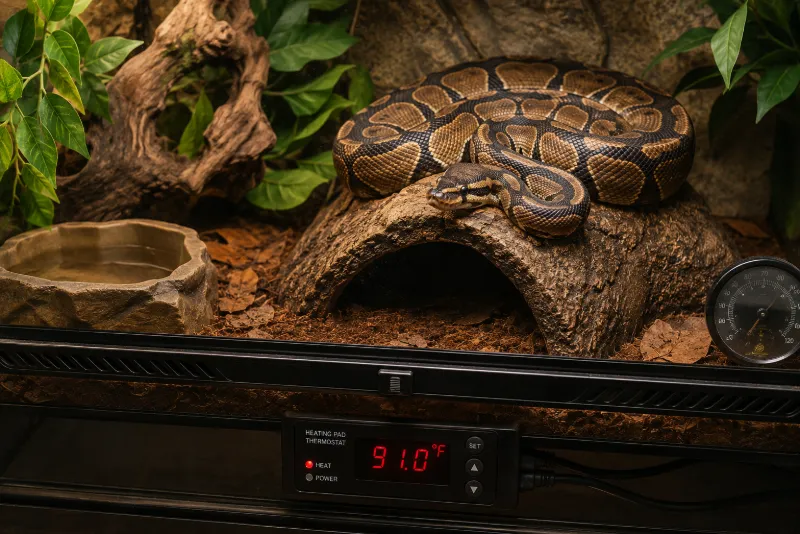
| Ball Pythons | 31–33°C (88–92°F) | 25–27°C (77–81°F) |
| Bearded Dragons | Heating pad is generally not the primary heat source; overhead basking heat is usually preferred. | Species-specific |
*These are general ranges. Individual species and life stages may require different temperatures.
Which Older Reptiles Benefit Most?
Heating pads are especially useful for species that naturally absorb warmth from the ground.
Leopard geckos
African fat-tailed geckos
Corn snakes
King snakes
Milk snakes
Ball pythons
Many terrestrial skinks
For reptiles that primarily bask under sunlight, such as many iguanas and bearded dragons, overhead heating and UVB lighting generally remain the primary heat source, while heating pads may play only a supplemental role if recommended for the enclosure design.
Common Mistakes to Avoid
Using a heating pad without a thermostat
Heating the entire enclosure instead of creating a gradient
Placing the pad inside the enclosure
Using cracked or damaged equipment
Failing to monitor enclosure temperatures regularly
Ignoring changes in an older reptile's behavior or appetite
Signs Your Senior Reptile May Be Too Cold
Temperature is only one possible explanation for these signs, but persistent problems should be evaluated.
Reduced activity
Poor digestion
Loss of appetite
Frequent hiding
Difficulty shedding
Slow movement
If these signs continue despite appropriate husbandry, consultation with a reptile veterinarian is recommended, as illness or age-related conditions may also be involved.
How Long Should a Heating Pad Stay On?
Many reptile heating pads are designed for continuous operation when controlled by a thermostat. Whether they should run during both day and night depends on the species, enclosure setup, and nighttime temperature requirements.
Rather than switching the heating pad on and off manually, most keepers rely on thermostat-controlled systems that maintain stable temperatures automatically.
Choosing the Best Heating Pad
The "best" heating pad is not necessarily the most powerful or expensive one. Instead, it is the one that delivers stable, evenly distributed heat, works reliably with a thermostat, matches the enclosure size, and helps create a safe thermal gradient. When combined with proper monitoring and species-appropriate husbandry, a quality heating pad can contribute to the comfort and health of many senior reptiles.
FAQs
Do older reptiles need more heat than younger reptiles?
Not necessarily. Most senior reptiles require the same species-appropriate temperature range, but they may benefit from more stable and easily accessible heat because they are often less active.
Can a heating pad burn a reptile?
Yes. A heating pad that is not controlled by a thermostat or is installed incorrectly can become hot enough to cause thermal burns.
Should a heating pad be inside or outside the enclosure?
It should generally be installed on the outside of the enclosure according to the manufacturer's instructions. Placing it inside increases the risk of direct contact burns.
Are heating pads enough for all reptiles?
No. Many reptiles, especially diurnal basking species, require overhead heat and appropriate UVB lighting in addition to, or instead of, an under-tank heater.
How do I know if my heating pad is the right temperature?
Use a thermostat together with a reliable digital thermometer or infrared temperature gun to verify the surface temperature in the warm area. Adjust settings based on your species' recommended temperature range.