Quick answer
Hamsters and guinea pigs are both rodents, but they differ greatly in size, behavior, diet, lifespan, and social needs. Hamsters are small, compact animals with short tails, expandable cheek pouches, and mostly solitary habits. Guinea pigs, also called cavies, are much larger, tailless-looking rodents that are highly social and communicate with many squeaks, whistles, and purr-like sounds.
For a pet owner, the biggest difference is lifestyle. A hamster may suit someone with limited space who wants a small, independent pet that is most active in the evening or at night. A guinea pig usually needs more space, more food, more cleaning, and more social interaction, but it is often easier to observe and interact with during the day.
Summary table
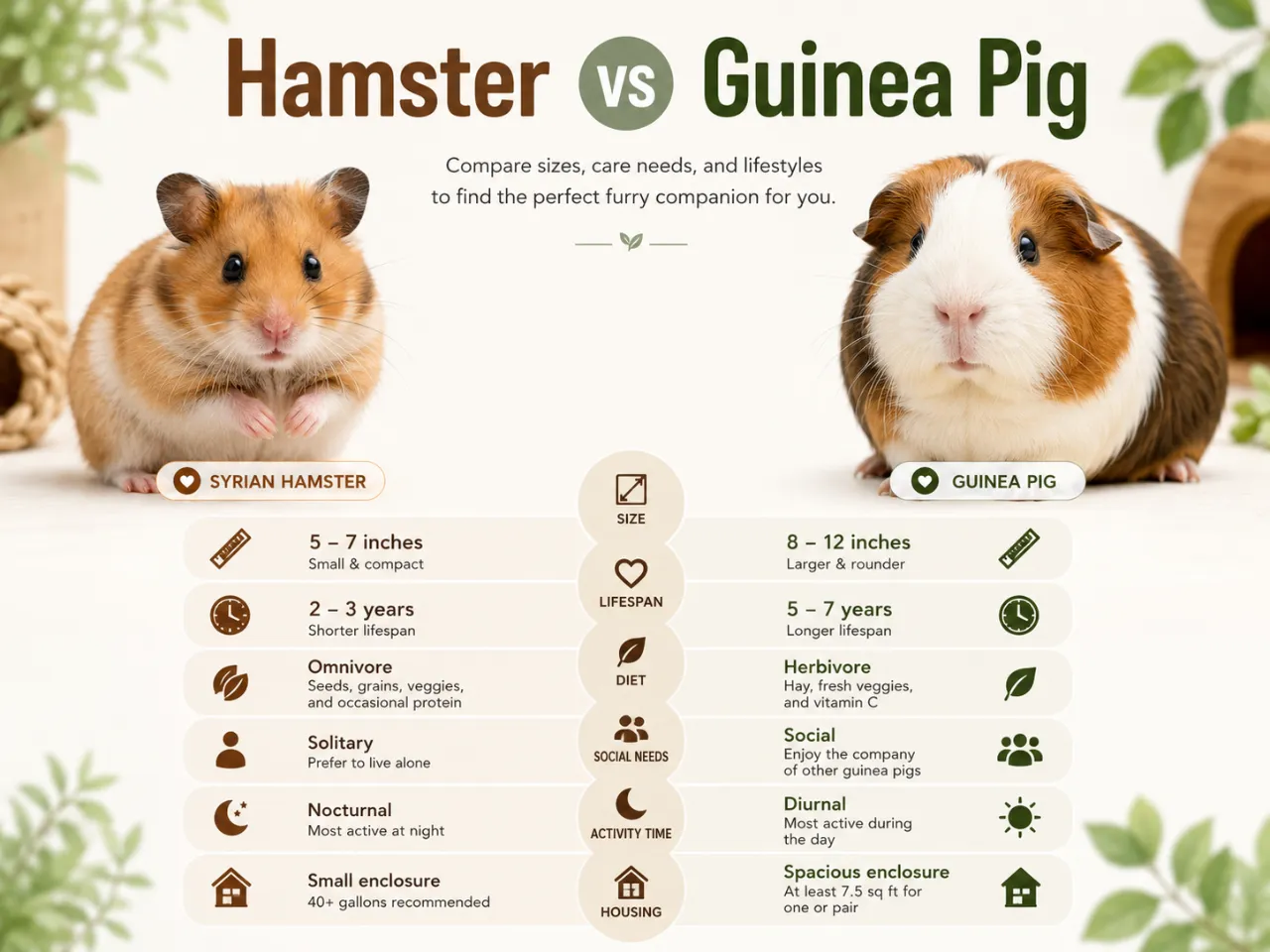
| Feature | Hamster | Guinea Pig |
|---|---|---|
| Scientific group | Small rodents in the subfamily Cricetinae | Rodents in the family Caviidae |
| Typical size | Small; varies by species, from dwarf hamsters to larger Syrian hamsters | Much larger and heavier than hamsters |
| Social needs | Often solitary, especially Syrian hamsters | Highly social; generally does best with another compatible guinea pig |
| Activity pattern | Often nocturnal or crepuscular | Often active in short periods through day and night |
| Diet | Commercial hamster food, seeds, grains, vegetables, and limited treats | Unlimited hay, guinea pig pellets, vegetables, and vitamin C |
| Lifespan | Generally around 2–3 years, depending on species and care | Generally around 5–7 years, sometimes longer with good care |
| Housing | Needs secure enclosure, deep bedding, wheel, tunnels, and enrichment | Needs larger floor space, hay area, hideouts, bedding, and companionship |
| Handling | Can be tame, but may be fast, delicate, or easily startled | Often calmer to hold, but must be supported carefully |
| Noise level | Usually quiet, but wheel use at night can be noisy | More vocal, with whistles, squeaks, and excited calls |
How hamsters and guinea pigs are related
Hamsters and guinea pigs are both rodents, which means they have continuously growing front teeth adapted for gnawing. However, they are not close enough to be treated as similar pets. Hamsters belong to a different rodent lineage from guinea pigs, and their bodies, diets, and behavior evolved in different directions.
Hamsters are small burrowing rodents. Many wild hamsters live in dry grasslands, steppes, or semi-arid environments where they store food in cheek pouches and retreat into burrows. Guinea pigs are domesticated cavies that originated from South American wild relatives. They are more social, more vocal, and generally built for ground-level movement rather than climbing or burrowing in the same way.
This difference matters because good care should match the animal’s natural tendencies. A hamster needs deep bedding, hiding places, and opportunities to forage. A guinea pig needs space to move, constant hay, social contact, and a stable daily routine.
Size and body shape
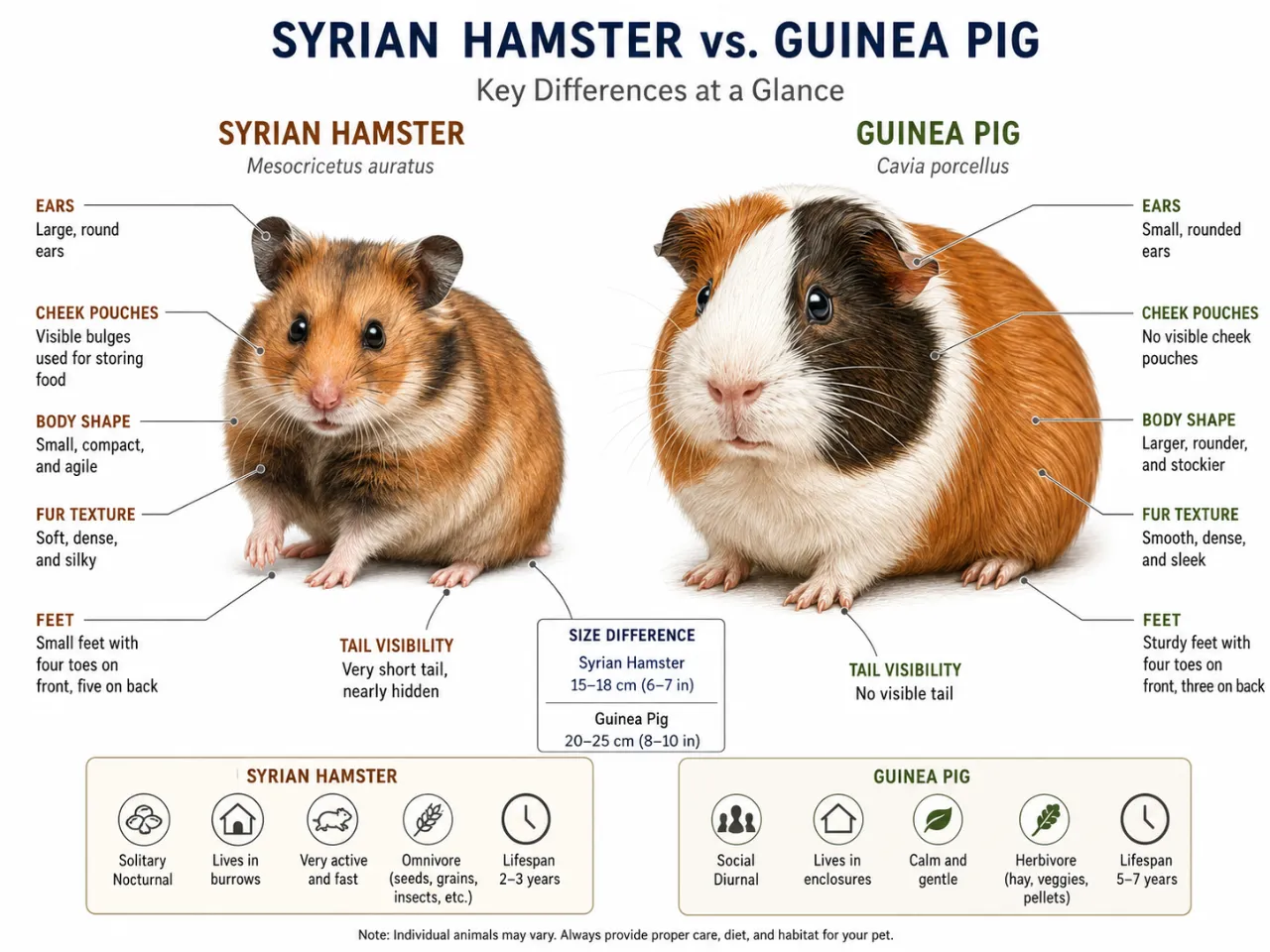
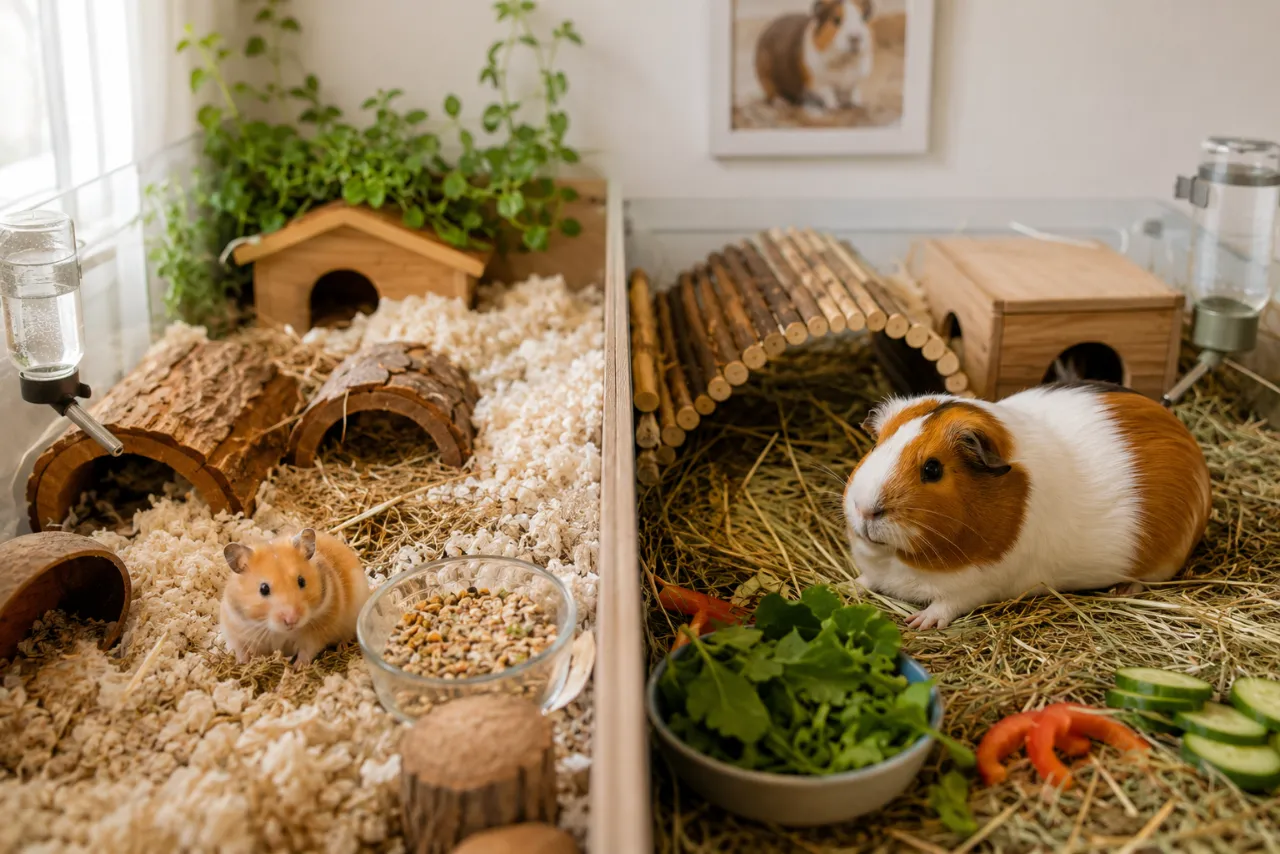
Hamsters are much smaller than guinea pigs. A Syrian hamster is usually the largest common pet hamster, while dwarf hamsters are considerably smaller. Their bodies are compact and rounded, with small paws, short tails, and flexible cheek pouches used for carrying food.
Guinea pigs are larger, heavier, and more solid-bodied. They have short legs, rounded bodies, no visible external tail, and a blunt face. Because of their size, they need more living space, more bedding, more hay, and larger hideouts than hamsters.
The size difference also affects handling. A hamster can move quickly and may slip from a hand if startled. A guinea pig is generally easier to support with both hands, but it is still fragile and should never be dropped or squeezed.
Temperament and social behavior
Hamsters are often solitary animals. Syrian hamsters should generally be housed alone because adults are likely to fight. Some dwarf hamster species may tolerate same-sex pairs or groups in certain conditions, but fighting can still occur, and many pet keepers choose single housing for safety.
Guinea pigs are much more social. In many cases, they do best with at least one compatible guinea pig companion. They communicate through squeaks, whistles, rumbles, chirps, and body language. A lonely guinea pig may become stressed, inactive, or less confident, although individual behavior varies.
For people who want a more visibly social pet, guinea pigs may be more rewarding. For people who prefer one small animal housed alone, a hamster may be easier to manage. The key is not to force a social lifestyle on a solitary species or isolate a social species unnecessarily.
Activity patterns and daily routine
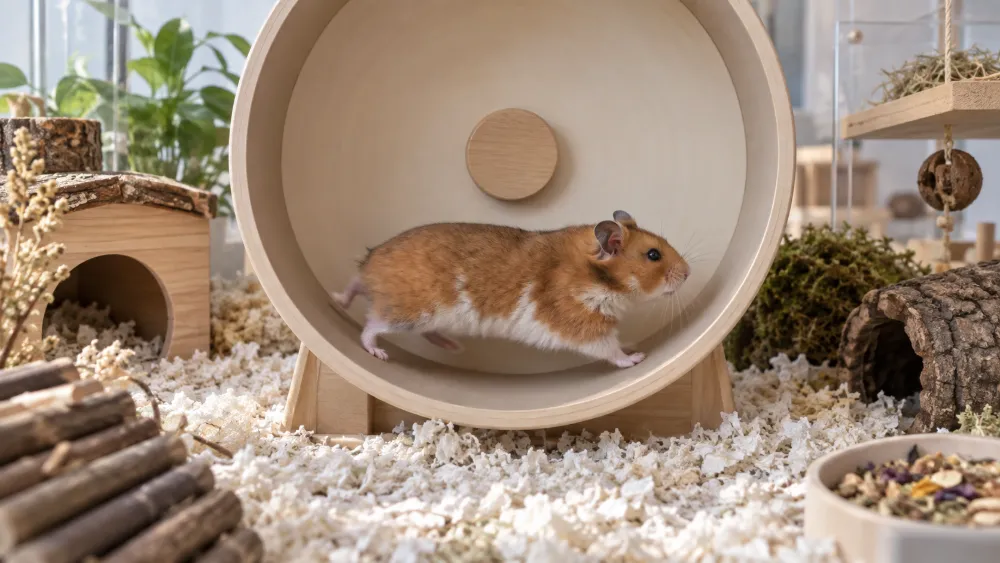
Hamsters are generally most active in the evening, at night, or around dawn and dusk. This means they may sleep during much of the day and become energetic when people are preparing for bed. A hamster wheel, digging, and chewing can create noticeable nighttime noise.
Guinea pigs do not usually sleep in one long block. They tend to rest and wake in shorter cycles throughout the day and night. Many are active during daytime feeding times and may learn to recognize household routines, voices, or the sound of vegetables being prepared.
This difference can influence which pet fits a home better. A child hoping for daytime interaction may be disappointed if a hamster is asleep most of the day. A guinea pig may be easier to watch and interact with during normal daytime hours, but it also requires more daily care.
Diet and nutrition
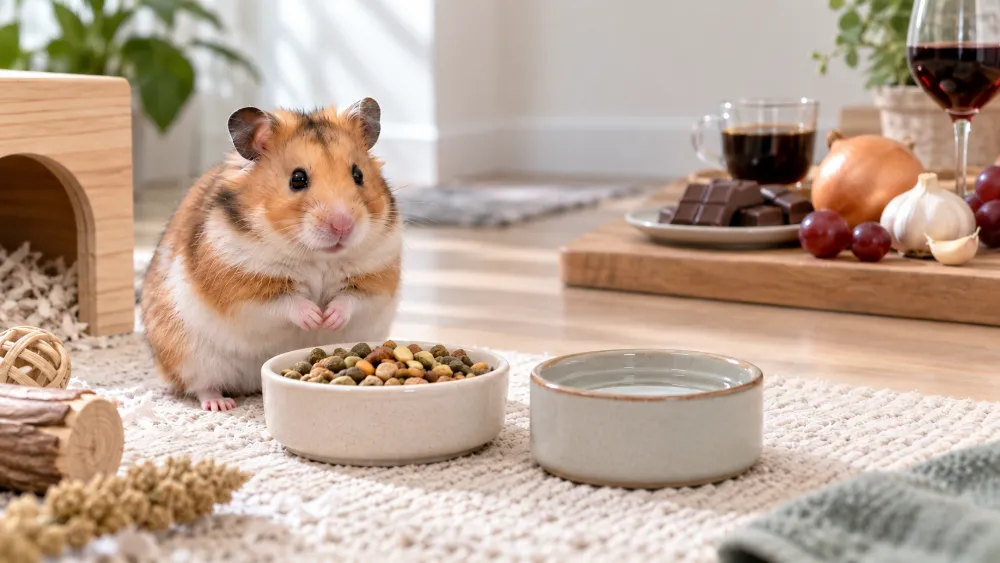
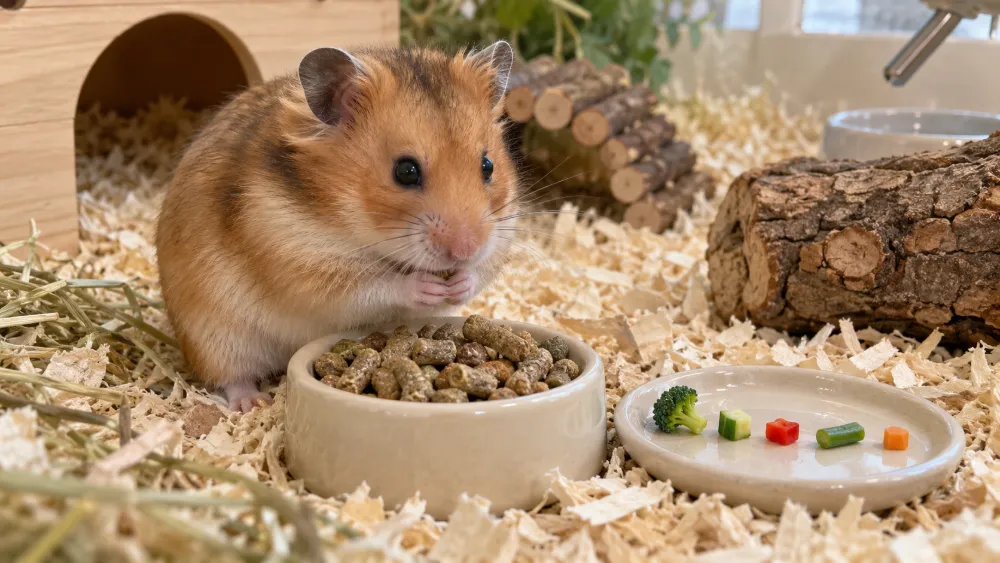
Hamsters are omnivorous or mostly seed-and-plant eaters with some animal protein in many natural diets. Pet hamsters are usually fed a balanced commercial hamster mix or pellet, along with small amounts of safe vegetables, occasional protein sources, and limited treats. Sugary foods should be restricted, especially for dwarf hamsters that may be prone to metabolic issues.
Guinea pigs have more specialized dietary needs. Their digestive system depends on a constant supply of fiber, so high-quality grass hay should make up the largest part of the diet. They also need a suitable guinea pig pellet, fresh vegetables, and a reliable source of vitamin C, because guinea pigs cannot produce enough vitamin C on their own.
This is one of the most important care differences. A hamster can store food in its cheek pouches and hoard it in bedding. A guinea pig needs steady access to hay and should not be fed hamster food. Feeding the wrong diet can cause serious health problems for either animal.
Housing and space needs
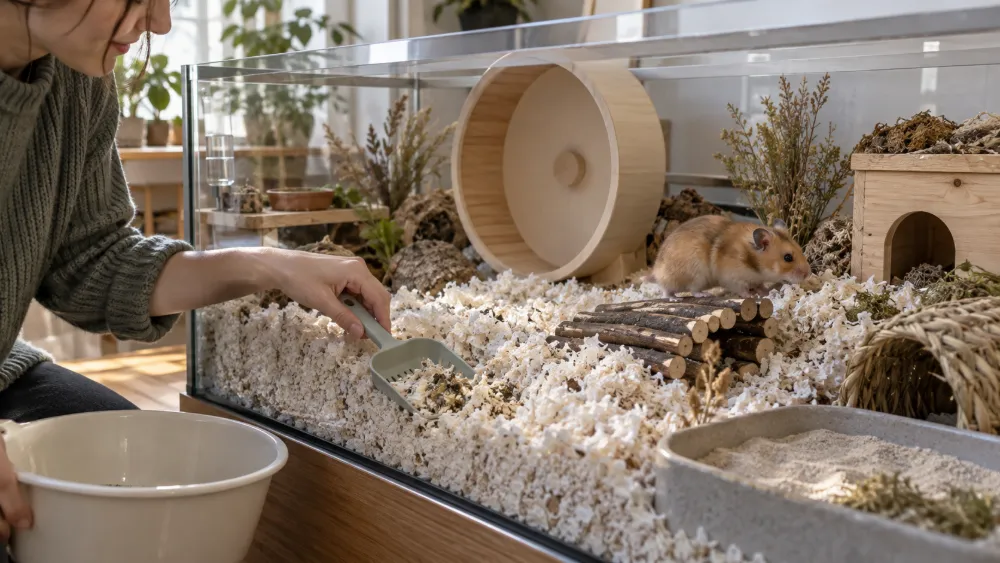
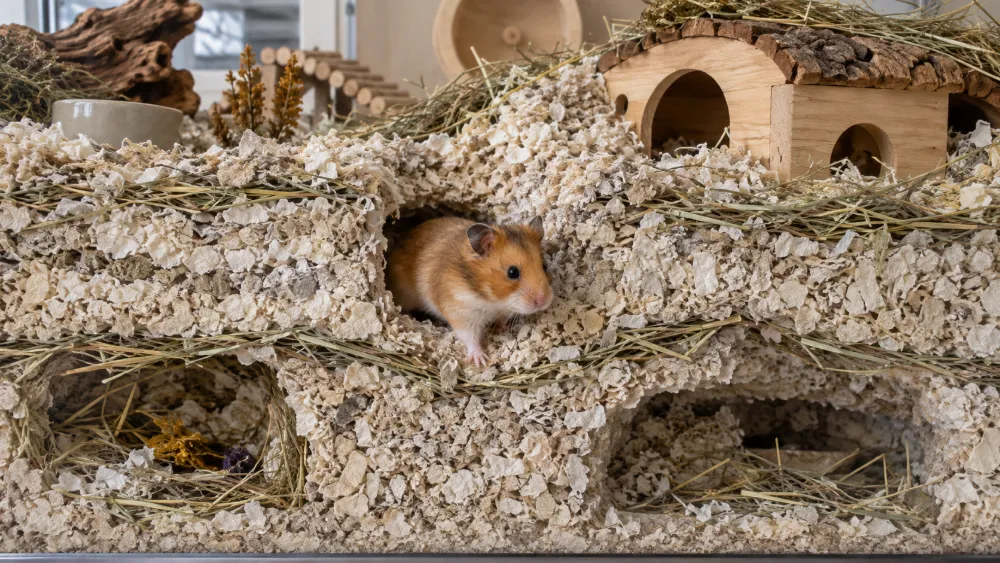
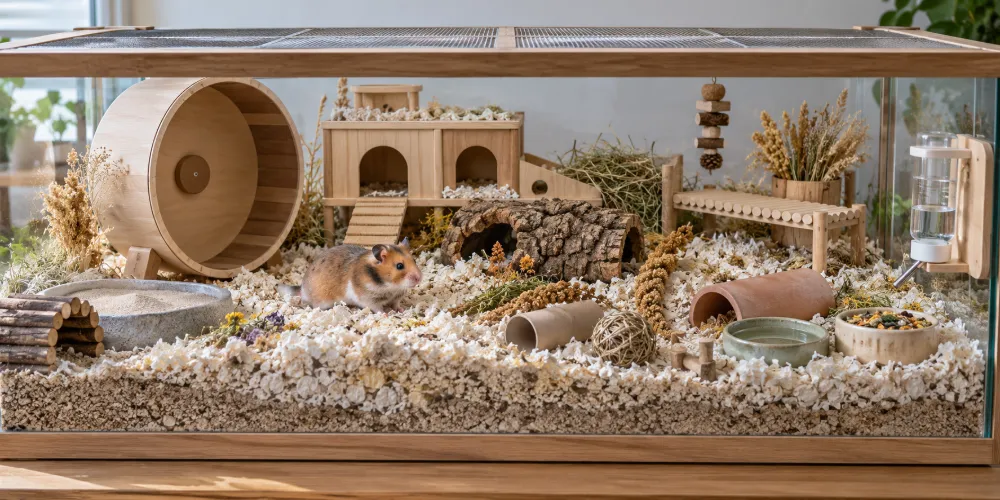
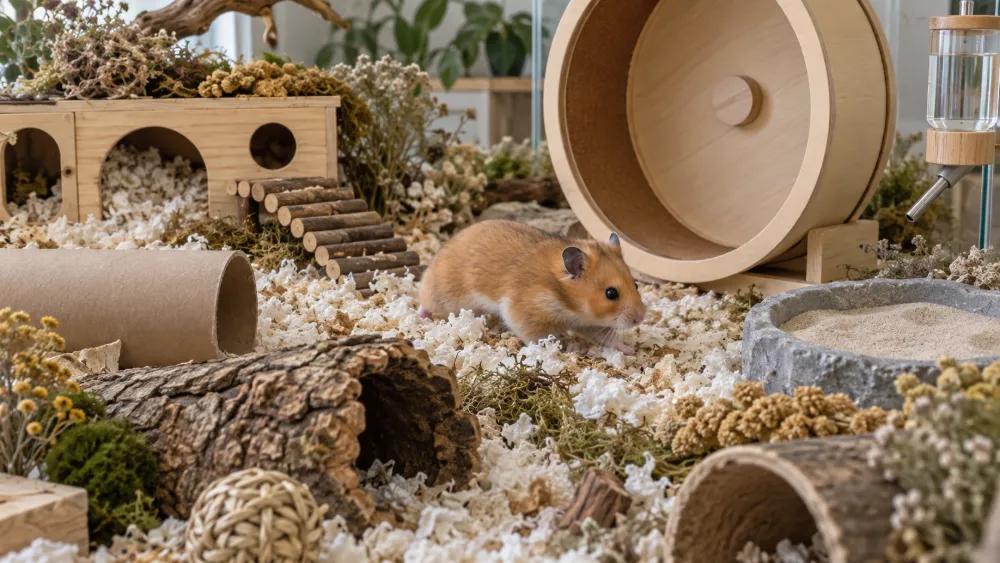
Hamsters need a secure enclosure with enough floor space, deep bedding, a properly sized exercise wheel, chew items, tunnels, hides, and foraging opportunities. Deep bedding is especially important because many hamsters have a strong instinct to dig and create tunnels.
Guinea pigs need a much larger enclosure with open floor space for walking, exploring, and social interaction. They also need hideouts, hay racks or hay areas, soft bedding or fleece systems, chew-safe enrichment, and regular cleaning. Because guinea pigs are not strong climbers, floor area is usually more important than vertical height.
Neither animal should live in a tiny cage with little enrichment. Small cages can cause stress, inactivity, obesity, repetitive behavior, and poor welfare. A good enclosure should allow the animal to express natural behaviors, not just survive.
Handling and interaction
Hamsters can become tame with patient, gentle handling, but they are small prey animals and may be easily startled. Some may nip if woken suddenly, grabbed from above, or handled before they feel safe. It is usually best to let a hamster wake naturally and approach voluntarily.
Guinea pigs are often calmer during handling, but they still need careful support. Their body should be held securely with one hand under the chest and another supporting the hindquarters. Many guinea pigs enjoy sitting on a lap with a towel or blanket, but not all enjoy being picked up.
In general, guinea pigs are better for people who want a more vocal, social, and visible pet. Hamsters may be better for people who enjoy observing nighttime behavior, digging, wheel running, and food-hoarding. Both need patience and respect.
Health and lifespan
Hamsters usually have shorter lifespans than guinea pigs. Many pet hamsters live around 2 to 3 years, although this varies by species, genetics, and care. Common health concerns may include dental problems, respiratory infections, tumors, skin issues, digestive upset, and injuries from unsafe housing.
Guinea pigs often live around 5 to 7 years, and some live longer with good care. Common health issues may include dental disease, vitamin C deficiency, respiratory infections, bladder stones, skin parasites, bumblefoot, and digestive problems. Because guinea pigs hide illness well, changes in appetite, droppings, weight, or behavior should be taken seriously.
Both animals need access to a veterinarian experienced with small mammals or exotic pets. Preventive care, correct diet, proper housing, and early attention to illness can make a major difference.
Which pet is easier for beginners
Neither animal is automatically “easy.” Hamsters require less space and usually cost less to feed, but they are delicate, often awake at night, and may not enjoy frequent handling. Their small size can make health problems harder to notice quickly.
Guinea pigs are often easier to observe and may be more interactive, but they need more space, more cleaning, more food, and usually a companion. Their longer lifespan also means a longer commitment.
For a beginner with limited space and a quiet evening routine, a hamster may be suitable. For a family that wants a daytime social pet and can provide a large enclosure, daily hay, vegetables, and veterinary care, guinea pigs may be a better match.
Do hamsters and guinea pigs get along
Hamsters and guinea pigs should not be housed together. They have different social systems, diets, communication styles, sizes, and housing needs. A guinea pig could accidentally injure a hamster, while a stressed hamster may bite. They also require different foods and enclosure setups.
Even supervised play together is generally unnecessary and risky. These animals do not need each other for companionship. A hamster is usually content alone with proper enrichment, while a guinea pig needs companionship from another compatible guinea pig.
The safest approach is to keep them in separate species-appropriate enclosures and meet each animal’s needs individually.
Common myths about hamsters and guinea pigs
One common myth is that all small pets are good starter pets for young children. In reality, hamsters and guinea pigs are living animals with specific care needs. Adults should always supervise care, handling, cleaning, and feeding.
Another myth is that guinea pigs can eat the same food as hamsters. This is not true. Guinea pigs need hay-based diets and vitamin C, while hamster diets are formulated differently. Food should always match the species.
A third myth is that hamsters are happier in pairs. Syrian hamsters are generally solitary and should be kept alone. Some dwarf hamsters may appear social in certain conditions, but pairing can lead to fighting. Housing decisions should be based on species and safety, not human assumptions.
Final takeaway
Hamsters and guinea pigs are both appealing small pets, but they are suited to different homes. Hamsters are smaller, often solitary, more nocturnal, and need deep bedding, a wheel, and careful handling. Guinea pigs are larger, more social, more vocal, and need more space, hay, vitamin C, and usually another guinea pig companion.
The better choice depends on your schedule, space, budget, and expectations. A hamster may be best for someone who wants a small independent pet and enjoys evening observation. A guinea pig may be better for someone who wants a more social, daytime-visible animal and can commit to larger housing and longer-term care.
FAQs
Is a hamster or guinea pig better for kids?
Guinea pigs are often easier for supervised children to observe and interact with because they are larger and more active during the day. However, they need more space, more cleaning, and longer-term care. Hamsters are smaller and more delicate, and many are active mostly at night.
Can a hamster and guinea pig live together?
No. Hamsters and guinea pigs should not live together. They have different diets, behaviors, social needs, and body sizes. Housing them together can cause stress, injury, or poor care for both animals.
Which smells more, a hamster or a guinea pig?
Odor depends mostly on enclosure size, bedding, diet, and cleaning routine. Guinea pigs usually produce more waste because they are larger and eat more. Hamsters are smaller, but a poorly cleaned enclosure can still smell. Good housing and regular cleaning are essential for both.