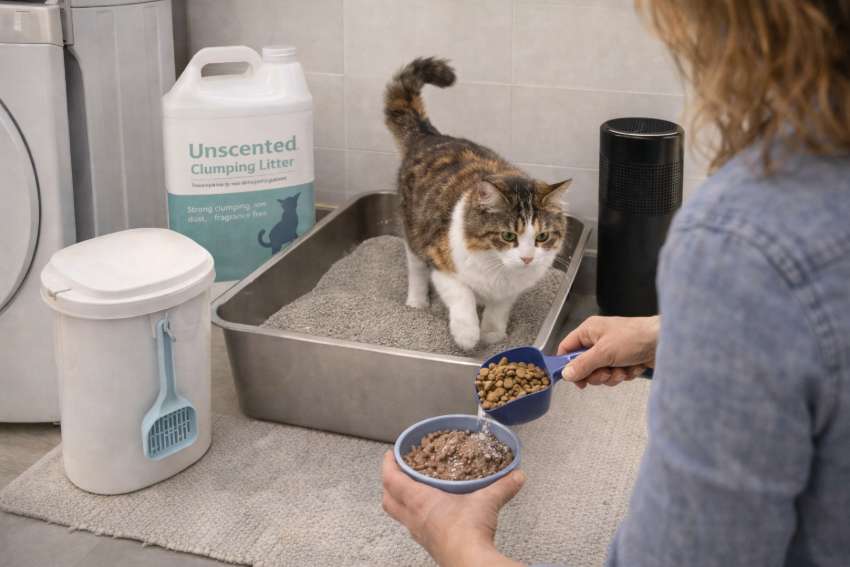
In a small apartment, litter box odor can feel like it takes over your entire home—especially if your litter box is near the bathroom, laundry area, or a corner of the living room. The good news is that odor control is usually less about finding a “miracle” litter and more about choosing the right litter type for your cat’s habits, then locking in a simple maintenance routine that prevents smells before they build up.
This guide explains which litter types control odor best, what to avoid, how to set up a small-apartment litter station, and when persistent odor might actually be a health issue.
1. Why Litter Boxes Smell More in Small Apartments
Odor problems usually come from one (or more) of these factors:
Not scooping often enough: even “best” litter can’t cover old waste.
Too little litter depth: urine hits the bottom and sticks to the box.
Box size or design issues: small boxes concentrate odor and get dirtier faster.
Humidity and airflow: bathrooms and closets trap smells.
Cat diet/hydration: concentrated urine and strong stools smell worse.
Old litter residue: odor gets embedded in scratched plastic and seams.
Apartment reality: A single missed cleaning day can be noticeable in a studio or one-bedroom.
2. What “Best Odor Control” Litter Typically Does Well
Odor control litter works by trapping moisture fast and reducing ammonia smell.
Fast clumping: makes it easier to remove urine and prevent ammonia buildup.
Low dust and low tracking: reduces litter grime that holds odor around the home.
Good absorbency: keeps the box drier overall.
Odor neutralization (not just perfume): truly reduces smell rather than masking it.
3. Best Litter Types for Odor Control (Pros and Cons)
Here’s how the most common litter types perform in small apartments.
3.1 Clumping Clay (Bentonite) Litter
This is one of the strongest odor-control performers for many cats because it clumps tightly and is easy to scoop.
Pros: excellent clumping, strong odor control, widely available, usually budget-friendly.
Cons: can be dusty, can track, heavier bags, some cats dislike scented versions.
Best for: most single-cat apartments where you scoop daily (or twice daily).
3.2 Unscented Clay + Baking Soda (The “Simple” Odor Upgrade)
If scented litters bother you or your cat, unscented clay with an odor absorber often works better than strong perfume.
Pros: fewer fragrance issues, reliable odor control, easy to maintain.
Cons: still can be dusty or track depending on brand.
Best for: cats sensitive to smell, or owners sensitive to fragrance.
3.3 Silica Crystal Litter
Crystal litters absorb moisture and can control odor well, especially for urine. They’re often marketed as longer-lasting.
Pros: very absorbent, can reduce urine odor effectively, lighter than clay, low tracking for some brands.
Cons: does not clump (many versions), stool still needs frequent removal, some cats dislike the feel, can be dusty in a different way.
Best for: cats that tolerate it and owners who want less heavy lifting.
3.4 Plant-Based Litters (Corn, Wheat, Cassava, Wood, etc.)
Many plant-based litters clump well and can offer good odor control, but performance varies by material and brand.
Pros: lighter weight, often less dusty, some have strong natural odor control, many are eco-friendly.
Cons: some can smell “sweet” or musty when used, some track more, clumps may break if not scooped carefully, cost can be higher.
Best for: owners who want a lighter option and are willing to test what their cat likes.
3.5 Non-Clumping Clay
Non-clumping clay can control odor initially, but it’s harder to keep truly fresh in a small space because urine stays behind.
Pros: often inexpensive.
Cons: weaker long-term odor control, requires more frequent full changes, can smell quickly in small apartments.
Best for: generally not ideal for tight spaces if odor control is your top priority.
4. Scented vs Unscented: What Works Better for Apartments?
Many people buy scented litter to “cover” odor, but in small apartments it often backfires:
Scent + ammonia = worse smell: the mix can be unpleasant.
Some cats avoid strong fragrances: which can lead to litter box issues.
Apartment-friendly rule: Prefer unscented litter with real odor neutralizers (tight clumps, moisture control, baking soda/charcoal) over heavy perfume.
5. The Small-Apartment Litter Box Setup That Reduces Odor Fast
5.1 Use the Right Box (Size Matters More Than You Think)
Choose a larger box: bigger boxes stay cleaner longer and reduce “missed” urine on the edges.
Aim for comfort: your cat should be able to turn around easily.
Covered box: can trap odor inside (good for you) but may also trap odor for your cat (bad if ventilation is poor).
5.2 Choose a Better Location
Avoid tight closets with no airflow
Choose a spot with some ventilation (but not right next to loud appliances)
Keep it away from food and water stations
5.3 Add Odor Control Tools That Actually Help
Air purifier with a carbon filter: helps in the room where the box lives.
Litter mat: reduces tracking (tracked litter holds smell around the home).
Enzyme cleaner: essential for any accidents outside the box.
6. The Odor-Control Routine That Works (Even in Studios)
In small apartments, frequency beats “stronger litter.”
Scoop 1–2 times daily: twice daily makes a huge difference for odor.
Top off litter regularly: maintain a consistent depth so clumps form properly.
Full refresh schedule: depends on litter type and cat count, but don’t let the box get “sticky.”
Wash the box: every few weeks with mild soap and warm water; avoid harsh chemicals that leave smells.
Pro tip: Replace old plastic boxes periodically. Scratches hold odor that no litter can fully fix.
7. Troubleshooting: If Odor Is Still Bad, Check These Common Causes
Not enough litter depth: urine reaching the bottom = stuck smell.
Clumps breaking: switch to a tighter-clumping litter or scoop more gently.
Tracking everywhere: add a mat, try larger-grain litter, or move the box to reduce foot traffic.
Box too small: upgrade size and see if odor improves within a week.
Diet changes: new foods can make stool smell stronger temporarily.
8. When Litter Box Odor Might Be a Health Issue
Sometimes the smell isn’t a litter problem—it’s a cat health problem. Contact your vet if you notice:
Very strong ammonia smell with increased drinking/urination (possible medical issue)
Sudden change in stool odor with diarrhea or vomiting
Straining to urinate or frequent tiny urinations
Blood in urine or peeing outside the box
Emergency warning: If a male cat is repeatedly trying to urinate with little or no urine produced, treat it as an emergency and seek urgent care immediately.
Final Thoughts: Odor Control Is 60% Routine, 40% Litter Choice
For small apartments, the most reliable odor-control setups usually involve a tight-clumping, unscented litter (often clumping clay or a high-performing plant-based clumping litter), paired with daily (ideally twice-daily) scooping, proper litter depth, and a well-sized box. Add an air purifier and a good litter mat, and your home can stay fresh even in a studio.
Your action step: pick one odor-focused litter type, commit to twice-daily scooping for one week, and upgrade box size if needed. If the odor is still unusually strong, consider a vet check to rule out urinary or digestive issues.