Choosing between wet and dry cat food can feel like a never-ending debate—especially when you’re trying to balance budget, convenience, your cat’s preferences, and long-term health. The truth is that both wet and dry foods can work well when they’re complete and balanced and fed in the right portions. The “best” choice depends on your cat’s hydration habits, weight goals, dental situation, and any history of urinary or digestive issues.
This guide breaks down the real-life pros and cons of wet vs dry cat food, when each option makes the most sense, and how to build a practical feeding plan that fits your household.
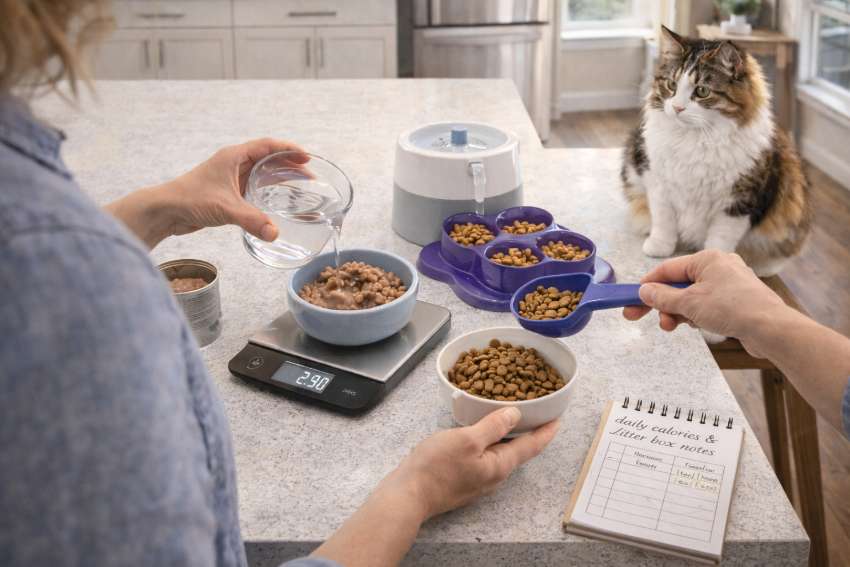
1. The Core Difference: Moisture (And Why It Matters for Cats)
The biggest nutritional difference between wet and dry food isn’t protein or carbs—it’s water.
Wet food: high moisture, which helps many cats get closer to their daily water needs through food.
Dry food: low moisture, which relies more heavily on your cat drinking enough water separately.
Because many cats naturally drink less than dogs, moisture intake can be a major factor in urinary and overall health for some cats.
2. Wet Cat Food: Pros
Wet food can be a strong choice for cats who need hydration support or better portion satisfaction.
Supports hydration: especially helpful for cats that rarely drink.
Often helps urinary health: more moisture can mean more dilute urine for many cats.
Can support weight control: higher water content can help cats feel full with fewer calories.
Usually more palatable: helpful for picky eaters or cats with reduced appetite.
Easier to eat for some cats: can be helpful for dental pain or missing teeth (depending on texture).
3. Wet Cat Food: Cons
Wet food is great for many cats, but it has practical drawbacks.
Higher cost per calorie: feeding exclusively wet can be more expensive.
Spoils faster: needs safe storage and shouldn’t sit out for long periods.
Messier: more odor, more dish washing, and more cleanup.
Harder with automatic feeding: timed feeding is possible, but more complicated than dry.
Real-life note: If you work long hours, you may need a mixed plan or a wet-food feeding system that fits your schedule.
4. Dry Cat Food: Pros
Dry food is popular because it’s convenient and easy to measure consistently.
Convenient and easy to store: simple for busy households.
Works well with automatic feeders: helpful for consistent schedules and portion control.
Cost-effective: generally cheaper per calorie.
Easy for puzzle feeders: can boost enrichment and slow eating.
Less messy: less odor and easier cleanup.
5. Dry Cat Food: Cons
Dry food’s biggest drawback is moisture. It can also be easy to overfeed.
Lower moisture intake: some cats won’t drink enough to compensate.
Overeating risk: free-feeding can quickly lead to weight gain in indoor cats.
Not a dental solution by itself: despite the “crunch,” most dry food does not meaningfully clean teeth for many cats.
May be less ideal for cats with certain urinary histories: some cats do better with more moisture.
6. When Wet Food Is Usually the Better Choice
Wet food (or at least partially wet) is often recommended in these scenarios:
History of urinary issues: crystals, frequent urinary irritation, or a cat that rarely drinks.
Weight control goals: especially for indoor cats that gain easily.
Constipation-prone cats: more moisture can help stool consistency (though not always).
Picky eaters or low appetite: especially during stress or after illness (with vet guidance if ongoing).
Senior cats: may benefit from extra moisture and easier-to-eat textures.
7. When Dry Food Is Usually the Better Choice
Dry food can be a solid option when:
Your cat has a healthy weight and drinks water reliably
You need a practical feeding schedule: long workdays, travel, or multiple short meals via auto-feeder
You’re using puzzle feeders: for enrichment and slower eating
Budget is tight: and you’re choosing a complete and balanced product
Important: Dry food can still be part of a healthy plan—just don’t treat it as “set it and forget it,” especially for indoor cats.
8. Mixed Feeding: The “Best of Both Worlds” Plan for Many Homes
Many cat owners find that a mixed feeding approach is the most realistic option.
Hydration support: one or two wet meals per day
Convenience and enrichment: measured dry food through a puzzle or auto-feeder
Better portion control: easier to manage total daily calories
How to Do Mixed Feeding Correctly
Count total calories: wet + dry + treats all add up.
Measure, don’t guess: use a measuring cup or kitchen scale.
Keep treats limited: treat calories can sabotage weight goals.
Transition gradually: sudden food changes can cause GI upset.
9. Practical Tips for Feeding Wet Food Safely
Don’t leave wet food out too long: if your home is warm, pick up leftovers sooner.
Use smaller portions more often: helps freshness and reduces waste.
Refrigerate opened food properly: and bring to room temperature before serving if your cat dislikes cold food.
Clean bowls daily: reduces odor and bacterial buildup.
10. Practical Tips for Feeding Dry Food Responsibly
Avoid free-feeding for most indoor cats: set measured meal portions.
Use puzzle feeders: slows eating and adds mental stimulation.
Refresh water daily: and consider a water fountain for low drinkers.
Store kibble correctly: keep it sealed to maintain freshness and reduce rancid fats.
11. When to Talk to a Vet (Food Choice Isn’t the Whole Story)
Diet can support health, but it’s not a substitute for medical care. Contact your vet if you notice:
Urinary red flags: straining, frequent tiny urinations, blood in urine, crying in the litter box, peeing outside the box
Emergency sign (especially male cats): repeated litter box trips with little/no urine output
Frequent vomiting, ongoing diarrhea, or major appetite changes
Unexplained weight loss or weight gain
Signs of dental pain (dropping food, pawing at mouth, bad breath, reduced appetite)
Important: A blocked male cat is an emergency. If your cat is straining and not producing urine, seek urgent care immediately.
Final Thoughts: Choose the Format That Supports Your Cat’s Health and Your Routine
Wet food shines for hydration, urinary support, and often weight control. Dry food shines for convenience, cost, and structured feeding routines—especially with puzzle feeders and automatic feeders. For many indoor cats, a mixed plan is the most practical and health-supportive approach.
Your action step: start with your cat’s biggest need (hydration, weight, or convenience), then build a routine you can maintain. If your cat has any history of urinary problems or struggles to drink water, lean toward more wet food and talk to your vet about the safest long-term plan.