A great walk isn’t about fancy accessories—it’s about safety, comfort, and control. The right gear can prevent pulling injuries, reduce escape risk, keep your hands free, and make daily walks smoother for both you and your dog. The wrong gear can cause chafing, worsen pulling, or even lead to dangerous slip-outs.
This practical guide covers the must-have dog walking essentials—harnesses, collars, leashes, and poop bags—plus how to choose the right setup for your dog’s body type and behavior, common mistakes to avoid, and when to ask a trainer or vet for help.
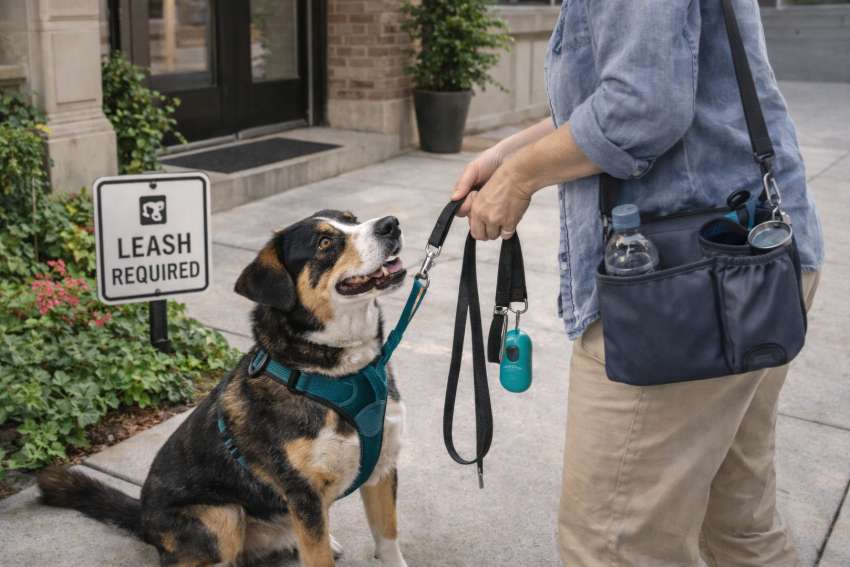
1. The Walking Gear Basics: What Every Dog Owner Should Have
At minimum, most dogs need a simple, reliable walking kit:
One well-fitted collar (for ID tags)
One well-fitted harness (for safer walking control)
One standard 4–6 ft leash
A poop bag system you’ll actually remember to use
Optional upgrades: treat pouch, reflective gear, and a long line for training
Real-life tip: Many experienced owners use both: a collar for ID and a harness for walking. That way, you don’t rely on the collar to control pulling.
2. Collars: What They’re Best For (And What They’re Not)
Collars are essential for identification, and some dogs walk fine on a collar. But collars are not the best tool for dogs that pull hard or lunge.
2.1 Flat Collars (Everyday ID Collar)
Best for: holding ID tags, everyday wear (if your dog tolerates it)
Pros: simple, widely available, easy to fit
Cons: pressure on the neck if used to control pulling
2.2 Martingale Collars (Escape-Prevention for Certain Dogs)
Martingales tighten slightly when the dog pulls, helping prevent backing out—commonly used for narrow-headed dogs.
Best for: dogs that slip out of flat collars, sighthounds, nervous dogs
Pros: more secure than a flat collar
Cons: still not ideal as the main tool for strong pullers
2.3 Head Halters and Training Collars (Use with Professional Guidance)
Some tools can be helpful in specific cases, but they require correct fitting and training to avoid discomfort or injury.
Best for: strong pullers when owners need extra control while training
Note: introduce gradually and consider a trainer’s guidance to avoid stress.
3. Harnesses: Your Main Walking Tool for Comfort and Control
Harnesses distribute pressure across the chest and shoulders rather than the neck, which can be safer for many dogs—especially those that pull, cough, or have airway sensitivity.
3.1 Back-Clip Harnesses
Best for: calm dogs with decent leash manners
Pros: comfortable, simple, good for casual walks
Cons: can encourage pulling in strong pullers (like “sled mode”)
3.2 Front-Clip Harnesses
Front-clip harnesses redirect a pulling dog by turning their body slightly toward you, reducing forward momentum.
Best for: dogs learning loose-leash walking, mild-to-moderate pullers
Pros: often reduces pulling immediately; helpful training tool
Cons: some can rub if not fitted well; needs correct adjustment
3.3 Y-Shaped (Non-Restrictive) Harnesses
Y-shaped harnesses aim to allow freer shoulder movement compared to some “straight across the chest” designs.
Best for: many everyday dogs, especially active walkers
Pros: comfortable movement, less chafing risk when fitted correctly
Cons: fit matters—wrong fit can still restrict movement
3.4 Escape-Proof / Three-Strap Harnesses
These harnesses add an extra strap around the belly area to prevent backing out—helpful for fearful or skinny dogs.
Best for: nervous rescues, dogs that back out of harnesses, sighthounds
Pros: added security
Cons: can take longer to put on; must be adjusted carefully
4. How to Fit a Harness Correctly (This Prevents Rubbing and Escapes)
Poor fit is the #1 reason people think a harness “doesn’t work.” Use these quick checks:
Two-finger rule: you should fit two fingers under straps, snug but not tight.
Chest/shoulder clearance: straps should not dig into armpits or restrict shoulder movement.
No twisting: straps should lie flat, not roll or twist.
Escape test: gently pull backward—if your dog can back out, adjust or switch to a more secure design.
Pro tip: If your dog is fluffy, check fit under the fur. Thick coats can hide a loose harness.
5. Leashes: Choose the Right One for Safety and Training
5.1 Standard Leash (The Everyday Best Choice)
Recommended length: 4–6 feet
Best for: sidewalks, city walks, training
Why it works: gives control without constant tangles
5.2 Hands-Free Leash (Great for Runners, Strollers, and Coffee Walks)
Best for: steady walkers and dogs with decent leash manners
Watch-outs: can be risky with strong pullers; use a safety backup if needed
5.3 Long Line (Training Leash)
A long line allows controlled freedom while practicing recall or sniff walks in safe areas.
Recommended length: 10–30 feet
Best for: recall training, decompression walks, open spaces where leashes are required
Safety note: wear gloves and avoid wrapping around your hand to prevent rope burns.
5.4 Retractable Leashes (Use with Caution)
Retractable leashes can create safety issues in busy areas and can be harder for dogs to learn consistent leash manners.
Not ideal for: crowded sidewalks, reactive dogs, training loose-leash walking
Risks: sudden darting, tangles, rope burns, less control near traffic
If you use one: reserve it for open spaces and keep it locked short when people/dogs are near
6. Poop Bags: The Small Item That Makes Walks Easy
Poop bags aren’t glamorous, but they’re non-negotiable—especially in cities and apartments. The best system is the one that stops you from forgetting bags.
6.1 What to Look for in Poop Bags
Leak resistance: thicker bags reduce mess and stress
Easy tear and open: important when you’re juggling a leash
Size that fits your dog: larger dogs need larger bags
Dispenser compatibility: standard rolls fit most dispensers
6.2 A Better “Never Forget Bags” Setup
Attach a dispenser to every leash you use
Keep spare rolls by the door and in your car
Use a small clip-on bag holder for “full bags” so you’re not carrying it in your hand
7. The Most Useful Add-Ons (Worth It for Many Owners)
Treat pouch: speeds up leash training and calm behavior rewards
Reflective or LED gear: improves visibility on early/late walks
ID tag + microchip: collar tags help fast returns; microchips are a backup
Portable water bottle/bowl: helpful for warm weather and longer walks
Booties or paw wax: for hot pavement, ice, or salted sidewalks
8. Common Gear Mistakes (And How to Avoid Them)
Walking a puller on a collar: increases neck pressure and can worsen pulling.
Buying a harness “by weight only”: fit depends on chest shape, not just pounds.
Using a retractable leash in crowded areas: increases risk of accidents and tangles.
Choosing scented poop bags for “odor control”: scent doesn’t always help; a good tie-off and disposal plan is better.
Ignoring rubbing signs: hair loss or redness in armpits means adjust or switch style.
9. When to Ask a Trainer or Vet for Help
Trainer Help Is Worth It If:
Your dog pulls hard, lunges, or reacts to dogs/people on walks
Walks feel unsafe, stressful, or out of control
Your dog slips out of gear repeatedly
Talk to a Vet If:
Your dog coughs, gags, or wheezes on walks (especially with collar pressure)
Your dog shows pain, limping, or stiffness after walks
You notice skin irritation under gear that doesn’t improve with fit adjustments
Safety note: Sudden exercise intolerance, collapse, or trouble breathing during walks is urgent—seek veterinary care right away.
Final Thoughts: A Simple Walking Setup Beats Fancy Gear Every Time
Most dog owners can simplify walking by using a collar for ID, a comfortable well-fitted harness for control, a standard 4–6 ft leash for everyday walks, and a reliable poop bag system that’s always attached to the leash. Add a treat pouch and reflective gear, and you’ll cover nearly every situation.
Your action step: check your current gear fit today (especially harness straps near the armpits), attach a poop bag dispenser to every leash, and practice rewarding calm leash behavior for 5 minutes on your next walk. Small changes create noticeably better walks.