Not every dog is built for your weather. A fluffy double coat can be amazing in a snowy winter and miserable in a hot summer. A short-nosed (flat-faced) dog may struggle the moment the temperature climbs. And “my dog loves the snow” doesn’t always mean they’re safe in it for long.
This climate-specific guide explains which dog breed types tend to handle cold vs heat better, how to spot temperature stress early, and how to keep any dog safe in real-life US/European conditions—from humid summers to icy sidewalks.
1. How Dogs Handle Temperature: The Basics
Dogs don’t sweat like humans. They mainly cool off through panting, a small amount through paw pads, and by seeking shade/cool surfaces. That means some dogs overheat quickly, especially in humidity. In cold weather, dogs lose heat through exposed areas (ears, paws, belly), and wind/wet conditions make it worse.
Key Body Features That Affect Climate Tolerance
Coat type: single coat vs double coat; thick undercoat helps in cold but can trap heat.
Body size and shape: smaller dogs cool down faster in winter; lean dogs have less insulation.
Muzzle length: short-nosed breeds cool poorly and overheat faster.
Color and skin: dark coats absorb more sun; thin coats can burn.
Age and health: puppies, seniors, obese dogs, and dogs with heart/lung disease are less temperature-tolerant.
2. Dogs That Tend to Handle Cold Weather Better
Dogs built for cold typically have a thick double coat, smaller ears, and a sturdy build. They’re often more comfortable in cool temperatures and may happily play in snow—within limits.
2.1 Cold-Weather “Well-Suited” Breed Types (Common Examples)
Northern spitz types: Siberian Husky, Alaskan Malamute, Samoyed
Mountain/working breeds with heavy coats: Bernese Mountain Dog, Newfoundland
Some herding breeds with robust coats: Rough Collie, some lines of German Shepherd Dogs
2.2 Real-Life Cold-Weather Notes (Even for “Snow Dogs”)
Wet is the enemy: rain, slush, and damp coats can chill dogs faster than dry snow.
Paws need protection: salt, ice melt, and ice balls between toes can cause pain and injury.
Indoor heat matters: thick-coated dogs can overheat indoors with blasting heat.
2.3 Cold-Weather Dogs That Still Need Extra Help
Puppies and seniors: even cold-adapted breeds can struggle when very young or old.
Thin/lean athletes: Greyhounds and Whippets (even if energetic) get cold quickly.
Small dogs: lose heat faster and may need coats even in mild cold.
3. Dogs That Tend to Handle Heat Better
Heat-tolerant dogs typically have shorter coats, longer muzzles, and leaner builds that dissipate heat more effectively. But no dog is immune to heat stress—especially in humidity.
3.1 Heat-Weather “Better Suited” Breed Types (Common Examples)
Short-coated, athletic types: many pointers, some retrievers (with caution), many mixed breeds with short coats
Lean sighthounds: Greyhound-type dogs (they still need sun protection and hydration)
Many “village dog” type mixed breeds: often have coats and body types shaped by warmer climates
3.2 Real-Life Heat Notes
Humidity changes everything: panting is less effective in humid air, raising overheating risk.
Sun exposure matters: light-colored and thin-coated dogs can sunburn.
Hot pavement is dangerous: paw burns happen faster than most owners expect.
4. Dogs That Struggle the Most in Heat (High-Risk Groups)
Some dogs are at significantly higher risk of overheating and heat stroke. For these dogs, hot weather isn’t just uncomfortable—it can be dangerous.
4.1 Flat-Faced (Brachycephalic) Breeds
Common examples: French Bulldog, English Bulldog, Pug, Boston Terrier, Pekinese
Why they struggle: shortened airways make panting less efficient; heat can become an emergency quickly.
4.2 Heavy-Coated Northern Breeds in Hot Climates
Examples: Husky, Malamute, Samoyed
Why they struggle: heavy insulation traps heat; many do poorly in humid summers.
4.3 Dogs With Extra “Heat Load”
Overweight dogs: insulation + more effort to cool down
Senior dogs: lower tolerance and slower recovery
Heart/lung disease: reduced ability to regulate temperature
Dark-coated dogs: absorb more solar heat
5. Dogs That Struggle the Most in Cold (High-Risk Groups)
Cold weather can be just as dangerous as heat, especially for dogs without insulation or with exposed skin.
5.1 Short-Coated and Thin-Bodied Breeds
Examples: Greyhound, Whippet, Doberman, many small terriers
Why they struggle: minimal insulation and rapid heat loss
5.2 Small Dogs and Toy Breeds
Why they struggle: higher surface area relative to body mass means faster heat loss
Extra issue: short legs mean belly contact with snow/slush
5.3 Hairless or Thin-Coated Dogs
Examples: Xoloitzcuintli (hairless varieties), Chinese Crested (hairless varieties)
Why they struggle: little coat protection; skin can become irritated by cold wind and dry air
6. Climate Match Guide: Choosing a Dog for Where You Live
If you’re choosing a dog based on climate, use this as a practical approach:
6.1 If You Live in a Cold Winter Region
Look for: double coats, medium-to-large sturdy builds, longer muzzle
Plan for: paw care, coat drying after slush, indoor shedding, seasonal brushing
Avoid (or plan extra management): thin-coated dogs unless you’re committed to winter gear
6.2 If You Live in a Hot or Humid Summer Region
Look for: longer muzzle, athletic build, short to moderate coat
Plan for: early morning/evening walks, cooling strategies, hydration routines
Avoid (or plan strict precautions): flat-faced breeds and heavy-coated northern breeds
6.3 If You Live Somewhere With Big Seasonal Swings
Best strategy: choose a moderate coat and build, and budget for seasonal gear
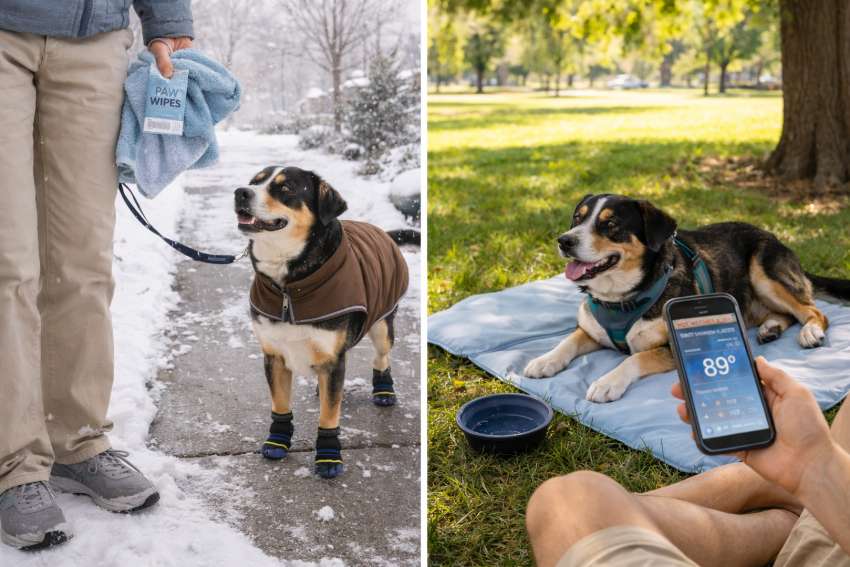
Plan for: boots/wax in winter, cooling mats and shaded routines in summer
Remember: management matters more than breed if you plan well
7. Practical Cold-Weather Safety Tips (Any Breed)
Protect paws: wipe paws after walks; consider dog boots or paw wax in icy/salted areas.
Use a coat for thin-coated dogs: especially for longer walks or windy days.
Keep walks shorter in extreme cold: multiple short walks can be safer than one long one.
Dry your dog fully: wet fur + wind increases chilling risk.
Watch for shivering or lifting paws: signs your dog is too cold or paws hurt.
8. Practical Heat-Weather Safety Tips (Any Breed)
Walk at cooler times: early morning and late evening in summer.
Avoid hot pavement: if the ground feels too hot for your hand, it’s too hot for paws.
Provide shade and water: especially during outdoor time or travel.
Use cooling tools wisely: cooling mats, damp towels, and shaded rest spots can help.
Never leave a dog in a parked car: temperatures can become dangerous quickly.
9. Signs Your Dog Is Too Hot (When to Seek Urgent Vet Care)
Heat illness can become an emergency fast. Seek urgent veterinary care if you see:
Heavy panting that doesn’t improve with rest
Thick drool, vomiting, diarrhea
Weakness, wobbling, collapse
Bright red or pale gums, confusion, seizures
Immediate first aid while contacting a vet: move to shade or AC, offer small amounts of cool water, and cool with damp towels (especially belly/paws). Avoid ice-cold water immersion unless a vet advises it, as rapid cooling can cause complications.
10. Signs Your Dog Is Too Cold (When to Seek Vet Help)
Cold exposure can also become dangerous. Contact a vet if you notice:
Persistent shivering that doesn’t stop indoors
Lethargy, weakness, confusion
Pale gums, slowed breathing
Very cold ears/feet, signs of pain in paws
Immediate first aid: bring your dog indoors, dry them thoroughly, warm gradually with blankets, and avoid direct high heat (like a hot hair dryer against skin).
Final Thoughts: Climate Matters, but Management Matters More
Some breed types are naturally more comfortable in cold or heat due to coat, body shape, and muzzle length. Northern double-coated dogs often thrive in cold but can struggle in hot, humid weather. Short-coated, long-muzzled, athletic dogs tend to handle heat better, while thin-bodied and small dogs often need help in winter.
Your action step: choose a dog that fits your local climate and your daily routine, then build seasonal habits—paw protection in winter, cooler walk times in summer, and quick response to heat/cold stress signs. With the right match and smart routines, most dogs can live comfortably in most climates.