Apartment living with a dog can be wonderful—until barking becomes a daily stressor for you and your neighbors. The truth is: “quiet breed” doesn’t mean “never barks.” Dogs bark to communicate, and in an apartment there are more triggers (hallway footsteps, elevators, door buzzers, delivery knocks, neighbor dogs). The goal is a dog that’s naturally less vocal and easier to teach calm habits.
This guide covers dog breeds and breed types that often do well in apartments with noise-sensitive neighbors, what actually makes a dog quieter in real life, and practical training steps to prevent barking from becoming a problem.
1. What Makes a Dog “Quiet” in Real Life?
Quietness is usually a combination of temperament, energy level, and how easily the dog can relax when nothing is happening.
Low to moderate alertness: less likely to bark at every hallway sound.
Good “off switch” indoors: can settle and nap between walks.
Lower reactivity: not easily triggered by noises, strangers, or other dogs.
Needs met daily: under-exercised dogs bark more due to frustration and boredom.
Comfort being alone: separation distress is a major cause of apartment barking.
Apartment reality: A “quiet” dog that’s bored or anxious can become a loud dog. Matching energy to your routine matters as much as breed choice.
2. The Biggest Barking Triggers in Apartments (So You Can Prevent Them)
Hallway noise: footsteps, keys, doors closing, elevators, neighbor conversations.
Doorbell/buzzer and deliveries: sudden, predictable sound that becomes a habit trigger.
Other dogs: barking “echo loops” through walls and courtyards.
Window watching: street activity becomes a “job” for the dog.
Separation distress: whining/howling when you leave.
Key strategy: prevent your dog from practicing barking routines. The more barking becomes a habit, the harder it is to change.
3. Quiet Dog Breeds for Apartments (With Real-Life Notes)
These breeds are often quieter and more apartment-friendly when their needs are met. Individual temperament matters, and training still matters—but these are commonly good starting points for noise-sensitive buildings.
3.1 Greyhound (Adult Adoption Often Works Great)
Greyhounds are famous for being calm “couch potatoes” indoors, especially when adopted as adults.
Why they’re quiet: many are low-barking and relaxed at home.
Watch-outs: prey drive can be strong; leash safety is essential.
Apartment fit: excellent if you provide daily walks and a soft, comfy bed.
3.2 Whippet
Whippets are often quiet, clean, and content with bursts of activity plus lots of lounging.
Why they’re quiet: many are not “alert barkers” and settle well indoors.
Watch-outs: can get cold easily; needs warmth in winter.
Apartment fit: strong for calmer households with consistent walks.
3.3 Cavalier King Charles Spaniel
Cavaliers are typically gentle companion dogs that often prefer being near you rather than guarding the hallway.
Why they’re quiet: many are less territorial and more people-focused.
Watch-outs: can develop separation issues if always with you; alone-time training is important.
Apartment fit: great for people who want a cuddly, calm companion.
3.4 French Bulldog (With a Heat and Breathing Reality Check)
Many French Bulldogs are relatively quiet and low exercise indoors, which is why they’re popular in cities.
Why they’re quiet: often not big barkers and are content indoors.
Watch-outs: flat-faced breathing issues; heat sensitivity; vet costs can be higher.
Apartment fit: good for quieter routines if you can manage health considerations responsibly.
3.5 Shih Tzu
Shih Tzus often do well in apartments when trained for calm routines and not encouraged to “alarm bark” at the door.
Why they’re quiet: many are content with a slower pace and indoor life.
Watch-outs: grooming needs can be significant unless kept in a low-maintenance trim.
Apartment fit: strong for owners who want a small companion and can handle grooming.
3.6 Bichon Frise (Quiet Potential With Training)
Bichons can be wonderful apartment dogs, though some may bark if bored or under-stimulated.
Why they can be quiet: friendly, adaptable, and trainable with routines.
Watch-outs: grooming needs; can be vocal if they learn “bark = attention.”
Apartment fit: excellent for owners who enjoy training and have a consistent schedule.
3.7 Pug (With the Same Health Reality Check)
Pugs are often affectionate, low exercise, and can be relatively quiet indoors.
Why they’re quiet: many are not strong alert barkers.
Watch-outs: flat-faced breathing issues and heat sensitivity; weight management is critical.
Apartment fit: good if you’re prepared for careful health management.
3.8 Bernese Mountain Dog (Only If Your Building and Body Can Handle It)
Some large breeds are quiet and gentle—but size matters in elevators, hallways, and tight spaces.
Why they’re quiet: often calm and less yappy than many small dogs.
Watch-outs: large size, shedding, and higher costs; not ideal for small apartments.
Apartment fit: only for spacious buildings and owners comfortable handling a large dog.
3.9 Calm Adult Mixed-Breed Dogs (Often the Best Apartment Choice)
A calm adult dog from a reputable rescue with a known temperament can be more predictably quiet than a random puppy of any breed.
Why they’re quiet: you can select for calm behavior and lower reactivity.
Watch-outs: ask specifically about barking history and alone-time comfort.
Apartment fit: excellent, especially if the dog is already house-trained and settled.
4. Breeds and Traits That Often Bark More (Harder in Noise-Sensitive Buildings)
This doesn’t mean these dogs can’t live in apartments—it means you may need stronger training and management.
High-alert watchdog types: more likely to bark at hallway sounds and strangers.
Very vocal small breeds: some toy breeds can develop “alarm barking” quickly.
Herding breeds: may react to motion/noise without enough exercise and mental work.
Dogs with separation distress: howling/whining when left alone is a common complaint trigger.
Beginner tip: If you live in a strict building, prioritize lower reactivity and an adult dog with proven calm behavior.
5. How to Prevent Barking Problems (Apartment-Proof Training Plan)
Even quiet dogs bark if the environment teaches them to. These steps help almost every apartment dog.
5.1 Teach “Quiet” and Reward Calm
When your dog is calm and silent, quietly reward with a treat or calm praise.
Teach a cue like “quiet” by rewarding the moment they stop barking (not while barking).
Keep training short—30 seconds here and there is powerful.
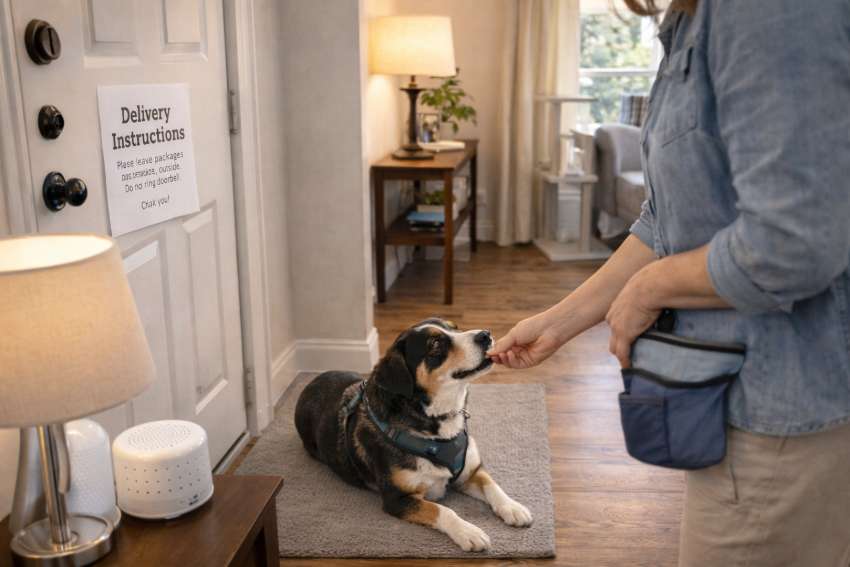
5.2 Reduce Door and Hallway Triggers
Sound management: use a fan or gentle white noise to mask hallway noises.
Visual management: limit window “patrol” with frosted film or strategic furniture placement.
Distance: use baby gates to keep your dog away from the front door during peak noise times.
5.3 Provide Daily Enrichment (Bored Dogs Bark More)
Food puzzles, sniff mats, and scatter feeding to “work” for meals.
Short training games (sit, touch, down, settle) to reduce restlessness.
Sniff walks (slow, exploratory walks) to drain mental energy.
5.4 Alone-Time Training (Prevents the Worst Complaints)
Start with short departures (seconds to minutes) and build gradually.
Give a special chew or food puzzle only when you leave.
Don’t make exits and arrivals emotionally intense.
Important: If your dog panics when alone, it’s not disobedience—it may be separation anxiety and needs a structured plan (often with professional help).
6. Apartment Gear That Helps With Noise Complaints
Front-clip harness: helps control pulling without stress.
Standard leash: better than retractable leashes for hallway control.
White noise/fan: reduces “trigger stacking” from hallway sounds.
Crate or calm zone: a safe place away from the door where the dog can relax.
Enrichment rotation: chew items and puzzles to prevent boredom barking.
7. When to Hire a Trainer (So It Doesn’t Become a Building Problem)
Get help early if you notice:
Frequent barking at hallway sounds that’s increasing over time
Lunging/barking at people or dogs in hallways
Separation distress (howling, panic, destructive escape attempts)
Inability to settle even after exercise
Cost-smart move: a few targeted training sessions can prevent months of neighbor stress and potential lease issues.
8. When to Talk to a Vet (Barking Can Be Medical Sometimes)
If barking increases suddenly or comes with other changes, rule out health issues:
Pain or discomfort (new irritability, sensitivity to touch)
Hearing or vision changes (startling more easily)
Cognitive changes in senior dogs (confusion, pacing, nighttime vocalizing)
Skin allergies or ear infections (restlessness and agitation)
Final Thoughts: Quiet Apartment Dogs Are Made by Good Matches and Good Habits
Breeds like Greyhounds, Whippets, Cavaliers, Shih Tzus, and many calm adult mixed-breed dogs often do well in apartments with noise-sensitive neighbors. But the biggest predictor of success is not the breed—it’s whether your dog can relax, whether their daily needs are met, and whether you prevent barking from becoming a habit.
Your action step: choose a calm, low-reactivity dog (ideally an adult with known temperament), set up your home to reduce triggers, and start “quiet” and alone-time training from day one. That combination keeps your dog happier—and your neighbors calmer.