Dog grooming can feel confusing to budget for because “grooming” means very different things depending on your dog’s coat, lifestyle, and tolerance for brushing and baths. A short-haired dog may only need regular nail trims and occasional baths, while a doodle or poodle mix might need professional clipping every 4–8 weeks to avoid painful matting. Then there are hidden extras: dematting fees, special shampoos for skin issues, and the simple truth that busy US/UK/European cities often charge premium prices.
This guide explains what you’re paying for, what you can safely do at home, what usually requires a pro, and how to build a grooming plan that keeps your dog comfortable without blowing your budget.
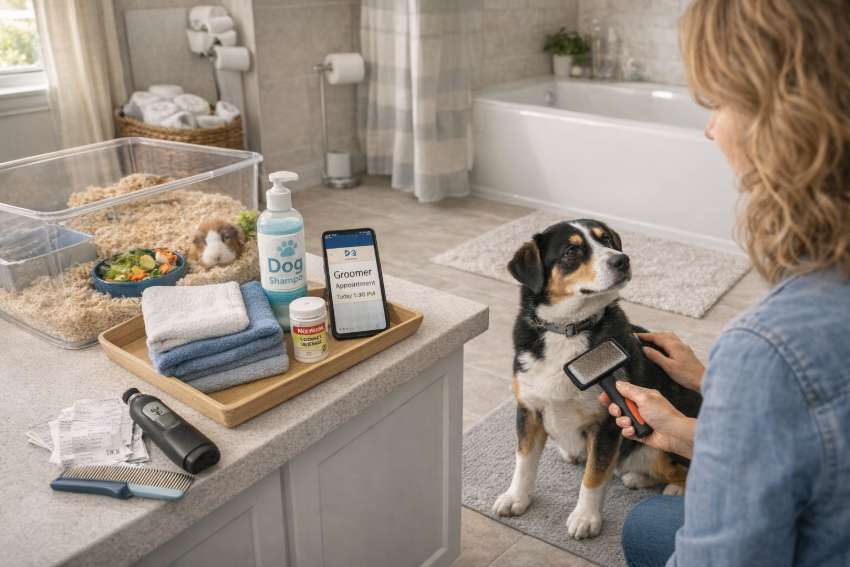
1. What Counts as “Grooming”? (It’s More Than a Haircut)
Dog grooming usually includes some combination of:
Brushing and coat maintenance: removing loose hair, preventing mats, distributing oils.
Bathing and drying: proper shampooing, conditioner (sometimes), thorough drying (especially for thick coats).
Haircut or trimming: clipper work, scissoring, sanitary trim, face/feet shaping.
Nail trimming/grinding: preventing overgrowth, cracking, and painful walking.
Ear care: cleaning as advised; managing hair in ears for some breeds (only with guidance).
Hygiene support: anal gland expression (only when needed and typically handled by a vet or trained groomer).
Budget reality: The “haircut” is often not the most important part. For many dogs, nails, brushing, and skin/ear hygiene are what prevent discomfort and vet visits.
2. The Three Biggest Factors That Drive Grooming Cost
2.1 Coat Type (This Is the #1 Cost Driver)
Short coat (Lab, Boxer): lower cost; shedding control is the main goal.
Double coat (Husky, Golden): needs thorough deshedding and drying; can be time-intensive.
Curly/wavy coat (Poodle mixes, Poodles): requires regular brushing and clipping; matting risk is high.
Long silky coat (Shih Tzu, Yorkie): often needs frequent trims and careful maintenance.
2.2 Size and Behavior
Size: larger dogs take more time, product, and physical effort.
Cooperation: fearful, wiggly, or reactive dogs require slower handling and sometimes extra staff time.
2.3 Condition of the Coat
Well-maintained coat: faster service, lower cost.
Matted coat: dematting fees, longer appointments, or a shorter “reset” shave that’s safer and kinder.
Key takeaway: Regular basic maintenance at home is the most powerful way to reduce professional grooming costs over the long term.
3. Typical Professional Grooming Price Ranges (What Most Owners Pay)
Prices vary by region, salon demand, and your dog’s coat. These ranges are common for many US/UK/European cities.
3.1 Bath + Brush (No Haircut)
Small dog: moderate
Medium dog: moderate to higher
Large dog: higher due to drying time and coat volume
Often includes: bath, blow-dry, brush-out, nails, and basic ear cleaning.
3.2 Full Groom (Haircut + Bath)
Small dog: moderate to high
Medium dog: high
Large dog: high to very high
Often includes: bath, blow-dry, haircut, nails, ear cleaning, and basic tidy work.
3.3 Common Add-On Fees (The “Why Was It More?” List)
Dematting: time-based fee or extra service charge
De-shedding treatment: extra brushing time + specialized product
Special handling: for highly anxious or difficult dogs (varies widely)
Flea treatment: if fleas are found during grooming
Breed-specific styling: hand scissoring or special cuts
Money tip: Ask for an estimate before drop-off and ask what could change the final price (matting, coat condition, behavior).
4. DIY Grooming Costs: What You’ll Spend Up Front (And Ongoing)
DIY grooming can save money, but only if you invest in the right tools and keep expectations realistic. Many owners succeed with “maintenance grooming” at home and still use a pro for haircuts a few times a year.
4.1 DIY Tool Checklist (Practical Essentials)
Brushes: slicker brush, pin brush, and/or deshedding tool depending on coat type
Comb: essential for checking for mats (especially behind ears, armpits, and tail)
Nail trimmer or grinder: grinder can be easier for gradual shortening
Dog shampoo (and conditioner if needed): choose gentle formulas; medicated products only with vet advice
Towels + drying setup: a strong dryer is helpful for thick coats (optional but valuable)
Clippers + blades (only if you plan haircuts): quality matters; cheap clippers struggle and pull hair
Styptic powder: for minor nail quick nicks
4.2 DIY Cost Patterns
Up-front cost: tools can be a one-time investment that pays off over months
Ongoing cost: shampoo refills, blade maintenance, replacement brushes, nail grinder sanding bands
Hidden cost: time—DIY grooming takes practice, especially for curly coats
Best DIY value for most owners: regular brushing + nail care + occasional baths. Haircuts are where DIY can get tricky.
5. DIY vs Professional: Which Tasks Are Safe to Do at Home?
5.1 Great DIY Tasks (Most Dogs)
Brushing: a few minutes several times per week prevents mats and reduces shedding
Bathing: if your dog tolerates it and you can dry thoroughly
Nail trimming/grinding: with slow, careful technique
Basic hygiene trims: small tidy work around paws and sanitary areas (only if your dog is calm)
5.2 Better Left to Pros (Or Done With Guidance)
Dematting severe mats: can be painful and can injure skin; sometimes a humane shave-down is safest
Full haircuts on curly coats: requires skill, good tools, and safe handling
Ear hair plucking: not appropriate for all dogs; can worsen inflammation if done incorrectly
Anal gland issues: recurring problems should be discussed with a vet
Safety note: Never use scissors to cut out mats close to the skin—skin can fold into mats and be cut easily. This is a common emergency vet scenario.
6. The Most Cost-Effective Strategy for Most Owners
You don’t have to choose “all DIY” or “all professional.” Many owners save the most money and stress with a hybrid approach:
At home: brushing 3–5 times a week (daily for curly coats), nails every 2–4 weeks, baths as needed
Professional: full grooms every 6–10 weeks for curly/long coats; seasonal deshedding for double coats
Annual reset: schedule extra grooming before hot weather or winter coat changes if your breed needs it
Why it works: home maintenance prevents matting and reduces professional appointment time, which often reduces add-on fees.
7. How Often Should You Groom? (A Practical Schedule)
Short Coat
Brushing: weekly
Bath: every 4–8 weeks or when dirty
Nails: every 2–4 weeks
Double Coat
Brushing: 2–3 times per week (more during shedding seasons)
Bath + thorough dry: every 6–10 weeks
Deshedding: seasonal sessions can help manage fur and skin
Curly/Wavy or Long Coat
Brushing + comb check: most days
Professional full groom: every 4–8 weeks for many dogs
At-home baths: optional, but be careful—wet coats mat faster if not dried well
8. Common Grooming “Mistakes” That Increase Cost
Waiting until the coat is matted: leads to dematting fees or a shorter shave-down
Bathing a curly coat without drying thoroughly: can create mats that require professional intervention
Using human shampoo: can irritate skin and create ongoing issues
Skipping nails: overgrown nails can cause pain and posture issues, and may require more work later
No desensitization training: fearful dogs take longer to groom and may require extra handling
Money-saving habit: practice gentle handling weekly—touch paws, ears, and brush briefly with treats. A dog that tolerates grooming costs less over time.
9. When Grooming Becomes a Vet Issue
Some grooming-related problems aren’t just “cosmetic.” Contact a vet if you notice:
Red, moist, painful skin (“hot spots”), especially under mats
Strong odor, head shaking, or ear discharge (possible ear infection)
Repeated scratching, hair loss, or scabs (allergies, parasites, infection)
Broken nails, bleeding, limping, or persistent paw licking
Lumps, bumps, or sores discovered during brushing
Important: If your dog is extremely anxious or aggressive during grooming, talk to your vet and a qualified trainer. Forcing grooming can lead to injury for both dog and human.
10. How to Choose a Professional Groomer (So You Get Value)
A good groomer isn’t just a haircut provider—they’re part of your dog’s wellness team.
Ask what’s included: nails, ear cleaning, gland expression (if offered), brushing time
Discuss coat goals: “easy maintenance cut” often saves money and stress versus high-maintenance styling
Be honest about behavior: anxiety, biting history, or sensitivities
Book on a schedule: regular appointments reduce matting and can reduce extra fees
Look for calm handling: a rushed environment can increase stress for sensitive dogs
Cost tip: If your dog mats repeatedly, request a shorter, practical cut and a home brushing plan. It’s kinder and often cheaper.
Final Thoughts: The Cheapest Grooming Is Consistent Grooming
Professional grooming can be a major recurring expense, especially for curly and long-coated dogs—but you can control it with smart maintenance. For most owners, the best strategy is a hybrid plan: do brushing and nails at home, and use a professional groomer on a predictable schedule for haircuts and deep coat work.
Your action step: identify your dog’s coat type, set a realistic grooming calendar, and start a simple weekly routine today. A few minutes of brushing now can save you money (and prevent discomfort) later.