Vet costs can feel unpredictable because you’re rarely paying for just “a visit.” You’re paying for a professional exam plus whatever your pet needs next: vaccines, tests, medications, imaging, anesthesia, monitoring, or emergency stabilization. The same symptom (like vomiting) might cost a little—or a lot—depending on where you live, whether it’s after-hours, and how complex the case turns out to be.
This guide explains realistic cost ranges in the US and Europe, what’s usually included, what makes prices rise fast, and how to budget without guessing. (All numbers below are typical ranges—your local clinic may be lower or higher.)
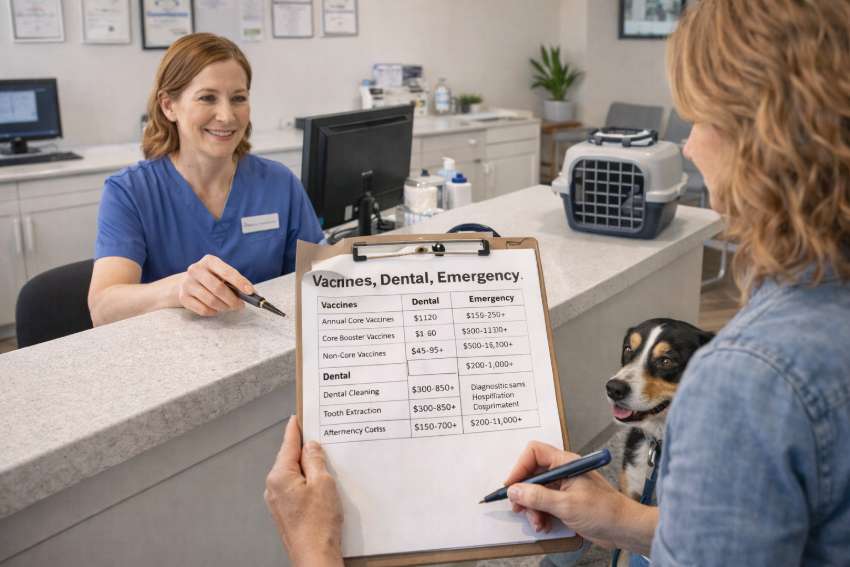
1. Why Vet Costs Vary So Much
Two pets can walk in with the same problem and leave with very different bills. The biggest cost drivers are:
Location: major cities and high-cost regions usually charge more than rural areas.
Clinic type: general practice vs emergency hospital vs specialty referral center.
Time of day: nights/weekends/holidays often cost significantly more.
Diagnostics needed: an exam alone is cheaper than an exam plus labs, X-rays, ultrasound, or hospitalization.
Pet size and age: larger dogs often cost more for anesthesia and medication; seniors may need more testing.
Dental/anesthesia complexity: cleanings with dental X-rays and extractions can multiply the total.
2. Typical Cost of a Standard Vet Visit (Exam/Consultation)
A “routine visit” is usually a physical exam and discussion of symptoms, history, and next steps. Tests and medications are often separate line items.
2.1 US (General Practice)
Office visit / exam fee: $60–$150
Recheck visit (sometimes discounted): $30–$80
2.2 UK (General Practice)
Consultation fee: £40–£80
Recheck (varies): £25–£60
2.3 Europe (Typical EU City Pricing)
Consultation fee: €40–€90
Recheck (varies): €25–€70
What usually increases the bill: lab work, imaging, prescription meds, injection treatments, and any sedation or anesthesia.
3. Vaccine Costs (Dogs and Cats)
Vaccines can be priced “per shot” or bundled into a wellness package (especially for puppies and kittens). The visit/exam fee may be separate.
3.1 Common Dog Vaccines and Typical Prices
US: $20–$60 per vaccine (plus exam fee if not bundled)
UK: £25–£60 per vaccine (often as part of annual boosters)
EU: €25–€60 per vaccine (varies by country and clinic)
Examples (may differ by your dog’s lifestyle and local rules): rabies, distemper/parvo combo, leptospirosis, bordetella (kennel cough), canine influenza (some areas), tick-borne risk guidance.
3.2 Common Cat Vaccines and Typical Prices
US: $20–$60 per vaccine (plus exam fee if not bundled)
UK: £25–£60 per vaccine
EU: €25–€60 per vaccine
Examples: core combo vaccines (often including feline viral rhinotracheitis/calicivirus/panleukopenia), rabies where recommended/required, lifestyle-based vaccines (like feline leukemia for some cats).
3.3 Puppy/Kitten Vaccine Series (First-Year Budget Reality)
Puppies and kittens usually need multiple vet visits for a vaccine series plus fecal testing and parasite control. Typical total first-year vaccine-related spending (including some exams and boosters) often lands in these ranges:
US: $200–$600+
UK: £160–£450+
EU: €180–€500+
4. Emergency Vet Costs (What “After-Hours” Really Means for Your Budget)
Emergency care is expensive because it’s staffed and equipped for urgent stabilization, imaging, surgery, and overnight monitoring. The exam/triage fee is just the beginning—diagnostics and treatments often drive the total.
4.1 Typical Emergency Exam / Triage Fees
US: $150–$350 (can be higher in major metro areas)
UK: £150–£300 (out-of-hours is often a big jump from daytime pricing)
EU: €120–€300
4.2 Common Emergency Scenarios and Typical Total Ranges
These are very general ranges to help you plan. Your total depends on how sick your pet is and what testing/treatment is needed.
Vomiting/diarrhea (mild to moderate):
US: $300–$1,200
UK: £300–£1,200
EU: €250–€1,100
Foreign object ingestion (imaging + possible hospitalization):
US: $800–$2,500+ (surgery can push much higher)
UK: £700–£2,000+
EU: €600–€2,200+
Emergency surgery (example: intestinal blockage):
US: $3,000–$8,000+
UK: £2,000–£6,000+
EU: €2,000–€7,000+
Overnight hospitalization (fluids, monitoring, meds):
US: $700–$2,500 per night
UK: £500–£1,800 per night
EU: €500–€2,000 per night
Budget tip: If you have no insurance, many owners find it helpful to keep an “emergency vet fund” that can cover at least one serious event. Even a smaller fund reduces panic decisions.
5. Dental Costs (Cleanings, X-Rays, and Extractions)
Dental care is one of the most common “surprise” expenses because a dental cleaning is not the same as a human cleaning. Pets typically need anesthesia for proper scaling and evaluation, and many clinics recommend dental X-rays to find problems under the gum line.
5.1 Routine Dental Cleaning (Under Anesthesia)
US: $300–$1,200
UK: £250–£800
EU: €250–€900
5.2 Dental Cleaning With Extractions
Extractions can increase costs dramatically depending on how many teeth are affected and whether extractions are complex.
US: $800–$2,500+ (severe cases can go higher)
UK: £600–£2,000+
EU: €700–€2,500+
5.3 What Makes Dental Bills Spike
Dental X-rays: often added or bundled; essential for detecting hidden disease.
Number/complexity of extractions: fractured teeth, root issues, or advanced periodontal disease.
Pre-anesthetic bloodwork: especially common for seniors or pets with medical history.
Specialty dentistry referral: complicated cases may require a specialist.
Money-saving habit: consistent home dental care (vet-approved brushing routine and appropriate chews) can reduce how often your pet needs extractions later. It won’t eliminate dental needs for all pets, but it can meaningfully change the trajectory.
6. “Add-On” Costs That Often Surprise Pet Owners
These are common line items that can turn a simple visit into a bigger bill:
Lab tests: fecal testing, blood panels, urinalysis
Imaging: X-rays, ultrasound
Medications: antibiotics, pain relief, anti-nausea meds, long-term prescriptions
Procedures: wound care, ear flushes, skin cytology tests
Follow-up visits: rechecks to confirm the plan is working
7. How to Budget for Vet Care (A Simple, Practical Method)
If you want a budget that won’t break the first time something happens, build it in layers.
7.1 Layer A: Routine Care (Predictable)
Annual wellness exam(s)
Vaccines based on your pet’s lifestyle and local guidance
Parasite prevention (as appropriate for your region)
7.2 Layer B: The “Average Surprise” Fund
Most pets will have at least one unexpected issue eventually (ear infection, stomach upset, minor injury). Plan a buffer you can replenish.
7.3 Layer C: The Emergency Plan
Option 1: pet insurance (best started before pre-existing conditions exist)
Option 2: a dedicated emergency savings fund
Option 3: a combination of smaller insurance + smaller monthly savings
Quick self-check: if an unexpected “hundreds” bill would stress your finances, prioritize building Layer B and Layer C. If an unexpected “thousands” bill would be impossible, strongly consider an emergency plan (insurance and/or savings) before you need it.
8. Questions to Ask Your Vet Clinic (To Avoid Bill Shock)
You don’t need to negotiate care—you just need clarity. These questions are normal and responsible:
“Can you give me a written estimate range for today?”
“What’s the most likely diagnosis vs the worst-case scenario?”
“Which tests are essential today, and which can wait if needed?”
“If we do dental cleaning, what costs might change the final bill?”
“Do you offer wellness plans or bundled vaccine packages?”
9. When You Should Seek Urgent Vet Care (Don’t Wait on These)
If you’re trying to decide whether to “watch and wait,” these signs usually warrant urgent care:
Difficulty breathing, collapse, pale/blue gums, seizures
Suspected poisoning or ingestion of a foreign object (socks, toys, bones, medication)
Repeated vomiting/diarrhea, blood in vomit/stool, or severe lethargy
Straining to urinate or frequent attempts with little/no urine (especially in male cats)
Swollen belly, unproductive retching, obvious severe pain
Eye injuries or sudden squinting/pain
Cost-smart reality: delaying care can turn a smaller, treatable issue into a much larger emergency bill.
Final Thoughts: Make Vet Costs Predictable Before You Need To
In the US and Europe, routine vet visits are usually manageable—until emergencies and dental care enter the picture. The most practical approach is to treat routine care like a monthly subscription (set aside a little each month) and treat emergencies like an eventual certainty (insurance and/or a dedicated fund).
Your action step: call your local clinic, ask for typical exam, vaccine, emergency triage, and dental pricing ranges, then build a budget with a routine line item plus a safety net. That small planning step can prevent huge stress later.