Bringing home a puppy is exciting—and expensive in ways many new dog owners don’t expect. The first year often costs more than any later year because you’re paying for setup gear, multiple vet visits, training, and the “oops” moments (chewed cords, emergency tummy issues, surprise daycare). If you plan for the costs upfront, you’ll enjoy your puppy more and stress less.
This guide breaks down first-year puppy expenses into one-time setup versus ongoing monthly costs, with realistic ranges and a simple budgeting method you can use right away. You’ll also learn where it’s smart to spend, where you can save, and when to call a vet or a professional trainer.
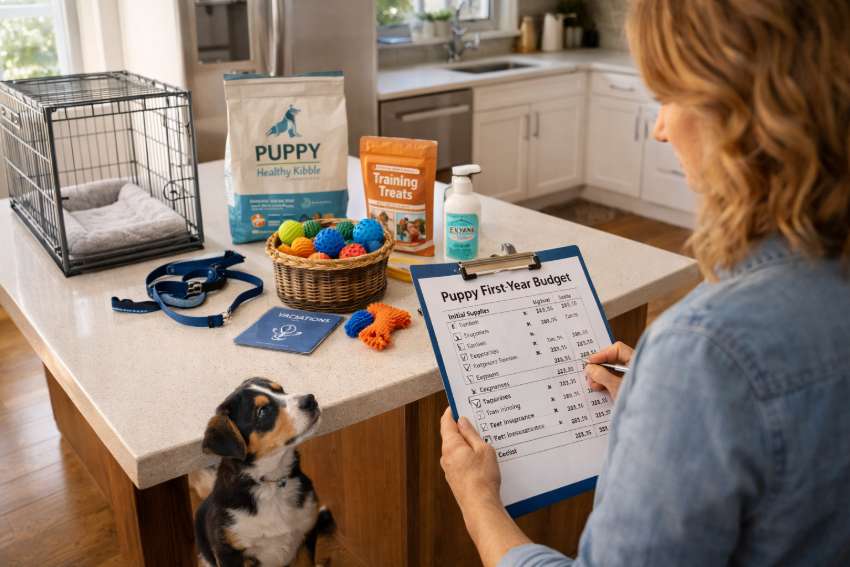
1. What Makes the First Year So Expensive?
Puppies aren’t just “small dogs.” In the first 12 months, you’re paying for:
Medical foundations: vaccine series, parasite screening, spay/neuter, microchip, and more frequent checkups.
Growth-related changes: larger harness/collar sizes, new crates/beds, diet changes, and higher food volume as they grow.
Training and management: puppy classes, socialization, house-training support, baby gates, playpens, and chew-proofing.
Higher risk: puppies explore with their mouths, making foreign-body scares, GI upsets, and injuries more common.
Even if you keep things simple, the first year has more “non-optional” spending than most adult dog years.
2. One-Time Puppy Costs (Setup Expenses)
These are the costs you’ll typically pay once (or mostly once) when you first bring your puppy home. Some may be included in an adoption fee, while others depend on your vet and your puppy’s needs.
2.1 Adoption or Purchase Fee
This varies widely based on where you get your puppy (shelter/rescue vs breeder) and your region.
Typical range: moderate to very high depending on source and breed/type.
What may be included: initial vaccines, deworming, microchip, sometimes spay/neuter (more common with rescues).
Budget tip: If the upfront cost is lower, don’t assume the total cost is low—vet and training can still add up fast.
2.2 Initial Veterinary Visits and Puppy Vaccine Series
Puppies usually need multiple appointments in the first months for a vaccine series, wellness checks, and parasite testing.
What’s commonly included: exam(s), core vaccines, fecal testing, deworming guidance, lifestyle-based vaccine recommendations.
Typical first-year impact: one of the largest early expenses, especially if your puppy starts with no medical history.
2.3 Spay/Neuter (If Not Already Done)
Spay/neuter is often a major one-time cost in the first year. Timing varies by breed, size, and your vet’s recommendations.
What affects cost: your puppy’s size, sex, anesthesia and monitoring, pre-op bloodwork, and whether there are complications.
Practical planning: treat this like a “scheduled big expense” and save toward it monthly.
2.4 Microchip + Registration/License
Microchipping is a one-time safety investment. Licensing/registration is often annual, but the initial setup happens early.
Microchip: typically one-time plus small administrative fees.
License: varies by city/country; some places have discounts for spayed/neutered dogs.
2.5 Essential Gear (The Real “Welcome Home” Costs)
It’s easy to overspend here. Focus on safety, comfort, and house-training success.
Crate or playpen: supports house-training, prevents destructive chewing, provides a calm space.
Baby gates: limit access while your puppy learns household rules.
Collar/harness + leash: a well-fitting harness is often easier on a puppy’s neck.
ID tag: simple, inexpensive, and extremely important.
Bed/blankets: start modest—many puppies chew bedding early.
Bowls + food storage: choose easy-to-clean options.
Chews and toys: rotate a few durable items rather than buying a mountain of toys.
Cleaning supplies: enzyme cleaner is a must for house-training accidents.
Grooming basics: brush/comb appropriate for coat type, nail trimmer or grinder, puppy shampoo.
2.6 Home “Puppy-Proofing” and Replacement Costs
Many first-year budgets forget the small-but-constant fixes: cords, shoes, rugs, chewed furniture corners. You don’t have to replace everything, but plan a small buffer.
Examples: cord covers, bitter-tasting deterrent sprays, washable covers, replacing chewed items.
Budget buffer: setting aside a small monthly “household wear-and-tear” amount can prevent frustration spending later.
3. Ongoing Puppy Costs (Monthly and Recurring Expenses)
These are the expenses you’ll likely pay throughout the year. Some start high and taper off (like frequent vet visits early), and some increase (like food) as your puppy grows.
3.1 Food (Plus Treats Used for Training)
Puppies need a diet formulated for growth, and training can use a surprising amount of treats.
Typical pattern: food costs rise as your puppy gains weight, especially for medium and large breeds.
Hidden cost: high-value treats for recall, leash training, and socialization can add up.
Cost-smart strategy: use part of your puppy’s kibble as training “treats,” and reserve special treats for hard situations (busy streets, vet visits, grooming).
3.2 Routine Vet Care and Preventive Meds
Puppies generally need consistent preventive care, which may include flea/tick prevention, heartworm prevention (common in many regions), and routine testing as recommended.
Common recurring items: parasite preventives, wellness exams, stool tests, booster shots as scheduled.
Reality check: missing preventive care can lead to bigger vet costs later.
3.3 Training and Socialization
In the first year, training is not optional—it’s what keeps your puppy safe and makes life easier for your household and neighbors.
Group puppy class: often the most cost-effective option for basics and controlled social exposure.
Private training: helpful for targeted issues (biting, fearfulness, leash reactivity, separation distress).
Enrichment: puzzle feeders, snuffle mats, chew items, and structured play reduce behavior problems.
Budget tip: one good puppy class plus a few private sessions (if needed) is often cheaper than paying for problem behavior later.
3.4 Grooming, Nails, and Hygiene
Even if your puppy won’t need “full grooming” regularly, you’ll still pay in time or money for hygiene and coat care.
Short-coated breeds: basic brushing, nail trims, ear checks.
Long/curly-coated breeds: more frequent grooming needs, higher risk of mats if brushing is inconsistent.
3.5 Pet Sitting, Daycare, or Dog Walking
This is the biggest cost swing factor for many families. If you work away from home, a puppy often needs more support than an adult dog.
Puppies can’t “hold it” long: younger puppies may need midday potty breaks for months.
Daycare varies by puppy age and vaccines: many facilities require completed vaccine series and an evaluation.
Pet sitting for training support: some owners hire a sitter not just for supervision, but to reinforce training and prevent accidents.
Cost-control idea: if you can adjust your schedule temporarily (lunch break at home, shared puppy care with a partner/neighbor, staggered workdays), you may reduce the need for paid services during the most expensive months.
3.6 Insurance or “Vet Fund” Contributions
For the first year, you have two common approaches:
Pet insurance: helps protect against high-cost emergencies; best started early before any conditions appear.
Dedicated vet fund: a separate savings bucket you contribute to every month.
Practical approach: many owners do both—a smaller insurance plan plus a smaller monthly savings contribution—so they’re covered for big events and smaller surprises.
4. Typical First-Year Cost Ranges (By Puppy Size)
Instead of promising a single “average,” it’s more helpful to show realistic ranges. Your exact number depends on your city, how much you outsource care (walkers/daycare), and your puppy’s health.
Small Dogs (Adult weight roughly under 20 lb / 9 kg)
One-time setup (first 1–2 months): moderate
Ongoing monthly: lower food costs, but vet and training are similar to larger dogs
First-year total: often “moderate to high” depending on services and medical needs
Medium Dogs (Adult weight roughly 20–55 lb / 9–25 kg)
One-time setup: moderate to high
Ongoing monthly: medium food costs; service costs can dominate in cities
First-year total: commonly higher than small dogs, especially with daycare/walking
Large Dogs (Adult weight roughly 55+ lb / 25+ kg)
One-time setup: higher (larger crate, sturdier gear)
Ongoing monthly: higher food volume; medications and some procedures can cost more due to size
First-year total: often the highest category, especially in urban settings
Key takeaway: training and vet care don’t scale down much for small dogs. Food and gear scale up significantly for large dogs. Services (walkers/daycare/boarding) can dominate for any size if you rely on them.
5. A Simple First-Year Puppy Budget (Step-by-Step)
If you want a budget that works in real life, build it like this:
Step 1: List your one-time setup items
Crate/playpen, gates, harness/leash, ID tag
Starter food, training treats, chew toys
Cleaning supplies and puppy-proofing items
Initial vet visits and microchip
Step 2: Estimate your monthly essentials
Food + treats
Preventive meds
Routine vet care (annual costs divided by 12)
Basic grooming/hygiene
Step 3: Add your “life schedule” costs
Midday sitter/walker needs
Daycare days per month (if any)
Training class or private sessions
Boarding/pet sitting (annual total divided by 12)
Step 4: Protect yourself with a safety net
Emergency fund target: build toward a meaningful vet emergency amount as quickly as you can
Insurance (optional): consider it early to avoid pre-existing condition issues later
Step 5: Add a “puppy chaos” buffer
Chewed items, replacement gear sizes, tummy-upset meds approved by your vet, extra cleaning
Even a small monthly buffer helps you avoid impulse purchases and stress
6. Where to Spend vs Where to Save (Smart Priorities)
Spend on these (high impact)
Training support: a solid puppy class can prevent years of problems
Preventive care: parasite prevention, routine exams, early dental habits
Safe containment: crate/playpen and gates prevent emergencies and damage
Proper fit gear: a safe harness and leash reduce injury risk
Save on these (low impact early)
Fancy beds and décor: many puppies chew or soil bedding
Too many toys: a small rotation is more effective and cheaper
Trend-driven supplements: only use supplements recommended by your vet
Premium everything at once: start with basics and upgrade based on your puppy’s real needs
7. Common First-Year “Surprise Costs” (And How to Reduce Them)
GI upsets: puppies eat things they shouldn’t; keep trash secured and practice “leave it.”
Foreign-object scares: small toys, socks, and chews can become emergencies; choose size-appropriate items and supervise.
Skin/ear issues: especially common in some breeds; budget for occasional vet visits and meds.
Damage deposits and cleaning: accidents happen; enzyme cleaner and washable covers help.
Last-minute care needs: a sudden work trip can force expensive booking; build a reliable backup sitter plan early.
Preventive habit: do a weekly “puppy scan” of your home—pick up socks, kids’ toys, and chewable objects before they become a vet bill.
8. When You Should Call a Vet (Especially With Puppies)
Puppies can become dehydrated or worsen quickly. Contact a vet promptly if your puppy has:
Repeated vomiting or diarrhea, diarrhea with blood, or signs of dehydration (dry gums, lethargy)
Refusal to eat for more than a day (sooner for very young or small puppies)
Swollen belly, unproductive retching, or obvious abdominal pain
Difficulty breathing, persistent coughing, pale/blue gums, or collapse
Suspected ingestion of a foreign object, toxic food/plant, or medication
Straining to urinate, frequent attempts with little output, or crying in pain
Sudden lameness, crying out, or inability to use a limb
Cost-smart note: quick action can be cheaper than waiting. Early treatment often prevents complications and longer hospital stays.
9. When to Hire a Professional Trainer or Behaviorist
Puppies bite, bark, and have accidents—that’s normal. But some patterns deserve professional support early:
Fearfulness that’s getting worse: refusing walks, trembling, hiding, panicking at everyday sounds
Resource guarding: growling or snapping around food, chews, toys, or resting spots
Separation-related distress: frantic behavior, nonstop vocalizing, or destructive escape attempts when alone
Intense reactivity: barking/lunging that doesn’t improve with basic training
House-training stuck: ongoing accidents past the early learning phase without progress
Budget tip: early coaching is often cheaper than later “behavior rehab,” especially in busy urban environments.
Final Thoughts: Plan the First Year Like a Project
The first year of puppy ownership is a mix of joy, mess, and rapid learning—for both of you. The best way to keep it positive is to separate your budget into one-time setup and ongoing monthly costs, then protect yourself with an emergency plan (insurance, savings, or both). If you plan for training and preventive care up front, you’ll usually spend less over time and end up with a calmer, happier dog.
Your action step: write down your top 10 likely expenses, choose a monthly number you can sustain, and set aside a small “puppy chaos” buffer. Future you will be grateful.