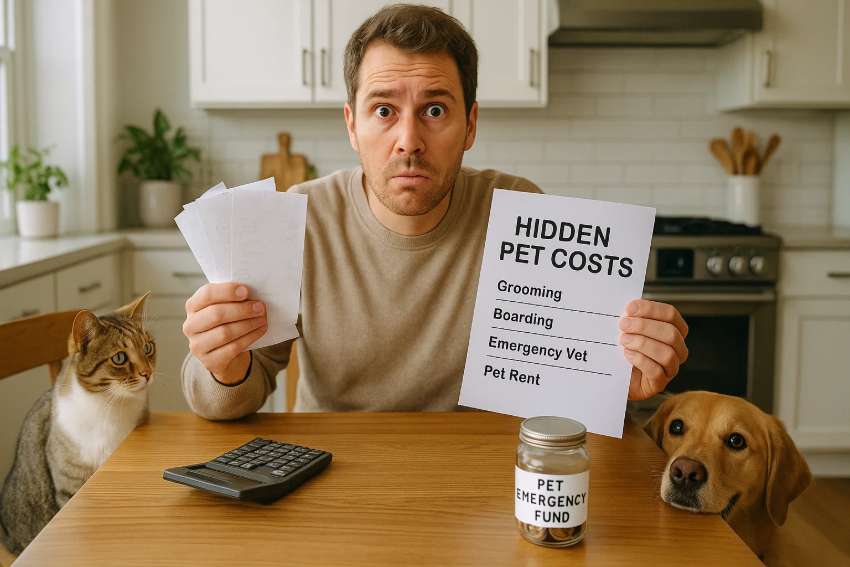
When people imagine getting a dog or cat, they picture adoption fees, food, a bed and maybe a few toys. That feels manageable. But in the US and Europe, the real money often disappears into costs you don’t see coming – until you’re standing at the vet desk or looking at a surprise bill from your landlord.
This guide is a honest look at the hidden costs of pet ownership that most people never talk about, so you can:
Understand where pet budgets usually “explode”
Avoid nasty financial surprises in the first years
Plan ahead for emergencies, travel and old age
Decide if now is really the right time to get a pet
1. The Real Reason Pet Costs Feel So “Sudden”
Food and basic vaccines are easy to plan for. What hurts are big, irregular costs like:
An emergency surgery in the middle of the night
A surprise pet deposit when you move
A senior dog’s new monthly medication and special diet
Boarding for a last-minute work trip
None of these are truly rare. They just don’t happen every month, so they feel like “bad luck” instead of something you could have expected. Once you know what to expect, you can spread these costs out mentally and financially.
2. Vet Bills Beyond the Basic Exam
Most new owners budget for “a vet visit”, but a vet bill is actually made of several pieces – and the extras are where it gets expensive.
2.1 Diagnostics: tests that add up fast
When your dog or cat is really sick, your vet often needs tests to find the cause:
Blood and urine tests
X-rays for bones, lungs or swallowed objects
Ultrasound for heart or abdominal organs
Biopsies and lab analysis
Each test has a separate cost. Together, they can easily be more than the consultation fee itself. They are not “unnecessary extras” – they are often the only way to avoid guessing and wasting money on the wrong treatment.
2.2 Out-of-hours and emergency surcharges
Many clinics in the US and Europe charge more for:
Night and weekend emergencies
Public holiday visits
Urgent walk-ins without an appointment
Owners often think “I can’t believe the visit cost that much” without realizing that an emergency fee was included because the clinic had to open extra staff and equipment just for you.
2.3 Follow-up visits and rechecks
Treatment rarely ends with a single visit. You may also pay for:
Rechecks to see if the treatment is working
Stitch removal, bandage changes or repeat blood tests
Long-term medications for chronic issues
Many people only budget for “the big emergency”, not for the quieter, repeated follow-ups that come afterward.
3. Housing Costs: Pet Rent, Deposits and Damage
Your home is where you feel your pet the most – and also where hidden costs often appear.
3.1 Pet deposits and monthly pet rent
In many cities:
Landlords charge higher deposits if you have pets.
Some charge an extra monthly “pet rent”.
Some will only accept small pets or certain dog breeds.
If you plan to rent for most of your pet’s life, this is not a one-time problem; it’s a slow, continuous cost that follows you from lease to lease.
3.2 Cleaning and repair bills
Even well-behaved animals leave traces:
Scratch marks on doors and floors
Stains on carpets from accidents or vomiting
Lingering smells that require professional cleaning
At the end of a lease, you may lose part of your deposit or pay extra cleaning charges because of your pet – not because you are dirty, but because normal pet life is rough on a property.
3.3 Actual damage at home
Puppies chew furniture legs, remote controls, shoes and cables.
Cats scratch sofas and chairs, especially if they don’t have good scratching posts.
Large dogs can knock over lamps and break fragile items.
Training and management reduce these risks, but even the best owners usually replace or repair something because of a pet over the years.
4. Grooming, Training and Behavior Help
Grooming and training are often seen as “extras”, but for many dogs and some cats they are basic needs – and they’re not free.
4.1 Grooming costs for certain breeds
Curly coats (poodles, doodles) need professional grooming every 4–8 weeks.
Long-haired dogs and cats need regular brushing and may need trims to avoid mats.
Neglected coats often become a medical problem that requires sedation and full shaving.
If your pet’s coat type requires constant maintenance, grooming becomes a permanent budget item, not a rare treat.
4.2 Training classes and behavior consultations
Puppy socialization and basic obedience classes
Specialized training for leash reactivity, recall, anxiety or aggression
Behaviorists for complex issues (separation anxiety, fear, resource guarding)
These services can feel expensive, but skipping them often leads to more damage, more stress and, in worst cases, rehoming or euthanasia. In reality, training is often a money saver in the long term.
5. Travel and Holiday Costs
Whether you travel for work or pleasure, pets change the bill.
5.1 Boarding, kennels and pet sitters
Overnight kennels or catteries for holidays
In-home pet sitters if your pet is nervous or has medical needs
Higher costs at Christmas, New Year’s and other peak times
Even one or two weeks of boarding per year can significantly raise your total annual pet cost, especially in big cities.
5.2 Traveling with your pet
Pet passports or travel documents where required
Extra vaccines or parasite treatments for specific destinations
Airline fees or train/ferry charges for pets
Pet-friendly hotels or rentals that cost more than standard options
Many owners assume they’ll “just bring the dog” on trips, then discover the travel system is not built for that to be cheap.
6. Long-Term Health: Chronic Diseases and Old Age
As pets move from healthy adulthood into senior years, costs usually rise again – often sharply.
6.1 Chronic medications
Many older dogs and cats need daily or regular medications for:
Arthritis and chronic pain
Heart disease
Kidney or liver disease
Diabetes or thyroid disorders
Allergies and skin problems
These drugs may be relatively cheap for a small cat, but much more expensive for a large dog because of higher doses.
6.2 Special diets and supplements
Prescription diets for kidney, urinary, intestinal or allergy issues
Joint supplements, fish oils and other vet-recommended products
These costs creep in slowly and then become part of your monthly routine. They can easily double what you once spent on food alone.
6.3 Senior monitoring and supportive care
More frequent vet visits
Regular blood and urine tests to monitor chronic disease
Imaging (X-rays, ultrasound) to investigate new issues
Mobility aids (ramps, orthopedic beds, harnesses)
Many owners are shocked by the speed at which senior costs appear after years of “cheap” adult life.
7. Insurance, Licensing and Legal Responsibilities
Separate from direct medical care, there are smaller but important admin costs.
7.1 Licensing, registration and dog taxes
Dog licenses or registration fees in some US cities
Dog taxes in some European countries
Microchip registration and updates to keep contact details current
Each fee is small, but over a decade they add up more than most owners expect.
7.2 Liability and pet insurance
Liability insurance for dogs (required or strongly recommended in some countries)
Health insurance premiums that increase as your pet ages
You can choose not to use health insurance, but then you need a strong savings plan. Either way, some form of financial protection is usually necessary.
8. The Multi-Pet Multiplier
One dog or cat feels manageable, so people add a second, then a third. But costs rarely double neatly – they often multiply.
Food and litter costs go up directly with each extra animal.
Each pet needs its own vaccines, parasite control and vet care.
Boarding, grooming and insurance multiply by the number of animals.
If several get sick at once (not rare with contagious diseases), you might face many vet bills in a short time.
Multi-pet homes are wonderful, but you need a budget that can handle the combined effect, not just “it’s only one more bowl of food”.
9. Turning Hidden Costs Into Planned Costs
The goal isn’t to scare you away from dogs or cats. It’s to change “hidden” costs into expected events in your budget.
9.1 Build a realistic yearly pet budget
Start with obvious monthly costs: food, litter, routine preventives.
Add yearly items and divide by 12:
Annual check-up and vaccines
Grooming, boarding and training
Licensing, dog tax and registration
Add a line for “future health & senior care” – even a small amount helps.
9.2 Create a dedicated pet emergency fund
Open a separate savings pot named “Pet Emergency Fund”.
Transfer a fixed amount monthly, even if it’s small.
Use it only for emergencies, not toys or everyday expenses.
9.3 Combine insurance and savings if possible
Insurance to handle big, scary risks.
Savings to cover deductibles, co-pays and uncovered items.
The point is not to predict every bill exactly. It’s to have a calm, structured way to absorb costs when they arrive.
10. Final Thoughts: Love + Money, Not Love vs Money
People sometimes feel guilty mixing money and love for their pets, as if caring about cost makes them cold. But in the real world, every decision you make for a dog or cat has a financial side:
When you delay vet care because of money, their health is affected.
When you take on more animals than you can afford, everyone’s quality of life suffers.
When you plan ahead, you’re able to say “yes” to treatment more often.
Understanding the hidden costs of pet ownership doesn’t mean you love your animal less. It means you’re preparing to love them better – with a plan that protects them and you, through emergencies, old age and all the ordinary messy days in between.