Vet care in the US and Europe is getting more advanced every year – and also more expensive. Many dog and cat owners feel stuck between two bad choices: spend money they don’t really have, or delay care and hope the problem goes away on its own.
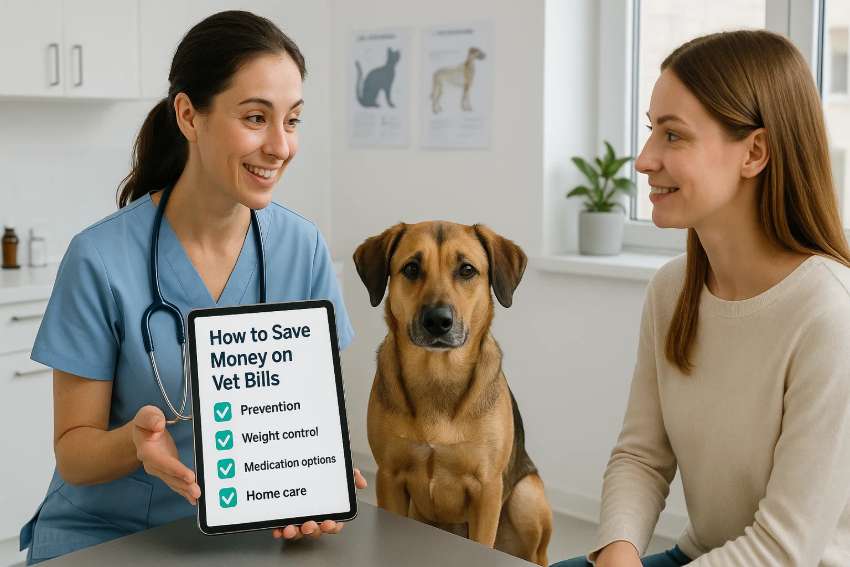
The good news is that you can reduce your vet bills without risking your pet’s health. The key is to cut waste and delay, not essential care. This guide will show you practical ways to:
Prevent expensive illnesses before they start
Talk to your vet about cost without feeling ashamed
Save on medications safely
Use at-home care (grooming, dental, weight control) to avoid bigger problems
Know which “money-saving” shortcuts are actually dangerous
1. Prevention Is Cheaper Than Crisis
The single best way to save money on vet bills is simple: don’t let small, preventable problems turn into major emergencies.
1.1 Keep vaccines and parasite prevention up to date
Vaccines protect against serious diseases that are far more expensive to treat than to prevent.
Flea, tick and worm control prevents anemia, skin infections, organ damage and some deadly diseases.
Ask your vet which vaccines and preventives are essential for your pet’s lifestyle in your region.
1.2 Don’t skip regular health checks
Annual exams (or more often for seniors) let your vet find early signs of problems before they become emergencies.
Early kidney disease, heart disease, dental problems or weight gain are much cheaper to manage when caught early.
1.3 Spay or neuter at the right time
Prevents many unplanned litters (and the costs that come with them).
Reduces the risk of certain cancers and infections that can be expensive to treat.
Think of preventive care as a subscription to “fewer disasters”. You will still pay something each year, but you are likely to pay less over your pet’s lifetime.
2. Talk About Money With Your Vet (It’s Okay)
Many people are scared to say “I can’t afford that” in the exam room. But vets understand that budgets are real. Honest conversation often leads to smarter, cheaper plans.
2.1 Tell your vet your budget early
As soon as the vet starts to outline tests and treatments, say something like:
“I want to help my pet, but my budget is around [realistic number]. Can we work within that?”
It’s easier for your vet to design a cost-conscious plan at the beginning than to cut things later.
2.2 Ask for a written estimate and options
Request a written estimate with each line item explained: exam, tests, imaging, treatments, hospitalization, medications.
Ask: “Which items are essential for safety? Which ones are recommended but optional or can be postponed?”
2.3 Consider step-by-step diagnostics
Sometimes there are two approaches:
Full workup now: more expensive up front, but faster answers.
Stepwise approach: start with basic tests and only add more if needed.
Ask your vet if a staged plan is safe for your pet’s specific situation.
Clear, respectful communication can reduce unnecessary costs and prevent misunderstandings – without compromising your pet’s health.
3. Save Money on Medications the Smart Way
Medication costs, especially for large dogs or chronic conditions, can be a big part of your vet bill. There are safe ways to reduce them.
3.1 Ask about generic or alternative drugs
Many human and veterinary medications have cheaper generic versions that work just as well.
Ask: “Is there a generic or lower-priced alternative that is still safe and effective for my pet?”
3.2 Use written prescriptions when appropriate
In some countries, your vet can write a prescription so you can buy certain medications from a human pharmacy or licensed online pharmacy.
Always:
Check that the pharmacy is legitimate.
Follow your vet’s exact dosing instructions.
3.3 Buy the right quantity
For chronic issues, buying a larger supply can sometimes lower the cost per dose – if your vet agrees the medication will be needed long-term.
For new medications, a smaller trial pack can avoid wasting money on something your pet doesn’t tolerate.
3.4 Do not change doses on your own
Never cut the dose or give pills less often “to save money” without your vet’s approval.
Under-dosing can make treatment fail and create bigger, more expensive problems.
4. Keep Your Pet at a Healthy Weight
Extra weight looks harmless, but it silently drives vet bills up for both dogs and cats.
4.1 Why obesity is expensive
Increased risk of arthritis and joint injuries
Higher risk of diabetes, heart disease and breathing problems
More anesthesia risk and higher doses of medication required
4.2 Simple weight-control habits
Measure food portions based on your vet’s recommendations, not just the bag.
Use part of the daily food allowance as training treats.
Limit table scraps and high-calorie snacks.
Provide regular exercise appropriate for your pet’s age and health.
A healthy weight is one of the most powerful “medicines” for long-term cost control – and it’s free.
5. At-Home Care That Prevents Big Bills
You can do more at home than you might think. Good daily care can stop small issues from becoming expensive medical problems.
5.1 Dental care
Get your pet used to having their mouth handled from a young age.
Brush teeth regularly with a pet-safe toothpaste (never human toothpaste).
Ask your vet about dental chews or special diets if brushing is difficult.
Even if your pet eventually needs a professional dental cleaning, good home care can delay it and reduce how often it’s needed.
5.2 Grooming and skin care
Brush long-haired pets to prevent mats that may require sedation to shave off.
Check ears, skin folds and paws regularly for redness, lumps or discharge.
Trim nails before they become painfully overgrown or cause injuries.
5.3 Home checks and early warning signs
Monitor appetite, thirst, breathing, energy levels and bathroom habits.
Call your vet early if you notice:
Sudden changes in eating or drinking
Persistent vomiting or diarrhea
Visible pain, limping or difficulty moving
Straining to urinate or defecate
Catching problems early with these simple checks often means faster, cheaper treatment.
6. Call the Vet Early Instead of Waiting
One of the most expensive habits owners have is waiting too long to seek help.
6.1 “Wait and see” can be costly
That small lump that “looked fine” for months may turn into a large tumor that needs complex surgery.
Mild vomiting that lasts for days can become severe dehydration and a hospital stay.
A limp ignored for weeks can become chronic arthritis or ligament rupture.
6.2 Use nurse/tech advice and telehealth when available
Some clinics offer nurse or technician phone advice for free or low cost.
Telehealth services (where allowed) can help you decide if you need an in-person visit immediately.
A quick call now can prevent a very big bill later.
7. Use Insurance and Budgeting Together
Insurance alone or budgeting alone can work – but combining them often gives you the most control.
7.1 Choose the right level of insurance
Look for policies that cover accidents and illnesses, not accidents only.
Adjust deductible and reimbursement level to balance your monthly premium and out-of-pocket costs.
7.2 Build a monthly pet budget
Set aside money monthly for:
Food and litter
Routine vet care and parasite prevention
Insurance premium
A pet emergency fund
This way, vet bills feel like predictable expenses, not random financial earthquakes.
8. Things You Should Not Do to “Save Money”
Some common shortcuts look cheap at first but often end up costing more – or seriously harming your pet.
8.1 Giving human medications without vet advice
Many human painkillers, cold medicines and other drugs are toxic to dogs and cats.
Even safe drugs must be dosed correctly for your pet’s species, size and health.
8.2 Using home remedies for serious problems
Home remedies found online may delay proper treatment.
Some “natural” products are unsafe or completely ineffective.
8.3 Skipping pain relief
Leaving pets in pain because “pain medicine costs too much” is not humane.
Untreated pain can slow healing and create behavior problems that are more expensive to manage.
8.4 Ignoring chronic conditions
Conditions like diabetes, kidney disease or heart disease don’t disappear if you ignore them.
Not treating them properly usually leads to emergency crises that are more costly and more dangerous.
Real money-saving strategies protect your pet’s health while controlling costs – they never put your pet at serious risk.
9. A Simple Action Plan to Lower Vet Bills Safely
To turn these ideas into action, you can:
Book a routine check-up if your pet hasn’t seen a vet for a while. Ask for a clear overview of their health and any risks to watch.
Ask your vet which vaccines, parasite preventives and tests are truly essential based on your pet’s age, breed, lifestyle and local risks.
Review your pet’s weight and ask for a target weight and feeding plan.
Start basic home care – brushing, dental hygiene, nail trims and regular body checks.
Create a small pet budget with a monthly emergency fund contribution, even if it’s tiny at first.
Read your insurance policy (if you have one) to understand what is covered and what is not.
10. Final Thoughts: Less Panic, More Planning
You can’t control every illness or accident your dog or cat will face. But you can control how prepared you are – medically and financially.
By:
Investing in prevention,
Talking openly with your vet about cost,
Using medications and home care wisely,
Maintaining a healthy weight and building a small emergency fund,
you’re not just lowering vet bills. You’re building a calmer, more stable life for both you and your pet, where decisions are guided by planning instead of panic.
In the end, “saving money on vet bills” doesn’t mean doing less for your pet. It means doing the right things at the right time – so they stay healthier, you stay more secure, and both of you can enjoy more good years together.