Potty training a puppy is challenging anywhere—but apartments add extra hurdles: elevators, long hallways, cold weather, noisy streets, and the reality that you can’t always sprint outside in time. The good news is that apartment potty training can be very successful when you use a clear routine, manage the environment, and reward the right behavior consistently.
This step-by-step plan walks you through exactly how to set up your home, create a schedule, teach your puppy where to go (outside, balcony potty, or indoor pads), handle accidents, and know when it’s time to get professional help.
1. Choose Your Potty Plan First: Outside-Only vs Indoor Backup
The biggest mistake apartment puppy owners make is switching methods randomly. Decide your plan up front:
Option A: Outside-Only Training
Best for: owners who can take frequent trips out and want the puppy to learn one clear rule.
Pros: faster clarity, no “sometimes inside” confusion.
Cons: harder in high-rises, harsh weather, long workdays.
Option B: Outside + Indoor Backup (Pads or a Grass Patch)
Best for: high-rise living, extreme weather, or owners who can’t reliably get out every time.
Pros: fewer “emergency” accidents, practical for small bladders.
Cons: requires clean setup and consistent placement to avoid confusion.
Apartment reality: Many successful owners use an indoor backup in the early months, then gradually fade it out as bladder control improves.
2. Set Up Your Apartment for Potty Training Success
Environment management is half of potty training.
2.1 Create a Small “Puppy Zone”
Use a crate (properly sized) and/or an exercise pen
Keep the zone near where you spend time, so you can supervise
Remove rugs and block off carpeted areas if possible
Why it works: puppies are less likely to potty where they sleep, and a smaller space makes supervision easier.
2.2 Pick a Single Potty Spot
Outside-only: choose one outdoor spot (same patch of grass or area) for consistency.
Indoor backup: place pads/grass patch in one fixed location, away from food and bed.
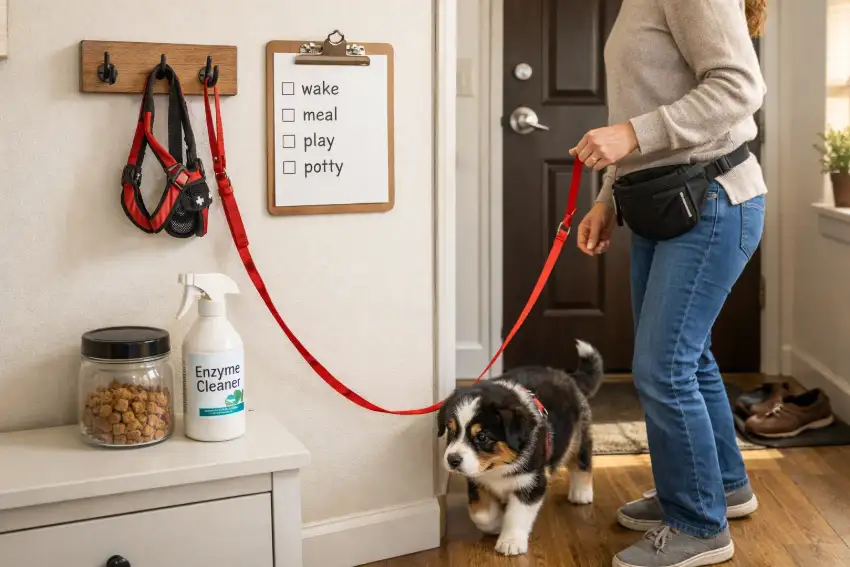
2.3 Stock Your “Potty Kit” by the Door
Leash/harness ready to go
Treat pouch with high-value rewards
Poop bags
Enzyme cleaner (for accidents)
Paper towels
Pro tip: apartment potty success often comes down to speed. If you can’t find your keys and leash, accidents happen.
3. The Step-by-Step Potty Training Schedule (Apartment-Friendly)
In the beginning, your schedule matters more than your puppy “learning.” You’re building a habit.
3.1 The Golden Rule: Take Them Out (or to the Potty Spot) After These Triggers
Immediately after waking up
After eating or drinking
After play sessions or zoomies
After training
Before and after naps
Any time they suddenly sniff, circle, or wander away
3.2 A Sample Apartment Day Schedule (First Weeks)
This is a general structure—adjust based on your puppy’s age and your vet’s guidance.
Morning: wake up → potty → breakfast → potty → short play → potty
Mid-morning: nap → potty → brief play/training → potty
Midday: lunch (if applicable) → potty → nap → potty
Afternoon: potty breaks every 1–2 hours (more often for very young puppies)
Evening: dinner → potty → play → potty → calm time → potty
Bedtime: final potty trip right before sleep
Nighttime note: very young puppies may need one overnight potty break at first. Many outgrow this as bladder control improves.
4. Exactly What to Do During a Potty Trip (This Is Where Learning Happens)
Keep potty trips boring and consistent—so your puppy focuses on the job.
Go straight to the potty spot
Stand still and give them a chance to sniff
Use a simple cue phrase (example: “go potty”) once
Wait quietly for 3–5 minutes
When they go, immediately reward with a treat and calm praise
Big tip: reward outside or at the potty spot immediately after they finish. If you wait until you’re back inside, the puppy won’t connect the reward to pottying.
What if they don’t go?
Bring them back inside to the puppy zone (crate/pen) for 10–15 minutes
Try again
This prevents the classic problem: “They didn’t pee outside, then they peed on the rug five minutes later.”
5. Crate Training and Potty Training: How They Work Together
A crate isn’t a punishment. It’s a management tool that prevents unsupervised accidents and helps build bladder control.
Choose a crate size where your puppy can stand and turn, but not roam far
Use a comfortable bed or mat (unless they chew it)
Offer a safe chew toy inside
Take them to potty immediately after letting them out
Important: Puppies can’t “hold it” for long. A crate doesn’t change biology—it just helps prevent accidental practice indoors.
6. Pads and Indoor Grass: How to Use Them Without Confusing Your Puppy
If you choose an indoor backup, treat it like a “second bathroom” with strict rules.
Keep the potty pad/grass in one consistent location
Do not scatter pads around the apartment
Walk your puppy to it on leash at first (yes, even indoors)
Reward the moment they use it correctly
Apartment hack: Many owners prefer a washable pad holder or indoor grass patch because it creates a clear “potty zone” and reduces mess.
How to fade pads later (if you want outside-only)
Start by moving the pad/grass closer to the door over days/weeks
Increase outdoor trips and reward outside heavily
Only offer the indoor option when you truly can’t get outside in time
7. How to Handle Accidents (Without Making Potty Training Worse)
Accidents are part of the process. What matters is preventing repeats.
If you catch them mid-accident: calmly interrupt (“oops”) and take them to the potty spot immediately.
If you find it later: do not punish—your puppy won’t understand and may start hiding potty behavior.
Clean with enzyme cleaner: regular cleaners can leave scent cues that invite repeat accidents.
Rule: Punishment teaches your puppy to fear you around potty time, not to hold their bladder.
8. Common Apartment Potty Training Problems (And Fixes)
8.1 “My Puppy Pees Right After We Come Back Inside”
Stay outside longer (3–5 minutes of quiet waiting)
Limit distractions (don’t walk around; stand still)
Return to crate/pen for 10–15 minutes if they don’t go, then try again
8.2 “My Puppy Won’t Pee Outside Because It’s Loud/Scary”
Choose a quieter spot if possible
Pair outdoor time with treats and calm praise even before they potty
Use short, frequent trips rather than long stressful ones
8.3 “My Puppy Uses the Rug Like a Pad”
Remove rugs temporarily
Supervise more closely
Use a clearly defined potty station (holder/grass patch) rather than loose pads
8.4 “I Work Long Hours—What Do I Do?”
Use an indoor backup option (pads/grass) temporarily
Consider a midday dog walker or pet sitter
Use a pen setup rather than expecting a young puppy to hold it all day
9. When to Call a Vet or Trainer
Call a Vet If:
Your puppy is peeing very frequently in tiny amounts
Accidents suddenly worsen after improvement
There’s blood in urine or your puppy cries when peeing
Your puppy drinks excessively or seems unwell
Consider a Trainer If:
You’re following a consistent routine for 2–3 weeks with little progress
Your puppy seems fearful of the outdoor potty area
You need help creating a plan that fits your work schedule
Final Thoughts: Consistency and Speed Win in Apartments
Apartment potty training is all about reducing mistakes and increasing successful reps. Set up a small puppy zone, stick to a predictable schedule, go to the same potty spot, reward immediately, and use an indoor backup if needed—without scattering pads everywhere. With consistent practice, your puppy will build the habit and your daily routine will get easier week by week.
Your action step: for the next 7 days, follow the trigger-based routine (after sleep, meals, play) and track accidents. Most apartment owners see major improvement once they tighten timing and supervision.