If your dog or cat is already a senior, pet insurance can feel like a tough call. Premiums are higher than they were when your pet was young, and you might worry that “everything will be excluded as pre-existing anyway.” At the same time, this is the life stage when chronic conditions, dental disease, arthritis, and sudden emergencies become more common—and vet bills can rise fast.
This guide explains whether pet insurance is still worth it for older pets, what plan features matter most for seniors, common pitfalls that make people regret buying late, and practical alternatives if insurance isn’t a good fit.
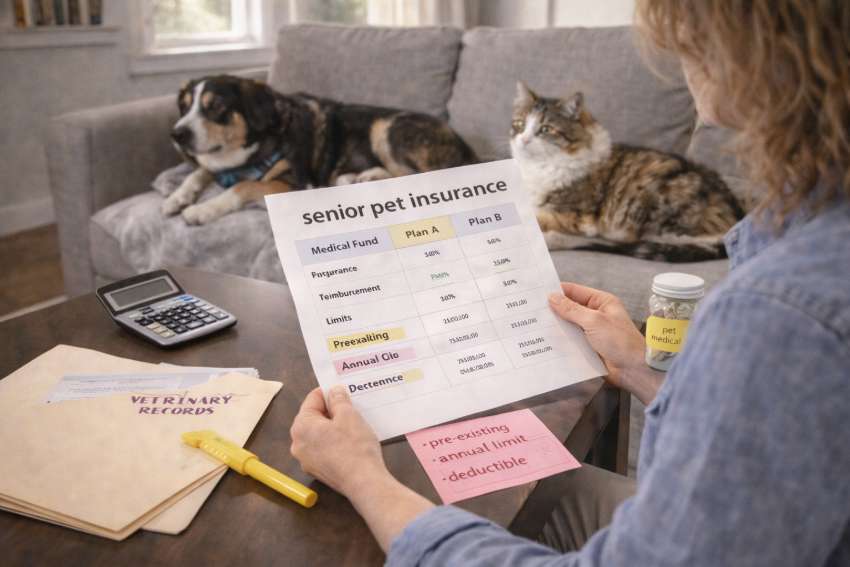
1. The Honest Reality of Pet Insurance for Senior Pets
Pet insurance can still help older pets, but it works best when you understand three truths:
Premiums will be higher: older pets are more likely to claim.
Pre-existing conditions won’t be covered: anything already noted in medical records may be excluded.
The value is often about future surprises: new injuries, new illnesses, and costly diagnostics—especially emergency or specialty care.
Bottom line: senior pet insurance is rarely a “money saver” in every year. It’s more often a way to reduce financial risk when something big happens.
2. When Pet Insurance Is Still Worth It for Older Dogs and Cats
Insurance tends to be more worth it for senior pets when one or more of these are true:
You would struggle with a large emergency bill: the plan protects your budget from worst-case costs.
You want more freedom to say “yes” to diagnostics: imaging, bloodwork panels, specialist consults can be expensive.
Your pet has a clean medical record for major issues: fewer exclusions means more potential value.
You have a breed prone to costly late-life conditions: orthopedic issues, heart disease, certain cancers, endocrine disease.
You live in a high-cost vet area: pricing can make insurance more attractive for risk control.
3. When It Might NOT Be Worth It (And What to Do Instead)
Insurance may be less worth it if:
Your pet already has multiple documented chronic conditions (many costs may be excluded).
Premiums are so high they strain your monthly budget (and you’d risk canceling later).
Coverage limits are low and won’t meaningfully help with large claims.
A Practical Alternative: A “Senior Pet Medical Fund”
If insurance doesn’t pencil out, build a dedicated pet medical fund:
Set up an automatic monthly transfer (even a small amount helps)
Keep it separate so it’s not accidentally spent
Plan for predictable expenses (dentals, arthritis meds) plus one emergency buffer
For many senior pet owners: a savings approach can be more flexible than a policy with exclusions.
4. What “Best” Means for Older Pets: The Features That Matter Most
For senior pets, the best plan is less about a brand name and more about structure and fine print.
4.1 Annual Limits (Bigger Limits Usually Matter More Than You Think)
Older pets are more likely to need expensive workups or ongoing care.
Higher annual limits (or no annual limit) can be especially valuable if something serious is diagnosed.
4.2 Deductible Type: Annual vs Per-Condition
Annual deductible: often friendlier for seniors who may have multiple vet visits in one year.
Per-condition deductible: can be okay, but may add up if new issues stack up (skin + GI + mobility).
4.3 Reimbursement Percentage and How It’s Calculated
Higher reimbursement can reduce the sting of large bills.
Check whether reimbursement is based on actual invoice costs or a preset fee schedule in your region.
4.4 Coverage for Diagnostics, Imaging, and Hospitalization
For older pets, diagnostics often make up a large part of the bill.
Bloodwork panels, ultrasound, X-rays
Hospital stays, IV fluids, specialist consults
Make sure your plan meaningfully covers these.
4.5 Prescription Meds and Chronic Disease Management
Chronic conditions can mean monthly medication costs for years.
Confirm whether prescription drugs and rechecks are included under illness coverage.
4.6 Dental Coverage (Often Limited, But Important)
Dental disease is common in older pets and can be expensive. Many policies have limits or exclusions related to dental, especially if there’s pre-existing periodontal disease.
Look for clear dental terms
Ask what counts as “pre-existing” dental disease
Consider prevention now to avoid bigger problems later
5. Pre-Existing Conditions: How Seniors Get Excluded (Even When You Don’t Expect It)
Pre-existing exclusions are the #1 frustration for older pet owners who buy insurance late.
If your vet record notes “intermittent limping,” future arthritis claims might be excluded.
If your pet had “recurrent ear infections,” future ear/allergy costs might be excluded.
If the record mentions “vomiting episodes,” GI conditions might be limited later.
Practical step: ask for a copy of your pet’s recent medical notes, so you know what’s documented before you pick a plan.
6. A Simple “Is It Worth It?” Math Check (No Spreadsheet Needed)
Use this quick test to avoid regret:
Step 1: take the monthly premium and multiply by 12 (annual premium).
Step 2: add your deductible (annual or per condition).
Step 3: ask: “Would I feel okay paying this amount even if I make zero claims this year?”
If the answer is “no,” insurance may create stress rather than relief.
Then ask: “If my pet needed a $3,000–$8,000 emergency workup this year, would insurance help me say yes?” If the answer is “yes,” it may still be worth it as a risk management tool.
7. Best Plan Types for Older Pets (What Many Owners Choose)
7.1 Comprehensive Accident & Illness (Often Best If Your Pet Is Still Insurable)
Best for: owners who want coverage for new illnesses and injuries
Why it works: seniors are more likely to develop new medical issues
7.2 Accident-Only (Often Best for Budget-Conscious Senior Owners)
Best for: owners who mainly fear emergency injuries and want a lower premium
Reality check: many expensive senior issues are illness-related, so this is narrower protection
7.3 High Deductible + High Limit (A Common “Risk Protection” Strategy)
Some owners choose a higher deductible to keep premiums more manageable, while still protecting against worst-case bills.
Best for: owners who can handle moderate expenses but want a safety net for major costs
8. How to Shop Smarter for Senior Pet Insurance
Prioritize the fine print over marketing: focus on exclusions, limits, deductible type, and reimbursement method.
Ask about enrollment age rules: some plans restrict new enrollment for older pets.
Check coverage for chronic conditions: confirm ongoing treatment is covered once a condition is eligible.
Look at claims experience features: easy claims submission can matter a lot when you’re stressed.
Don’t cancel lightly: once you cancel, anything that happened becomes pre-existing for future plans.
9. When to Talk to Your Vet (This Helps You Choose Better)
Your vet can’t pick a policy for you, but they can help you plan realistically. Ask:
“Based on age and breed, what problems are most likely next?”
“Is anything in the record that could be considered pre-existing?”
“What are the most common expensive diagnostics for seniors?”
If your pet already has a diagnosis, ask what a typical year of management can cost. That helps you decide whether insurance premiums make sense.
Final Thoughts: For Older Pets, Insurance Is About Reducing Risk, Not Winning the Math Every Year
Pet insurance for older dogs and cats can still be worth it—especially if your pet’s record is relatively clean for major issues and you want protection from large, unexpected bills. The “best” plan is typically the one with strong illness coverage, meaningful annual limits, and a deductible structure that won’t punish you for multiple vet visits in a year. If premiums are too high or exclusions are too limiting, building a dedicated senior pet medical fund can be a smart, flexible alternative.
Your action step: get your pet’s recent medical notes, then compare plans based on annual limit, deductible type, reimbursement method, and exclusions. Choose the option that reduces your stress and fits your budget long-term—because consistency is what makes senior coverage valuable.