Separation anxiety is more than a dog “being naughty” when you leave. It’s a real panic response to being alone (or being separated from a specific person), and it can show up as barking, destruction, accidents, drooling, or frantic attempts to escape. The good news: many dogs improve dramatically with the right home plan—one that combines prevention, gradual training, and calmer daily routines.
This guide explains the most common causes and symptoms of separation anxiety, how to tell it apart from boredom, and practical, vet- and trainer-friendly steps you can start at home today.
1. What Separation Anxiety Actually Is (And What It Isn’t)
Separation anxiety is distress that happens when a dog is left alone or separated from their person. It’s typically driven by fear and panic, not stubbornness.
It is: a predictable pattern of distress that occurs during departures or absences.
It is not: revenge peeing, “spite,” or a dog trying to “get back at you.”
Separation Anxiety vs Boredom vs Lack of Training
Boredom: a dog chews random items, raids trash, or gets into mischief even when you’re home sometimes. Usually improves with exercise and enrichment.
House-training gaps: accidents happen at various times, not specifically tied to you leaving.
Separation anxiety: symptoms cluster around departures and are often intense, repetitive, and panic-like.
2. Common Causes (Why Some Dogs Develop It)
There’s rarely one single cause. Separation anxiety often develops from a mix of temperament, life changes, and learning history.
Genetics and sensitivity: some dogs are naturally more anxious or attached.
Major routine changes: new job schedule, moving homes, a breakup, a new baby, or a family member leaving.
Rescue history: some adopted dogs struggle after being rehomed or experiencing instability.
Under-socialized alone time: dogs that were rarely left alone as puppies may find separation harder.
Trigger stacking: stress from noise, neighborhood dogs, construction, or medical discomfort can amplify anxiety.
3. Symptoms of Separation Anxiety (What It Looks Like at Home)
Most signs appear within the first minutes after you leave, but some dogs escalate later.
3.1 Common Signs
Vocalizing: barking, whining, howling that starts soon after departure
Destruction focused on exits: doors, windows, blinds, crates, baby gates
Accidents: urinating/defecating despite being house-trained
Drooling, panting, pacing: stress behaviors that don’t settle
Escape attempts: scratching, chewing, or jumping in dangerous ways
Self-injury: broken teeth, bloody paws, or worn nails from frantic behavior
3.2 Subtle Signs Some Owners Miss
Not eating high-value treats only when alone
Following you from room to room constantly
“Shadowing” and distress when you close a door, even while you’re home
Extreme excitement or relief when you return
4. How to Confirm It’s Separation Anxiety (Simple Home Checks)
The fastest way to understand what’s happening is to see what your dog does when you’re not there.
Use a camera: a phone, pet cam, or laptop can show the pattern clearly.
Look for timing: anxiety often begins within 1–30 minutes of departure.
Track triggers: keys, shoes, coat, and “leaving routines” can create pre-departure panic.
Why video matters: it helps you (and your trainer/vet) tell the difference between boredom chewing and true panic.
5. Home Treatment Tip #1: Prevent Panic While You Train
This is the most important step and the one people skip: don’t keep putting your dog into full panic during training. Panic rehearsals make the problem stronger.
Practical ways to prevent panic temporarily
Use a dog sitter/dog walker/daycare for longer absences during the training phase.
Work from home when possible or adjust errands to reduce “alone time” temporarily.
Consider a trusted neighbor/family help for the toughest days.
Reality check: This is short-term management, not a forever solution—but it speeds training dramatically.
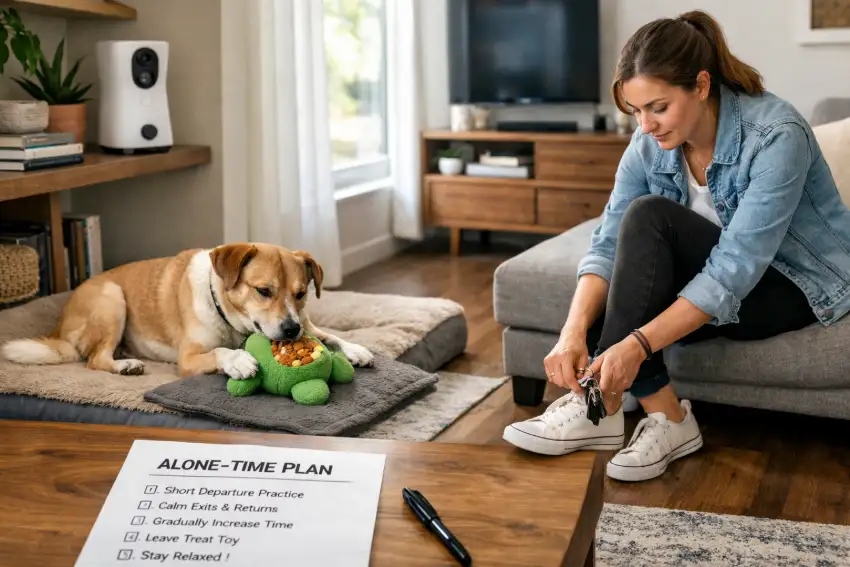
6. Home Treatment Tip #2: Gradual Alone-Time Training (Step-by-Step)
The core training method is desensitization: teach your dog that short absences are safe, then slowly increase duration.
6.1 Start Below Your Dog’s Panic Threshold
If your dog melts down at 5 minutes, start at 10–60 seconds.
Your goal is “calm or mildly concerned,” not “panic.”
6.2 A Simple Training Plan
Step 1: Pick a training time when your dog has been walked and is slightly tired.
Step 2: Leave for a very short time (seconds), then return calmly.
Step 3: Repeat multiple short sessions, gradually increasing time.
Step 4: Mix easy reps with slightly harder reps (don’t increase every time).
6.3 What “Progress” Looks Like
Your dog can stay relaxed, lie down, or engage with a chew.
They may look up when you leave, but they can settle quickly.
They can eat or chew calmly when alone.
6.4 Common Mistakes That Stall Training
Increasing duration too fast: one panic episode can set you back.
Only practicing once a week: frequent short practice works best.
Big “goodbyes” and “reunion parties”: keep departures and arrivals low-key.
7. Home Treatment Tip #3: Teach Independence Skills While You’re Home
Some dogs need to learn that being away from you inside the home is also safe.
Baby gate practice: separate your dog for short periods while you remain visible.
Settle training: reward calm behavior on a mat while you move around.
“Place” or “bed” cue: teaches relaxation in a predictable spot.
Short door-closed moments: close a door briefly, return before anxiety escalates.
8. Home Treatment Tip #4: Use Food and Chews the Right Way
Food enrichment can help—but only if your dog is calm enough to eat.
High-value, long-lasting chews: used only for alone-time practice
Stuffed food toys: can extend “calm time” and create a positive association
Snuffle mats/puzzle feeders: help some dogs settle before you leave
Important: If your dog refuses food when you leave, that’s a clue the anxiety is intense—and you may need to start with much shorter absences or get professional help.
9. Home Treatment Tip #5: Reduce Pre-Departure Triggers
Some dogs start panicking when they see keys, shoes, a work bag, or hear the garage door.
Practice “fake departures”: pick up keys, put on shoes, then sit down again.
Break the pattern: put on your coat at random times without leaving.
Use a consistent calm cue: a short phrase like “back soon” paired with calm practice reps.
10. Crate or No Crate? (Safety Comes First)
Crates help some dogs feel secure, but they make others worse—especially if panic leads to self-injury.
Crate can help if: your dog chooses it willingly, settles inside, and doesn’t try to escape.
Crate can harm if: your dog thrashes, drools heavily, bites the bars, or injures teeth/paws.
Safer alternatives: an exercise pen, a puppy-proofed room, or baby gates can reduce injury risk for some dogs.
11. When to Bring in a Vet or Professional Trainer
Separation anxiety is very treatable, but some cases need a team approach.
Get professional help promptly if:
Your dog is injuring themselves or causing severe home damage
Neighbors report nonstop barking/howling
Your dog cannot settle even for a minute or two alone
You’ve tried gradual training consistently and progress is minimal
Talk to your vet if:
Anxiety appeared suddenly in an adult or senior dog (rule out pain or medical causes)
Your dog has GI issues, itching, or chronic discomfort that could increase stress
You want to discuss medication support as part of a training plan
Medication note: In moderate to severe cases, vet-prescribed anxiety medication can reduce panic enough for training to work. This is not “drugging your dog”—it’s often a temporary bridge that allows learning.
12. A Realistic Timeline (What to Expect)
Many dogs improve over weeks to months, depending on severity and consistency. Expect a gradual, stepwise change rather than an overnight fix. The most important thing is avoiding repeated panic episodes while building tolerance slowly.
Final Thoughts: Treat the Panic, Build Skills, and Make Alone Time Predictable
Separation anxiety is a fear response, not bad behavior. The most effective home approach combines management (prevent panic while you train), gradual alone-time practice below your dog’s threshold, independence skills at home, and smart enrichment. If your dog is severe, involve a trainer and your vet early—because the right support can dramatically speed progress and reduce suffering.
Your action step: set up a camera today and identify your dog’s “panic threshold” time. Then start practicing absences shorter than that threshold, rewarding calm behavior and building up in tiny steps.