If you love cats but don’t have the time for constant attention, you’re not alone. Many busy professionals want a cat that’s affectionate on their terms, comfortable with alone time, and less likely to develop clingy behaviors when your schedule gets hectic. The good news: some cat breeds (and many individual cats) tend to be more independent and adaptable—especially when you set up the right environment.
This guide covers cat breeds that often do well with working professionals in the US and Europe, what “independent” really means, how to choose the right cat beyond breed labels, and practical routines to keep your cat healthy and emotionally balanced.
1. What Does “Independent” Mean in a Cat?
An independent cat is not an “unloving” cat. Independence usually looks like this:
Comfortable alone: naps peacefully, doesn’t panic when you leave.
Low attention demand: enjoys affection but doesn’t constantly seek it.
Self-entertains: uses window perches, toys, and enrichment without needing you to initiate everything.
Steady temperament: less prone to stress behaviors when routine changes.
Clear boundaries: prefers short cuddle sessions, then goes off to relax.
Reality check: Any cat can become needy if they’re bored, under-stimulated, or anxious. Independence is partly temperament and partly environment.
2. The Biggest Mistake Busy Owners Make (And How to Avoid It)
Many busy owners choose a kitten because it’s adorable—then realize kittens are like tiny toddlers: high-energy, mischievous, and very attention-hungry. Kittens also learn habits quickly, so boredom can become scratching, nighttime zoomies, or “attention meowing.”
If you’re busy: consider adopting an adult cat (2+ years) with a known personality.
If you want a kitten: consider adopting two kittens so they can entertain each other (more work up front, often easier long-term).
3. Independent Cat Breeds That Often Suit Busy Professionals
Breed tendencies can help, but individual personality matters more—especially in adult cats. These breeds are often described as more self-sufficient and less “velcro-cat” in day-to-day life.
3.1 British Shorthair
British Shorthairs are often calm, undemanding, and content to lounge nearby rather than on top of you.
Why it works: steady temperament, moderate activity, usually not overly vocal.
Watch-outs: can gain weight easily; needs routine play for fitness.
Best fit: professionals who want a calm companion with low drama.
3.2 Russian Blue
Russian Blues are often gentle and reserved, with a preference for calm homes and predictable routines.
Why it works: can entertain themselves, often quieter, may not demand constant attention.
Watch-outs: can be shy with strangers; needs slow introductions.
Best fit: single-person or quieter households with a consistent schedule.
3.3 Chartreux
Chartreux cats are often calm and adaptable, known for being affectionate but not overly needy.
Why it works: balanced personality, often content with their own space.
Watch-outs: still needs daily engagement to prevent boredom.
Best fit: owners who want a steady cat that’s not constantly underfoot.
3.4 American Shorthair
Often described as easygoing and adaptable, American Shorthairs can be a solid choice for busy households.
Why it works: usually friendly but not intense; tends to fit into many routines.
Watch-outs: needs enrichment to avoid weight gain and boredom.
Best fit: professionals who want a flexible, low-fuss companion.
3.5 European Shorthair (Common in Many European Homes)
Many European Shorthair-type cats (often similar to domestic shorthairs) have practical, adaptable temperaments.
Why it works: often resilient, independent, and good at self-entertaining.
Watch-outs: personality varies—meet the individual cat and ask about alone-time comfort.
Best fit: busy owners who want a “classic cat” personality with lower maintenance.
3.6 Persian (Independent Energy, High Grooming)
Many Persians are calm, quiet, and happy to lounge, which can feel “independent” in terms of attention demands.
Why it can work: low activity, often content with a calm environment.
Watch-outs: grooming and coat care are high; eye/face care can be frequent.
Best fit: busy professionals only if you’re truly comfortable with grooming or budgeting for it.
3.7 Domestic Shorthair (Often the Best Real-Life Option)
In shelters and rescues, many adult domestic shorthairs are quietly independent and already settled into a mature temperament.
Why it works: you can choose by personality rather than breed label.
Watch-outs: ask about alone-time, vocal habits, and play style.
Best fit: professionals who want a predictable adult cat with known habits.
4. Independence vs Loneliness: How to Tell the Difference
Busy owners sometimes miss early signs that a cat is not coping well alone. A truly independent cat is relaxed and stable. A lonely or stressed cat often shows changes.
Common Signs Your Cat Needs More Support
Excessive vocalization: frequent meowing, yowling, especially when you leave or return.
Clinginess changes: suddenly follows you everywhere or becomes unusually demanding.
Destructive scratching: especially near doors or windows.
Litter box issues: outside-the-box urination/defecation (always rule out medical causes first).
Overgrooming: bald patches or irritated skin.
Nighttime disruption: persistent midnight zoomies or waking you frequently.
5. How to Set Up a Busy-Professional Home for a Happy Cat
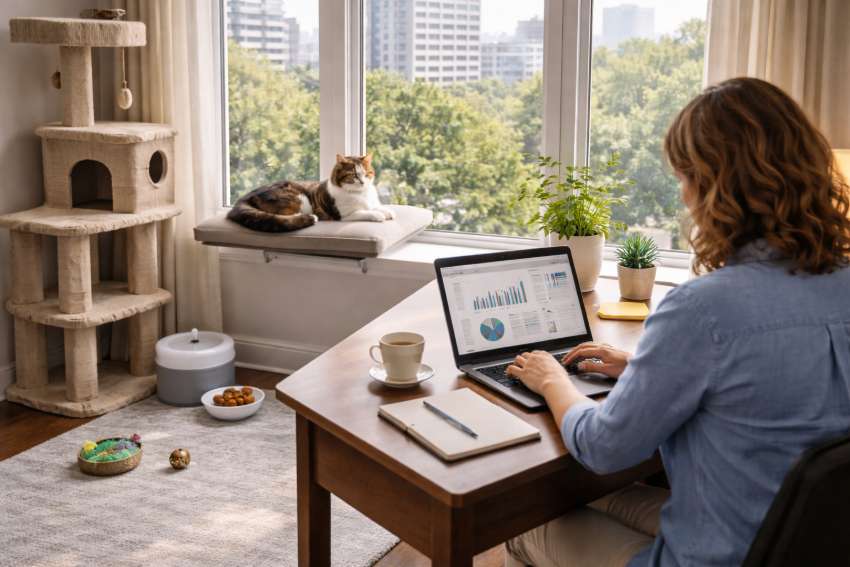
Environment is the difference between “independent” and “bored.” Your goal is to give your cat choices, vertical space, and daily routine anchors.
5.1 Create Vertical Territory
Cat tree or shelves for climbing
Window perch for watching outside safely
Quiet hideaway spots (covered bed, cozy corner)
5.2 Automate the Right Things (Without Neglecting Interaction)
Timed feeder: helps keep meals consistent with irregular work schedules
Water fountain: encourages hydration for many cats
Self-play toys: rotate weekly so they stay interesting
5.3 Make the Litter Box “Easy Mode”
Enough boxes (a practical guideline is one per cat plus one extra, if space allows)
Choose a box size that fits the cat comfortably
Scoop daily (this prevents odor issues and reduces litter box stress)
5.4 Schedule Micro-Play Sessions
You don’t need hour-long play. Two short sessions can change everything.
Morning: 5–10 minutes of wand play
Evening: 5–10 minutes + a small meal afterward to encourage restful sleep
6. A Simple Routine for Busy Owners (Weekdays vs Weekends)
Weekdays
Quick morning check + short play
Consistent feeding schedule (manual or timed feeder)
Evening play + grooming check (especially long-haired cats)
Daily litter scoop
Weekends
One longer play session
Environment refresh: rotate toys, add a new cardboard box, change puzzle feeder setup
Basic health check: appetite, coat condition, litter box output
7. When to Consider Two Cats
Two cats can be easier than one—if they’re compatible. This is especially true for younger cats with high play needs.
Consider two if: you’re gone long hours, your cat is young and high-energy, or you want less “attention pressure” on you.
Don’t assume two fixes everything: introductions must be done slowly to avoid stress and conflict.
Practical option: adopt a bonded pair or two cats that already live together.
8. When to Talk to a Vet (Behavior Changes Can Be Medical)
Cats hide illness well, and behavior changes can be the first sign of a health problem. Contact your vet if you see:
Sudden changes in litter box habits
Loss of appetite, vomiting, diarrhea, or weight loss
Overgrooming, skin irritation, or hair loss
Sudden aggression, hiding, or unusual clinginess
Increased drinking/urination
Important: Rule out medical issues before assuming it’s “separation anxiety” or boredom.
9. When to Seek Behavior Help
If your cat’s stress behaviors persist despite enrichment, consider help from a qualified cat behavior professional—especially for:
Persistent litter box avoidance after medical causes are ruled out
Aggression between cats in multi-cat homes
Severe anxiety signs (constant hiding, panic, ongoing overgrooming)
Final Thoughts: Choose a Calm Adult Cat and Build an Independent-Friendly Home
For busy professionals, the best “independent cat breed” is often less about the label and more about temperament and routine. Breeds like British Shorthair, Russian Blue, Chartreux, and many domestic shorthairs can be excellent fits—especially when adopted as adults with a known personality.
Your action step: prioritize an adult cat described as calm and self-sufficient, set up vertical space and daily micro-play sessions, and use smart tools like timed feeders and toy rotation. That combination gives you a cat who feels secure—even when your schedule is full.