You’ve found a nice apartment, your neighbors are close, and your landlord is “pet friendly… as long as they don’t bark all day.” If that sounds familiar, choosing a quiet dog breed (and raising them well) is just as important as choosing couch color.
No dog is completely silent, but some breeds and types are far less likely to yap at every footstep in the hallway. This guide will help you:
Understand what actually makes a dog “quiet”
Meet dog breeds known for being more reserved and low-barking
See which “small apartment dogs” are quieter than their reputation
Learn training and management tips to keep noise under control
Important: every dog is an individual. Breed tendencies help, but training, exercise and environment decide how quiet your real dog will be.
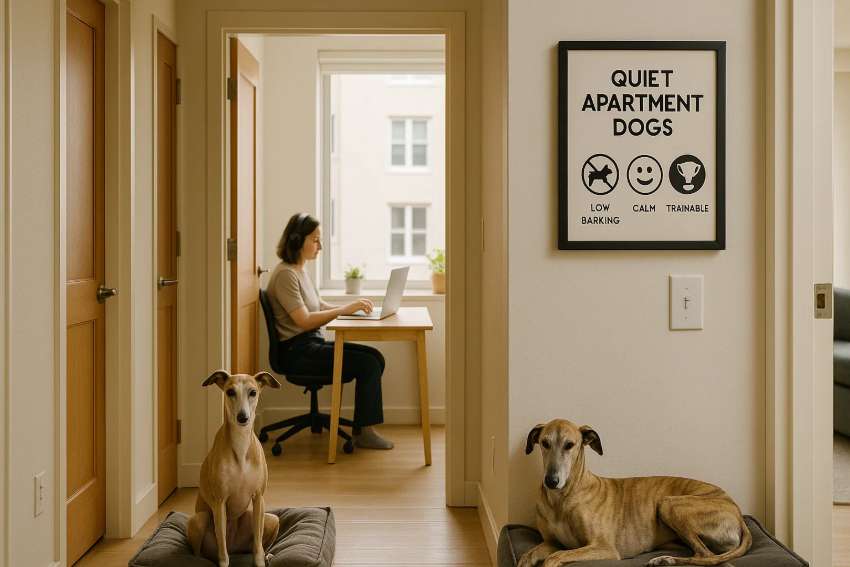
1. What “Quiet Dog” Really Means in Apartment Life
When people say they want a “quiet dog” for an apartment, they usually mean:
Rarely barks without a good reason (not every time someone closes a door)
Doesn’t howl or scream when left alone for short periods
Not constantly vocal in play or during everyday life
But there’s a reality check:
All dogs need some way to communicate – barking is normal.
A quiet breed can still become noisy if bored, anxious or under-exercised.
A louder breed can become much quieter with good training and management.
So you’re looking for a dog with:
A natural tendency to be calm and reserved
Less “alarm bark” instinct than many guard or watchdog breeds
The ability to relax in a small space without constantly reacting to noise
2. Big Picture: Traits That Affect Barking
Before naming breeds, it helps to know why some dogs bark more than others.
2.1 Breed purpose
Watchdogs and guard breeds were literally bred to sound the alarm.
Hunting and terrier breeds often vocalize when excited or when they detect movement.
Companion breeds vary: some were bred to be calm lapdogs, others to be lively “conversation partners.”
2.2 Temperament & sensitivity
Nervous, easily startled dogs tend to bark more at apartment sounds.
Confident, stable dogs are less concerned by every noise in the corridor.
2.3 Training, exercise and routine
A bored dog with too much energy will find a job – like barking at every neighbor.
A well-exercised, mentally stimulated dog usually rests more and reacts less.
Dogs left alone too long without preparation may vocalize from separation anxiety.
3. Naturally Quiet Breeds for Apartments
These breeds are often mentioned by experienced owners as low-barking, calm and apartment-friendly, when their needs are met.
3.1 Greyhound
Why they’re surprisingly good apartment dogs:
Ex-racing Greyhounds are often described as “60 mph couch potatoes.”
Typically gentle, laid-back and not overly vocal inside.
Short coat, minimal grooming needs.
Things to know:
Need regular walks and occasional zoomies in a secure area, but don’t require all-day exercise.
Often have a strong chase instinct – careful around cats and small animals, and off-leash freedom needs secure fencing.
3.2 Whippet
Why they’re a great quiet choice:
Smaller cousin of the Greyhound with similar calm indoor behavior.
Usually sensitive, gentle and not inclined to noisy drama.
Short coat, low grooming; fits well in smaller apartments.
Things to know:
Need coats in colder climates – they feel the cold easily.
Like Greyhounds, many have strong prey drive; secure outdoor spaces are important.
3.3 Basenji (“The Barkless Dog” – sort of)
Why they’re famous in “quiet breed” lists:
Basenjis are known for rarely barking in the traditional “woof” way.
They often make other sounds (yodels, whines), but overall bark less than many breeds.
Compact size and short coat suit apartment life physically.
Things to know:
They are clever, independent and can be challenging to train for first-time owners.
They get bored easily; need mental work (puzzles, scent games) as well as walks.
3.4 Shiba Inu (with good training and socialization)
Why they’re often quiet indoors:
Shibas are usually clean, cat-like and not constant barkers.
Independent nature means they’re not “yappy” social butterflies.
Things to know:
They can scream loudly when very upset – not ideal if mishandled.
Strong-willed and independent; need experienced, patient training and early socialization.
4. Calm Companion Breeds That Tend to Be Less Noisy
These are dogs whose main job is to be with people. Many of them adapt well to close living spaces and aren’t naturally hyper-alert watchdogs.
4.1 Cavalier King Charles Spaniel
Why they’re popular in apartments:
Gentle, affectionate and usually people-focused.
Often prefer cuddles and naps over patrolling the hallway.
Things to know:
Health issues can be common – choose health-focused breeders or rescues.
Need daily company; not a good choice for very long workdays away from home.
4.2 Bichon Frise / Havanese
Why they can be quiet, happy apartment dogs:
Friendly companion breeds that enjoy human company and indoor life.
With enough attention and training, they don’t need to bark constantly.
Things to know:
Coats need regular grooming; plan for grooming bills or DIY time.
Like many small dogs, can become barky if overprotected or never taught boundaries.
4.3 French Bulldog (with health caution)
Why some apartment dwellers choose them:
Generally people-oriented and often relaxed indoors.
Not usually loud barkers compared to classic watchdog breeds.
Things to know:
Flat-faced breed with serious potential breathing and health issues; medical costs can be high.
Snoring and snorting can be noisy in a different way!
5. Small Dogs That Are Less Yappy Than Their Reputation
“Small dog” doesn’t always mean “yappy.” With good breeding, socialization and training, some smaller breeds can be surprisingly quiet neighbors.
5.1 Miniature Schnauzer (from calm lines)
Pros:
Smart, trainable and often good watchdogs without non-stop barking.
Size is apartment-friendly; low-shedding coat.
Watch-outs:
Can be vocal if allowed to practice barking at every sound.
Need consistent training and clear rules from day one.
5.2 Boston Terrier
Pros:
Generally friendly, people-loving and playful without being a constant alarm system.
Short coat, easy to groom.
Watch-outs:
Another flat-faced breed – watch for heat and breathing issues.
Can snore loudly; not ideal if your walls are very thin.
6. Training Your Dog to Be Quieter (Whatever the Breed)
Even if you choose a quiet breed, you still need a solid noise management plan for apartment living.
6.1 Teach a strong “quiet” cue
First, let your dog bark once or twice at a trigger (door knock, hallway noise).
Say “Quiet” in a calm voice; when they pause, immediately reward with a treat or praise.
Repeat until your dog learns that stopping barking makes good things happen.
6.2 Control the view and the sounds
Use frosting film or curtains on windows if your dog barks at everything outside.
White noise machines, fans or gentle music can mask hallway sounds.
Provide a cozy “den” spot (crate or bed) away from the front door.
6.3 Prevent boredom barking
Daily walks and play sessions matched to your dog’s energy level.
Food puzzle toys and chew items for “quiet time” enrichment.
Short training sessions to tire the brain as well as the body.
6.4 Gradual alone-time training
Practice leaving for very short periods first (seconds, then minutes).
Return calmly before your dog starts to panic or bark.
Build up slowly to the real length of your workday, if possible.
7. Talking to Neighbors and Landlords
Choosing a quiet breed is only part of being a good apartment dog owner. Communication matters too.
Tell neighbors you’re working on training and invite them to let you know if barking becomes a problem.
Leave a note with your contact details if the building is very sound-sensitive.
Ask your landlord or building manager about:
Pet policies and weight/breed limits
Quiet hours and noise expectations
Any dog-friendly areas or nearby parks
Showing that you’re proactive and considerate goes a long way, especially in buildings where previous dogs may have caused issues.
8. How to Choose the Right Quiet Dog for Your Apartment
When you’re ready to choose, use this simple checklist:
Does this breed (or individual dog) have a reputation for low barking?
Is their energy level realistic for my daily routine and apartment size?
Do I have a plan to meet their exercise and mental needs every day?
Have I heard from the breeder, rescue or foster about their typical vocal behavior?
Am I prepared to invest time in training and enrichment to prevent boredom barking?
Whether you fall in love with a Greyhound, Whippet, quiet companion breed or a calm mixed-breed rescue, the best apartment dog is one whose temperament, energy and voice match your life, your building and your neighbors.
Choose the right dog, train thoughtfully, and your neighbors may say the best possible sentence a dog owner can hear in an apartment building: “Oh, you have a dog? I never hear them!”