A daily walk is one of the best parts of your dog’s day – and, honestly, often the best part of yours too. But a good walk isn’t just “clip any leash to anything and go”. The right walking gear makes walks safer, more comfortable and less stressful for both you and your dog, especially in busy US and European cities.
In this guide, we’ll cover the essential dog walking gear every owner should consider:
Collars vs harnesses – what each is really for
Leashes: length, material and special features
Poop bags (and how to always have them when you need them)
Safety extras: ID tags, lights, reflective gear
Optional but helpful add-ons like treat pouches and hands-free belts
Whether you’re walking a tiny apartment dog in Paris or a big family dog in the suburbs of Chicago, this checklist will help you build a walking kit that works in real life.
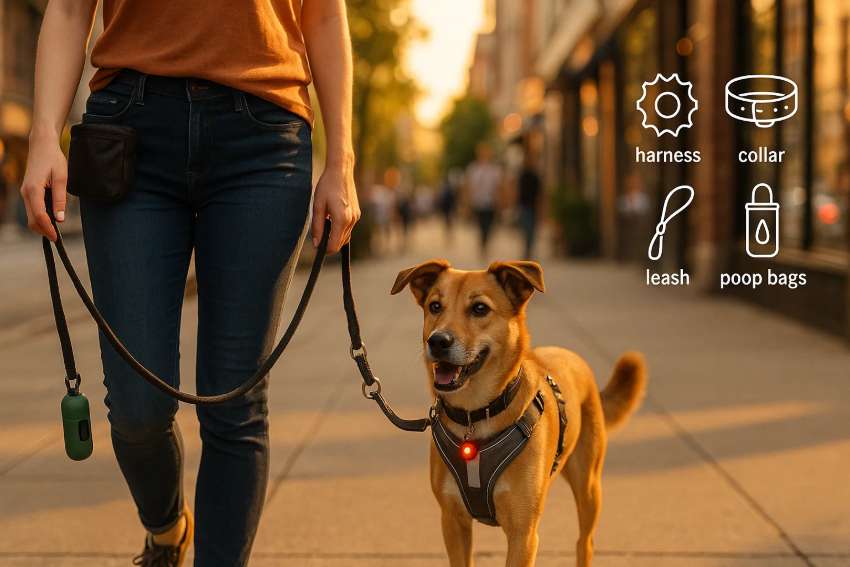
1. Collars vs Harnesses: Different Tools for Different Jobs
Many owners use “collar” and “harness” almost interchangeably, but they actually have different main roles.
1.1 What collars are best at
ID and legal requirements: collars are the easiest place to attach ID tags and, in many places, required license tags.
Short, calm handling: gently moving your dog around the home, at the vet or in low-distraction areas.
Everyday wear: light, comfy collars can be worn most of the time (if your dog is safely supervised).
Flat collar basics:
Choose a flat, adjustable collar with a sturdy buckle.
Two-finger rule: you should fit two fingers between the collar and your dog’s neck – not too tight, not so loose it can slip off.
Avoid very thin, sharp or decorative-only collars for daily walking.
1.2 What harnesses are best at
Protecting the neck: a good harness spreads pressure across the chest and shoulders, instead of the throat.
Pulling or strong dogs: safer for dogs that hit the end of the leash, especially larger breeds.
Puppies and small breeds: their necks are delicate; harnesses can be a kinder option.
Key types of harnesses:
Back-clip harness: leash attaches on the dog’s back.
Easy to use and comfortable.
Great for dogs that already walk politely on leash.
Front-clip or dual-clip harness: leash attaches at the chest, or both chest and back.
Helps gently turn the dog toward you when they pull.
Useful for training and for strong, enthusiastic walkers.
For most modern pet dogs in busy US/EU streets, a well-fitted harness + flat collar with ID is a very safe, practical combination.
2. Choosing a Safe, Comfortable Harness
Not all harnesses are created equal. Some are comfortable and secure; others rub, restrict movement or are easy to escape from.
2.1 Features of a good everyday harness
Y-shaped chest: allows the shoulders to move freely instead of crossing tight over the front.
Multiple adjustment points: ideally at the neck, chest and belly so you can fine-tune the fit.
Padding in pressure areas: around the chest and belly straps.
Sturdy hardware: strong buckles and metal D-rings for the leash.
Reflective elements: helpful for night walks in city streets or country roads.
2.2 Fit checks
You should fit two fingers between the straps and the dog’s body.
The neck opening should not slide down over the shoulders or rub under the armpits.
Watch your dog walk and run: shoulders and front legs should move freely, without straps cutting into them.
If your dog seems stiff, constantly scratches at the harness, or tries to back out of it, something is wrong: the harness may be uncomfortable or the fit may need adjustment.
3. Leashes: Length, Material and Everyday Use
A leash is more than a rope. The right leash length and material affects control, comfort and safety.
3.1 Ideal everyday leash length
Standard 1.2–1.8 m (4–6 feet) leashes are best for most city and suburban walks.
1.2 m (4 ft) gives more control in busy areas like sidewalks and apartment lobbies.
1.8 m (6 ft) gives your dog a bit more space while still being manageable.
3.2 Materials
Nylon: durable, affordable, many colours and patterns. Slightly rough on hands if your dog pulls hard.
Biothane / coated webbing: waterproof, easy to wipe clean – great for rainy climates in the UK or coastal cities.
Leather: comfortable in the hand and durable when cared for; often more expensive.
3.3 Why many trainers avoid retractable leashes in busy areas
Thin cords can cause burns or rope injuries if wrapped around fingers or legs.
Less control in traffic or around other dogs.
Can teach dogs to pull because “pulling = more length”.
Retractable leashes may have a place in open, low-traffic areas for already well-trained dogs, but they are not ideal as your main city-walking leash.
4. Poop Bags and Waste Management (Non-Negotiable)
No matter where you live, picking up after your dog is basic good manners – and in most US and European cities, it’s also the law.
4.1 Types of poop bags
Standard plastic bags: cheap, widely available, but not eco-friendly.
Biodegradable / compostable bags:
Designed to break down more quickly under the right conditions.
Still need to be disposed of according to local rules – “compostable” doesn’t mean you can bury them in the park.
Handle bags: easier to tie and carry, useful on longer walks.
4.2 How to never forget them
Attach a bag dispenser to your leash and keep it topped up.
Store extra rolls:
By the front door
In your walking jacket
In the car (if you drive to parks)
In small apartments, have a dedicated dog waste bin or sealed container on the balcony or near the door to avoid indoor smells.
5. ID Tags, Microchips and Safety Extras
Even the best leash can be dropped, and even the best harness can fail. Make sure your dog can always be identified quickly if they get loose.
5.1 ID tags
Attach a tag to your dog’s everyday collar with:
Dog’s name (optional – some people prefer to skip this)
Your mobile phone number (with country code if you travel)
Optional: city/postcode or a short “I am microchipped” note
5.2 Microchip
In many countries, microchipping is required by law.
Make sure your contact details are kept up to date in the database, especially if you move country or change phone numbers.
5.3 Lights and reflective gear
Clip-on LED lights for the collar or harness help drivers and cyclists see your dog at night.
Reflective harnesses or leashes add visibility in low light, especially in dark winters in northern Europe.
Consider your own safety too – a reflective jacket or armband helps cars see you.
6. Optional But Useful Walking Add-Ons
Once you’ve covered the basics (collar, harness, leash, poop bags, ID), you can add tools that make walks easier and more enjoyable.
6.1 Treat pouch
Clips to your waistband or belt.
Makes it easy to reward good behaviour on walks (loose-leash walking, checking in with you, ignoring distractions).
Use small, soft treats that your dog loves – this can transform your training results.
6.2 Hands-free leash system
Leash attaches to a belt around your waist.
Useful for jogging, pushing a stroller, or managing luggage in cities.
Only safe for dogs who are already well-trained and not strong pullers – you don’t want to be yanked off balance.
6.3 Weather gear
Dog coats or sweaters: helpful for small, short-haired or elderly dogs in cold US/EU winters.
Dog boots: protect paws from road salt, ice or very hot pavements.
Compact towel: keep one near the door to dry your dog after rainy walks.
7. Gear to Be Cautious With (Or Avoid Without Professional Guidance)
Some walking tools can cause pain or injury if used incorrectly. In general, for everyday pet owners:
Avoid harsh tools like choke chains, prong collars or electric collars unless you’re working closely with a qualified, welfare-focused trainer or behaviourist.
These tools are often unnecessary for typical family dogs and can increase fear or aggression if misused.
Most dogs can learn good leash manners with positive reinforcement, a well-fitted harness and a standard leash.
8. Building a Simple, Real-World Walking Kit
To keep things practical, here’s a basic everyday kit that works for most dogs in US and European cities:
8.1 Core essentials
Flat collar with ID tag
Well-fitted Y-shaped harness (ideally with front and back attachment points)
1.2–1.8 m (4–6 ft) sturdy leash (nylon, biothane or leather)
Poop bag dispenser attached to the leash, stocked with bags
8.2 Safety add-ons
Microchip with up-to-date contact information
Clip-on LED light for night walks
Reflective details on harness, leash or your own clothing
8.3 Training and comfort extras
Small treat pouch with soft, high-value treats
Weather-appropriate coat or boots for sensitive dogs
9. Final Thoughts: Good Gear Makes Better Walks
Great walks aren’t about fancy brands – they’re about comfort, safety and control for both you and your dog. A well-fitting harness, a reliable leash, simple poop bags and clear ID give you a calm foundation. From there, treat pouches, reflective gear and weather protection turn everyday walks into something smoother and more enjoyable.
Invest once in solid walking gear that actually fits your dog and your city, and every walk – from quick midnight potty breaks to long Sunday strolls – becomes less of a chore and more of what it should be: time together that you both look forward to.