2026 expert review (what works, what’s risky, and what to check)
Important medical note: This is educational information, not a prescription. Stage 2 CKD dogs vary a lot (proteinuria, blood pressure, body condition, appetite, phosphorus levels). Work with your veterinarian—ideally with a board-certified veterinary nutritionist—before changing diets.
1) What “IRIS Stage 2” means (and why it matters for diet)
IRIS Stage 2 CKD in dogs is typically defined by creatinine 1.4–2.8 mg/dL and/or SDMA 18–35 μg/dL, then sub-staged by urine protein (UPC) and blood pressure.
Stage 2 dogs often look “mostly normal,” so diet is one of the earliest, highest-impact interventions to slow progression and reduce complications. IRIS treatment recommendations commonly include feeding a clinical renal diet and addressing proteinuria, appetite, and weight/muscle loss early.

2) What the evidence supports (even if you prefer “raw”)
Multiple veterinary reviews and clinical summaries report that therapeutic renal diets outperform maintenance diets in dogs with CKD—reducing uremic crises and improving outcomes (e.g., longer time to uremic crisis).
This is why, in practice, many “raw-leaning” plans for CKD still use a renal therapeutic diet as the nutritional backbone, and then adjust palatability/moisture on top of that.
3) “Low-protein” for Stage 2: the nuance most people miss
For Stage 2 CKD, the goal is usually not “ultra-low protein.” It’s more like:
Reduce phosphorus first (often the most critical nutritional modification).
Use moderate, highly digestible protein (too little risks muscle loss; too much can worsen uremic signs and often increases phosphorus).
Maintain calories + appetite (malnutrition is worse than “imperfect macros”). IRIS even highlights treating nausea/appetite loss and muscle/weight loss in Stage 2.
Table A — Typical nutrient profile used in therapeutic CKD diets (dogs)
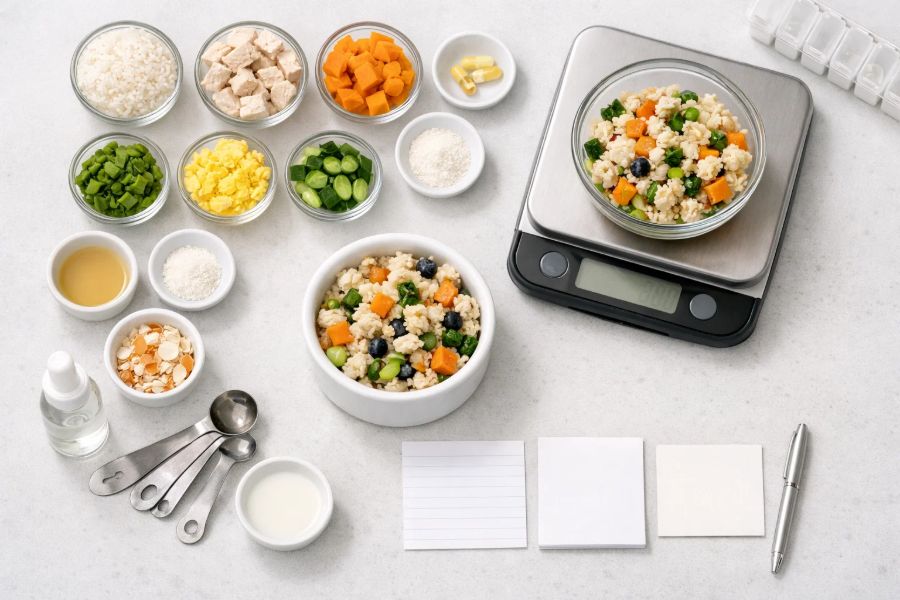
(Useful as a benchmark when evaluating any “renal raw” product.)
| Nutrient (dogs) | Typical therapeutic CKD range | Why it matters |
|---|---|---|
| Protein | ~31–41 g/1000 kcal (common formulation range) | Controls uremic toxins while protecting lean mass |
| Phosphorus | ~0.5–0.8 g/1000 kcal | Core target for slowing CKD complications |
| Added omega-3 (EPA+DHA) | Often increased | Potential renoprotective effect; may aid inflammation control |
| Moisture | Higher is often better | Supports hydration; many CKD dogs benefit from wet/fresh formats |
4) Raw diets in CKD: what’s good, what’s dangerous
Potential advantages (why owners like them)
High moisture (good for hydration support).
Often high palatability (some CKD dogs are picky).
Major risks (especially for kidney patients)
Leading veterinary organizations warn there’s no properly documented health benefit of raw meat–based diets over balanced cooked/commercial diets, while there are well-documented risks: pathogen exposure, nutritional imbalance, bone injury, etc.
Raw handling also increases household risk—particularly for children, elderly, pregnant, or immunocompromised people.
Key CKD-specific problem: many raw diets are meat/bone heavy, making phosphorus control difficult; and lowering phosphorus often requires lowering animal-protein load.
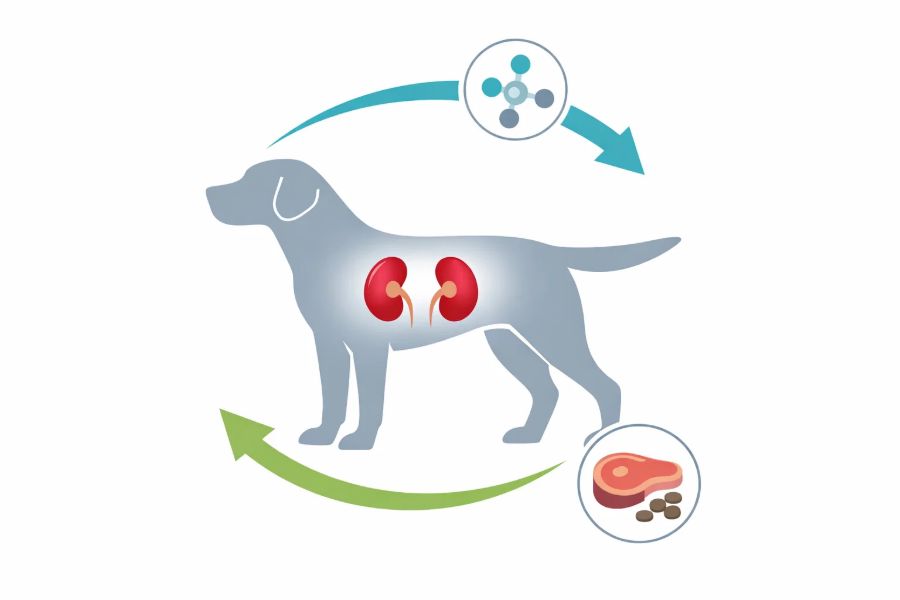
5) The “Best 5” low-protein raw(-leaning) options for Stage 2 CKD (2026)
Because true “renal-level” phosphorus + moderate protein is hard to achieve with typical raw feeding, the “best” options are those that publish renal-relevant nutrient data and are designed for reduced renal function—not generic BARF mixes.
1) A veterinary dietetic raw renal formula (best ‘true renal raw’ concept)
Example: Raw Veterinary Diets – ERVD Renal Balance (complete, balanced, dietetic raw).
It’s positioned specifically for reduced renal function with reduced protein and phosphorus, high moisture, added fish oil, and an alkalinizing approach.
2) A freeze-dried “raw-style” renal diet that publishes phosphorus per 1000 kcal (best transparency)
Example: Medicus Kidney Support Diet (freeze-dried; veterinary authorization) publishes phosphorus ~0.89 g/1000 kcal and other nutrient details, which is the kind of transparency you want for CKD decision-making.
3) A commercial “kidney support raw” that declares low phosphorus on label (best mainstream raw retail option)
Example: Big Dog BARF Nourish Nutrition Kidney Support provides a guaranteed analysis including phosphorus (e.g., 0.15% as-fed) and protein (13% as-fed) plus handling instructions.
But: as-fed % can be misleading—ask the company or your vet to convert to g/1000 kcal.
4) Vet-guided homemade raw using a renal meal-completer (best customization)
Example: CompleteMe Renal Canine is designed to help owners create a balanced, low-phosphorus renal diet at home and is described as usable with raw or cooked components—while explicitly advising vet consultation on whether raw is suitable.
5) “Hybrid renal” approach (best real-world risk/benefit)
Use an evidence-supported clinical renal diet for the core nutrition, then add tiny, kidney-safer toppers only for appetite (and only if your household can handle raw safely). This respects what’s best supported clinically while still meeting the owner’s preference for “fresh/raw vibes.”
6) Comparison table (what to check before you call it “renal raw”)
Table B — Quick comparison of the top options above
| Option | Format | Publishes renal-relevant nutrient data? | Biggest strength | Biggest risk / limitation |
|---|---|---|---|---|
| ERVD Renal Balance | Frozen raw dietetic | Yes (energy, protein %, phosphorus %, moisture) | Designed for reduced renal function | Still verify phosphorus on a kcal basis with your vet |
| Medicus Kidney Support | Freeze-dried “raw-style” | Yes (incl. phosphorus per 1000 kcal) | High transparency | Not truly “raw-frozen”; Rx/authorization model |
| Big Dog Kidney Support | Frozen raw | Partial (as-fed protein/phosphorus, moisture) | Easy to buy, kidney-positioned | Convert to g/1000 kcal; verify true phosphorus control |
| CompleteMe Renal Canine | Meal completer | Yes (supplement specs) | Allows customization + balancing | Still requires correct ingredient selection + hygiene |
| Hybrid renal base + topper | Mixed | Depends on base diet | Best evidence + best palatability | Raw hygiene + topper phosphorus can sabotage targets |
7) How to judge any “low-protein raw renal” label in 60 seconds
Ignore marketing. Ask for phosphorus on a calorie basis (g/1000 kcal). That’s what helps you compare diets fairly.
Check the real priority: phosphorus restriction (Stage 2+).
Protein should be “moderate + high quality,” not extreme. Watch for muscle loss and appetite issues.
Omega-3 (EPA/DHA) matters—either in the diet or as vet-approved supplementation.
If raw is non-negotiable, prefer manufacturers using validated pathogen-reduction strategies (e.g., high-pressure processing) and follow strict hygiene; HPP can reduce pathogens like Salmonella under appropriate conditions.
References (cited)
[1] International Renal Interest Society (IRIS). IRIS Staging of CKD (modified 2023) – PDF.
[2] IRIS. IRIS Dog Treatment Recommendations (modified 2023) – PDF.
[3] Rollins AW. Nutrition is arguably the most important aspect of CKD management (Today’s Veterinary Practice, 2018 PDF; includes nutrient targets table).
[4] Today’s Veterinary Practice (ACVN Nutrition Notes, 2016 PDF). Nutritional Management of CKD in cats and dogs (summarizes uremic crisis/survival comparisons and renal diet ranges).
[5] Today’s Veterinary Practice (2014 PDF). Nutritional Management of Renal Disease (summarizes study outcomes; discusses phosphorus vs protein restriction evidence).
[6] Heinze CR (dvm360). Renal diets for veterinary patients: what to feed and when to start (phosphorus priority; raw diets noted as high protein/phosphorus).
[7] WSAVA Global Nutrition Committee. Statement on risks of raw meat-based diets (recommends RMBD not be fed due to documented risks).
[8] WSAVA Global Nutrition Committee Toolkit. Raw Meat Based Diets for Pets (no evidence of benefit; contamination/AMR risk; household risk groups).
[9] Lyu Y, et al. 2025. Current Evidence on Raw Meat Diets in Pets (review of benefits/risks; notes limited substantiation and key risks).
[10] British Veterinary Association (BVA). 2024. Is it safe or advisable to feed a raw meat-based diet? (risk and hygiene discussion).
[11] Serra-Castelló C, et al. 2023. High pressure processing to control Salmonella in raw pet food… (HPP as safety intervention).
[12] Petfood Industry. 2025. HPP in pet food production (describes validated pathogen reduction framing).
[13] Raw Veterinary Diets. ERVD Renal Balance product page (analytical constituents, reduced protein/phosphorus positioning).
[14] Big Dog BARF / retailers. Nourish Nutrition Kidney Support (guaranteed analysis incl. protein/phosphorus; raw handling guidance).
[15] Veterinary Nutrition Group (VNG). CompleteMe Renal Canine (low-phosphorus meal completer; raw/cooked use; vet consultation note).
[16] Medicus Veterinary Diets. Kidney Support Diet for Dogs (publishes phosphorus per 1000 kcal and diet positioning).
[17] Today’s Veterinary Practice. Treatment Guidelines for CKD in Dogs & Cats (phosphorus reduction as major Stage 2 goal).