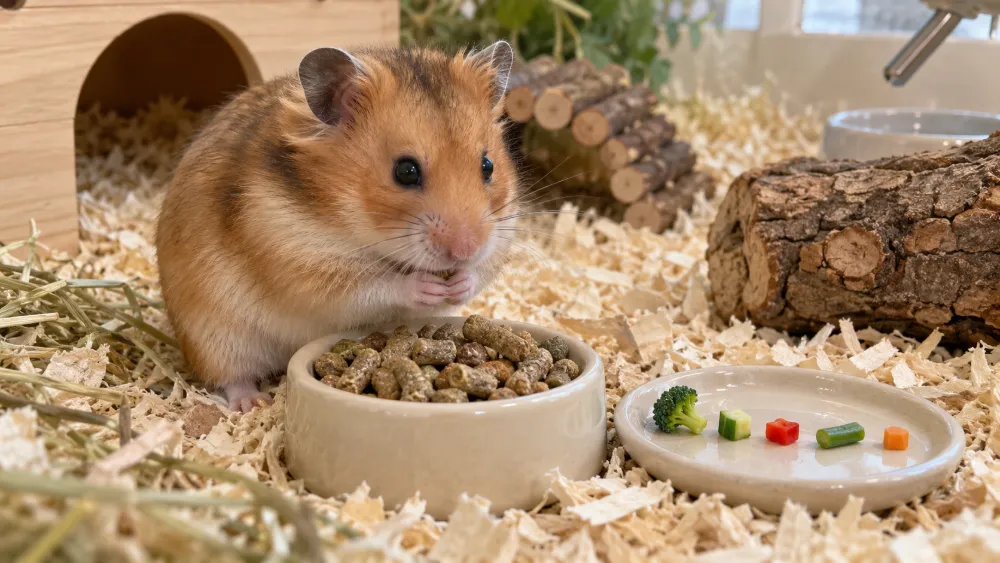
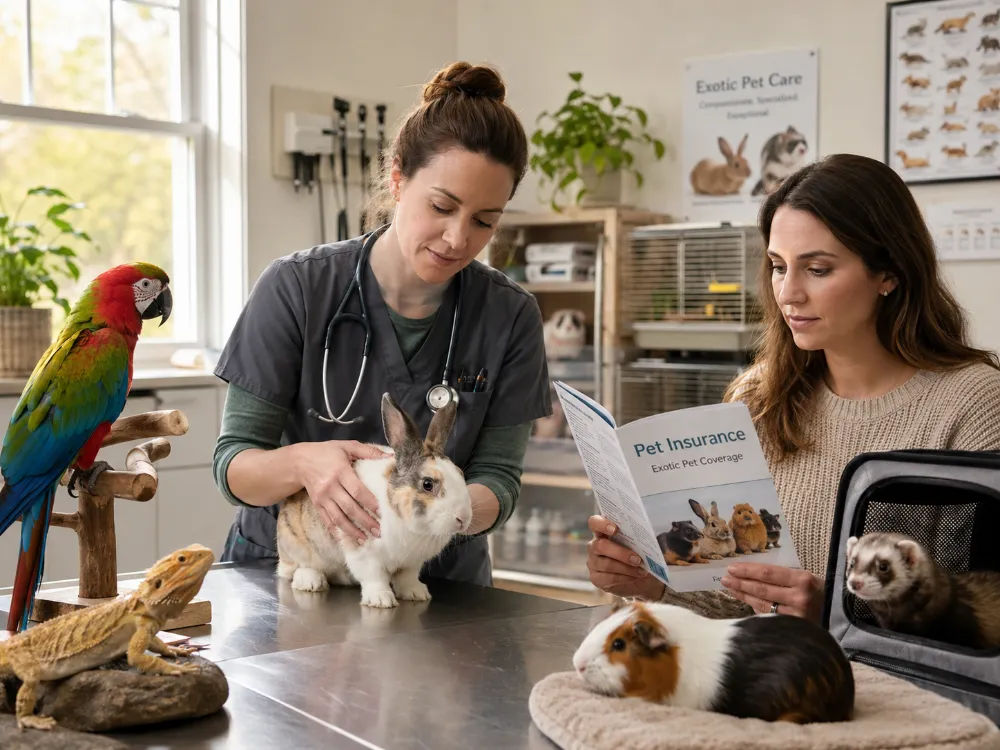
Pet insurance for exotic pets can help cover unexpected veterinary costs for animals such as birds, rabbits, reptiles, ferrets, guinea pigs, rodents, amphibians, and some small mammals. However, coverage is much more limited than dog and cat insurance. The best plan depends on your species, local exotic-animal veterinarians, accident and illness coverage, exclusions, waiting periods, reimbursement rules, and whether your pet already has medical problems.
| Exotic Pet Type | Common Vet Risks | Insurance Consideration | Owner Priority |
|---|---|---|---|
| Birds | Respiratory disease, egg binding, feather picking, injuries, nutritional disease | Look for coverage for diagnostics, emergency care, hospitalization, and surgery | Access to an avian veterinarian |
| Rabbits | Dental disease, gut stasis, abscesses, urinary problems, fractures | Dental illness coverage is especially important | Fast emergency access |
| Ferrets | Adrenal disease, insulinoma, foreign body ingestion, dental disease, tumors | Check chronic illness and surgery coverage carefully | Coverage before disease appears |
| Guinea pigs and chinchillas | Dental overgrowth, respiratory infection, skin disease, digestive problems | Dental and diagnostic coverage can be valuable | Routine monitoring and early treatment |
| Reptiles | Metabolic bone disease, egg binding, burns, parasites, respiratory disease | Ask whether species-specific illnesses are covered | Proper husbandry plus emergency care |
| Amphibians | Skin disease, water-quality illness, fungal infection, trauma | Coverage may be harder to find | Specialist vet availability |
| Pot-bellied pigs and goats | Hoof problems, digestive disease, injuries, reproductive issues | Confirm whether the animal is treated as a pet, livestock, or excluded species | Clear policy wording |
What Is Exotic Pet Insurance?
Exotic pet insurance is a health insurance policy or veterinary cost plan designed for companion animals other than dogs and cats. Depending on the provider, “exotic pets” may include birds, rabbits, reptiles, ferrets, guinea pigs, hamsters, rats, mice, chinchillas, hedgehogs, amphibians, pot-bellied pigs, miniature goats, or other non-traditional pets.
The purpose is similar to dog and cat insurance: the owner pays the veterinary bill first, submits a claim, and receives reimbursement for covered expenses. Some alternatives, such as veterinary discount plans, work differently. Instead of reimbursing claims later, they may reduce the bill at participating clinics.
Exotic pet insurance matters because these animals often need specialized veterinary care. A rabbit with dental disease, a parrot with respiratory illness, a ferret with insulinoma, or a bearded dragon with egg binding may require diagnostics, medication, anesthesia, surgery, hospitalization, or long-term treatment. These costs can surprise owners who expected a small pet to mean small vet bills.
Why Exotic Pet Veterinary Care Can Be Expensive
Exotic pets are often small, delicate, and biologically different from dogs and cats. Many require veterinarians with additional training in avian, reptile, rabbit, small mammal, or zoo animal medicine. Specialized care can increase cost because the clinic may need special equipment, species-specific anesthesia, advanced diagnostics, and more careful monitoring.
A small animal can become critically ill very quickly. Rabbits may stop eating because of dental pain or gut stasis. Birds may hide illness until the disease is advanced. Reptiles may show subtle signs for weeks before the owner notices a serious problem. Ferrets may need urgent care after swallowing rubber, foam, or fabric. These cases can require emergency treatment rather than a simple routine visit.
Another reason costs can be high is that exotic pets are not all treated the same way. A parrot, rabbit, snake, tortoise, axolotl, and ferret have completely different anatomy, diets, temperatures, diseases, and medication needs. This makes exotic animal medicine highly specialized.
What Does Pet Insurance for Exotic Pets Usually Cover?
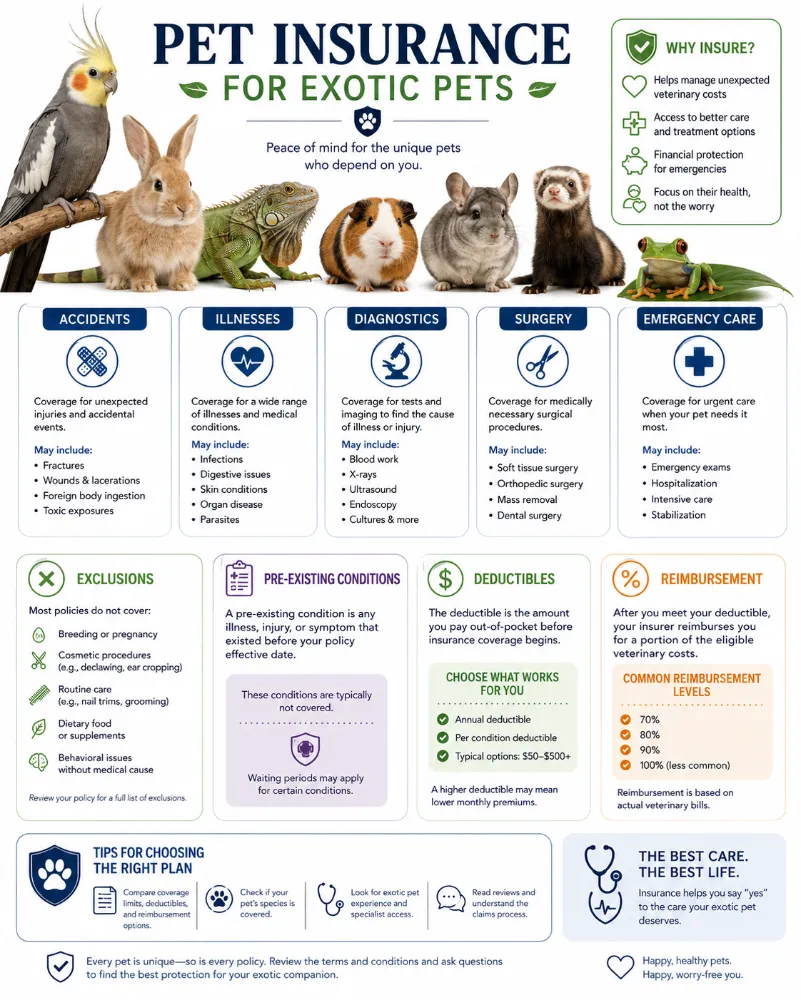
Coverage varies by provider and policy, but exotic pet insurance may cover unexpected accidents and illnesses. A good plan should help with the types of medical problems that exotic pets commonly face.
Possible covered services may include:
Accident treatment
Illness diagnosis
Emergency exams
X-rays
Ultrasound
Blood tests
Fecal testing
Medication
Hospitalization
Fluid therapy
Surgery
Anesthesia
Wound treatment
Respiratory disease treatment
Digestive disease treatment
Skin, shell, feather, or scale disorders
Some chronic conditions if they are not pre-existing
Owners should never assume a condition is covered just because the policy says “illness.” Always read the sample policy and ask about your exact species. Exotic pet policies can have species-specific limitations.
What Is Usually Not Covered?
Most exotic pet insurance plans have exclusions. These exclusions are very important because many exotic animals develop health problems related to diet, housing, temperature, humidity, lighting, or long-term husbandry mistakes.
Common exclusions may include:
Pre-existing conditions
Routine wellness exams unless a wellness add-on is available
Preventive care
Cosmetic procedures
Breeding-related expenses
Elective procedures
Boarding and grooming
Non-prescription food
Supplements
Experimental treatment
Conditions linked to illegal ownership
Injuries from improper housing, depending on policy wording
Animals classified as livestock, wildlife, venomous, endangered, or prohibited species
For exotic pets, the legal status of the animal matters. A species that is legal in one state, province, or country may be restricted in another. Insurers may refuse coverage for wild-caught animals, venomous animals, endangered species, illegal pets, or animals primarily kept for farming rather than companionship.
Best Exotic Pets to Consider for Insurance
Insurance is most useful when the animal is expensive to treat, likely to need emergency care, or difficult to replace emotionally and ethically. It is also useful when the owner would realistically choose advanced diagnostics, surgery, or hospitalization if the animal became seriously ill.
Exotic pets that may benefit most from insurance include:
Parrots and other long-lived birds: They can live for decades and may need advanced avian care.
Rabbits: Dental disease, gut stasis, and emergency care can become expensive.
Ferrets: They are prone to several serious medical conditions and foreign body ingestion.
Chinchillas and guinea pigs: Dental and respiratory problems can require repeated veterinary visits.
Large reptiles: Surgery, imaging, and hospitalization can be costly.
Pot-bellied pigs: Treatment can require specialized handling and large-animal knowledge.
Insurance may be less financially useful for very short-lived small pets if premiums exceed the likely cost of care. However, even small pets can need expensive emergency treatment, so the decision depends on the owner’s budget and the pet’s medical risk.
Pet Insurance for Birds
Birds are among the most medically complex exotic pets. Parrots, cockatiels, canaries, finches, doves, and other birds have sensitive respiratory systems, high metabolisms, and strong instincts to hide illness. By the time a bird looks obviously sick, the condition may already be advanced.
Common bird health problems include:
Respiratory infections
Egg binding
Feather damaging behavior
Malnutrition
Liver disease
Beak and nail injuries
Trauma from flying into windows or fans
Metal toxicity
Tumors
Parasites
For birds, insurance is most valuable when it covers diagnostics, emergency care, surgery, hospitalization, and medication. Owners should also confirm whether the policy covers behavioral feather plucking, reproductive disease, and chronic conditions.
Pet Insurance for Rabbits
Rabbits are not low-maintenance pets. They have specialized digestive systems, constantly growing teeth, and a high risk of rapid decline when they stop eating. A rabbit that refuses food should be treated as urgent because gut stasis can become life-threatening.
Common rabbit health problems include:
Dental overgrowth
Tooth root disease
Gut stasis
Abscesses
Urinary sludge or stones
Respiratory disease
Fractures
Parasites
Heat stress
For rabbits, dental illness coverage is especially important. Many rabbit medical costs are related to teeth, jaw, diet, or digestion. If a policy excludes dental disease, it may be much less useful for a rabbit owner.
Pet Insurance for Reptiles
Reptiles include snakes, lizards, turtles, tortoises, geckos, skinks, monitors, chameleons, and bearded dragons. Their health depends heavily on correct heat, humidity, lighting, diet, enclosure size, and hygiene. Many reptile illnesses are linked to husbandry problems.
Common reptile health problems include:
Metabolic bone disease
Respiratory infections
Mouth rot
Parasites
Burns from heat lamps or heat rocks
Egg binding
Shedding problems
Shell disease in turtles and tortoises
Impaction
Injuries from enclosure accidents
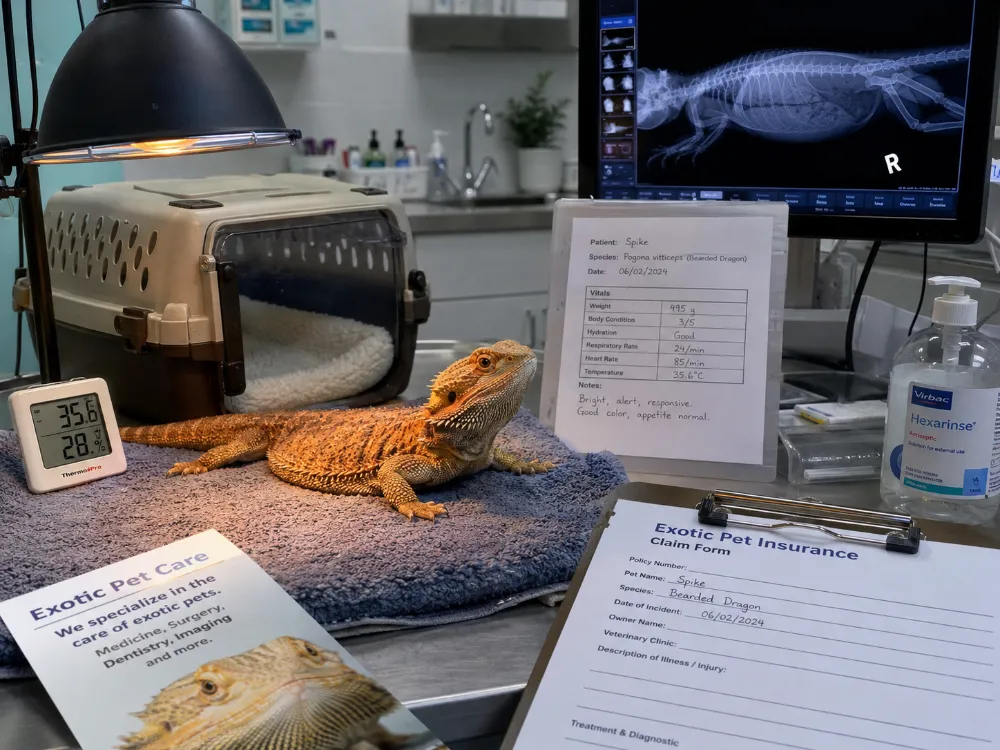
Reptile owners should ask whether the plan covers species-specific illness, surgery, imaging, parasite treatment, burns, reproductive emergencies, and hospitalization. They should also ask whether conditions linked to improper husbandry may be excluded.
Pet Insurance for Ferrets
Ferrets are playful, intelligent carnivores with several important medical risks. They are prone to certain endocrine diseases and may swallow objects that cause intestinal blockages. Emergency surgery for a foreign body can be expensive.
Common ferret health problems include:
Adrenal disease
Insulinoma
Lymphoma
Dental disease
Foreign body ingestion
Gastrointestinal disease
Respiratory illness
Trauma
Insurance can be valuable for ferrets if purchased before symptoms appear. Once a ferret has signs of adrenal disease, low blood sugar, tumors, or recurring digestive problems, those issues may be considered pre-existing.
Pet Insurance for Guinea Pigs, Chinchillas, Rats, and Hamsters
Small mammals may be inexpensive to buy, but they are not always inexpensive to treat. Their small size can make anesthesia, surgery, imaging, and blood collection more delicate. Many small mammals also hide illness until they are seriously sick.
Common small mammal health problems include:
Dental overgrowth
Respiratory infections
Skin mites or fungal disease
Abscesses
Digestive problems
Tumors
Eye injuries
Heat stress
Trauma from falls or improper handling
For these pets, insurance is most useful when it covers diagnostics, dental disease, medication, and emergency care. Owners should compare the monthly premium with the expected lifespan and likely medical needs of the species.
How Much Does Exotic Pet Insurance Cost?
The cost of exotic pet insurance depends on the species, age, location, coverage level, deductible, reimbursement rate, and annual limit. Birds, rabbits, ferrets, reptiles, and small mammals may all be priced differently because their medical risks are different.
In general, monthly premiums may be modest for some small pets and higher for species that commonly need specialized or repeated care. A plan with a low deductible, high reimbursement rate, and high annual limit will usually cost more. A plan with a higher deductible and lower annual limit may be cheaper but less protective during an emergency.
When comparing costs, do not only ask “What is the monthly premium?” Ask these questions:
What is the deductible?
Is the deductible annual or per condition?
What percentage is reimbursed?
Is there an annual limit?
Are there per-incident limits?
Are exam fees covered?
Are diagnostics covered?
Are medications covered?
Are chronic conditions covered in future policy years?
How Exotic Pet Insurance Works
Most pet insurance works by reimbursement. You take your exotic pet to a licensed veterinarian, pay the bill, submit a claim, and receive money back if the expense is covered. This means owners still need access to funds at the time of treatment.
A typical claim process may look like this:
Your exotic pet becomes sick or injured.
You visit a licensed veterinarian, ideally one experienced with that species.
You pay the clinic directly.
You submit the invoice and medical records to the insurer.
The insurer reviews the claim.
You receive reimbursement for eligible expenses after deductible and co-insurance.
Some veterinary discount plans work differently. They may reduce the price at participating clinics, but they are not the same as insurance. They may be useful for exotic pets, especially when traditional insurance is unavailable, but owners should understand the difference.
Insurance vs Veterinary Discount Plans
Traditional insurance and veterinary discount plans are often confused. They can both reduce veterinary costs, but they work in different ways.
| Feature | Traditional Exotic Pet Insurance | Veterinary Discount Plan |
|---|---|---|
| How it pays | Reimburses eligible claims after you pay the vet | Gives a discount at participating clinics |
| Vet choice | Often any licensed veterinarian, depending on policy | Usually limited to participating providers |
| Pre-existing conditions | Usually excluded | May still receive a discount, depending on plan |
| Best for | Unexpected illness, surgery, emergency care | Predictable discounts and broader pet eligibility |
| Main limitation | Exclusions, waiting periods, claim approval | Not insurance and may not reduce major bills enough |
A discount plan may be helpful if your exotic pet is not eligible for insurance or already has a pre-existing condition. However, if your pet needs a major surgery, hospitalization, or specialist treatment, traditional insurance may offer stronger financial protection if the condition is covered.
Pre-Existing Conditions in Exotic Pets
Pre-existing conditions are one of the most important parts of any pet insurance policy. A pre-existing condition is generally a medical problem that showed signs, symptoms, diagnosis, or treatment before the policy started or before the waiting period ended.
For exotic pets, examples may include:
A rabbit with known dental disease before enrollment
A ferret already showing signs of adrenal disease
A bird with chronic feather plucking before coverage begins
A reptile with metabolic bone disease caused by long-term lighting or diet problems
A guinea pig with recurring respiratory infections
Insurance is usually strongest when purchased while the pet is still healthy. Once symptoms appear, it may be too late to get coverage for that specific condition.
Questions to Ask Before Buying Exotic Pet Insurance
Before buying a policy, owners should ask direct questions. Exotic pet coverage is too species-specific for assumptions.
Do you cover my exact species?
Do you cover my pet’s age?
Do you cover my state, province, or country?
Are accidents and illnesses both covered?
Are exam fees covered?
Are diagnostic tests covered?
Are surgeries and anesthesia covered?
Are chronic conditions covered if they begin after enrollment?
Are dental diseases covered for rabbits, guinea pigs, or chinchillas?
Are reproductive emergencies covered?
Are conditions related to husbandry excluded?
Are prescription medications covered?
Can I use an exotic-animal specialist?
Are emergency hospitals covered?
What are the waiting periods?
What counts as a pre-existing condition?
Are there annual, lifetime, or per-condition limits?
How to Choose the Best Exotic Pet Insurance
The best exotic pet insurance is the plan that covers your actual species, matches your local veterinary options, and protects you from the most likely expensive problems. A cheap plan that excludes the main diseases your pet is likely to develop may not be useful.
Use this step-by-step approach:
Identify your species’ main health risks. A rabbit, parrot, ferret, tortoise, and chinchilla need different coverage priorities.
Find an exotic-animal veterinarian first. Insurance is less useful if no qualified vet is available nearby.
Request a sample policy. Do not rely only on marketing pages.
Check exclusions line by line. Look for dental, reproductive, husbandry, chronic disease, and species exclusions.
Compare reimbursement structure. Understand deductible, reimbursement rate, and annual limits.
Ask about emergency care. Exotic pets often need urgent treatment after hours.
Buy coverage early. Waiting until symptoms appear can lead to pre-existing condition exclusions.
Keep medical records. Complete records help support future claims.
When Exotic Pet Insurance Is Worth It
Exotic pet insurance is often worth considering when the animal is long-lived, emotionally important, expensive to treat, or likely to need specialist care. It can be especially useful for parrots, rabbits, ferrets, reptiles, and small mammals with known species-related health risks.
Insurance may be worth it if:
You would choose emergency care if your pet became seriously ill.
You have access to an exotic-animal veterinarian.
Your pet is still healthy enough to avoid major pre-existing exclusions.
Your species is prone to expensive medical problems.
You want protection from sudden bills rather than only routine-care help.
You own a long-lived bird, reptile, rabbit, or ferret.
Insurance may be less useful if your pet already has multiple excluded conditions, if no exotic veterinarian is available, if the species is not eligible, or if the premium is higher than the likely benefit.
When a Savings Fund May Be Better
Some exotic pet owners may choose a dedicated emergency savings fund instead of insurance. This can work well for owners who have the discipline to save consistently and who can afford sudden veterinary bills.
A savings fund may be better if:
Your species is not eligible for insurance.
Your pet has pre-existing conditions that would be excluded.
Your local exotic vet does not work well with insurance paperwork.
The premium is too high for the expected benefit.
You own many small exotic pets and prefer a shared emergency fund.
The safest approach for many owners is a combination: insurance or a discount plan for eligible pets, plus a separate emergency fund for deductibles, excluded care, and urgent treatment.
Common Mistakes Exotic Pet Owners Make
Many exotic pet owners wait too long to think about insurance. They may only search for coverage after the pet becomes sick, but by that time the condition may already be excluded.
Common mistakes include:
Assuming dog and cat insurers also cover exotic pets
Buying a pet before finding a qualified exotic veterinarian
Choosing a plan without checking species eligibility
Ignoring dental exclusions for rabbits and small mammals
Assuming routine wellness care is included
Not asking about emergency and specialist care
Waiting until symptoms appear before buying coverage
Confusing a discount plan with insurance
Keeping illegal or restricted species and expecting coverage
Not keeping vet records and receipts
Final Takeaway
Pet insurance for exotic pets can be valuable, but owners must compare plans carefully. Coverage is more limited than dog and cat insurance, and not every exotic species qualifies. The best plan should cover your exact animal, include accidents and illnesses, allow treatment by a qualified exotic veterinarian, and clearly explain exclusions, waiting periods, pre-existing conditions, deductibles, and reimbursement limits.
For birds, rabbits, ferrets, reptiles, and small mammals, the smartest time to buy coverage is before illness appears. Even if traditional insurance is not available, a veterinary discount plan and an emergency savings fund can still help reduce financial stress.
The most important rule is simple: exotic pets need exotic-qualified care. Insurance can help with cost, but proper husbandry, early veterinary attention, and a knowledgeable veterinarian are still the foundation of good exotic pet health.
FAQs About Pet Insurance for Exotic Pets
Can you get pet insurance for exotic pets?
Yes, but options are more limited than insurance for dogs and cats. Some providers cover certain birds, rabbits, reptiles, ferrets, guinea pigs, and small mammals, while others only cover dogs and cats.
What animals count as exotic pets for insurance?
Exotic pets may include birds, rabbits, ferrets, guinea pigs, hamsters, rats, mice, chinchillas, hedgehogs, reptiles, amphibians, pot-bellied pigs, and some other non-traditional companion animals. Eligibility depends on the provider and the exact species.
Does exotic pet insurance cover rabbits?
Some exotic pet insurance plans may cover rabbits. Rabbit owners should pay close attention to dental disease, gut stasis, abscesses, urinary disease, and emergency care coverage.
Does exotic pet insurance cover reptiles?
Some plans may cover certain reptiles, such as lizards, snakes, turtles, tortoises, and geckos. Owners should ask about metabolic bone disease, respiratory infection, burns, parasites, egg binding, and husbandry-related exclusions.
Does exotic pet insurance cover birds?
Some exotic pet insurance plans may cover birds, including parrots and other companion birds. Bird owners should check coverage for respiratory illness, egg binding, feather disorders, injuries, diagnostics, hospitalization, and avian specialist care.
Does exotic pet insurance cover pre-existing conditions?
Traditional pet insurance usually does not cover pre-existing conditions. If an exotic pet already had signs, symptoms, diagnosis, or treatment before enrollment, that condition may be excluded.
Is exotic pet insurance worth it?
It can be worth it for long-lived, medically complex, or expensive-to-treat pets such as parrots, rabbits, ferrets, reptiles, and some small mammals. It is most useful when purchased before the animal develops health problems.
How much does exotic pet insurance cost?
The cost depends on the species, age, location, coverage level, deductible, reimbursement rate, and annual limit. Some small pets may have relatively modest premiums, while species with higher medical risks may cost more to insure.
Can I use any veterinarian with exotic pet insurance?
Many reimbursement-style pet insurance plans allow treatment by any licensed veterinarian, but owners should confirm this before buying. For exotic pets, it is especially important to choose a veterinarian experienced with the species.
What is the difference between exotic pet insurance and a discount plan?
Insurance usually reimburses eligible claims after you pay the vet bill. A discount plan reduces the bill at participating clinics but is not traditional insurance. Discount plans may be useful when traditional exotic pet insurance is unavailable.