Most pet owners have had this moment: your dog or cat does something worrying and you wonder, “Is this serious, or can I wait and see?” Knowing the difference between a true emergency, an urgent situation and something that can wait for a regular appointment can literally save your pet’s life.
This guide is for pet owners in the US and Europe who want a clear, practical checklist of red-flag signs. It is not meant to diagnose your pet, but to help you decide when to call or visit a vet.
Important: when in doubt, it is always safer to call your vet or the nearest emergency clinic. Phone advice is usually free and can tell you how urgent the situation is.
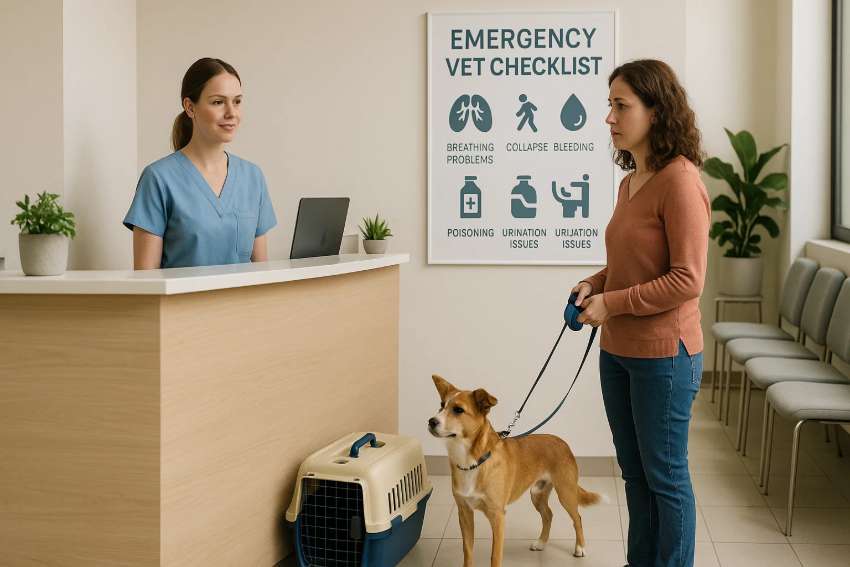
1. Emergency vs “Can Wait”: How to Think About It
A simple way to think about urgency:
Emergency – go now: serious risk of death or permanent harm if you wait.
Urgent – same day: very uncomfortable or potentially serious; your pet should be seen today but may not need an ambulance-style dash.
Routine – within days: mild or chronic issues that are not getting worse quickly.
The sections below focus first on clear emergencies (go immediately), then on urgent signs that mean you should book a same-day or very soon appointment.
2. Red-Flag Emergencies for Both Dogs and Cats
These signs are strong reasons to go to an emergency vet immediately (or call them and say you are on your way):
2.1 Trouble breathing
Open-mouth breathing (especially in cats)
Blue, grey or very pale gums or tongue
Very fast, shallow breathing, or obvious struggle to breathe
Why it’s serious: breathing problems can become fatal in minutes. Do not wait to see if it improves.
2.2 Collapse, fainting or repeated seizures
Sudden collapse or inability to stand
Seizure lasting more than 1–2 minutes
More than one seizure in a short period
Seizure followed by severe confusion or inability to get up
Why it’s serious: this can indicate heart problems, severe internal disease, poisoning or neurological emergencies.
2.3 Uncontrolled bleeding or major trauma
Hit by a car, fall from a height, attack by another animal
Bleeding that doesn’t slow within a few minutes of gentle pressure
Obvious broken bone, dislocated joint or severe wound
Why it’s serious: even if your pet seems “ok” after an accident, internal bleeding or organ damage may be hidden.
2.4 Suspected poisoning
You saw your pet eat medication, cleaning products, rat poison, chocolate, grapes/raisins, xylitol (sweetener), or other toxic substances
Sudden vomiting, shaking, drooling or collapse after chewing plants or household items
Why it’s serious: many poisons cause damage quickly. Call a vet or a poison helpline immediately with the product name and amount if you know it.
2.5 Extreme pain
Crying out when touched or moved
Refusing to move, hunched posture, very tense belly
Sudden, severe lameness without using a leg at all
Why it’s serious: severe pain is itself an emergency and can signal fractures, spinal issues, organ problems or other serious conditions.
3. Dog-Specific Emergency Signs
3.1 Bloated, hard belly with restlessness (especially large-breed dogs)
Swollen, tight abdomen
Dog is very uncomfortable, pacing or trying to vomit but bringing nothing up
Drooling, panting, looking at the belly
Why it’s serious: this can be a sign of gastric dilatation-volvulus (“bloat”), which is rapidly life-threatening and needs immediate surgery.
3.2 Heatstroke signs
Heavy panting that does not improve, even in shade
Bright red or very pale/grey gums
Weakness, confusion, collapse after being in heat or exercise
Why it’s serious: heatstroke can damage organs quickly; cooling must be gentle and a vet visit is urgent.
3.3 Continuous vomiting or diarrhea, especially with blood
Vomiting many times in a few hours
Blood in vomit or stool (red or black, tarry stools)
Dog cannot keep water down
Why it’s serious: risk of dehydration, internal bleeding or foreign body (something stuck in the intestines).
4. Cat-Specific Emergency Signs
4.1 Straining to urinate – especially male cats
Cat goes to the litter box repeatedly but produces little or no urine
Crying in the box, licking the genital area, obvious discomfort
Small drops of urine, sometimes with blood
Why it’s serious: male cats can develop a urinary blockage; this is a true emergency that can be fatal within a day if not treated.
4.2 Open-mouth breathing or very rapid breathing
Cats should normally breathe quietly with the mouth closed
Any open-mouth breathing, wheezing or tummy heaving is very worrying
Why it’s serious: can indicate heart disease, fluid in the chest, asthma or severe stress.
4.3 Sudden hind-leg weakness or paralysis
Dragging back legs
Back legs cold to the touch or very painful
Why it’s serious: can be a sign of a blood clot or spinal emergency. Needs immediate vet care.
5. Urgent Signs: Call the Vet the Same Day
These may not always be “rush to the ER right now” emergencies, but they should not be ignored. Book a same-day appointment or call your vet for guidance.
5.1 Repeated vomiting or diarrhea
More than 2–3 episodes in 24 hours
Any vomiting or diarrhea in a puppy, kitten or very small pet
Vomiting plus refusal to drink
5.2 Not eating for 24 hours (cats) or 24–48 hours (dogs)
Cats that stop eating for even a day can be at risk of liver problems.
Dogs that skip one meal but are otherwise normal can sometimes be monitored, but complete refusal of food plus other symptoms needs attention.
5.3 Sudden change in drinking or urination
Drinking much more or much less than usual
Urinating far more often, or having accidents indoors
Straining to urinate or defecate without obvious success
5.4 Eye problems
Squinting, holding an eye closed
Red, cloudy or bulging eye
Any eye injury or sudden blindness
Why it matters: eye issues can become permanent if not treated quickly.
5.5 Ongoing coughing or heavy sneezing
Cough lasting more than a few days
Frequent sneezing with thick nasal discharge
Coughing that disturbs sleep or causes gagging
6. Behavior and Personality Changes You Shouldn’t Ignore
You know your dog or cat best. Sudden changes in normal behaviour can be a sign that something is wrong.
Hiding, avoiding contact or acting unusually aggressive
Staring at walls, seeming confused or “lost” in familiar places
Stumbling, circling, bumping into furniture
Yelping or hissing when picked up or touched in a particular place
These signs may not always be emergencies, but they do mean your pet is uncomfortable or unwell. A vet visit can help find the cause before it becomes severe.
7. Puppies, Kittens, Seniors and Sick Pets: Extra Caution
Some pets are more fragile and need quicker action:
Puppies and kittens: can become dehydrated or hypoglycemic much faster than adults.
Senior pets: may have heart, kidney, liver or joint issues that make them less able to cope with illness.
Pets with known chronic diseases: any change (not eating, vomiting, more drinking, sudden weakness) is more serious.
If your young or old pet seems “off”, it is usually better to call your vet sooner rather than later.
8. How to Prepare for a Possible Emergency
A little planning makes a crisis less chaotic:
Save the phone numbers of your regular vet and the nearest 24-hour emergency clinic in your phone.
Know the clinic’s address and parking options in advance.
Keep a cat carrier and a dog leash/harness ready near the door.
Have a basic pet first-aid kit (gauze, bandage, clean cloths) at home – but remember, first aid is not a substitute for veterinary care.
9. What to Say When You Call the Vet
When you phone, give clear, short information:
Your pet’s species, breed, age and whether they are spayed/neutered
What you are seeing (for example: “rapid breathing, gums are pale, collapsed after a walk”)
When it started and if it is getting worse
Any medications, known diseases or recent accidents
Anything unusual the pet may have eaten (food, plants, chemicals, medications)
This helps the clinic decide how urgent the situation is and prepare for your arrival if it’s an emergency.
10. Final Thoughts: Trust Your Instincts and Get Help Early
This checklist can’t cover every situation, but it gives you a framework:
Difficulty breathing, collapse, major trauma, serious bleeding, extreme pain or inability to urinate = emergency now.
Repeated vomiting/diarrhea, not eating, eye problems, significant behaviour changes = same-day vet call or visit.
If something in your gut says “this is not right”, listen to it. You will almost never regret being careful with a beloved pet’s health, but waiting too long can be something owners never forget. When in doubt, call your vet – they are there to help you decide what to do next.