Many dogs and cats have dirty teeth and bad breath long before their owners realize there’s a problem. By the time you finally book a professional dental cleaning, the estimate can easily be in the hundreds of dollars or euros – and it’s natural to think, “Why is this so expensive?”
The truth is that dental disease is one of the most common health problems in pets in the US and Europe – but also one of the most preventable. This guide will help you:
Understand what really happens during a professional teeth cleaning
See why the cost is high (and what you’re actually paying for)
Learn daily habits that can reduce or delay the need for big dental bills
Spot early warning signs of dental trouble in your dog or cat
Important: this article is general information only. Always follow the specific advice of your own veterinarian.
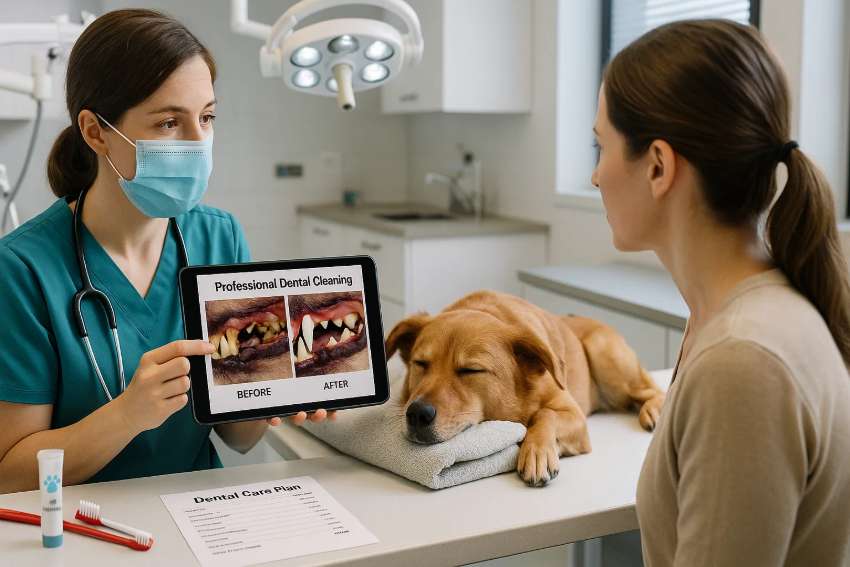
1. What Dental Disease Actually Is (More Than Just “Dirty Teeth”)
Dental disease in pets usually starts quietly:
Soft plaque (a film of bacteria and food) forms on teeth after eating.
If not removed, plaque hardens into tartar (calculus), a rough yellow-brown coating.
Bacteria at the gumline cause gingivitis – red, inflamed gums that may bleed.
Over time, infection damages the tissues that hold the tooth in place: periodontal disease.
Periodontal disease can lead to:
Loose, painful teeth
Abscesses and pus pockets
Difficulty eating, weight loss and behavior changes
Bacteria entering the bloodstream and affecting organs (heart, kidneys, liver)
A “dirty mouth” is not just a cosmetic issue – it’s a chronic infection your pet carries every day.
2. Why Professional Pet Teeth Cleaning Is So Expensive
When you see a line like “dental cleaning and extractions” on a vet estimate, it’s easy to compare it to a quick human dental cleaning. But veterinary dentistry is very different.
2.1 General anesthesia, monitoring and safety
Dogs and cats can’t hold their mouths open and follow instructions like humans.
Proper cleaning, X-rays and extractions require full access to all teeth and gum surfaces.
Your pet is placed under general anesthesia with:
Pre-anesthetic exam (sometimes blood tests)
IV catheter and fluids in many clinics
Monitoring equipment (heart rate, breathing, oxygen levels, temperature)
A trained nurse/technician watching your pet the entire time
Much of the cost is actually the anesthesia and monitoring, not just the scaling itself.
2.2 Professional equipment and training
Ultrasonic scalers and polishing tools similar to human dentists
Dental X-ray machines to see roots and bone below the gumline
Special instruments for extractions and periodontal treatment
Vets and technicians with extra dental training and continuing education
2.3 Time and complexity
Thorough dental procedures often take 1–2 hours or more, depending on how bad the mouth is.
If extractions are needed, each tooth can take significant time and skill to remove safely.
Pain relief medications and sometimes antibiotics are needed before/after the procedure.
When you add up anesthesia, monitoring, skilled labor, equipment, X-rays, medications and time, the cost starts to make more sense – especially when compared with the price of human surgeries (which are partly hidden by insurance).
3. What Happens During a Professional Dental Cleaning?
A proper veterinary dental cleaning typically includes:
Pre-anesthetic exam: physical check-up and often blood tests to assess anesthetic risk.
Anesthesia and monitoring: your pet is safely sedated, intubated and monitored throughout.
Full-mouth examination: looking at every tooth and gum area for pockets, fractures, resorptive lesions (especially in cats) and masses.
Scaling above and below the gumline: ultrasonic and hand scaling to remove plaque and tartar.
Polishing: smoothing tooth surfaces so plaque doesn’t stick as easily.
Dental X-rays: to check roots, jaw bone, hidden infection or resorption.
Extractions or treatment: removing diseased teeth, treating pockets where necessary.
Flushing and recovery: rinsing the mouth, waking your pet and monitoring until stable.
At discharge, you’ll usually get:
A report (and sometimes pictures) of what was done
Pain relief and possibly antibiotics if extractions were needed
Home-care recommendations to slow future dental disease
4. Signs Your Dog or Cat May Need Dental Care Soon
Many pets hide pain well. Watch for these common signs of dental trouble:
Bad breath: “fishy” or rotten smell from the mouth
Yellow or brown tartar on teeth, especially near the gums
Red, swollen or bleeding gums
Drooling, pawing at the mouth or dropping food
Choosing to chew on one side only
Reluctance to eat hard food or toys they used to enjoy
Behavior changes – irritability, hiding, less playful
In cats, you may also see:
Chattering or jaw trembling when touching certain teeth
Blood on toys or in the water bowl
If you notice any of these, it’s time to schedule a dental exam with your vet – before it becomes a painful emergency.
5. How Often Do Pets Need Professional Cleanings?
There’s no single rule, because dental disease develops at different speeds depending on:
Species (cats vs dogs)
Breed (small breeds and brachycephalic breeds often have worse teeth)
Age
Diet and chewing habits
Home dental care (brushing, dental diets, chews)
As a very general guide:
Some pets need a dental cleaning every 12–24 months.
Others with excellent genetics and good home care may need them less often.
Small-breed dogs (Yorkies, Chihuahuas, Pugs, etc.) often need more frequent dental attention.
Your vet will usually comment on your pet’s teeth during annual check-ups and can suggest the right timing for professional cleanings.
6. How to Reduce Dental Costs: Prevention at Home
The best way to deal with expensive dental bills is to delay or reduce the need for them by building simple habits at home.
6.1 Brushing your pet’s teeth
Yes, you really can brush a dog’s or cat’s teeth.
Use a pet-safe toothbrush or finger brush and pet-specific toothpaste (never human toothpaste).
Start slowly: let your pet lick the toothpaste, then gently rub a few front teeth, building up over days and weeks.
Focus on the outer surfaces of the teeth, especially back molars where plaque builds up.
Even brushing a few times a week is far better than never.
6.2 Dental diets and special kibbles
Some veterinary and premium diets are designed to help reduce tartar, using:
Special kibble shapes and textures that don’t shatter immediately
Ingredients that limit tartar formation
Ask your vet whether a dental diet is appropriate for your dog or cat.
6.3 Dental chews and toys
Chews can help mechanically remove plaque from teeth.
Choose products recommended by your vet or recognized dental councils (where available).
Avoid very hard chews (bones, antlers, rocks, extremely hard nylon) – these can break teeth.
6.4 Water additives and gels
Some products can be added to drinking water or applied to teeth/gums to help reduce bacteria and plaque.
Effectiveness varies – ask your vet which products they trust.
No home-care product can replace professional cleaning, but good habits can slow tartar build-up and reduce how often your pet needs a full dental procedure.
7. Can Pet Insurance Help With Dental Costs?
This depends on the policy and the country:
Some pet insurance plans cover non-routine dental care (for example, extractions due to disease or injury), but not routine scaling and polishing.
Others require proof of regular dental check-ups to maintain coverage.
Basic or accident-only plans may exclude dental disease completely.
If you’re comparing policies in the US or Europe, check the fine print for:
“Dental illness” vs “accident-only dental”
Requirements for yearly dental exams
Coverage limits for dental procedures
Even if routine cleanings aren’t covered, insurance can sometimes help with unexpected dental emergencies (like broken teeth or abscesses).
8. My Pet Is Older – Is It Safe to Put Them Under for Dental Work?
Many owners worry about anesthesia in older pets, so they delay dental care until the mouth is very bad. In reality:
Age alone is not a disease. Many senior pets handle anesthesia well when properly assessed and monitored.
Chronic dental infection and pain can be much more harmful to quality of life than the controlled risk of anesthesia.
Your vet will use blood tests, exams and tailored anesthetic protocols to reduce risk.
A senior dog or cat who wakes up with a clean mouth and less pain often acts younger and happier within days – many owners are surprised how much dental disease was holding their pet back.
9. Quick Home Checklist: Is It Time to Talk to the Vet About Teeth?
Ask yourself:
Does my dog or cat have bad breath most days?
Can I see yellow or brown tartar at the gumline?
Are the gums red, swollen or bleeding when they chew toys?
Do they drop food, chew on one side or seem reluctant to eat hard food?
Have they ever had a professional dental cleaning?
If you answer “yes” to several of these, it’s time to book a dental consultation. Catching problems early usually means:
Shorter procedures
Fewer extractions
Lower bills and a much more comfortable pet
10. Final Thoughts: Dental Care Is Part of Love
It’s easy to overlook your pet’s teeth – they don’t complain, and they still wag or purr even with a sore mouth. But dental health is a major part of their overall wellbeing.
Understanding why professional cleanings cost what they do helps you see them for what they are: full anesthetic procedures with skilled medical work, not just a quick polish. At the same time, simple daily habits – brushing, smart chews, dental diets and regular check-ups – can greatly reduce how often your pet needs that level of care.
A clean, pain-free mouth doesn’t just smell better. It helps your dog or cat eat, play and enjoy life more fully for years to come – and that’s one of the most valuable returns on investment you can get.