Most people in the US and Europe budget for the “obvious” pet costs: food, litter, a bed, a few toys, maybe annual vaccines. But over time, many dog and cat owners discover something uncomfortable: the real money goes into the expenses they didn’t see coming.
These hidden or irregular costs are the reason so many pet budgets fail. The good news? Once you know what to expect, you can plan for them calmly instead of panicking at the reception desk or the end of the month.
In this guide, we’ll walk through 15 common “surprise” pet expenses and show you how to build them into your budget so they’re not surprises anymore.
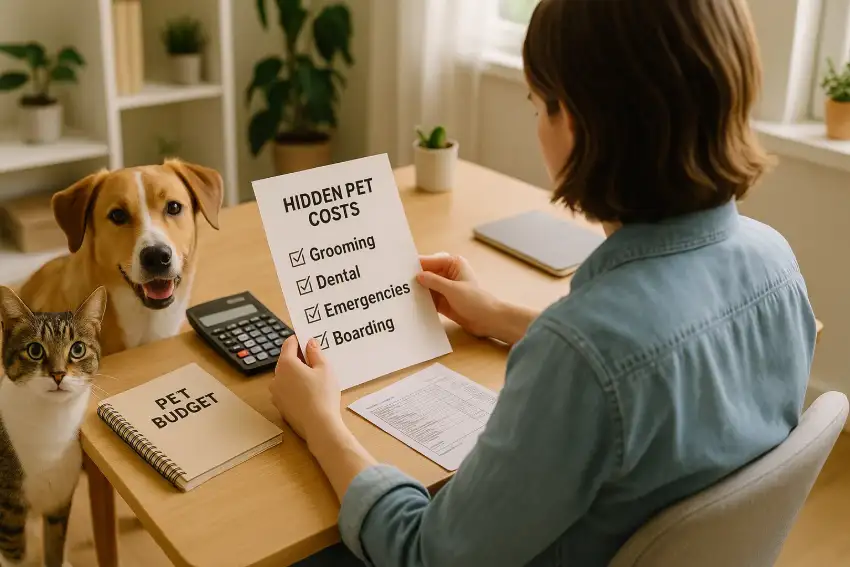
1. Adoption or Breeder “Extras”
You may plan for the adoption fee or breeder price, but forget the extras around it:
Transport costs to pick up your new pet
Initial health check at your own vet (even if the breeder/shelter has done one)
Extra vaccines your vet recommends based on local risks
Tip: When you calculate the cost of “getting” a pet, add a small buffer for these first-week medical and transport expenses.
2. Licensing, Microchipping and Local Fees
In many areas of the US and Europe, dogs (and sometimes cats) must be:
Registered with the local authority
Microchipped and kept up to date in the database
These are not huge costs, but they’re easy to forget and may repeat every year or every few years.
3. Training and Behavior Help
New owners often imagine a dog or cat that “just behaves”. In real life:
Puppies usually benefit from group training classes.
Adult dogs may need leash training, recall work or help with reactivity.
Cats may need behavior consultations for spraying, aggression or anxiety.
Good training saves money later by preventing damage, bites, returns to shelters and stressful situations – but it’s still an up-front cost you should plan for.
4. Grooming and Coat Management Surprises
Many owners underestimate grooming, especially with fashionable breeds.
Curly and long-haired dogs often need professional grooming every 4–8 weeks.
Long-haired cats may need help with mats, shaving or sanitary trims.
Neglected coats can turn into painful medical problems that require sedation to fix.
Before adopting, ask: “How often will this breed realistically need grooming – and what does that cost where I live?”
5. Dental Care and Tooth Extraction
Dental disease is one of the most common hidden costs in both dogs and cats:
Professional cleaning under anesthesia can be a significant bill.
Extractions, X-rays and antibiotics push the cost even higher.
Ignored dental problems cause pain and can affect heart, kidney and liver health.
Brushing at home and routine check-ups can delay or reduce these costs – but it’s still wise to expect at least one or two big dental bills over a pet’s lifetime.
6. Parasite Prevention and Seasonal Spikes
Flea, tick and worm prevention is often treated like a small add-on, but over a year it adds up:
Large dogs pay more simply because they need higher doses.
Some regions have year-round flea/tick risk, not just summer.
Heartworm prevention in certain areas adds another layer of cost.
Don’t just budget for “a flea treatment now and then” – think in 12-month cycles.
7. Emergency Exam Fees and Out-of-Hours Surcharges
One of the biggest shocks for owners is not only the treatment, but the emergency fee itself:
Night, weekend and holiday visits often have higher starting fees.
Even before tests or treatment, the bill can already be significant.
A pet emergency fund should always assume higher exam fees outside normal hours.
8. Diagnostic Tests: Bloodwork, X-Rays and Ultrasound
When your pet is sick, your vet may recommend tests to find the cause:
Blood and urine tests
X-rays for bones, lungs or swallowed objects
Ultrasound for abdomen or heart
Each test has a price. Together they can exceed the cost of the consultation and basic treatment. But without them, you risk spending money on guesses instead of targeted care.
9. Chronic Medications and Special Diets
Many pets eventually develop chronic conditions that require:
Daily pills or liquids (for arthritis, heart disease, thyroid issues, diabetes, allergies)
Prescription diets for kidney disease, urinary problems, allergies or weight loss
These become permanent monthly costs once a condition is diagnosed. They can easily double or triple your original “routine” budget if you never planned for them.
10. Boarding, Pet Sitting and Travel Documents
Travel and holidays bring their own pet expenses:
Boarding kennels, catteries or in-home pet sitters
Vaccines or health certificates required for boarding or travel
Pet passports, microchip registrations or rabies titers in some regions
Even if you only travel once or twice a year, these costs are easy to forget when you first adopt a pet.
11. Damage to Furniture, Floors and Belongings
Puppies chew. Kittens climb. Even adult pets can:
Scratch furniture and doors
Damage carpets with accidents or scratching
Break items on shelves and tables
Training, scratching posts, crate/pen management and supervision help – but realistically, most owners will replace or repair something due to pet damage over the years.
12. Housing Costs: Pet Deposits and “Pet Rent”
In many cities:
Landlords charge higher deposits if you have pets.
Some charge monthly “pet rent”.
Some housing options are off-limits to certain breeds or sizes.
If you rent, the true cost of a pet includes these housing-related fees and sometimes the cost of moving to a more pet-friendly (and more expensive) place.
13. Senior Care and Mobility Support
As pets age, you may need to pay for:
Orthopedic beds and ramps
Joint supplements and pain medications
More frequent vet visits and monitoring tests
Assistance devices (harnesses for lifting, non-slip rugs)
Many owners underestimate how quickly these senior costs appear after years of “cheap” adult life.
14. End-of-Life Care and Aftercare
It’s painful to think about, but responsible to plan for:
Final vet visits, palliative care and medications
Humane euthanasia at the clinic or at home
Cremation or burial costs, and any memorial choices
These are one-time costs, but they arrive at a very emotional moment. Having money set aside beforehand can remove at least one layer of stress.
15. The “Multi-Pet Multiplier”
One dog or cat might feel manageable, so people add a second or third. But:
Food and litter costs multiply instantly.
Vet bills multiply, especially for routine care.
Boarding, grooming and insurance match the number of animals.
Some costs (toys, beds) can be shared, but most essential costs grow roughly in proportion to how many pets you have.
How to Build Hidden Costs Into Your Pet Budget
Knowing about these 15 expense types is only useful if you turn that knowledge into a plan. Here’s a simple approach:
Step 1: List regular monthly costs
Food
Litter (cats)
Routine parasite prevention
Insurance premiums (if you use insurance)
Step 2: Turn “hidden” yearly costs into monthly amounts
For each of the items above that applies to you (grooming, boarding, dental, training, senior care), do this:
Estimate what you’re likely to spend in a typical year.
Divide by 12 to get a monthly amount.
Add that amount to your monthly pet budget as a “future costs” line.
Step 3: Create a dedicated pet sinking fund
Transfer the “future costs” amount into a separate savings pot every month.
Use this fund only for irregular costs (dental, grooming, boarding, emergencies).
When a big bill arrives, you’ll already have money waiting.
Step 4: Review once a year
Look at what you actually spent on hidden costs over the last 12 months.
Adjust your estimates and monthly savings accordingly.
Remember that senior years will probably be more expensive than adult years.
Final Thoughts: Turn “Surprises” Into Expected Events
The problem is not that pets are expensive out of nowhere. The problem is that most owners only budget for:
Food,
Litter,
Basic vaccines,
and forget about everything else.
When you plan for:
Grooming, dental, diagnostics and chronic meds,
Boarding, damage, housing and senior care,
Emergency fees and end-of-life costs,
those “sudden” bills stop being shocking. They become expected events you’ve already prepared for. That doesn’t make them fun to pay – but it does mean you can focus less on panic and more on what matters: keeping your dog or cat safe, comfortable and loved throughout their life.