Wasps often have a fearsome reputation because of their painful stings and their role as predators of other insects. One species that has attracted particular attention is the Asian hornet (Vespa velutina), sometimes also called the Asian wasp. Although it is native to parts of Southeast Asia, it has spread beyond its original range and is now established in new regions, where it can affect local ecosystems—especially pollinators.
Key Characteristics of the Asian Hornet
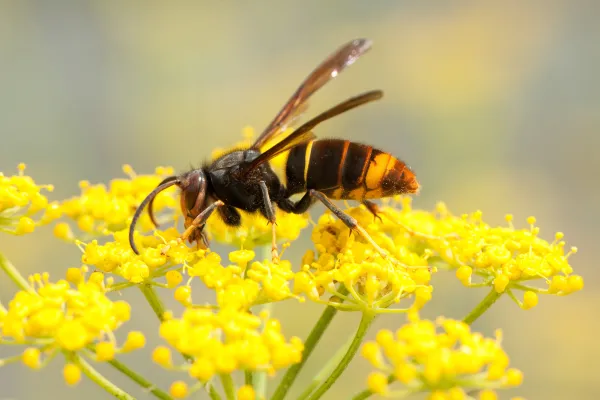
Color pattern
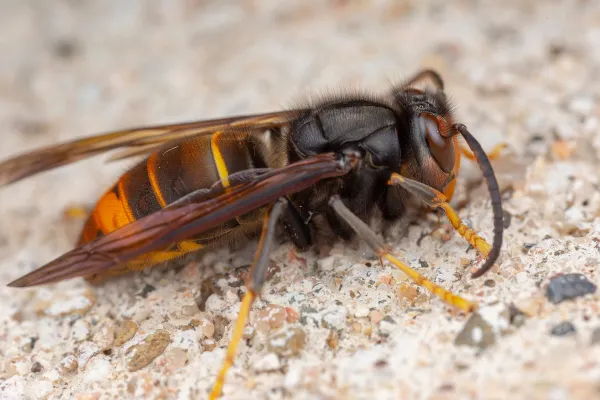
The Asian hornet is generally darker than many other large wasps. Typical features include:
A mostly black thorax.
An abdomen with thin yellow bands, followed by a broader yellow band and a darker tip.
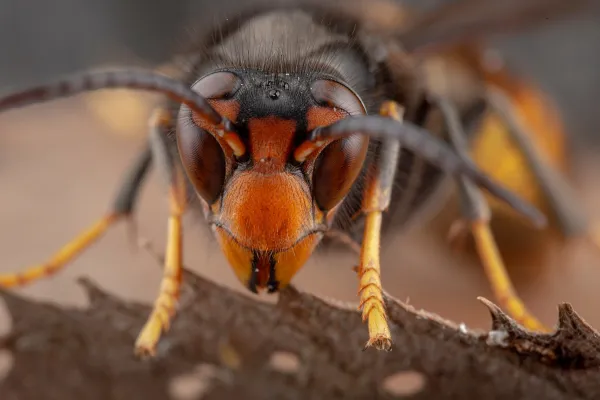
A face with a noticeable yellow front, including the jaw area.
Size
Most adults measure around 3 cm in length.
The sting can be about 6 mm long.
Queens are larger than workers; workers often measure around 2.5 cm.
It is often distinguished from the European hornet by being smaller and darker overall.
Asian Hornet Sting: What Happens if It Stings You?
The Asian hornet is not usually looking for trouble. In many situations it prefers to avoid confrontation and fly away. Most stings occur when the insect feels its nest is threatened. If you disturb a nest—especially at close range—defensive attacks become more likely.
Typical symptoms
Sharp, intense pain at the sting site
Swelling and redness
Itching after the initial pain
When it can become dangerous
For most people, the sting causes local symptoms only. The main serious risk is an allergic reaction. Seek urgent medical help if any of these occur:
Difficulty breathing or wheezing
Swelling of the lips, tongue, face, or throat
Widespread hives
Dizziness, fainting, or feeling “shocky”
Where the Asian Hornet Lives and What Its Nest Looks Like
Native range and spread
The Asian hornet is native to Southeast Asia. It was accidentally introduced into Europe in the early 2000s, with many reports pointing to France around 2004 as an entry point—possibly linked to commercial shipments. From there, it expanded into other European countries, with early detections in nearby regions occurring in the following years.
Nest appearance and location
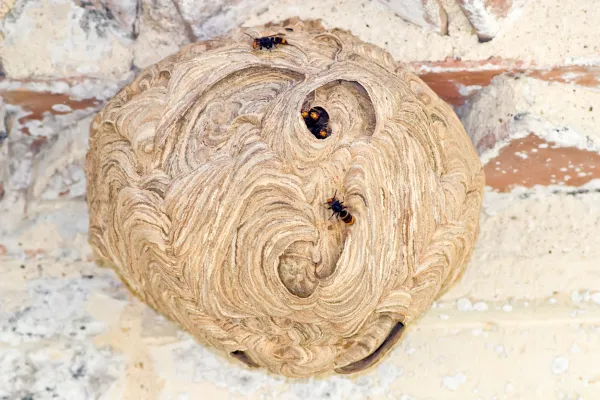
Asian hornet nests are often:
Large—commonly 40 cm to 1 meter in diameter
Spherical or oval in shape
Made of a paper-like material
Placed high, often in tree canopies (secondary nests)
Primary vs. secondary nests
In many established areas, colonies begin in a smaller primary nest (often in sheltered places), and later move to a larger secondary nest higher in trees, where the colony grows dramatically.
What the Asian Hornet Eats
Adults: mostly sugars
Adult Asian hornets commonly feed on nectar and sweet liquids from fruits. These sugar sources fuel flight and daily activity.
Larvae: protein from hunted insects
To raise their young, workers hunt other insects. In many areas, a large portion of the larval diet can come from bees, but they also capture:
dragonflies and damselflies
flies
crickets and other sizable insects
A common hunting strategy near hives
Asian hornets may hover near the entrance of a beehive and ambush returning bees. When carrying prey back to the nest, they often process the insect, keeping the most protein-rich parts for the larvae.
Behavior of the Asian Hornet
The Asian hornet has a highly developed eusocial structure, meaning the colony is organized into specialized castes and roles to keep the nest functioning.
Seasonal cycle
Overwintering: fertilized females (future queens) survive cold months hidden in sheltered places such as cavities, hollow logs, crevices, or protected structures.
Early season: as temperatures rise, a queen starts a primary nest and lays the first eggs.
Colony growth: within a few months, the first workers emerge and take over foraging and nest expansion.
Relocation/expansion: the colony often develops a secondary nest in a tree canopy, where production of new workers, males, and future queens increases.
Late season: new queens leave to mate and find overwintering shelter; the old queen typically dies as the colony collapses with colder weather.
Reproduction and Caste System
Like other eusocial wasps, each caste has a distinct role:
Queen
The only egg-laying female in the colony and the only one that is fertilized for long-term reproduction.
Drones (males)
Their main function is to mate with future queens.
New queens (“princesses”)
Fertilized females that will become the next generation of queens.
Workers
Females that maintain the colony: foraging, building, feeding larvae, and defending the nest.
Threats, Impacts, and Management
The Asian hornet is not considered threatened in areas where it has established. In fact, it is often treated as an invasive pest because it can:
Reduce local pollinator populations (not only honeybees, but also wild bees and other beneficial insects).
Create economic losses for beekeepers by stressing hives and reducing productivity.
Common control approaches
Early nest detection and removal, especially before colonies reach peak size.
Targeted trapping designed to reduce captures of non-target insects.
Public reporting systems in affected regions to locate nests quickly.
Methods vary by region, and safe handling is essential—large nests should be addressed by trained professionals.
Interesting Facts About the Asian Hornet
It is often described as one of the darkest large wasps commonly seen in parts of Europe.
A mature nest can contain thousands of individuals.
They create “paper” by scraping and chewing plant fibers, including bark, then mixing it with saliva.
They have natural predators, including certain birds, though predation pressure often isn’t enough to stop an invasion on its own.