Wasps are often associated with painful stings and social colonies like those of bees or ants. However, many wasps live very differently. Potter wasps are a great example: they are usually solitary and famous for building small clay “pots” as nests. Using mud shaped with their mouthparts, they create jar-like chambers where they raise their young—an impressive bit of natural engineering.
Key Characteristics of Potter Wasps
1) Their signature “pot” nest
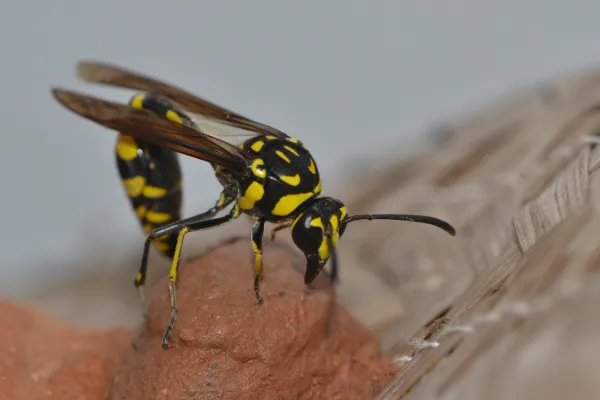
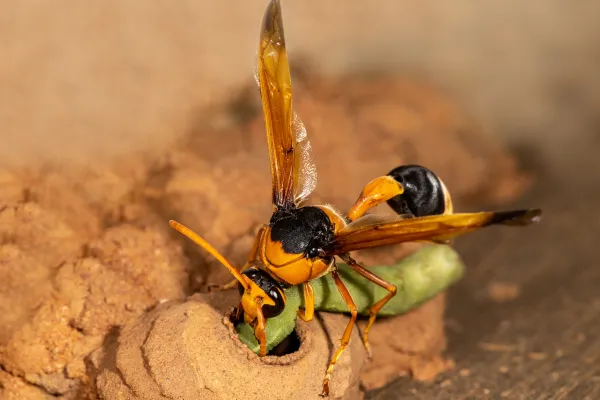
Potter wasps get their name from their nest-building style. The female mixes soil with water to make mud, then molds it into a vase-shaped nest. Some species also use chewed plant material combined with water to form a paste-like building material. These nests may be attached to walls, rocks, branches, or tucked into small crevices.
2) Body shape and appearance
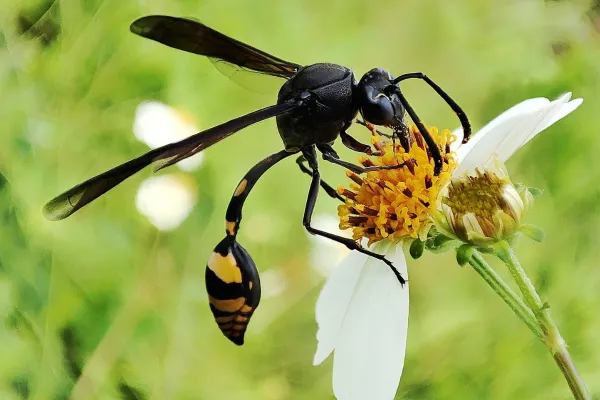
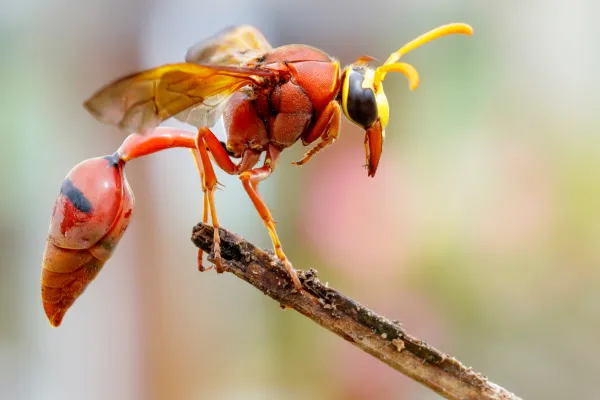
Many potter wasps have a noticeably narrow “waist” (a slim connection between the thorax and abdomen). Their wings are often brownish and may be held folded lengthwise when resting.
In temperate regions, they’re commonly black with yellow, orange, or reddish markings.
In tropical regions, some appear mostly dark with metallic highlights.
Because patterns and colors can vary greatly—even within the same species—nest style is often the most reliable clue for recognizing a potter wasp in the field.
3) Classification
Potter wasps belong to the subfamily Eumeninae. One of the best-known groups is Eumenes, found across many regions of the world. Different areas have their own local species, and new species are still being described.
Where Potter Wasps Live
Potter wasps occur in many parts of the world, with species adapted to different climates and landscapes. They can live in:
gardens and parks,
open woodlands and forest edges,
grasslands and scrub,
urban areas where small nesting cavities exist.
Native and introduced populations
Some species remain limited to their original ranges, while others have been transported—intentionally or accidentally—into new places. In certain regions, introduced potter wasps can affect local ecosystems by heavily preying on native insects, including spiders.
What Potter Wasps Eat
Adults: nectar feeders and pollinators
Adult potter wasps often feed on flower nectar. While they are not as famous as bees, they can still contribute to pollination as they move between flowers.
Larvae: protein from captured prey
To raise their young, females hunt prey such as:
caterpillars,
beetle larvae,
spiders (in many species).
A typical strategy is:
the female stings to paralyze the prey (so it stays fresh),
she stores it inside the mud chamber,
then lays an egg so the larva has food ready when it hatches.
This approach is often called mass provisioning, because the mother stocks the nest with food before the larva begins feeding.
Behavior of Potter Wasps
Solitary lifestyle
Potter wasps are typically solitary. Unlike social wasps, they don’t form large colonies with many workers. Each female handles everything herself—nest building, hunting, egg laying, and nest defense.
Are they aggressive?
In general, potter wasps are not aggressive toward people. Most stings happen only if:
the wasp is grabbed or trapped,
the nest is disturbed,
or the wasp feels directly threatened.
Potter Wasp Sting: What to Expect
A potter wasp sting usually causes localized pain, redness, and swelling. For most people, it is uncomfortable but not dangerous.
Basic home care
Wash the area with soap and water.
Apply a cold compress to reduce swelling.
Consider an oral antihistamine if itching or swelling is significant.
When to seek urgent help
Get medical attention immediately if there are signs of a serious allergic reaction, such as:
trouble breathing,
swelling of the face or throat,
hives spreading beyond the sting site,
dizziness or fainting.
Reproduction and Life Cycle
Potter wasps undergo complete metamorphosis, moving through four stages:
1) Egg
The female typically lays one egg per nest chamber. She may build multiple separate nests, but they are not communal.
2) Larva
The larva hatches and feeds on the paralyzed prey stored in the chamber.
3) Pupa
After feeding, the larva pupates inside a protective casing. During this stage it does not eat, instead transforming into an adult.
4) Adult
The adult emerges fully formed, ready to feed, mate, and (in females) build nests and provision offspring.
Threats and Conservation
Many potter wasp species are not formally listed as threatened, but that does not mean they face no risks. Common pressures include:
pesticides and insecticides used in agriculture and home gardens,
loss of nesting sites due to habitat changes and overly “sterile” landscaping,
unnecessary killing driven by fear, despite their ecological benefits.
Because they help control pest insects and also visit flowers, potter wasps can be valuable components of healthy ecosystems.
Interesting Facts About Potter Wasps
Natural pest control
By hunting caterpillars and other insects, potter wasps can function as a form of biological control, helping reduce pests in gardens and sometimes in agricultural settings.
They use human-made structures creatively
Potter wasps often take advantage of small cavities such as cracks in walls, holes in concrete, drill holes, gaps in wood, or sheltered corners—then reinforce and shape them with mud to create a safer nursery.
Remarkable architecture in miniature
Their mud “pots” are among the most distinctive nests in the insect world—compact, durable, and carefully built to protect a single developing wasp.