The lion (Panthera leo) is one of the most iconic animals on Earth. Celebrated for its strength, charisma and cultural symbolism, the lion has long been regarded as a symbol of courage, leadership and royalty. Although often called the “king of the jungle,” lions actually inhabit vast grasslands and savannas, where their presence helps maintain the delicate balance of African and Indian ecosystems.
Despite their reputation as apex predators, modern lion populations face mounting challenges—including shrinking habitats, increased conflict with humans and persistent threats from poaching. Understanding their biology, behavior and conservation needs helps highlight why lions remain one of the world’s most important yet vulnerable big cats.
3 Types of Lions (Recognized Populations & Lineages)
While all modern lions belong to the same species, Panthera leo, scientists recognize several distinct populations shaped by geography and evolution.
1. African Lion (Panthera leo leo)
African lions once roamed across Europe, the Middle East and most of Asia. Today, they survive mainly in:
Sub-Saharan Africa
Fragmented populations within protected reserves
African lions occupy savannas, shrublands and open woodlands but are rarely found in rainforests or true deserts. They are classified as Vulnerable, with populations declining across most of their range.
2. Asiatic Lion (Panthera leo persica)
This subspecies is critically endangered, surviving only in the Gir Forest of Gujarat, India, with a population of roughly 600 individuals.
Key traits:
Slightly smaller body size
Shorter, sparser mane
Fold of loose skin along the belly (a distinct feature)
Despite their limited range, conservation programs in India have been a major success story.
3. Barbary Lion (Extinct in the Wild)
Once found across North Africa, the Barbary lion was famous for its large, dark mane. Although listed as extinct in the wild, scattered anecdotal reports suggest these lions may have survived much longer than previously believed.
Recent genetic studies on lions kept in captivity indicate some individuals may carry partial Barbary lineage.
Physical Characteristics of Lions
As the second-largest big cats (after tigers), lions possess impressive strength and powerful weaponry designed for taking down large prey.
Size and Weight
Male lions: 330–550 lbs (150–250 kg), up to 8.3 ft (2.53 m) long
Female lions: 270–400 lbs (122–181 kg), up to 5.7 ft (1.7 m) long
Despite their large size, lions are not the swiftest big cats. They reach about 50 mph (80 km/h) in short bursts—still slower than cheetahs—but their power, coordination and teamwork make them highly effective predators.
The Lion’s Mane
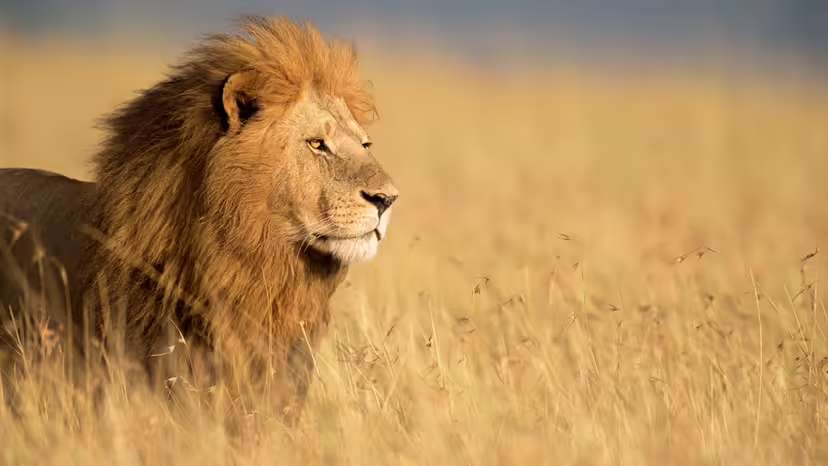
Male lions are instantly recognizable by their majestic manes. The mane:
Provides protection during fights
Signals health and strength to rivals
Attracts females
Darker, thicker manes indicate higher testosterone and better overall fitness
Female lions lack manes, allowing them improved agility and heat regulation—useful for hunting.
Camouflage & Coat Color
Both sexes have tawny to dark brown coats, blending seamlessly into dry savannas and tall grass.
Lions' Social Habits
Lions are the most social of all big cats, living in complex family groups called prides. A typical pride includes:
Multiple related females
Their cubs
1–4 adult males
Female Roles
Female lions:
Are the primary hunters
Coordinate group attacks
Nurse and raise cubs communally
Defend the pride’s territory when males are absent
Male Roles
Adult males:
Protect the pride from intruding males
Defend territory borders
Mate with the pride’s females
Male Dispersal
When young males reach 2–3 years old, they are expelled from the pride and must live nomadically until strong enough to challenge another pride’s leader.
This process keeps lion genetics diverse and prevents inbreeding.
A Lion’s Diet
As apex predators, lions mainly consume large herbivores:
Preferred Prey
Zebras
Wildebeests
Buffalo
Antelopes
Giraffe (occasionally)
Lions are opportunistic and may also eat smaller mammals, scavenge carcasses or even target livestock when natural prey is scarce—often causing conflict with farmers.
How Lions Hunt
Female lions lead coordinated pursuits
They use cover and teamwork to ambush prey
Males participate mainly in hunts requiring brute strength, like buffalo
After a kill:
Males typically eat first
Females follow
Cubs eat last
A Lion’s Natural Habitat
Lions inhabit a variety of landscapes across Africa and India.
African Lions
Prefer savannas, grasslands, semi-open woodlands
Require access to water and abundant prey
Asiatic Lions
Live exclusively in:
Dry deciduous forests
Scrublands of the Gir Forest
The denser vegetation and more temperate climate of India contrast sharply with Africa’s open plains, yet both habitats demand large territories to support lion social groups.
Life Cycle
Birth
A lioness gives birth after a gestation of ~110 days, producing:
1–4 cubs (average)
Cub Mortality
Up to 50% of lion cubs die before reaching adulthood due to:
Predation (hyenas, leopards, nomadic males)
Disease
Starvation
When new males take over a pride, they often kill existing cubs to bring females back into heat.
Growth
Cubs begin eating meat at ~3 months
Learn hunting skills by copying adults
At 2–3 years old, males leave the pride
Lifespan
Wild males: 10–12 years
Wild females: 12–16 years
Lions in captivity can live beyond 20 years
Conservation Status
Lions are classified as Vulnerable by the IUCN, with populations decreasing by ~40% in the last 20 years.
Major Threats
Habitat loss and fragmentation
Declining natural prey
Retaliatory killings due to livestock predation
Illegal hunting and poaching
Human encroachment
Conservation Solutions
Efforts include:
Expansion of protected reserves
Anti-poaching patrols
Relocation programs for problematic lions
Community-based conservation to reduce conflict
Education and ecotourism programs that support local livelihoods
The long-term survival of lions depends heavily on habitat protection and sustainable coexistence with human communities.