When winter arrives and landscapes are covered in snow and ice, many animals face freezing temperatures, food shortages and harsh winds. Yet some species are so well adapted to the cold that winter is simply part of their normal life.
From the polar bear and snow leopard to the narwhal and yak, these winter animals use strategies like thick fur, fat layers, hibernation, brumation and migration to survive in some of the most extreme environments on Earth.
Below you’ll find 25 winter animals and the key adaptations that help each of them endure the cold.

1. Polar Bear (Ursus maritimus)
The polar bear is the top predator of the Arctic and one of the most iconic winter animals.
Key winter adaptations:
Thick layer of fat (blubber) under the skin that insulates against freezing water and air
Dense, water-repellent fur that traps air and keeps heat close to the body
Large paws that work like snowshoes and paddles for swimming
White coat that provides camouflage on snow and ice, letting it stalk seals with minimal detection
Polar bears travel long distances across sea ice hunting seals, often fasting for weeks when food is scarce.

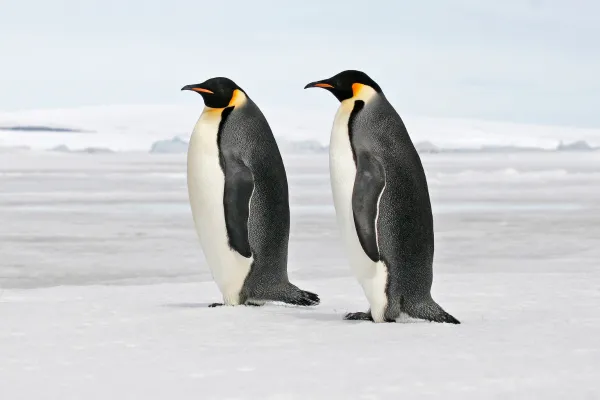
2. Emperor Penguin (Aptenodytes forsteri)
The emperor penguin is the largest penguin species and lives exclusively in Antarctica, where winter temperatures can drop below −60 °C.
How it survives:
Extremely dense, waterproof feathers plus a thick layer of fat for insulation
Lives in huge groups, huddling together to share warmth in brutal blizzards
During the Antarctic winter, males incubate the egg on their feet under a brood pouch while females travel to the sea to feed
Their social behavior and incredible tolerance to cold make them one of the best-adapted winter birds on the planet.
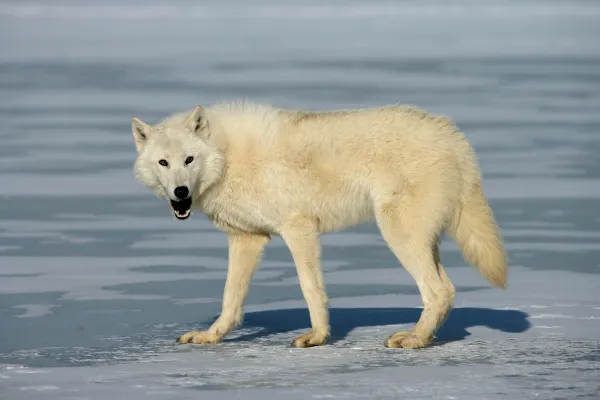
3. Arctic Wolf (Canis lupus arctos)
The Arctic wolf inhabits the northernmost regions of Canada and Greenland, where vegetation is sparse and conditions are severe.
Winter adaptations:
Thick, white coat that protects from low temperatures and helps it blend into snowy landscapes
Lives in small packs, cooperating to hunt caribou, Arctic hares and other prey
Able to travel huge distances in search of food across frozen tundra
Teamwork and stamina allow Arctic wolves to survive in places with almost no shelter.
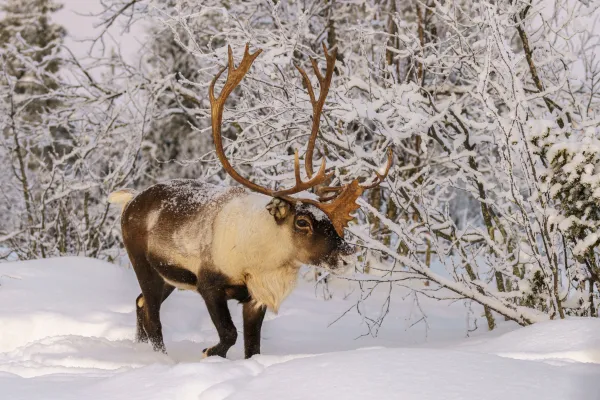
4. Reindeer / Caribou (Rangifer tarandus)
Known as reindeer in Eurasia and caribou in North America, this species is a symbol of winter wildlife.
Adaptations to cold and snow:
Hooves change with the seasons:
In winter, the pads shrink and the edges harden, improving grip on ice and snow
In summer, the pads become softer for muddy ground
Dense fur and a thick fat layer for insulation
One of the most migratory mammals on Earth, traveling thousands of kilometers annually to find food
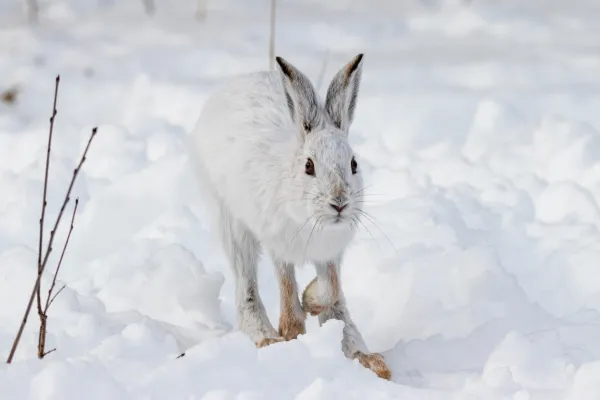
5. Arctic Hare (Lepus arcticus)
The Arctic hare is a small mammal perfectly adapted to snow-covered terrain.
Winter survival traits:
Fur turns completely white in winter, providing excellent camouflage
Powerful hind legs for quick bursts of speed to escape predators
Often lives in groups, helping them conserve warmth and endure cold winds
Efficient metabolism that allows them to survive when food is limited
6. Arctic Ground Squirrel (Urocitellus parryii)
This is one of the few mammals that can hibernate at sub-zero body temperatures without serious damage.
What makes it special:
Spends summer feeding and storing fat
Digs deep burrows and spends winter in a state of hibernation (a very deep, prolonged torpor)
Body temperature can drop close to freezing, yet its organs are adapted to tolerate this extreme condition
When spring arrives, it wakes, feeds intensely and reproduces quickly.

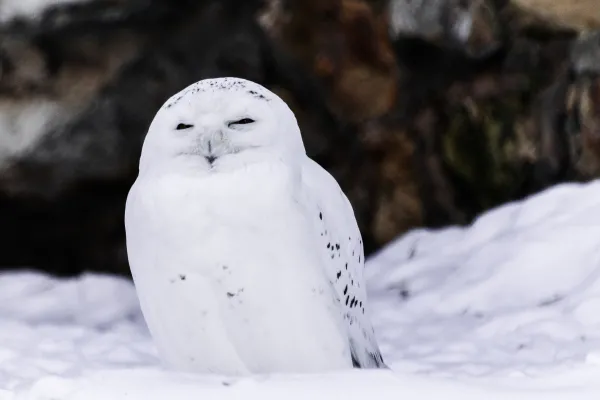
7. Snowy Owl (Bubo scandiacus)
The snowy owl is a striking white owl of the Arctic tundra (often mistakenly called a “snowy barn owl”).
Winter adaptations:
Thick, white plumage that insulates against the cold and provides camouflage
Exceptional night and low-light vision, crucial during long Arctic nights
Hunts mainly rodents like lemmings, but can travel long distances when food is scarce
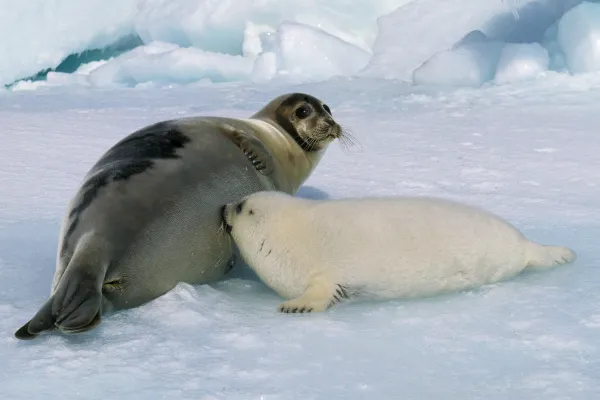
8. Harp Seal (Pagophilus groenlandicus)
The harp seal inhabits the icy waters of the North Atlantic and Arctic.
Key winter traits:
Pups are born on sea ice with a fluffy white coat that acts as insulation and camouflage
Adults rely on a thick layer of blubber to stay warm in freezing water
Excellent divers, able to stay submerged for 15 minutes or more
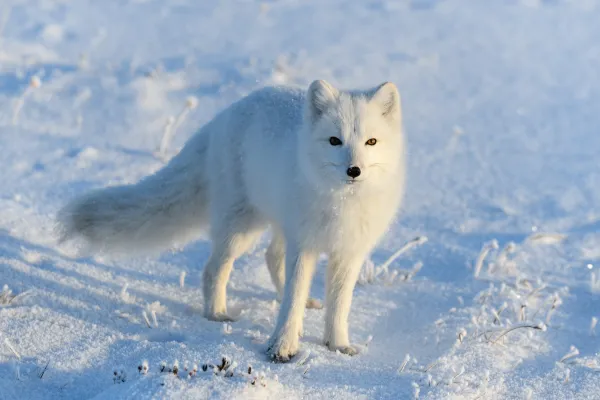
9. Arctic Fox (Vulpes lagopus)
The Arctic fox is one of the best-adapted mammals to extreme cold.
Winter strategies:
Fur changes color with the seasons:
White in winter for snow camouflage
Brown/gray in summer for tundra camouflage
Compact body shape, small ears and densely furred paws to reduce heat loss
Opportunistic diet: eats small mammals, birds, eggs and even leftovers from polar bear kills
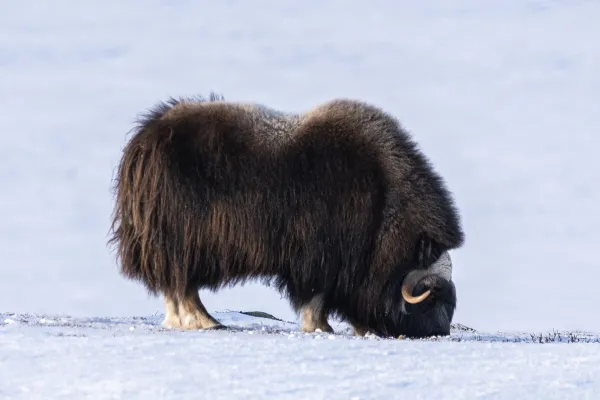
10. Musk Ox (Ovibos moschatus)
The musk ox is a robust herbivore of the frozen tundra.
Cold-weather adaptations:
Double coat:
Long outer hair protects from wind and snow
Inner coat, called qiviut, is one of the warmest natural fibers known
Lives in protective herds that form circles around calves when predators approach
A true symbol of toughness and endurance in Arctic winters.
11. Sea Otter (Enhydra lutris)
Sea otters live along the cold Pacific coasts of the north and have the densest fur of any animal.
How they stay warm:
Instead of thick blubber, they rely on extremely dense fur that traps insulating air
Spend much of their time floating on their backs, grooming fur and cracking shells with stones
Constant grooming is essential to keep their “air layer” intact and prevent heat loss

12. Grizzly Bear (Ursus arctos horribilis)
The grizzly bear is a brown bear subspecies well known for its winter hibernation behavior.
Winter survival strategy:
In autumn, it eats heavily to build up large fat reserves
In winter, retreats to dens or caves, where metabolism, heart rate and breathing slow dramatically
Can go months without eating, relying on stored fat for energy

13. Moose (Alces alces)
The moose is the largest member of the deer family and often associated with snowy forests.
Adaptations:
Long legs that allow it to move through deep snow and wetlands
Thick coat and large body volume help conserve heat
Feeds on twigs, bark and shoots that remain accessible above snow and ice

14. Whooper Swan (Cygnus cygnus)
The whooper swan is an elegant waterbird that can withstand harsh winters in Europe and Asia.
Winter lifestyle:
Many populations migrate south, while others stay on partially frozen lakes
White, waterproof plumage insulates against cold water
Strong wings enable long-distance flights to find open water and food
Its loud, musical calls often echo across snowy landscapes.

15. Golden Eagle (Aquila chrysaetos)
The golden eagle inhabits mountainous and forested regions where winters can be severe.
Cold-season adaptations:
Powerful hunter capable of catching prey even in snow
Exceptional vision allows it to detect small animals from over a kilometer away
In winter, hunts small mammals and birds, showing impressive adaptability

16. Arctic Lemming (Lemmus lemmus)
The Arctic lemming is a small rodent that plays a key role in polar food webs.
How it survives winter:
Lives under the snow, building tunnel systems that shield it from wind and extreme cold
Feeds on mosses and lichens
Reproduces quickly, helping maintain populations despite heavy predation by owls, foxes and other predators

17. Bactrian Camel (Camelus bactrianus)
The Bactrian camel, or Asian camel, is uniquely capable of surviving both desert heat and Central Asian winters.
Winter adaptations:
Has two humps that store fat (not water), providing energy when food is scarce
Long, thick winter coat protects against low temperatures and icy winds
Can partially close its nostrils to shield itself from cold wind and blowing sand or snow

18. Antarctic Petrel (Thalassoica antarctica)
The Antarctic petrel is one of the few bird species that breeds in Antarctica.
Winter strategies:
Excellent flier, able to travel long distances over the Southern Ocean to find food
Nests on rocky cliffs sheltered from the wind
Feeds on fish and crustaceans, supported by waterproof plumage and a fast metabolism to stay warm

19. Timber Rattlesnake (Crotalus horridus)
Also called the forest rattlesnake, this cold-blooded reptile survives winter through brumation, a reptile version of hibernation.
How it gets through winter:
Seeks rock crevices or caves where temperatures remain stable
During brumation, its metabolism drops to a minimum, and it hardly moves
Can survive months without feeding, waiting for spring to become active and hunt again

20. Black-necked Grebe (Podiceps nigricollis)
The black-necked grebe is a small waterbird that spends winter on cold lakes and coastal waters.
Adaptations:
Compact body and waterproof plumage allow it to dive in icy water without losing too much heat
Forms large winter flocks, which helps reduce the impact of wind and predators
Skilled diver that hunts fish and crustaceans underwater

21. Snow Leopard (Panthera uncia)
The snow leopard is a high-altitude big cat adapted to frigid mountain environments.
Cold-climate adaptations:
Lives in the Himalayas and Central Asian mountains, where temperatures can fall below −30 °C
Thick, spotted fur camouflages it among snowy rocks while hunting goats and deer
Very long, bushy tail acts like a blanket, often wrapped around its body and face while resting

22. Weddell Seal (Leptonychotes weddellii)
The Weddell seal lives in the freezing waters around Antarctica and is one of the most cold-resistant seal species.
Winter survival skills:
Can dive to 600 meters or more and stay underwater over an hour
Uses sharp teeth to maintain breathing holes in the ice, even in the depths of winter
Thick blubber and sturdy body help it withstand intense marine cold

23. Narwhal (Monodon monoceros)
The narwhal, often called the “unicorn of the sea”, is one of the most distinctive Arctic cetaceans.
Special features:
Males (and some females) have a long spiral tusk, actually an elongated canine tooth that can reach 3 meters, thought to have sensory and possibly social or hunting functions
Lives in groups and feeds on fish, squid and shrimp under the ice
Thick blubber insulates it from near-freezing Arctic waters

24. Rock Ptarmigan / Willow Ptarmigan (Lagopus muta)
Known in Spanish as perdiz nival, this mountain bird changes plumage with the seasons.
Winter adaptations:
Brown in summer, white in winter, helping it hide from predators on snow
Lives in cold regions of the Northern Hemisphere, such as Scotland, Iceland and Siberia
Feeds on buds, seeds and small invertebrates found under or above snow
Dense plumage and compact body protect it from strong winds and low temperatures

25. Yak (Bos grunniens)
The yak is a large bovine adapted to the high mountains of the Himalayas, where snow and cold dominate much of the year.
Survival in winter:
Extremely thick coat shields it from icy winds and heavy snow
Huge lung capacity allows it to live at altitudes above 4,000 meters, where oxygen is scarce
Domestic yaks are vital for local communities, providing milk, wool and transport
Wild yaks form herds that huddle together during winter storms for protection

These 25 winter animals show just how creative evolution can be: from changing coat colors and super-insulating fur to deep hibernation, brumation and long-distance migration.
All of them remind us that even in the coldest, harshest conditions, life finds a way to thrive.