When people imagine a clash between an African elephant and a rhino, they usually picture raw power versus armored aggression. It is a compelling matchup—but zoologically, the answer is not as simple as “one always beats the other.” In Africa, “rhino” usually means either the white rhino (Ceratotherium simum) or the black rhino (Diceros bicornis), while “African elephant” can refer to the savanna elephant (Loxodonta africana) or the smaller forest elephant (Loxodonta cyclotis). In an open-country comparison, the most relevant elephant is usually the African savanna elephant, the largest land animal alive today.
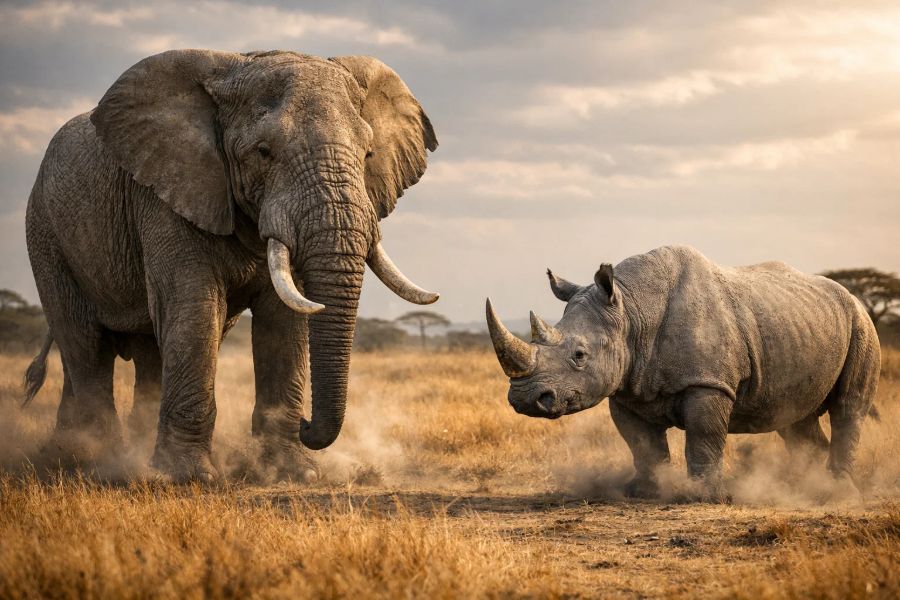
From a zoologist’s perspective, this is really a comparison of two different survival strategies. Elephants evolved as giant, highly social ecosystem engineers with trunks, tusks, great height, and immense mass. Rhinos evolved as heavily built, thick-skinned herbivores with low centers of gravity, powerful necks, and formidable horns designed for stabbing, hooking, and dominance displays. Both are dangerous, both are impressive, and both can dominate space when they choose to.
Quick Comparison Table
Approximate values below are compiled from WWF, IUCN, San Diego Zoo, and Britannica sources; rhino figures vary by species and sex.
| Feature | African Elephant | African Rhino | Why It Matters in a Face-Off |
|---|---|---|---|
| Main species in this comparison | Savanna elephant most relevant in open habitats; forest elephant smaller | White rhino and black rhino | “Rhino” is not one exact African form |
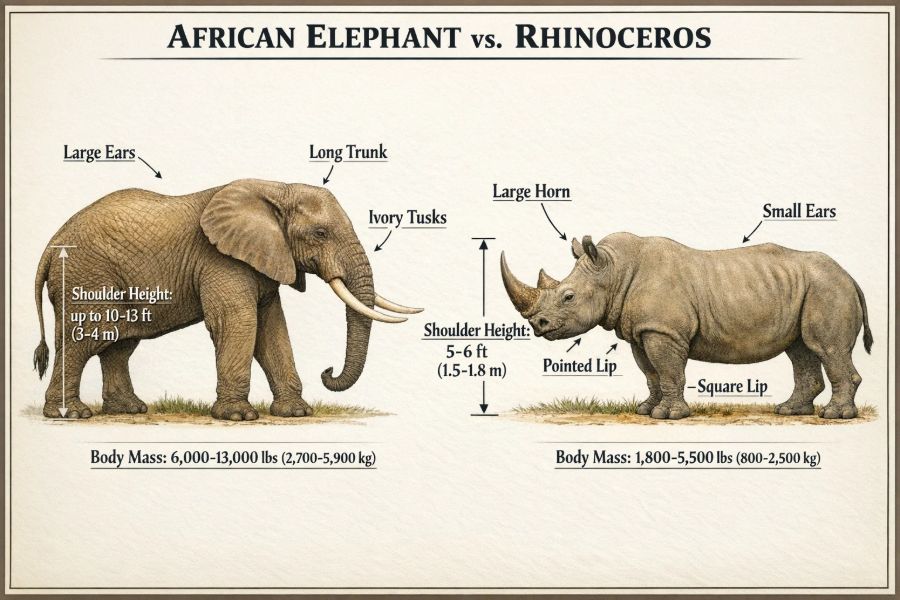
| Typical body mass | Around 4–6 tons; very large bulls can exceed that | White rhino about 3,080–7,920 lb; black rhino about 1,760–3,080 lb | Elephant usually has the mass advantage |
| Height | Around 11 ft at the shoulder for African elephants | About 5–6 ft at the shoulder | Elephant gains reach and striking angle |
| Main weapon | Tusks plus trunk-assisted pushing and lifting | One or two keratin horns; powerful charge | Rhino’s attack is more concentrated and spear-like |
| Body plan | Taller, broader, more flexible front end | Lower, compact, battering-ram build | Rhino can drive force low and forward |
| Social behavior | Females live in matriarchal herds; many bulls are solitary or in bachelor groups | White rhinos can be somewhat social; black rhinos are mostly solitary and territorial | Social context affects who yields and who escalates |
| Diet | Mixed feeding with major habitat-shaping effects | White rhino = grazer; black rhino = browser | They overlap partly but use vegetation differently |
| Conservation status | African savanna elephant: Endangered; African forest elephant: Critically Endangered | Black rhino: Critically Endangered; white rhino: Near Threatened overall | Both need protection more than comparison battles |
Size: The Elephant’s Biggest Advantage
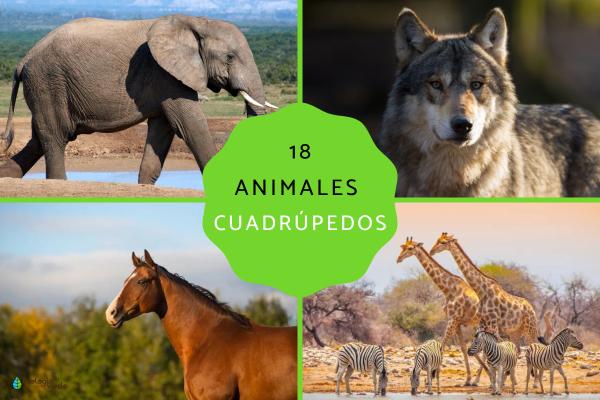
If the contest is decided mainly by body size, the African elephant usually starts ahead. African elephants are the largest land animals on Earth, with WWF listing African elephant weight at roughly six tons and Britannica noting that large male African bush elephants can reach well beyond 4,500 kg. By contrast, WWF lists white rhinos at roughly 3,080–7,920 pounds and black rhinos at about 1,760–3,080 pounds. Even a very large white rhino is typically smaller than a big bull elephant.
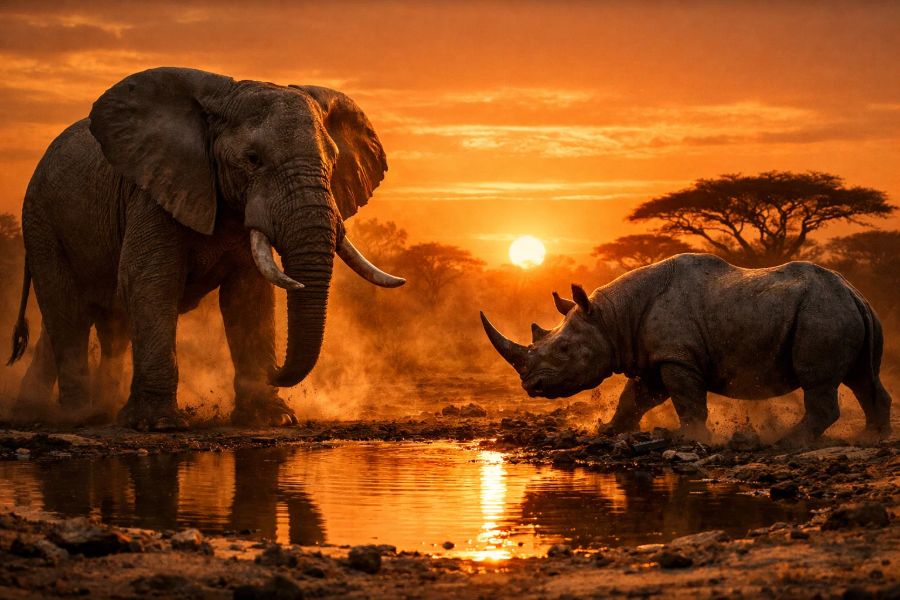
Height also matters. An elephant’s shoulder height, head position, and overall reach allow it to shove downward, twist sideways, and use leverage against a lower animal. A rhino’s body is massively built, but its profile is lower and more forward-driven. In practical terms, this means the rhino is excellent at charging into an opponent’s legs or underside, while the elephant is better at dominating the upper line of contact and using its greater bulk to displace another animal. That does not make a rhino harmless—far from it—but it does tilt the biomechanics toward the elephant in many direct collisions. This is an inference from comparative anatomy and size data rather than a universal rule for every encounter.
Weapons: Tusks and Trunk vs Horn and Charge
The elephant’s tusks are modified incisor teeth that keep growing and are used for defense, offense, digging, lifting, stripping bark, and moving objects. Combined with the trunk—which elephants use for touching, pushing, lifting, drinking, communication, and even forceful contact—the elephant fights with a mix of power and versatility.
Rhinos are less versatile, but their weapon is brutally direct. San Diego Zoo notes that rhinos have one or two horns and that those horns are made of keratin, the same material found in hair and fingernails. Their thick bodies, strong necks, and low stance make them ideal for short-range impact. A startled rhino may charge explosively, and because the horn is positioned at the front of a dense, forward-driving skull, the attack can be extremely dangerous.
So which weapon system is superior? In pure penetration, the rhino’s horn is the sharper and more focused weapon. In overall fighting utility, the elephant’s combination of mass, reach, tusks, and trunk-assisted grappling is broader. A rhino can cause catastrophic injury in a single well-placed charge, but the elephant has more ways to control distance and posture during a prolonged confrontation. That conclusion is again an inference from anatomy and observed behavior.
Temperament and Social Behavior
Elephants are deeply social. WWF describes elephant societies as matriarchal, with related females and calves living together while males often live alone or in small bachelor groups. This social structure matters because elephants are used to negotiating rank, protecting young, and coordinating movement. A mature female with calves may be especially assertive; a large bull may be unpredictable and highly forceful.
Rhinos are different. White rhinos are more tolerant of conspecifics than black rhinos, and females may occur in loose groups, but black rhinos are mostly solitary and territorial. White rhinos are specialized grazers with broad square lips, while black rhinos are browsers with pointed upper lips adapted for plucking leaves and twigs. That ecological difference influences temperament and habitat use as well as how often they overlap with elephants around food and water.
Rhinos also have a reputation for aggression, but that reputation needs nuance. San Diego Zoo notes that rhinos have poor eyesight and often charge when startled, while also possessing excellent hearing. In other words, some rhino “aggression” is defensive uncertainty rather than deliberate combativeness.
What Do Real Observations Suggest?
One of the most useful pieces of evidence comes from a study of interspecific dominance in African elephants and rhinos. Berger and Cunningham reported that in 159 encounters, female elephants dominated both sexes of black rhinos, while male rhinos displaced elephant bulls. Their conclusion was not that one species always wins, but that dominance is context-dependent and shaped by sex, size, and resource competition.
That finding is important because it breaks the myth of a single fixed winner. A rhino—especially a large male in the right context—can absolutely displace an elephant. But it also shows that elephants, particularly females defending space or access, can be behaviorally dominant over rhinos. In ecology, “winning” often means forcing the other animal to yield, not killing it.
Research also suggests competition can intensify where large herbivores are confined or resources are limited. A later study in PLOS ONE found evidence that black rhinoceroses shifted diet in the presence of elephants in Addo Elephant National Park, supporting the idea that elephants can alter resource availability for rhinos. This does not mean elephants and rhinos are perpetual enemies; it means that very large herbivores can influence one another strongly through space use and feeding pressure.
So, Who Would Win?
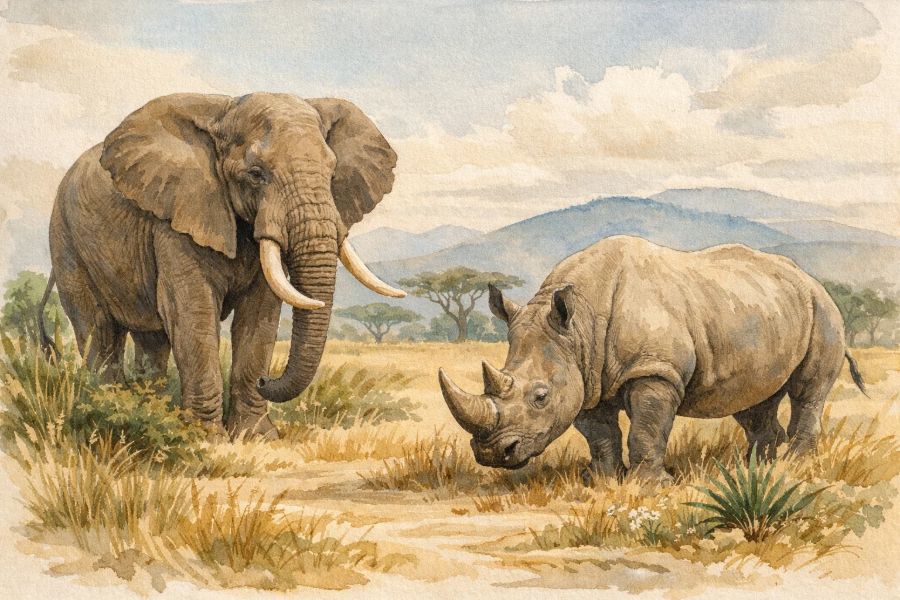
If the matchup is a full-grown African savanna elephant bull versus a black rhino, the elephant would usually be favored because of its much greater mass, height, and reach. Against a white rhino, the size gap may be somewhat smaller, but the elephant still generally retains the advantage in total bulk and leverage. A rhino’s best chance would be an explosive, well-placed charge delivered before the elephant fully controls the encounter.
But in the wild, outcomes are rarely about formal duels. They are about space, calves, stress, water, vegetation, and surprise. A rhino may win the moment by charging and forcing retreat. An elephant may win by standing ground, displacing the rhino physically, or simply being too massive to challenge safely. The most scientifically honest answer is this: the elephant is usually the stronger all-around giant, but the rhino is dangerous enough that no encounter is trivial.
The Ecological Story Matters More Than the “Battle”
As dramatic as “elephant vs rhino” sounds, the more important scientific story is that both animals are cornerstone African megaherbivores. Elephants reshape landscapes, disperse seeds, open clearings, alter water access, and influence vegetation structure across large areas. Rhinos also play key ecological roles, and black rhino conservation in particular protects wide habitats that benefit many other species.
Both are also under serious pressure from people. WWF estimates about 415,000 African elephants remain in the wild, with African elephant populations having fallen dramatically from historical levels. WWF lists black rhinos as Critically Endangered with almost 6,500 individuals, and white rhinos at about 16,800, while IUCN recognizes African savanna elephants as Endangered and African forest elephants as Critically Endangered. So the real conservation priority is not asking which one would win, but ensuring that both still exist in functioning African ecosystems a century from now.
Conclusion
In a simplified head-to-head comparison, the African elephant usually has the edge because it is taller, heavier, and more versatile in combat. The rhino, however, remains one of the few land mammals dangerous enough to make that advantage less than absolute. Real encounters are shaped by sex, age, species, habitat, and motivation. Zoologically, then, the best conclusion is not “elephant always wins,” but rather: elephants are generally dominant giants, while rhinos are specialized power tanks capable of turning a contest in an instant.
References
World Wildlife Fund. African elephants; Elephant; Black Rhino; White Rhino species pages.
IUCN Red List. Loxodonta africana (African Savanna Elephant) and Loxodonta cyclotis (African Forest Elephant).
Berger, J., & Cunningham, C. 1998. Behavioural ecology in managed reserves: gender-based asymmetries in interspecific dominance in African elephants and rhinos. Animal Conservation, 1(1): 33–38.
Landman, M., Schoeman, D. S., & Kerley, G. I. H. 2013. Shift in Black Rhinoceros Diet in the Presence of Elephant: Evidence for Competition? PLOS ONE, 8(7): e69771.
San Diego Zoo Wildlife Alliance. Rhinoceros and White Rhinoceros species pages.
Encyclopaedia Britannica. Elephant and African bush elephant entries.