Gulls are some of the most familiar birds around coasts, beaches, harbors, and rivers, known for their bold behavior and loud calls. The black-headed gull (Chroicocephalus ridibundus) is one of the most recognizable medium-sized gulls. Its call can sound like a harsh, laughing “kree-ar”, which is why many languages describe it as a “laughing” gull.
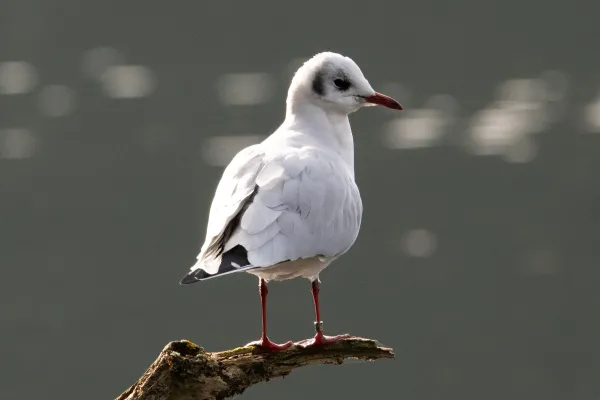
Despite the name, the bird’s head is not black year-round—and it isn’t even truly black in summer. In breeding season it develops a dark chocolate-brown hood, which fades to a mostly white head in winter.
Quick Facts
Scientific name: Chroicocephalus ridibundus
Common English name: Black-headed gull
Size: about 35–43 cm long (often described as “medium-sized”)
Wingspan: about 94–110 cm
Weight: commonly ~200–400 g (males slightly heavier on average)
Typical habitats: coasts, ports, estuaries, lakes, rivers, reservoirs, farmland, and landfills
Migration: partly migratory—many populations move south in winter
Conservation status: generally considered Least Concern globally, with large populations (though local trends can vary)
Identification: Key Characteristics
1) Hooded head (seasonal)
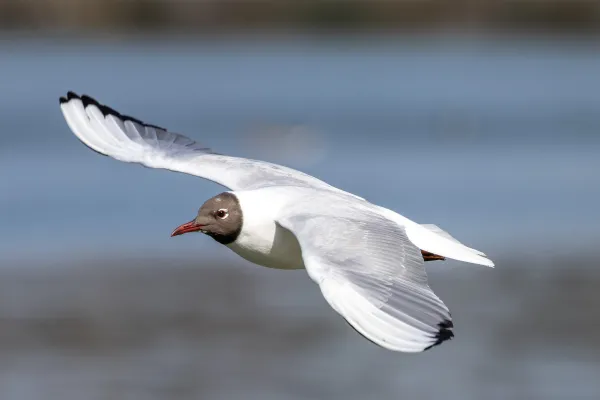
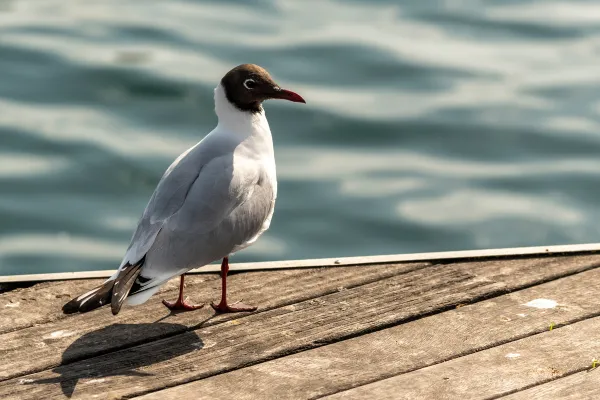
Breeding season (spring–summer): adults show a dark brown “hood” covering much of the head (often called “black-headed” in English tradition).
Non-breeding season (autumn–winter): the hood disappears; the head becomes white with a small dark spot near the ear and sometimes faint smudging.
Juveniles and non-breeding birds can look very different from breeding adults, which is why misidentification is common.
2) Body plumage
Body is mostly white with pale gray on the back and upper wings.
In winter, the gray tones can look slightly duller.
3) Bill and legs
Breeding season: bill typically red (often deep red), legs red.
Winter: bill can appear darker / duller, sometimes with a dark tip; overall red tones are reduced.
4) Wings and tail
Wings are long and pointed, giving fast, agile flight.
Tail is short and rounded.
5) Molting and age changes
Black-headed gulls go through several plumage stages:
First-year birds show more brown mottling on wings and may have a darker tail band.
Adult plumage develops gradually, and full breeding features are strongest after maturity.
Where Does the Black-headed Gull Live?
Broad range
This species has a wide distribution across Europe and Asia, and it also appears in other regions through migration and wintering movements.
Breeding: widely across temperate Eurasia, especially wetlands and inland waters.
Wintering: many birds move south or to milder coasts and lowlands in winter.
Habitats you can expect to see it in
Although people associate gulls with the sea, black-headed gulls are also very comfortable inland:
Beaches and harbors, but usually not far offshore
Rivers, lakes, reservoirs, and wetlands
Estuaries, saltmarshes, lagoons, salinas
Farmland and plowed fields
Landfills and urban edges where food is available
Grouping behavior
Outside of breeding colonies, they often form:
small feeding groups (sometimes 10–20 in a spot)
large roosts at night, especially in winter, when hundreds or thousands may gather.
Behavior and Personality
Social, opportunistic, and territorial when nesting
Very social: often feeds in groups and roosts communally.
During breeding, colonies can be highly territorial and noisy.
If a predator or intruder approaches nests, gulls may perform:
loud alarm calls
mobbing flights
dramatic threat postures (head lowering, wing spreading)
Flight and feeding style
Fast and agile, capable of quick turns and sudden dives.
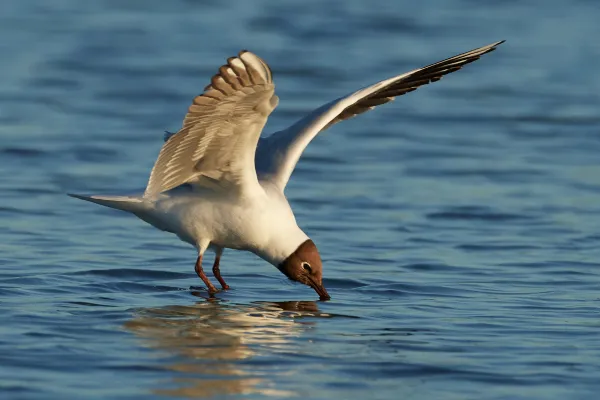
When taking prey from water, it can spot food from above and dip or plunge to grab it, though it often also feeds by walking and picking items from surfaces.
Diet: What Does the Black-headed Gull Eat?
Black-headed gulls are classic opportunistic omnivores. Their diet changes depending on season and local availability.
Natural foods
Small fish
Aquatic and terrestrial invertebrates: insects, larvae, worms
Crustaceans and mollusks in coastal areas
Eggs and chicks of other birds occasionally (especially where colonies overlap)
Carrion and dead fish along shorelines
Human-related foods
Because they live close to people, they also eat:
food scraps and refuse from cities, ports, beaches
edible waste from landfills
leftovers from fishing areas
This flexibility has helped many populations remain stable or increase in human-dominated landscapes.
Reproduction: Nesting Season and Chick Development
Breeding period
Usually April to July (varies by latitude and climate).
Nest sites
They often breed in colonies near water, choosing:
saltmarshes, lagoons, wet meadows
salinas (salt pans)
reedbeds and vegetated islets
shallow wetlands with nearby cover
Nest construction
Nests are built from dry grasses, reeds, leaves, and small twigs.
Adults may continue adding material during incubation.
Eggs and incubation
Typical clutch: 2–3 eggs (sometimes 1).
Egg color: usually olive to greenish-brown with darker speckles (camouflage).
Incubation: about ~22–24 days, shared by both parents.
Chicks
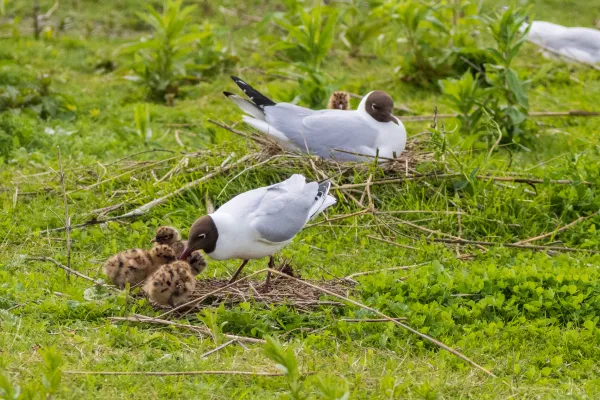
Chicks are semi-precocial: they can move around early but still rely on parents.
They hide in vegetation for protection.
Parents feed them regurgitated food at first, then increasingly solid prey.
Chicks often fledge at about 4–6 weeks, depending on conditions.
Sexual maturity is usually around 2 years.
Mixed colonies
They may nest near or alongside other waterbirds such as:
terns, avocets, stilts, and other marsh-nesting species.
Threats and Conservation
Current conservation outlook
In many regions, the black-headed gull is not considered globally threatened, but local populations can decline due to habitat changes.
Main pressures
Drought or changing water levels at nesting wetlands (nests may fail if marshes dry out)
Predation on eggs and chicks, including from dogs, foxes, and other predators near human settlements
Wetland loss and disturbance (drainage, development, heavy recreation)
Changes in waste management: because many gulls use landfills, shifts in garbage disposal can reduce an important food source (this can be good for human–wildlife conflict reduction, but it may change gull distribution and breeding success)
Historically, in some places gull eggs and adults were harvested for food, but this has generally declined, helping populations recover or stabilize.
Interesting Facts
The “laughing” name comes from its raspy, chuckling call.
Very adaptable: can live near humans in towns, ports, and inland lakes.
Often seen as “beach cleaners” because they eat scraps—but they also steal food from other birds and humans.
Traditional sayings in parts of Europe link gull behavior to weather changes (people noticed gulls moving inland before storms).
They may use temporary roosts for a single night, shifting with food and disturbance.
FAQ
Is its head really black?
Not exactly. In breeding season it has a dark brown hood; in winter the head is mostly white.
Do black-headed gulls only live by the sea?
No. They are commonly found inland at rivers, lakes, reservoirs, and even farmland.
Are they aggressive?
They can be bold around food, and very defensive near nests, but they are not dangerous to people in normal situations.