The red wolf (Canis rufus) is one of the world’s rarest wild canids. It is a medium-sized, social predator that typically lives in small family packs, hunts mostly at dawn, dusk, and night, and plays an important ecological role by regulating populations of mid-sized prey.
Today, the red wolf is best known not only for its reddish-tinted coat, but also for its dramatic conservation story: once widespread across the southeastern United States, it now survives in the wild mainly due to reintroduction efforts—and it continues to face serious threats such as human-caused mortality and hybridization with coyotes.
Quick Facts
Scientific name: Canis rufus
Wild lifespan: often ~4–7 years (varies with survival conditions)
Captive lifespan: can reach ~15 years
Legal status (U.S.): Endangered under the Endangered Species Act
Global status (IUCN): commonly listed as Critically Endangered
Wild population today: the only established wild population is in eastern North Carolina (numbers fluctuate year to year)
Key Characteristics of the Red Wolf
1) Size and build
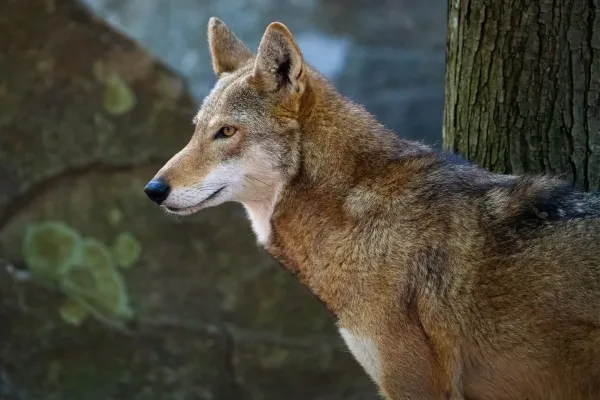
The red wolf is often described as intermediate in size between a coyote and a gray wolf.
Body length (including tail): commonly around 1.3–1.6 m
Weight: commonly ~20–39 kg (males average larger than females)
Body shape: lean, long-legged, and athletic—sometimes compared to a “long-limbed” canid silhouette.
Note: Some older or non-specialist sources overestimate red wolf weight. Most modern field references place adults well below 60 kg.
2) Head, ears, and legs
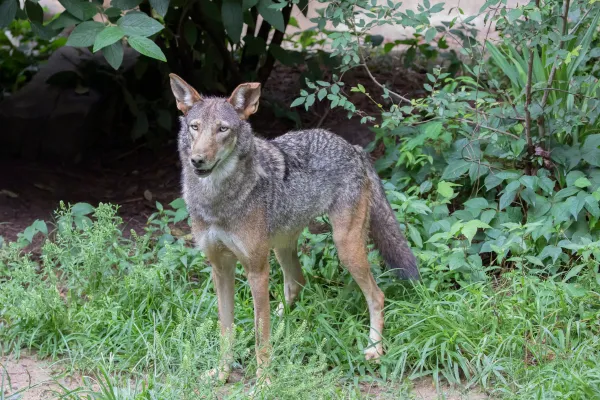
Ears are relatively large and pointed
Legs are typically slender and long, suited for traveling across mixed habitats like wetlands, forest edges, and coastal plains.
3) Coat color
Despite the name, most red wolves are not fully red.
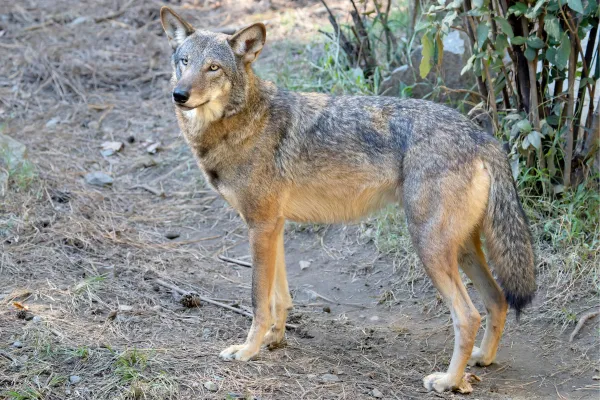
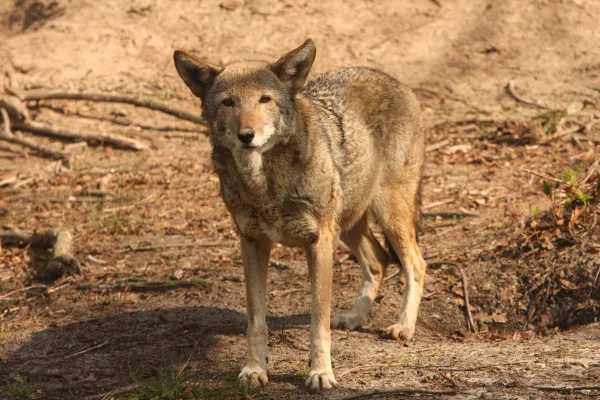
The coat is typically a blend of tawny, buff, gray, brown, with reddish tones often most visible behind the ears, along the neck, and on the legs.
Seasonal molting can make the coat appear different across the year.
Taxonomy: Why There’s Debate About “What” a Red Wolf Is
The red wolf’s classification has been debated for decades. Some researchers emphasize that it is a distinct lineage, while others focus on the history of gene flow among wolves and coyotes—especially after human-driven habitat change in North America.
What most scientists agree on:
Red wolves hybridize with coyotes where their ranges overlap.
Preventing extensive hybridization is a major conservation challenge because it can reduce the number of genetically identifiable red wolves in the wild.
Where Does the Red Wolf Live?
Historic range (before major declines)
Historically, red wolves were associated with the southeastern United States, especially coastal plains and lowland regions—areas that included forests, marshes, swamps, and river corridors.
Current wild range
Eastern North Carolina hosts the only established wild population associated with the U.S. recovery program.
The landscape there is a patchwork of wetlands, forests, farmland, and refuges, where wolves use cover and travel corridors near water.
Red wolves tend to be linked with humid, lowland habitats rather than arid regions, and they often move along river systems and wetland edges.
Red Wolf Behavior
Social structure: small packs, family-based
Red wolves typically form small packs that function as family groups.
In many packs, there is one primary breeding pair, and other members help raise pups.
Activity pattern
Often most active at night and during low-light hours (dawn/dusk).
During the day, they may rest in dense cover.
Communication
Red wolves communicate using multiple channels:
Howls and other vocalizations (contact calls, territory advertisement)
Scent marking (urine, feces, gland scents)
Body language (posture, facial expressions, tail position)
Diet: What Do Red Wolves Eat?
Red wolves are opportunistic carnivores and can be described as broadly omnivorous in the sense that they may consume plant material occasionally, but they rely primarily on animal prey.
Common food items include:
Rabbits and hares
Rodents (various species)
Raccoons
Birds (especially ground-feeding species when available)
Occasional larger prey such as deer, especially when packs cooperate or when vulnerable individuals are available
They may also eat:
Carrion (dead animals)
Seasonal fruit when prey is scarce
Because food availability can fluctuate, wolves may eat heavily after a large kill and then go longer periods with less food.
Reproduction and Pup Development
Breeding season
Breeding commonly occurs from winter into early spring (often January–March in many accounts).
Gestation and litter size
Gestation: about ~60–63 days
Litter size: commonly 3–6 pups, though larger litters can occur.
Den sites
Females select or prepare den areas that provide:
concealment
stable ground above flooding risk when possible
proximity to travel routes and resources
Dens can be:
excavated sites
enlarged natural cavities
hollow logs or sheltered spots in dense vegetation
Early life
Pups are born blind and deaf.
They remain highly dependent for the first few weeks and begin exploring outside the den as they grow.
Pack members often help with pup rearing by bringing food and guarding the den area.
Threats and Conservation
The red wolf is at high risk in the wild. Major pressures include:
1) Hybridization with coyotes
Coyotes expanded into parts of the historical red wolf range.
Interbreeding can reduce the number of genetically distinct red wolves and complicate recovery.
2) Human-caused mortality
Even with legal protection, red wolves can be lost due to:
shooting (including misidentification as coyotes)
vehicle collisions
poisoning or other conflicts
3) Habitat change
Development, road networks, and land conversion can fragment habitat and increase human-wildlife encounters.
4) Small population risks
When a wild population is very small, it becomes vulnerable to:
inbreeding
disease outbreaks
random events (storms, floods, sudden mortality spikes)
Conservation Efforts (What’s Being Done)
Key approaches used in recovery planning include:
Captive breeding programs (a managed “insurance” population)
Careful releases into the wild and monitoring with radio/GPS collars
Managing hybridization, including targeted coyote management in recovery areas
Public outreach and landowner cooperation (especially important where wolves share space with farms and private land)
Interesting Facts About Red Wolves
Packs are usually led by a breeding pair, but pup-rearing is often a group effort.
Their coat can shift in tone between seasons, with winter coats often appearing denser and sometimes darker.
They are generally shy around people, avoiding open areas during the day when possible.
The wild population’s size can change quickly depending on pup survival and human-related losses.
A number sometimes quoted online (for example, “only seven left”) reflects a particularly low point in certain past years; recent reports indicate the wild population has fluctuated upward from that extreme low, though it remains critically small.
FAQ
Is the red wolf the same as a gray wolf?
No. Red wolves are typically smaller and have different ecology and history. Their genetics also reflect a complex relationship with coyotes and gray wolves.
Are red wolves dangerous to humans?
Attacks on humans are extremely rare. Like most wild canids, red wolves generally avoid people.
Why is hybridization such a big problem?
When a very small wolf population interbreeds with a more common species (coyotes), it can dilute the distinct wolf lineage and reduce recovery success.
Where can you see red wolves today?
The best-known wild population is in eastern North Carolina under the U.S. recovery program. Red wolves are also present in captive breeding facilities and some managed sites.
References (for editors / fact-checking)
U.S. Fish & Wildlife Service — Red Wolf Recovery Program (project pages and release planning documents).
U.S. Fish & Wildlife Service — Red Wolf 5-Year Status Review (mentions threats such as hybridization and human-caused mortality, plus captive population scale).
IUCN Red List — Canis rufus assessments and supporting notes.
National Academies of Sciences reports discussing red wolf genetics, divergence, and introgression history.