For almost a century, wolves were absent from Catalonia. The last wolf traditionally cited in the region was killed in 1929, and for decades the species survived only as memory, folklore, and place names. That changed in the early 2000s, when the first modern evidence of wolves returning to Catalonia was detected in the Cadí-Moixeró area. Genetic analysis later showed that these animals were not Iberian wolves, but wolves of Italian lineage that had naturally expanded westward through France into the Pyrenees.
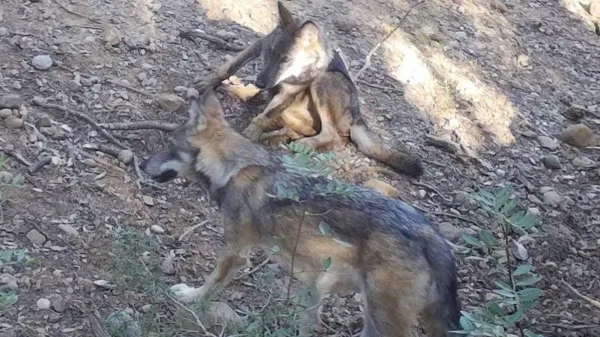
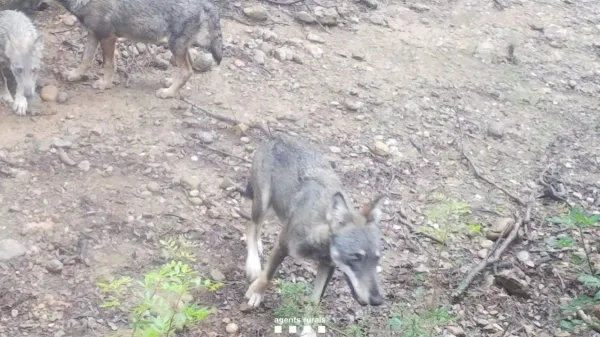
The story reached a historic turning point in November 2025, when Catalonia’s Rural Agents officially confirmed the first wolf family born in Catalonia in more than 100 years: two adults and three pups in a broad area between Alta Garrotxa and Alt Empordà. The Generalitat described it as the first confirmed breeding event in the territory in over a century.
How Wolves Returned to Catalonia
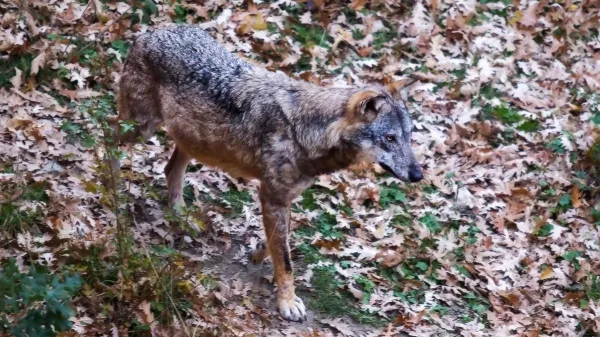
The wolf’s return to Catalonia did not begin with a planned reintroduction. It appears to have been a natural recolonization process. Official monitoring in Catalonia has traced the species’ modern return to the year 2000, when the first wolf sign confirmed by genetic analysis was collected in the Cadí-Moixeró Natural Park. Public communications from the Rural Agents have long identified these returning wolves as animals of Italian origin, part of the wider expansion of the Apennine wolf population through France and into the Pyrenees.
Over the following years, more wolves were detected in parts of the Pyrenees and Pre-Pyrenees. But breeding did not become established, and the species remained sporadic in Catalonia. That is why the 2025 litter matters so much: it marks the moment when wolves stopped being merely passing visitors and became a reproducing species again within Catalan territory.
How the Wolf Family Was Documented
According to reporting based on the work of the Rural Agents, what first seemed like another isolated wolf detection turned into something much more important. A female was detected in the Alt Empordà area in early 2024, and later the presence of a male in the same general zone was also documented. By late 2024, camera-trap images captured the two adults together, and continued monitoring eventually confirmed three pups born in 2025. Authorities deliberately avoided revealing the family’s exact location in order to reduce disturbance during a sensitive period.
This cautious monitoring strategy is typical for wolves, especially when pups may be present. Human disturbance near a breeding pair can alter movement patterns, increase stress, or encourage the animals to abandon an area. For that reason, the official communication focused on confirmation of the family rather than on public access or precise site information.
Could the Pair Have More Pups This Spring?
The original Spanish article suggests that the pair could breed again in spring 2026. That is biologically plausible. Wolves usually breed once a year, with mating generally taking place in late winter and pups typically being born about two months later in spring. In southern Europe, February is often a key month in the breeding season, with births usually following in April or May. This means that if the Catalan pair remained together through winter 2025–2026, a second litter in spring 2026 would be entirely possible. However, I have not found an official confirmation that a new litter has already been produced, so this should still be treated as a possibility rather than a confirmed event.
If the pair does breed again, that would be a major sign that wolves are no longer just reappearing in Catalonia, but beginning to establish a stable family unit. In wolf society, older offspring often remain with their parents for a period and can help the group by participating in territory defense, movement, and later pup-rearing. A second consecutive litter would therefore have importance far beyond the number of new pups: it would suggest the early formation of a lasting pack. This is a biological inference based on normal wolf behavior, not a confirmed field report from Catalonia.
Why This Birth Changed the Wolf’s Legal Status in Catalonia
The confirmed birth of three pups had legal as well as biological consequences. Catalan reporting on the announcement explained that the wolf had previously been treated as a species extinct as a breeder in Catalonia. Once reproduction was confirmed, that classification changed, and the species moved into the category of threatened fauna in danger of extinction in Catalonia, triggering the need for a formal recovery framework.
That shift matters because a breeding population requires a different management approach from occasional transient wolves. Monitoring, livestock protection, habitat planning, and coexistence policies all become more urgent when a species begins reproducing locally.
Coexistence With Livestock: The Main Management Challenge
The return of wolves has also intensified debate in rural areas. Catalan authorities have already been applying coexistence measures in zones with recurring wolf presence, including the distribution of electric fencing, support for livestock-guarding dogs, and compensation for verified wolf damage. These measures were already being discussed and implemented before the 2025 litter was confirmed.
Livestock losses are one of the main reasons wolves remain controversial. Reporting based on data from the Catalan administration stated that wolves killed 38 farm animals in Catalonia in 2024, mostly sheep, goats, and lambs, with incidents concentrated especially in Alt Empordà and Osona. That figure was more than double the number recorded two years earlier.
This explains why wolf conservation in Catalonia cannot be treated as a purely symbolic success story. It is also a practical management issue involving farmers, shepherds, environmental groups, and public authorities. The challenge is to protect a returning native predator while reducing preventable losses to extensive livestock farming.
More Than a Predator: Why Wolves Matter in the Pyrenees
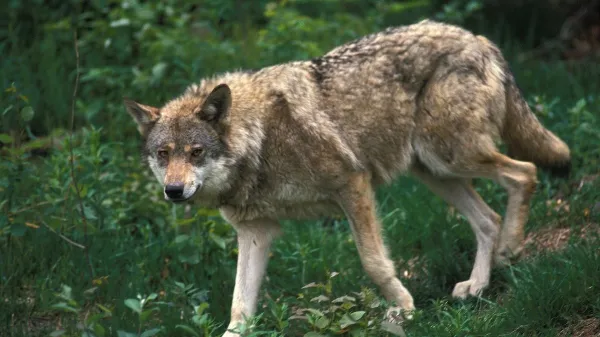
The modern Pyrenees are not the same landscape wolves knew a century ago. Today there are abundant wild ungulates in many areas, and wild boar numbers have become a major ecological and agricultural problem in parts of Catalonia. In that context, wolves are often discussed not only as predators, but as ecosystem regulators. Their presence can affect the movements and behavior of prey species, which may reduce overgrazing pressure in some places and contribute to broader ecological balance. This is an ecological interpretation commonly used in carnivore recovery debates; it does not mean wolves alone will solve every wildlife management problem in the Pyrenees.
That is one reason conservationists view the return of breeding wolves as important. A resident wolf family can influence prey communities differently from a lone transient animal. Even so, the first priority remains simple: the survival of the breeding pair and their offspring. Over the last 25 years, wolves reached Catalonia more than once, but none had been confirmed to establish a lasting family until now.
A Fragile New Beginning
Catalonia’s wolf story is still in its early stages. The confirmed family in Alta Garrotxa and Alt Empordà is historically important, but it does not yet mean the species is fully re-established across the region. Much depends on whether the pair continues breeding, whether the pups survive to dispersal age, and whether coexistence measures can reduce conflict enough for public support to hold.
For now, the most accurate conclusion is this: after more than a century without confirmed local reproduction, wolves are breeding again in Catalonia. That alone is a milestone. Whether this becomes the foundation of a permanent wolf population will depend on what happens over the next few years—in the forest, on farms, and in policy.