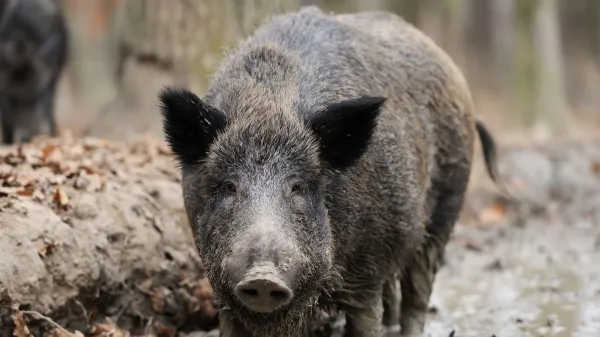
Fifteen years after the Fukushima Daiichi nuclear disaster, some of the most unexpected changes are not only industrial or social, but ecological. In the years following the 2011 earthquake, tsunami, and reactor accident, large areas around Fukushima were evacuated, leaving farms, roads, and woodland edges with far less human activity than before. In that altered landscape, escaped domestic pigs encountered native Japanese wild boar, and the result was an unusually large hybridization event that scientists are still trying to understand.
The Fukushima accident began on March 11, 2011, when a major earthquake and tsunami knocked out power and cooling systems at the Fukushima Daiichi plant. At the peak of the crisis and its aftermath, roughly 150,000 to 160,000 people were displaced or evacuated, according to official and widely cited summaries. That sudden human withdrawal reshaped the surrounding environment in ways that affected wildlife almost immediately.
One of the most unusual consequences involved pigs. After the evacuation, domestic pigs escaped into abandoned farmland and nearby forests, where they interbred with wild boar. Researchers at Fukushima University describe the event as a rare large-scale natural experiment, because it happened in a landscape with little ongoing human disturbance and, importantly, without repeated releases of domestic pigs after the initial escape. A new study led by Shingo Kaneko and colleagues, published online in the Journal of Forest Research on January 22, 2026, examined what happened next.
Strictly speaking, this is not a “new species.” Domestic pigs and wild boar are forms of the same broader Sus scrofa lineage, so what emerged in Fukushima is better described as a hybrid population rather than a brand-new animal created from scratch. That distinction matters, because the biological story here is not about science fiction or radiation inventing a new beast overnight. It is about hybridization, inheritance, and what happens when domestic animals enter a wild population under unusual ecological conditions.
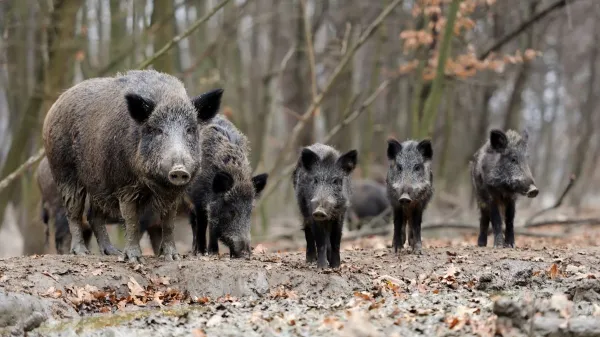
What surprised researchers most was not simply that pig–boar hybrids formed, but how quickly some lineages seemed to turn over. Wild boar usually reproduce seasonally, while domestic pigs are known for a much faster, more flexible reproductive cycle. According to the new study, that rapid domestic reproductive pattern can be carried through the maternal lineage, meaning that hybrids descended from domestic-pig mothers showed signs of unusually fast generational turnover. In other words, the key factor was not just the presence of pig genes, but which side of the family they came from.
To investigate this, the researchers analyzed mitochondrial DNA, which is inherited from the mother, together with nuclear genetic markers from 191 wild boar and 10 domestic pigs collected between 2015 and 2018. Their results showed that individuals carrying domestic pig maternal lineages often had significantly lower proportions of pig-derived nuclear DNA than hybrids with wild-boar maternal lineages. Many of them were already estimated to be more than five generations removed from the original cross, which points to very rapid genetic turnover after the first hybridization event.
That finding may sound counterintuitive at first. A reader might expect pig ancestry to remain obvious for longer, but the study suggests almost the opposite: maternal pig lineages may have helped accelerate reproduction and backcrossing, so that pig nuclear genes were diluted more quickly across generations even while the population itself expanded. This is why some headlines simplify the story by saying the hybrids reproduce “faster than wild boar,” but the more precise scientific interpretation is that maternal domestic-swine traits appear to have accelerated generational turnover and introgression in the Fukushima population.
Another major factor was the absence of people. Earlier research on Fukushima wildlife found that wild animals became more abundant in the ex-evacuation zone, and wild boar were among the most successful species there. A 2022 Scientific Reports paper noted that numerous wildlife species increased in the area despite chronic radiation exposure, and specifically identified wild boar as the most abundant species in the ex-evacuation zone. Separate genetic work on Fukushima wild boar also reported that their numbers rose noticeably in the difficult-to-return zone after the accident.
That context helps explain why the hybrid population could spread so effectively. With fewer farmers, less traffic, fewer daily human barriers, and more access to abandoned fields and forest margins, both wild boar and hybrids were able to move, forage, and breed with less interference. The study’s authors emphasize that Fukushima was an exceptional case, but they also argue that the same maternal-line effect could matter elsewhere in the world wherever feral pigs and wild boar overlap.
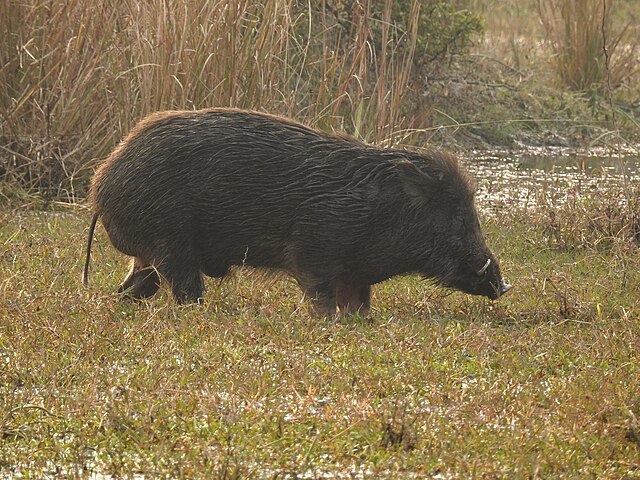
From a wildlife-management perspective, the real concern is not that Fukushima has produced some mysterious “mutant species.” The concern is that hybrid populations can become difficult to predict and control when they combine wild survival traits with domestic reproductive traits. Kaneko and his co-authors suggest that understanding maternal lineage could help authorities anticipate population surges and design more targeted control strategies for invasive or hybrid swine populations in the future.
The Fukushima case is a powerful reminder that human disasters can trigger ecological changes that last for years. In this case, the accident did not just alter a human landscape; it created conditions for a rare evolutionary and genetic experiment in the wild. What now lives in parts of Fukushima is not a new species in the strict biological sense, but it is still an important and revealing example of how quickly animal populations can change when domesticated and wild lineages suddenly meet in a landscape from which people have largely stepped back.