The great white shark has reappeared in the Spanish Mediterranean, and the news has quickly attracted public attention. For many readers, the headline sounds dramatic: an iconic apex predator has been confirmed again in waters where verified records have become extremely rare. But behind that headline, scientists are stressing an important point. This finding is real, scientifically solid, and highly relevant — yet it does not mean that great white sharks are making a broad comeback in the region.
A Confirmed Record, but Not a Recent Capture
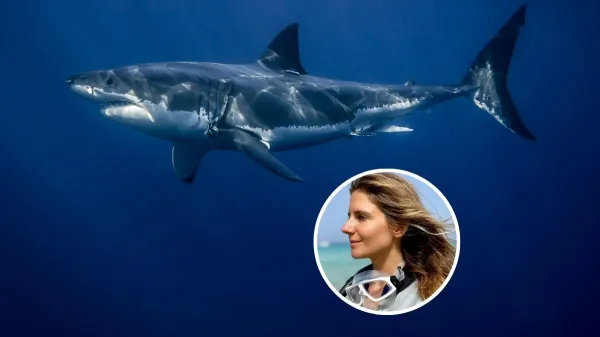
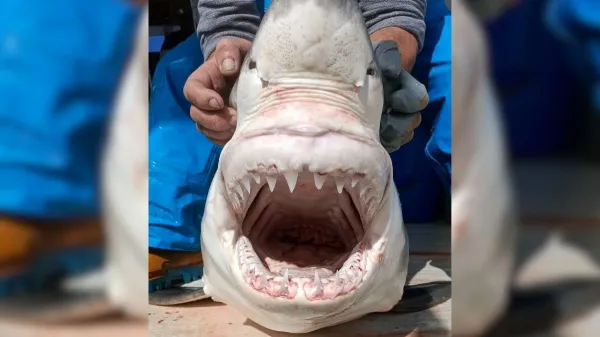
The first detail that needs clarification is the date. Although the study and media coverage were published recently, the shark itself was not caught in 2026. The specimen was accidentally captured in April 2023 in Spain’s Mediterranean Exclusive Economic Zone. Researchers later confirmed that it was a juvenile great white shark (Carcharodon carcharias) measuring about two meters in length and weighing roughly 80–90 kilograms. Its identity was verified through genetic analysis, making this one of the few confirmed records of the species in Spanish waters in recent decades.
That means this was not a rumor, a doubtful sighting, or a misidentified shark. It was a properly documented scientific record based on photographs, videos, and laboratory confirmation. At the same time, it was also an exceptional event, not evidence of frequent encounters.
The Great White Is Not New to the Mediterranean
Although the discovery sounds surprising, the great white shark is not a newcomer to the Mediterranean. Historical records show that the species was present there in the past and that the Mediterranean once played a more important role in its regional ecology than it does today. The recent study reviewed records from 1862 to 2023 and found 66 documented records in Spanish Mediterranean waters, including direct sightings, captures, and indirect evidence such as bite marks on stranded marine animals. The authors concluded that the species maintains a persistent but extremely infrequent presence in the area.
This matters because it changes the interpretation of the story. The shark was not “returning” from complete absence in the strict sense. Rather, the record adds to evidence that the species still occurs in the region, but only rarely and unpredictably.
One Juvenile Shark Does Not Mean Population Recovery
This is the central scientific message. The researchers were explicit that a single confirmed specimen does not prove that the Mediterranean great white population is recovering. José Carlos Báez of the IEO-CSIC stated that, with the data currently available, it is not possible to say that the Mediterranean population is increasing. He also noted that the new record may reflect better monitoring and communication systems, rather than a genuine rise in shark numbers.
The fact that the specimen was a juvenile makes the case especially interesting from a scientific perspective. Young individuals can provide valuable clues about population structure and possible regional dynamics. But the researchers also emphasized that it is still too early to determine whether Spanish Mediterranean waters include active nursery areas or regular breeding zones. That question would require long-term, targeted monitoring programs.
Why This Record Matters
Even though one shark does not change the overall conservation picture, the record is still important. Rare species are difficult to study precisely because reliable observations are so uncommon. Every confirmed specimen helps scientists refine what they know about distribution, age structure, movement patterns, and possible habitat use. In species that are already considered vulnerable, even isolated data points can be valuable when placed in a wider historical context.
In this case, the study also linked the shark’s presence to broader ecological patterns. The authors noted that some indirect evidence of great white presence in the region — such as bite marks on sea turtles — coincides with the migrations of Atlantic bluefin tuna, suggesting that prey availability may influence when and where these sharks appear.
The Role of Accidental Capture and Fisher–Scientist Cooperation
Another key part of the story is how the record became known in the first place. According to the IEO-CSIC, the case was documented thanks to collaboration with the fishing sector. The shark was caught accidentally, and that event was communicated to scientists who were then able to photograph, analyze, and identify the specimen properly. Without that cooperation, the record might never have entered the scientific literature.
This is an important reminder that major discoveries do not always come from large expeditions or expensive field campaigns. Sometimes they depend on a well-documented accidental encounter and a working relationship between local fishers and researchers.
Is the Great White Shark a Danger to People in Spain?
The great white shark has a powerful image in popular culture, and any mention of the species often creates anxiety. But the evidence from Spanish waters does not support panic. The historical review cited by the researchers found that, across more than 160 years of records in Spanish Mediterranean waters, documented incidents involving people have been exceptionally rare. Báez noted only two documented attacks in Spanish waters in the broader record discussed by the study: one fatal case in Málaga in 1862 and one bite on a surfer’s board in Tarifa in the 1980s, which caused serious injury.
The researchers therefore argue that the species does not represent a significant public-risk issue on Spanish coasts. Its presence is rare, and coastal encounters remain highly unusual.
A Species That Still Needs Research and Conservation
The recent confirmation strengthens the case for continued research on great white sharks in the Mediterranean. The species is described by the IEO-CSIC communication as vulnerable in the western Mediterranean, and EurekAlert’s summary of the study notes a declining population trend on the IUCN Red List. The authors stress that long-term observation programs are essential if scientists are to understand the biology and ecology of this elusive predator in Mediterranean waters.
Beyond its reputation, the great white shark plays an important ecological role. As a large migratory predator and scavenger, it helps connect marine regions and contributes to the functioning of ocean ecosystems. The researchers argue that improving knowledge of the species is not only a scientific goal, but also a necessary step toward evidence-based conservation.
Conclusion
The confirmed appearance of a juvenile great white shark in the Spanish Mediterranean is a meaningful scientific record, but it should be interpreted carefully. It shows that the species still appears in these waters, although only very rarely. It adds valuable information about an animal that has become almost ghost-like in the region. But it does not prove that the population is recovering, nor does it suggest an imminent danger to beachgoers. For now, the finding is best understood as an important piece of evidence — one that helps scientists better understand one of the Mediterranean’s most iconic and least frequently seen predators.
Bibliography
Báez JC, Puerto MA, Torreblanca D, Varela JL, Carmona L, Macías D (2026) New record of white shark, Carcharodon carcharias (Elasmobranchii, Lamniformes, Lamnidae), from the Mediterranean Spanish coast. Acta Ichthyologica et Piscatoria 56: 27–31. https://doi.org/10.3897/aiep.56.173786 Available at: https://aiep.pensoft.net/article/173786/list/9/