The rock ptarmigan (Lagopus muta), sometimes called the snow partridge in older general writing, is a hardy ground-dwelling bird of the far north and high mountains. It belongs to the grouse group and is famous for one remarkable skill: it changes color with the seasons. White in winter and mottled brown in summer, the rock ptarmigan is one of the best-camouflaged birds in cold environments. It is built for life in tundra, alpine slopes, and windswept rocky ground, where snow, ice, and low temperatures dominate much of the year.
What does the rock ptarmigan look like?
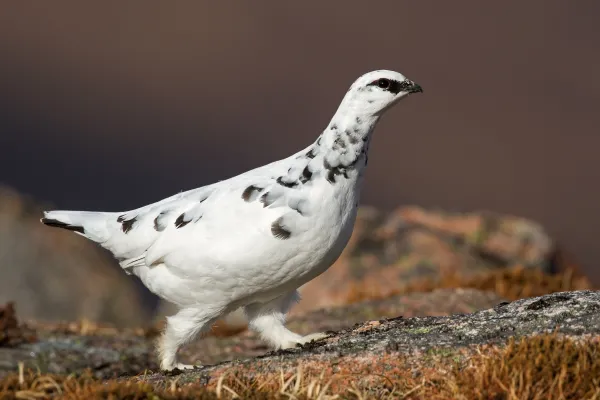
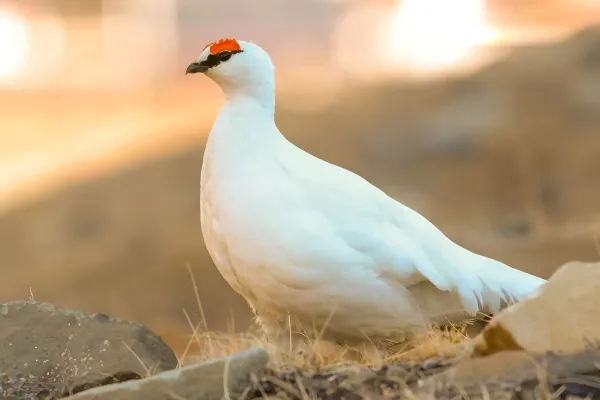
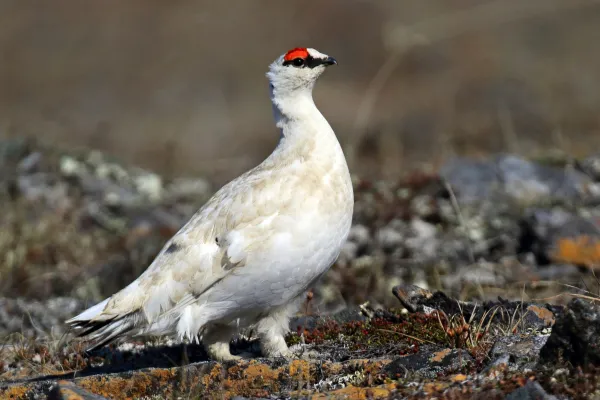
The rock ptarmigan is a small, compact bird, usually about 30 to 40 cm long, with a wingspan of roughly 54 to 65 cm. In winter, both sexes are mostly white, helping them blend into snow-covered landscapes. In summer, they molt into a brown, black, and buff mottled plumage that matches rocks, soil, and tundra vegetation. One of the easiest field marks is that the tail stays black year-round, even when the body turns white. Males in breeding season usually show a distinct black line from the beak through the eye, while both sexes have a bright red comb-like patch above the eye.
Another special feature is the bird’s fully feathered legs and toes. These feathers act like natural insulation and also work almost like snowshoes, helping the bird walk on soft snow without sinking too deeply. Because of its thick plumage, the rock ptarmigan often looks larger and rounder than it really is.
Seasonal camouflage and cold adaptation
The rock ptarmigan is one of the clearest examples of seasonal camouflage, also called seasonal color change. In snowy months it turns white, while in summer it becomes mottled brown. This color shift reduces the risk of predation in both seasons. It is a key survival strategy in open habitats where there are few places to hide.
Its feathered feet, dense body plumage, and compact shape also help it survive freezing conditions. The species is highly adapted to cold, windy environments and can remain active in places where many other birds would struggle to survive.
Where does the rock ptarmigan live?
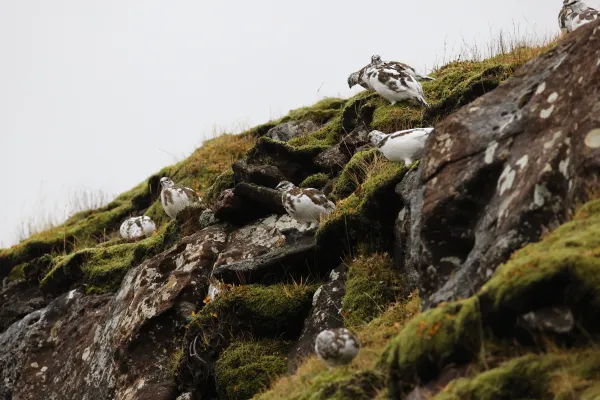
The rock ptarmigan has a broad northern distribution across the Holarctic, meaning it occurs in both Eurasia and North America. It is found in Arctic tundra, subarctic regions, and high alpine habitats. Its range includes places such as Norway, Iceland, Scotland, the Alps, Siberia, Japan, Greenland, Alaska, and northern Canada. It prefers open, rocky, sparsely vegetated ground, especially tundra and mountain slopes above the tree line.
Unlike forest birds, the rock ptarmigan is closely tied to open land. It avoids dense woodland and relies on exposed ground, low shrubs, and patchy snow-free feeding areas, especially in winter.
Diet of the rock ptarmigan
The rock ptarmigan feeds mainly on plant material, but its diet changes with the seasons. In summer, it eats leaves, flowers, seeds, berries, and buds, including plants such as willows and berries from tundra shrubs. In winter, when food is scarce and the ground is snow-covered, it shifts to tougher foods such as buds, twigs, and shoots, especially from willow species.
Young chicks need more protein than adults and feed heavily on insects and other small invertebrates during their first weeks of life. This helps them grow quickly during the short Arctic summer.
Behavior
The rock ptarmigan is a ground bird that spends much of its time walking, feeding, and resting on open terrain. It is well adapted to harsh weather and often shelters among rocks, in shallow depressions, or in snow. Males become especially territorial during the breeding season and use calls and displays to warn off rivals.
Although it can fly, it usually relies on camouflage and stillness before flushing suddenly if threatened. In winter, it may move locally to areas with better feeding conditions, but many populations remain within cold northern or alpine regions year-round.
Reproduction
Breeding usually begins in late spring or early summer, once snow starts melting. Females choose males partly through visual cues, and the bright red comb above the eye is an important signal during courtship. The nest is usually a simple shallow scrape on the ground, lined with plant material and feathers.
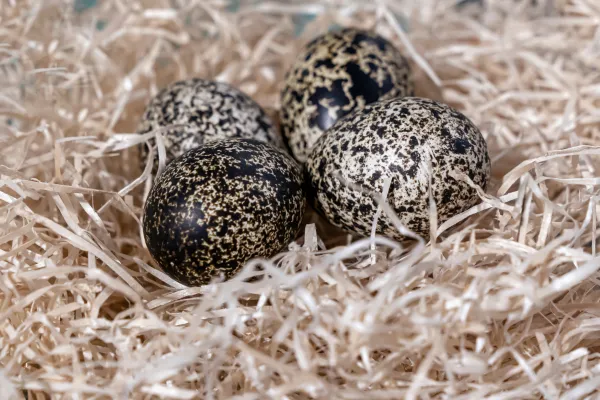
A female typically lays around 5 to 8 eggs, though clutch size can vary by region and food conditions. The chicks hatch covered in down and leave the nest soon after hatching, following the female and feeding themselves almost immediately. Like many tundra birds, they must grow quickly during the short warm season.
Threats and conservation
Globally, the rock ptarmigan is listed as Least Concern on the IUCN Red List because it has a very large range. However, that does not mean every population is secure. In some mountain regions, local declines have been linked to habitat degradation, climate change, ski-resort development, tourism pressure, and collisions with ski-lift cables.
Climate change is considered one of the most important long-term threats, especially in alpine populations. As temperatures rise, suitable cold habitat may shrink upward toward mountain tops, leaving less space for birds that depend on tundra-like conditions.
Interesting facts about the rock ptarmigan
The rock ptarmigan is one of the few birds whose toes are fully feathered, which helps it cope with snow and ice. Its tracks in fresh snow can even resemble those of a small mammal. It is also known for blending so well into its environment that it can be nearly invisible unless it moves. In Canada, the rock ptarmigan is the official bird of Nunavut, and it also holds symbolic status in parts of Japan.
Conclusion
The rock ptarmigan is a true specialist of cold landscapes. From its season-changing plumage to its feathered feet and tundra lifestyle, every part of its biology reflects survival in snow, wind, and rocky open ground. Although still widespread overall, some local populations face growing pressure from warming climates and expanding mountain tourism. That makes this small Arctic bird not only fascinating, but also an important indicator of how fragile cold ecosystems can be.
Bibliography
BirdLife International (2016) Lagopus muta (errata version published in 2017). The IUCN Red List of Threatened Species 2016: e.T22679464A113623562. https://dx.doi.org/10.2305/IUCN.UK.2016-3.RLTS.T22679464A89358137.en.
Kaufman, K. (2005). Kaufman Field Guide: to North American Birds. United States: Houghton Mifflin.
Sandercock, B. K., Martin, K., Segelbacher, G. (2011). Ecology, Conservation, and Management of Grouse: Published for the Cooper Ornithological Society. United Kingdom: University of California Press.