The “ocean overlord” debate—and why recent orca “team hunts” made headlines
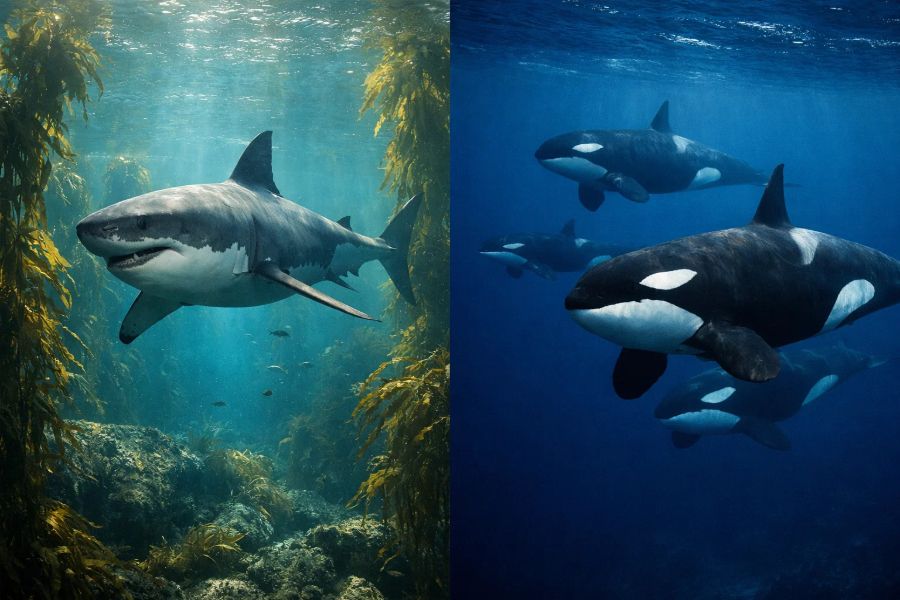
The great white shark (Carcharodon carcharias) and the orca (killer whale, Orcinus orca) sit near the top of marine food webs, but they’re built for different kinds of dominance. Great whites are elite, warm-bodied (regionally endothermic) ambush predators that thrive in temperate coastal systems. Orcas are highly social, intelligent dolphins with the widest diet range among cetaceans, and some populations specialize so strongly that they behave like different ecological “types.”
The recent surge of attention—especially the “orcas hunting great whites” stories—isn’t just hype. Multiple peer-reviewed studies and verified observations now document orcas killing white sharks in South Africa, Australia, and (notably) repeated predation on juvenile white sharks in the Gulf of California, often targeting the shark’s energy-rich liver.
1) Meet the contenders: two apex strategies
Great White Shark: a stealth missile with “warm muscles”
White sharks are among the few fishes with regional endothermy—they can keep parts of their body warmer than the surrounding water, supporting high-performance swimming and hunting in cooler seas.
They are apex predators with important ecological roles, and in U.S. waters NOAA emphasizes their wide-ranging nature and nearshore presence.
Orca: a pack-hunting super-predator with culture
NOAA notes that killer whales, as a species, have the most varied diet of all cetaceans, while different populations specialize in foraging and often use coordinated hunting like a pack.
In the North Pacific alone, NOAA describes major ecotypes (Resident, Transient/Bigg’s, Offshore) that differ in diet, behavior, and genetics—and are not known to interbreed.
Some “offshore” killer whales show strong dietary specialization on sharks and other elasmobranchs.
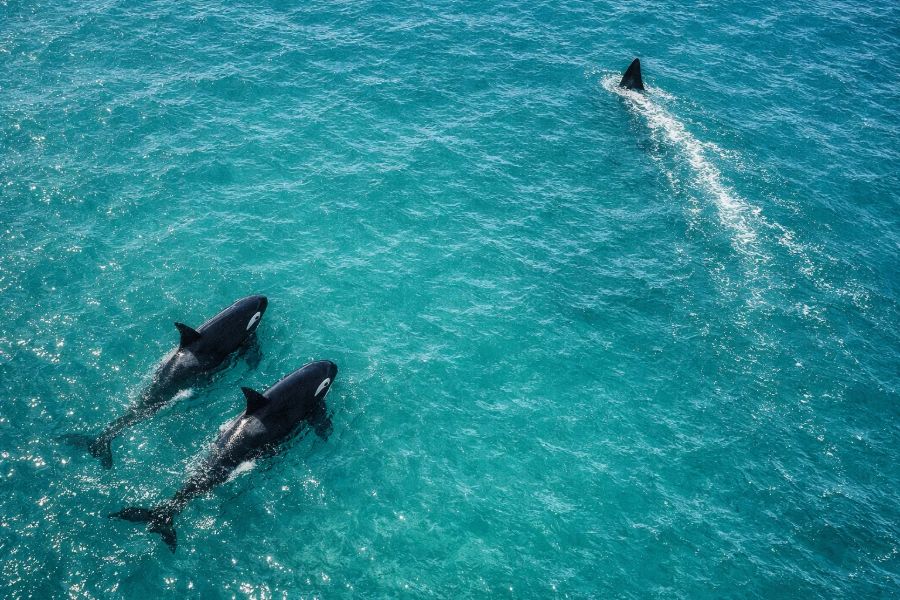
2) Why can orcas “beat” great whites?
This is the key: predation isn’t a boxing match—it’s about who can control the interaction.
Orcas often have advantages that matter in real encounters:
Mass & power: an adult orca can outweigh most great whites by several times, giving enormous leverage in grappling or ramming.
Team tactics: coordinated attacks reduce risk and increase control over the shark.
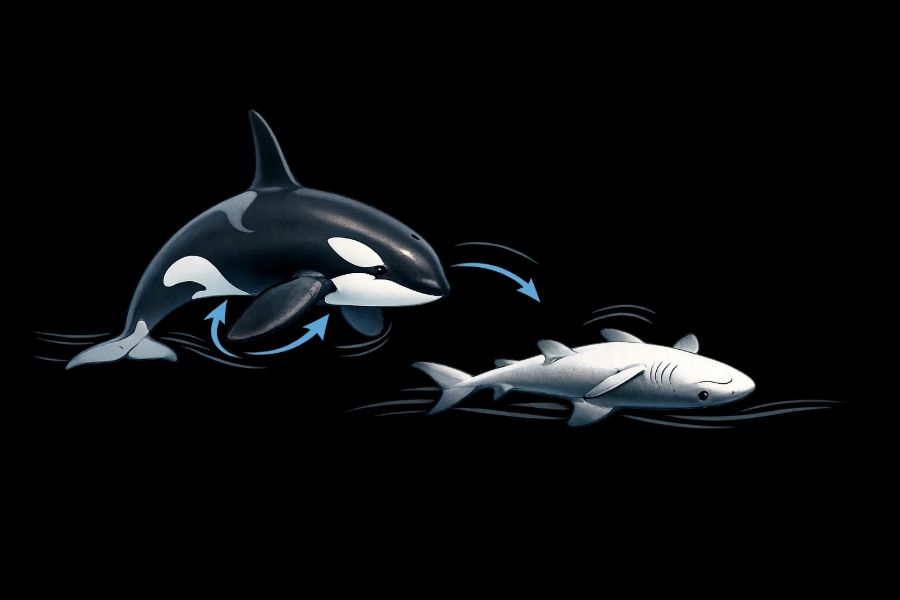
A shark “off switch”: tonic immobility
Many sharks enter a trance-like, immobile state when flipped upside down—tonic immobility. Orcas have been filmed using this tactic on juvenile white sharks in the Gulf of California.Selective organ feeding (especially liver):
Liver is a dense energy jackpot. Multiple studies and verified incidents link orca predation on white sharks with selective liver consumption.
3) The “team hunts” you mentioned: what the science says (not just viral clips)
South Africa: “fear at the top” and shark displacement
A major peer-reviewed study in African Journal of Marine Science documented that white sharks emigrated/left a major aggregation area in response to killer whale predation risk—popularly summarized as “fear at the top.”
SANParks has also summarized South African observations showing orcas killing white sharks and driving changes in the predator seascape.
Follow-up work continues to add detail about these predation events in the region.
Australia: DNA-confirmed orca predation on white sharks
A 2025 Ecology and Evolution paper provided genetic confirmation of killer whale involvement in an Australian white shark carcass and supported selective organ consumption consistent with liver targeting.
Gulf of California (Mexico): repeated predation on juvenile whites
A 2025 Frontiers in Marine Science paper documented repeated predations by orcas on juvenile white sharks in the Gulf of California, using aerial video evidence and describing the tactic of flipping sharks and targeting the liver.
4) What happens after orcas arrive: the ecology is the real headline
When a top predator suddenly avoids an area, the system can reorganize.
In South Africa’s False Bay context, a 2025 Frontiers in Marine Science study reported cascading ecosystem effects following the loss/absence of white sharks—consistent with a trophic cascade framework.
That doesn’t mean “orcas caused everything.” It means apex predators can reshape food webs—whether they disappear due to predation risk, human pressure, or multiple drivers.
5) Side-by-side comparison table
| Category | Great White Shark (Carcharodon carcharias) | Orca (Orcinus orca) |
|---|---|---|
| What it is | Large predatory shark (fish) | Toothed whale; largest dolphin |
| Body temperature | Regionally endothermic (“warm-bodied” in key tissues) | Fully endothermic mammal |
| Typical hunting style | Solitary/loose aggregation; ambush + burst speed | Often coordinated pack hunting; strong cultural specialization by population |
| Key advantages | Stealth, powerful bite, marine sensory suite; high-performance cruising for a shark | Size, intelligence, teamwork, diverse tactics (ramming, gripping, flipping prey) |
| Known natural predators (adults) | Very few; documented orca predation exists | Few natural predators (top-level) |
| Conservation/management notes | NOAA highlights threats such as bycatch and habitat impacts; major ecological role | Species-level status is complex; global listing often “Data Deficient,” with some small regional populations assessed separately |
6) Evidence table: where “orca vs great white” is documented
| Region | What was observed | Evidence type | Key takeaway |
|---|---|---|---|
| South Africa (aggregation sites) | White shark predation risk linked to shark absence/emigration | Peer-reviewed study | Fear/avoidance response can empty a hotspot |
| South Africa (predation events) | Direct predation events; continued documentation | Peer-reviewed follow-up | Tactics and frequency better described over time |
| Australia (Victoria, 2023 carcass; published 2025) | Orca DNA in bite wounds; consistent with liver targeting | Genetics + peer-reviewed paper | Confirms predation outside South Africa |
| Gulf of California (Mexico; events 2020–2022; published 2025) | Repeated predation on juvenile whites; flipping + liver extraction | Aerial video + peer-reviewed paper | Suggests shark-hunting can arise in new regions |
| False Bay ecosystem | Changes consistent with trophic cascade after white shark loss | Peer-reviewed study | Apex predator absence can reorganize food webs |
7) So… who is the “true ocean boss”?
If “boss” means who can sometimes kill the other, the evidence says: orcas can and do kill great whites, and may trigger major behavioral displacement.
If “boss” means who dominates coastal ecosystems most consistently, great whites remain apex predators across many temperate regions and play major ecological roles—especially where shark-eating orca ecotypes are absent or rare.
The most accurate scientific framing is:
Great whites rule many coastal predator guilds.
Orcas are the apex of apex predators—selectively, culturally, and regionally.
References (selected, cited above)
NOAA Fisheries. White Shark species profile.
NOAA Ocean Service (Shark Tracks): white sharks as warm-bodied fish; endothermy overview.
Watanabe et al. (2019). Swimming strategies and energetics of endothermic white sharks.
NOAA Fisheries. Killer Whale species profile; varied diet and coordinated hunting.
NOAA Fisheries. Killer whale populations/ecotypes (Resident/Transient/Offshore).
Wright et al. (2025). Offshore killer whale dietary specialization on elasmobranchs.
Towner et al. (2022). Fear at the top: killer whale predation drives white shark absence… (African Journal of Marine Science).
Towner et al. (2024). Further insights into killer whales preying on white sharks in South Africa.
Higuera-Rivas et al. (2025). Repeated predation by orcas on juvenile white sharks in the Gulf of California (Frontiers in Marine Science).
Reeves et al. (2025). Genetic evidence of killer whale predation on white sharks in Australia (Ecology and Evolution).
Hammerschlag et al. (2025). Cascading ecosystem effects following the loss of white sharks from False Bay (Frontiers in Marine Science).
IUCN (example regional assessment PDF for orca subpopulation; species-level context often Data Deficient).
SANParks scientific services story summarizing SA predation observations and shifting seascape.