The corsac fox, also called the steppe fox, is a small wild canid adapted to the dry open landscapes of Central Asia. It lives mainly in steppes, semi-deserts, and dry grasslands, where it survives with sharp senses, flexible feeding habits, and an ability to use underground dens to escape heat, cold, and danger. The species is still listed as Least Concern globally, but it faces pressure from hunting, land-use change, and local declines linked to human activity.
What does the corsac fox look like?
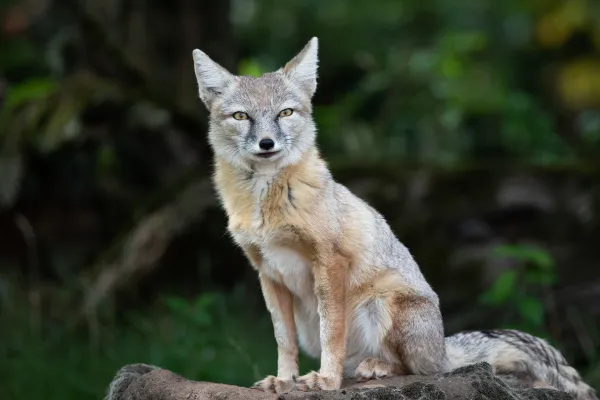
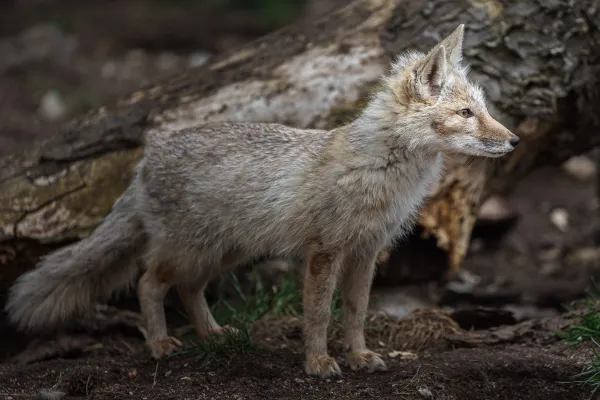
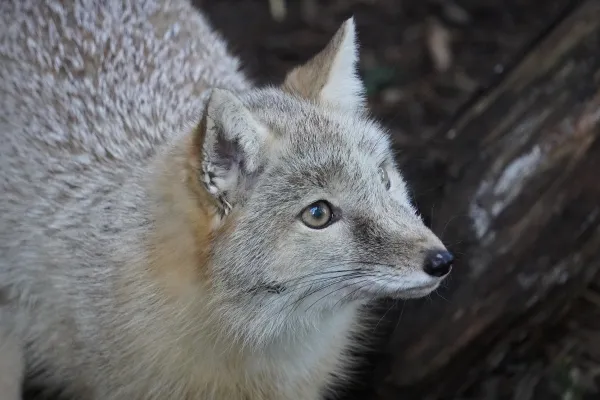
The corsac fox is a medium-sized fox with a slender body, relatively long legs, pointed ears, and a bushy tail. Adults usually measure about 45 to 65 cm in body length, with a tail of roughly 19 to 35 cm. Its coat is typically pale gray to yellowish-gray, sometimes with buff or reddish tones, and it often becomes thicker and paler in winter. The muzzle, throat, and underparts are usually lighter, which helps give the animal a soft sandy appearance suited to open dry habitats.
Its large ears are not just a visual feature. Like many animals from dry open country, the corsac fox’s ear shape helps with both hearing and heat exchange. It also has scent glands used in communication and territory marking, and it is known to be quite vocal, using barks and other calls when interacting with mates, family members, or rivals.
Where does the corsac fox live?
The corsac fox ranges across much of Central Asia and nearby parts of Eurasia, including countries such as Mongolia, Kazakhstan, Uzbekistan, Turkmenistan, parts of Russia, northern China, Afghanistan, and Iran. It is associated mainly with open steppe and semi-desert landscapes, and generally avoids dense forests, thick shrubland, and very rugged mountain areas. It also tends to avoid places with deep snow, which can make movement and hunting more difficult.
This fox prefers landscapes where it can see over long distances and move easily across the ground. During the day, it usually shelters in burrows, often ones originally dug by other animals. Marmot burrows are especially important in some parts of its range, although corsac foxes may also use dens made by badgers or other burrowing mammals.
Diet of the corsac fox
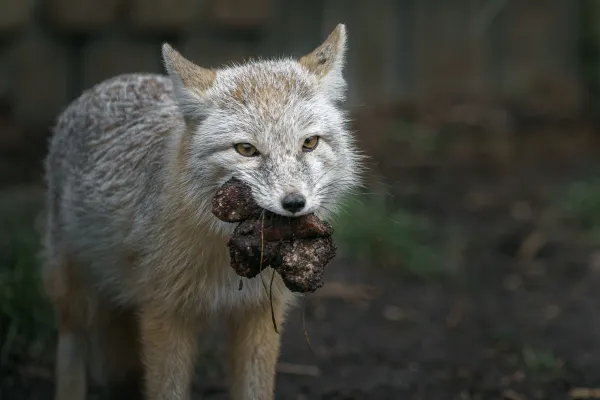
The corsac fox is an opportunistic carnivore. It feeds mostly on small mammals such as rodents, pikas, and similar prey, but it will also eat insects, birds, eggs, fruits, and carrion when available. This flexible diet helps it survive in habitats where food can change sharply from season to season.
Because it lives in harsh, often dry environments, the corsac fox is able to cope with long periods of limited food and water. It relies on keen hearing, smell, and eyesight when hunting, and it often forages at night or during cooler hours. In difficult conditions, scavenging becomes an important backup strategy.
Behavior
Corsac foxes are mainly nocturnal or crepuscular, meaning they are most active at night and around dawn or dusk. During the hottest part of the day, they usually remain in dens. This behavior helps them avoid extreme temperatures and conserve moisture in open dry habitats.
Although foxes are often thought of as solitary, the corsac fox can be relatively social compared with some other species. Pairs or small family groups may share space, especially during the breeding season and while raising young. In some regions, the species is also described as somewhat nomadic, moving in response to food supply, weather, and snow conditions.
Reproduction
Breeding usually begins in late winter. After courtship, pairs may form seasonal or longer-lasting bonds, and the female gives birth after a gestation of about 52 to 60 days. Litters commonly contain around 2 to 6 pups, though numbers can vary. The young are usually born in a den, often in a burrow previously used by another animal.
The pups grow quickly and begin emerging from the den while still young. Sexual maturity is reached within the first year, and wild individuals may live for several years, while maximum recorded longevity in captivity is longer.
Threats and conservation
The corsac fox is currently classified as Least Concern on the IUCN Red List, mainly because it still has a broad range. However, this does not mean it is free from threats. The main long-term pressures include hunting for fur, habitat alteration, overgrazing, and landscape development. In some regions, heavy hunting has caused strong local declines.
Another issue is the decline of marmots in parts of Central Asia. Because corsac foxes often rely on marmot burrows for shelter, a drop in marmot numbers can indirectly reduce suitable denning sites. That means the fox can be affected not only by direct hunting, but also by changes in the wider steppe ecosystem.
Interesting facts about the corsac fox
The corsac fox is well suited to life in dry open country. It can go for long periods with very little water, spends much of the day below ground, and uses its pale coat to blend into steppe and semi-desert landscapes. It is also lighter and more lightly built than the red fox, which helps it move efficiently across open terrain.
Despite its tough lifestyle, the corsac fox is not a fast, powerful predator in the way larger canids are. Its success comes from flexibility: it eats many kinds of food, uses burrows for protection, and adjusts its movements to the season and local conditions. That combination has allowed it to survive across some of Eurasia’s most exposed landscapes.
FAQ
What is a corsac fox?
The corsac fox is a small wild fox from Central Asia that lives mainly in steppe, semi-desert, and dry grassland habitats.
Where does the corsac fox live?
It occurs across parts of Mongolia, Kazakhstan, Russia, China, and several other Central Asian countries, mostly in open dry landscapes.
What does the corsac fox eat?
It feeds on small mammals, insects, birds, eggs, fruit, and carrion, depending on what is available.
Is the corsac fox endangered?
Globally it is listed as Least Concern, but local populations can be affected by hunting, habitat change, and loss of burrow sites.
Bibliografía
Castelló, J. R. (2018). Canids of the World: Wolves, Wild Dogs, Foxes, Jackals, Coyotes, and Their Relatives. Estados Unidos: Princeton University Press.
Murdoch, J.D. (2014) Vulpes corsac. The IUCN Red List of Threatened Species 2014: e.T23051A59049446. https://dx.doi.org/10.2305/IUCN.UK.2014-2.RLTS.T23051A59049446.en. Accessed on 07 April 2024.