Recognizing the Pain Call
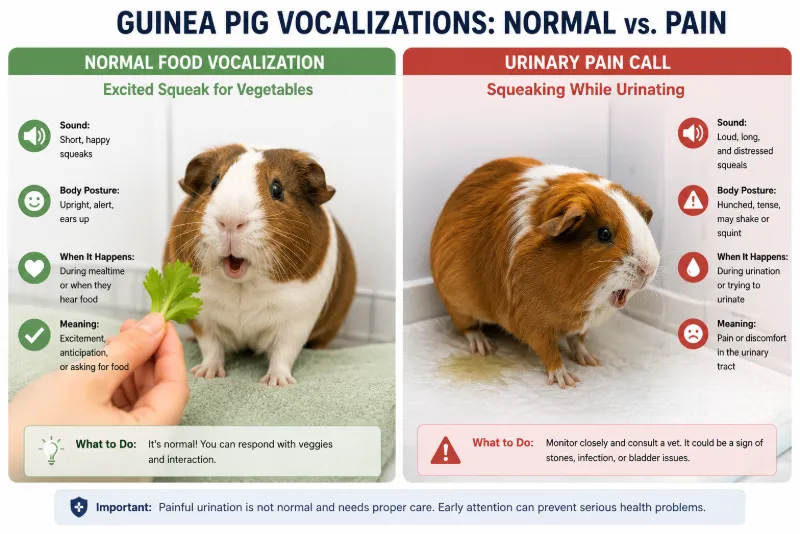
Guinea pigs are naturally vocal animals. They may whistle loudly when they hear a food bag, chirp during social interactions, rumble during courtship, or squeak briefly when startled.
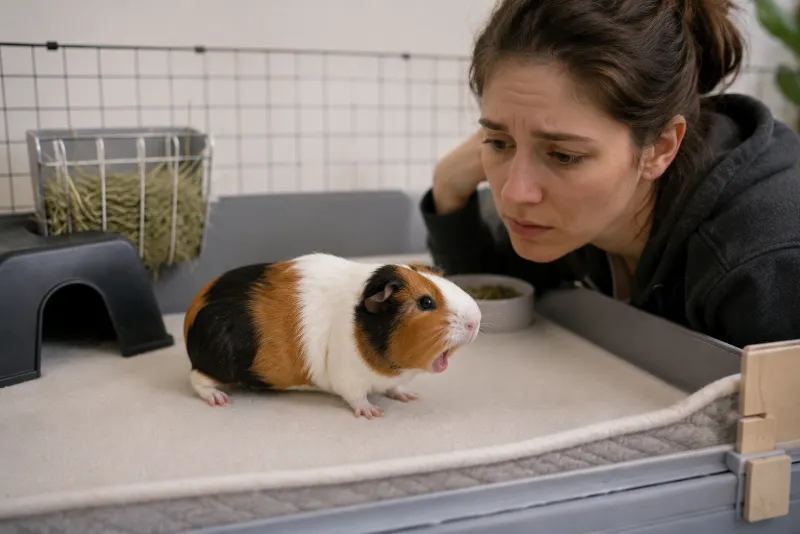
A pain-related urination call is usually different. It tends to occur at the exact moment the guinea pig crouches, strains, or passes urine.
Normal Food-Related Squeaking
Occurs when the refrigerator opens or food approaches
Sounds excited and repetitive
Is accompanied by active movement toward the owner
Stops after the animal receives attention or food
Is not associated with a hunched posture or straining
Possible Urinary Pain Squeaking
Occurs while crouching to urinate
Sounds sharp, sudden, or distressed
May happen repeatedly throughout the day
May be accompanied by straining
May occur with only a few drops of urine
May be followed by licking around the genital area
If you are uncertain, place the guinea pig temporarily on a clean, light-colored towel or fleece liner and observe its posture and urine output. Do not delay veterinary care if the animal appears unable to urinate.
Why Painful Urination Matters
Guinea pigs naturally excrete a considerable amount of dietary calcium through their urine. This is one reason their dried urine may leave a pale, chalky residue.
A small amount of smooth, powdery residue is not necessarily abnormal. However, thick sludge, gritty deposits, blood, repeated straining, or vocalization may indicate disease.
Urinary pain can develop because of:
Bladder or urethral stones
Urinary tract infection
Bladder inflammation
Dense calcium sludge
Partial or complete urinary obstruction
Reproductive-tract disease in females
Less commonly, tumors or kidney disease
Quick Symptom Checklist
| Observation | Possible Significance |
|---|---|
| Sharp squeak during urination | Pain or inflammation in the urinary tract |
| Frequent small urine spots | Bladder irritation, infection, or obstruction |
| Visible blood | Stone, inflammation, infection, or reproductive disease |
| Thick white or beige paste | Possible calcium sludge |
| Hunched posture | Pain or abdominal discomfort |
| Reduced appetite | Potentially significant illness requiring prompt care |
| No urine produced | Possible obstruction and veterinary emergency |
Main Cause #1: Bladder Stones
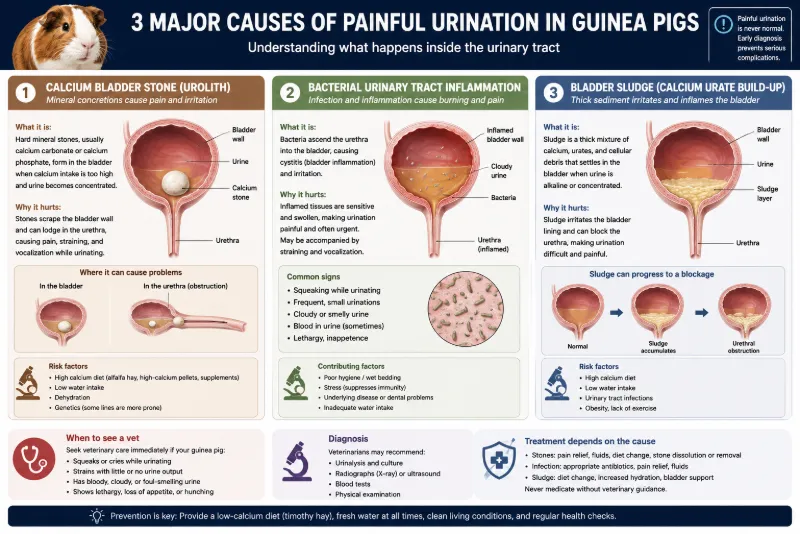
Urinary stones, also called uroliths or calculi, are a major cause of painful urination in guinea pigs. Stones may form in the kidneys, ureters, bladder, or urethra, although bladder stones are frequently diagnosed.
Most guinea pig urinary stones contain calcium-based minerals. However, stone development is usually more complicated than simply eating one calcium-rich food.
Risk may be influenced by a combination of:
Individual genetics
Urine chemistry
Total dietary mineral balance
Low water intake
Reduced activity
Chronic bladder inflammation
Age and anatomical factors
Signs of a Bladder Stone
Squeaking or crying while urinating
Repeated straining
Blood-tinged urine
Frequent urination
Only passing small amounts
Hunched posture
Teeth grinding from pain
Reduced movement
Loss of appetite
Why Male Guinea Pigs May Be at Greater Risk of Obstruction
Male guinea pigs have a relatively narrow and longer urethral pathway. A small stone that leaves the bladder may become lodged before it can pass completely.
A blocked guinea pig may repeatedly attempt to urinate without producing a normal stream. This situation can become life-threatening and requires immediate veterinary treatment.
How Stones Are Diagnosed
An exotic-animal veterinarian may use:
Physical examination
Abdominal palpation
Urinalysis
Urine culture
Radiographs
Ultrasound
Blood testing in selected cases
Calcium-containing stones are often visible on radiographs. Large stones generally cannot be dissolved through home remedies and may require surgical removal or another veterinary procedure.
Main Cause #2: Urinary Tract Infection
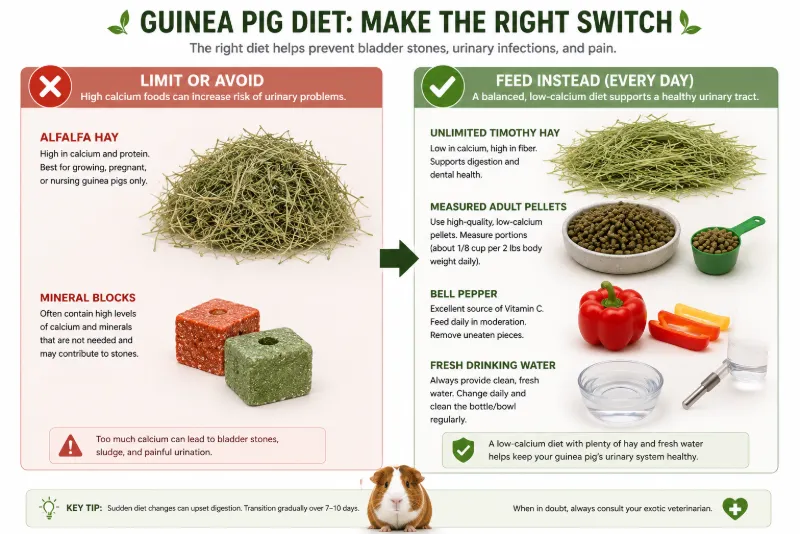
A urinary tract infection occurs when bacteria multiply within part of the urinary system. Infection may affect the bladder, urethra, or, less commonly, the upper urinary tract.
Possible UTI Signs
Painful urination
Frequent small urine spots
Strong-smelling urine
Blood in the urine
Wet or stained fur around the rear
Reduced appetite
Lethargy
These signs can look almost identical to bladder stones or noninfectious cystitis. For this reason, symptoms alone cannot confirm a bacterial infection.
Why Veterinary Testing Is Important
A veterinarian may collect a urine sample for analysis and bacterial culture. Culture helps determine whether bacteria are present and which antibiotic is likely to be effective.
Never give a guinea pig leftover antibiotics intended for another pet or a person. Some commonly used antibiotics can severely disturb guinea pig intestinal bacteria and cause dangerous digestive complications.
Main Cause #3: Calcium Sludge Build-Up
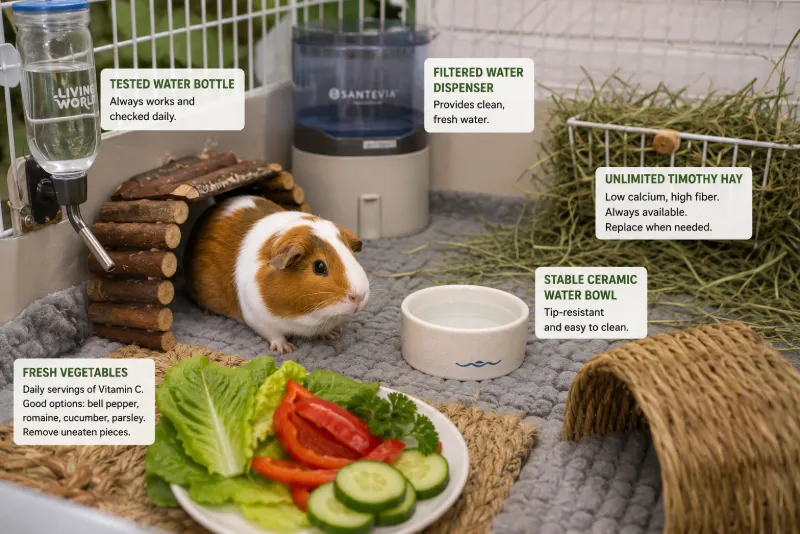
Bladder sludge is a dense accumulation of microscopic calcium crystals and mucus. Instead of passing as normal liquid urine, the material may develop a thick, gritty, or toothpaste-like consistency.
Possible Sludge Signs
Thick white, cream, or beige urine deposits
Gritty material on bedding
Pain while urinating
Frequent attempts to urinate
Wet fur around the genital area
Reduced activity
Ordinary dried guinea pig urine can leave a pale calcium mark. The more concerning finding is material that feels gritty, remains thick when fresh, or is associated with discomfort.
Why Sludge Develops
The exact cause is not always clear. Contributing factors may include:
High total calcium intake
Low water consumption
Limited movement
Obesity
Chronic bladder disease
Individual differences in calcium metabolism
Severe sludge may be difficult for a guinea pig to pass naturally. Veterinary flushing, pain relief, imaging, or other treatment may be necessary.
Other Possible Causes
Noninfectious Cystitis
Cystitis means inflammation of the bladder. It may occur with stones, sludge, infection, or other irritation. In some guinea pigs, the cause remains uncertain after other conditions have been ruled out.
Reproductive Disease in Females
Blood noticed near the genital opening does not always come from the urinary tract. Female guinea pigs may develop uterine, ovarian, or vaginal disease that can resemble a urinary problem.
Skin Irritation
Urine scald, dirty bedding, skin infection, or irritation around the genital area may cause squeaking when the animal urinates over damaged skin.
Constipation or Abdominal Pain
Occasionally, owners may mistake discomfort while passing feces for painful urination. Careful observation and veterinary examination help distinguish the source.
What to Do Immediately
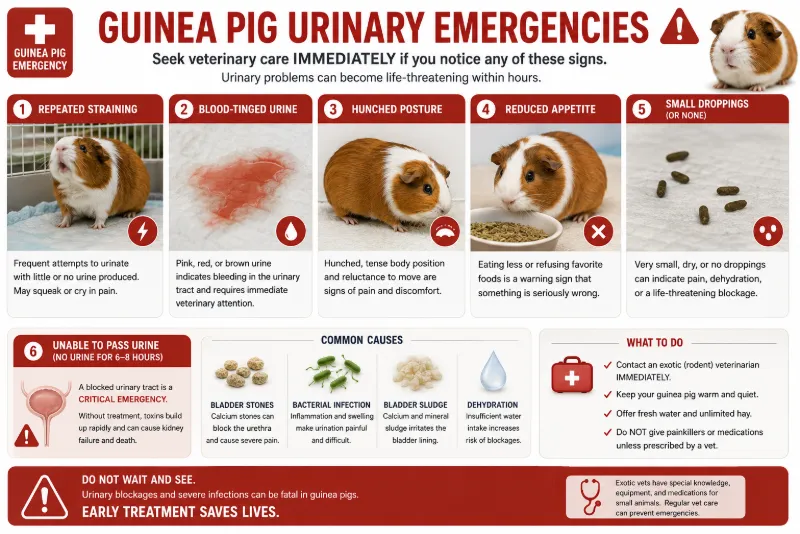
Painful urination deserves prompt veterinary attention. Home care should focus on observation and supportive husbandry while arranging an appointment—not trying to dissolve a stone or treat an assumed infection.
Step 1: Confirm That Urine Is Passing
Place the guinea pig on a clean towel for a short supervised period. Look for normal urine spots.
If the animal repeatedly strains but produces no urine, seek emergency veterinary care immediately.
Step 2: Monitor Food and Droppings
Guinea pigs need to eat frequently to maintain normal gastrointestinal movement. Urinary pain can reduce appetite, which may lead to gastrointestinal stasis and rapid deterioration.
Contact a veterinarian promptly if the guinea pig:
Stops eating
Eats much less than normal
Produces fewer droppings
Produces unusually small droppings
Step 3: Photograph the Urine
Take clear photographs of unusual urine color, sludge, blood, or deposits. A short video of the guinea pig's posture and vocalization may also help the veterinarian understand what is happening.
Step 4: Keep the Guinea Pig Comfortable
Provide clean, dry, soft bedding.
Keep hay and water within easy reach.
Minimize unnecessary handling.
Keep the environment quiet and comfortably warm.
Do not press or massage the abdomen.
Dietary Adjustments for Adult Guinea Pigs
Dietary management may help reduce certain urinary risk factors, but it cannot guarantee that stones will never form. Calcium should be moderated rather than completely eliminated because it remains an essential nutrient.
Replace Alfalfa with Grass Hay
Alfalfa is a calcium-rich legume hay. It is commonly used for growing guinea pigs, pregnant or nursing females, and selected underweight animals under veterinary guidance.
For most healthy adult guinea pigs, unlimited grass hay is generally more appropriate.
Better Everyday Hay Options
Timothy hay
Orchard grass
Meadow hay
Oat hay
Grass hay should normally form the largest portion of an adult guinea pig's diet and remain available at all times.
Check the Pellets
Choose a plain, adult guinea pig pellet based primarily on grass hay rather than alfalfa. Avoid colorful mixes containing seeds, nuts, dried fruit, or sugary pieces.
Overfeeding pellets may increase mineral and calorie intake while reducing hay consumption. Follow veterinary or manufacturer guidance for an appropriate daily portion.
Do Not Remove All Calcium
Extremely calcium-restricted diets may create nutritional imbalance. The goal is to avoid excessive intake while still providing a complete guinea pig diet.
Review High-Calcium Foods
Owners should consider the complete diet rather than removing one vegetable in isolation.
| Food Category | General Approach |
|---|---|
| Alfalfa hay for healthy adults | Replace with grass hay unless a veterinarian advises otherwise |
| Alfalfa-based adult pellets | Consider a timothy-based adult formula |
| Mineral blocks and salt licks | Usually unnecessary for a balanced diet |
| Very calcium-rich greens | Feed selectively rather than as daily staples |
| Grass hay | Provide freely |
| Vitamin-C-rich vegetables | Include appropriate portions in a varied diet |
Do not make severe dietary restrictions without veterinary guidance, especially for young, pregnant, nursing, elderly, or medically fragile guinea pigs.
Hydration Strategies
Increasing water intake may dilute urine and support regular bladder emptying. However, hydration alone cannot remove an obstructing stone.
Provide More Than One Water Source
Some guinea pigs prefer bottles, while others drink more readily from a stable ceramic bowl. Providing both can help identify the animal's preference.
Check Bottle Function Daily
A bottle may appear full while its ball-bearing nozzle is blocked.
Touch the nozzle and confirm that water is released.
Check for air locks.
Remove mineral deposits.
Confirm that the bottle is positioned at a comfortable height.
Replace leaking or unreliable bottles.
Offer Moisture-Rich Vegetables
Appropriate fresh vegetables can contribute additional water. Bell pepper is particularly useful because it also provides vitamin C.
Wash vegetables and serve them while still slightly wet, unless your veterinarian has provided different instructions.
Consider Water Mineral Content
In areas with extremely hard, mineral-rich tap water, ask an exotic-animal veterinarian whether filtered or lower-mineral water would be appropriate.
Do not assume that every bottled mineral water is low in calcium. Some mineral waters contain more calcium than tap water, so read the label carefully.
Filtered Water Dispensers
A pet-safe filtered water dispenser may encourage some guinea pigs to drink more frequently, particularly if they prefer bowls to bottles.
Choose a system that:
Is easy to clean
Has a low, accessible drinking area
Cannot easily tip over
Uses replaceable filters
Does not expose electrical cables inside the enclosure
Supporting Healthy Bladder Emptying
Daily activity may encourage normal movement and regular urination.
Provide a large enclosure.
Offer tunnels and hideouts.
Scatter hay in several safe locations.
Allow supervised floor time.
Prevent obesity through appropriate diet and exercise.
A guinea pig in pain may move less than normal. Do not force exercise if urinary disease is suspected.
Can Oxbow Urinary Support Help?
Oxbow Natural Science Urinary Support is marketed as a nutritional supplement for rabbits, guinea pigs, and other small herbivores. Products in this category may contain plant ingredients intended to support normal urinary function.
It is important to understand its limitations:
It does not dissolve bladder stones.
It does not unblock the urethra.
It is not an antibiotic.
It is not a substitute for pain medication.
It should not delay diagnostic imaging or veterinary care.
Before giving any urinary supplement, ask an exotic-animal veterinarian whether it is suitable for your guinea pig's age, diet, diagnosis, and current medication.
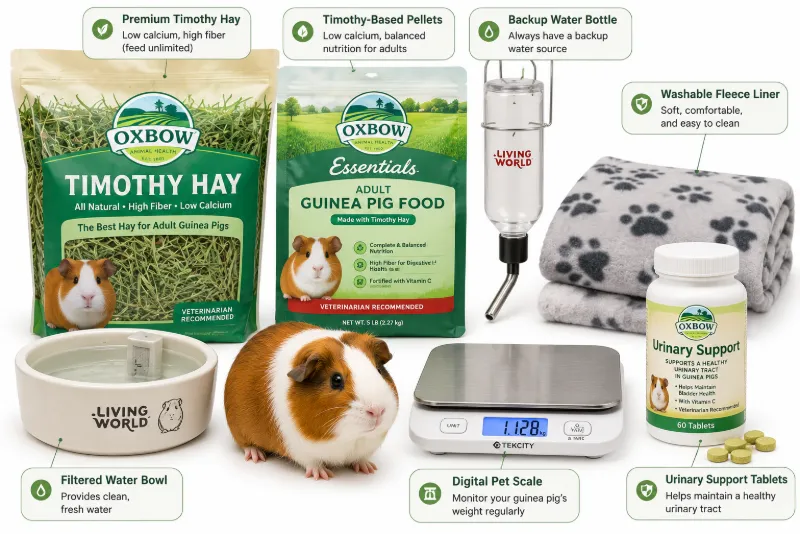
Useful Urinary-Care Products
| Product | Potential Use | Important Limitation |
|---|---|---|
| Timothy or orchard grass hay | Lower-calcium everyday hay for most adults | Does not treat existing stones |
| Timothy-based adult pellets | Supports a balanced adult diet | Portions still need control |
| Filtered water bowl or fountain | May encourage drinking | Requires frequent cleaning |
| Backup water bottle | Provides an additional water source | Nozzle must be tested daily |
| Urinary-support supplement | May provide nutritional support | Not a medical treatment |
| Washable light-colored fleece liner | Makes urine monitoring easier | Must remain clean and dry |
What Not to Do at Home
Do not squeeze the bladder.
Do not attempt to push a stone out manually.
Do not give human pain medication.
Do not give leftover antibiotics.
Do not use cranberry juice as a substitute for treatment.
Do not remove all dietary calcium.
Do not wait several days if the guinea pig is in obvious pain.
Guinea pigs metabolize medications differently from people, dogs, and cats. Even familiar over-the-counter products may be dangerous without veterinary dosing.
When to Contact an Exotic Veterinarian
Arrange a veterinary examination promptly if your guinea pig squeaks repeatedly during urination, even if it continues to eat.
Same-day veterinary assessment is especially important when you notice:
Visible blood in the urine
Repeated straining
Frequent small urine spots
Thick or gritty sludge
Hunched posture
Loud teeth grinding
Reduced appetite
Fewer or smaller droppings
A wet or dirty rear end
Unexplained weight loss
Emergency Warning Signs
Seek emergency veterinary care immediately if:
No urine is being produced
The guinea pig repeatedly strains without success
The abdomen appears swollen or extremely painful
The animal becomes weak, cold, or unresponsive
It stops eating completely
Dropping production stops or decreases sharply
There is heavy bleeding
A male guinea pig appears suddenly unable to urinate
A complete urinary blockage can damage the bladder and kidneys and may become fatal without rapid treatment.
How to Prepare for the Veterinary Visit
Bring or record the following information:
A list of hay, pellets, vegetables, treats, and supplements
The brand and quantity of pellets
The type of drinking water
Photographs of unusual urine
A video of the squeaking or straining
Recent body-weight records
The approximate number of urine spots and droppings
Any recent changes in appetite or behavior
Do not delay the appointment while attempting to obtain a urine sample unless the veterinary clinic specifically requests one.
Preventive Urinary-Care Checklist
Provide unlimited fresh grass hay.
Use an adult timothy-based pellet when appropriate.
Avoid routine alfalfa feeding in healthy adults.
Supply clean water at all times.
Test bottle nozzles every day.
Offer a varied selection of suitable vegetables.
Encourage daily movement.
Keep bedding clean and dry.
Weigh the guinea pig weekly.
Investigate painful urination immediately.
Final Thoughts
A guinea pig squeaking while urinating is usually expressing discomfort rather than making a normal social call. Bladder stones, urinary tract infection, calcium sludge, and bladder inflammation are among the most important causes.
Switching a healthy adult from alfalfa to timothy or another grass hay, reviewing pellet intake, improving hydration, and encouraging activity may support urinary health. However, these measures cannot diagnose an infection, dissolve most stones, or relieve a complete obstruction.
If your guinea pig repeatedly cries, strains, passes blood, eats less, or produces little to no urine, contact an experienced exotic-animal veterinarian immediately. Early diagnosis offers the best chance of controlling pain and preventing serious urinary complications.
FAQs
Why does my guinea pig squeak only when urinating?
A squeak that occurs specifically during urination commonly indicates pain or irritation. Bladder stones, sludge, infection, and cystitis are important possible causes and require veterinary evaluation.
Is white guinea pig urine normal?
Guinea pig urine may dry into a pale, chalky calcium mark. Thick, gritty, toothpaste-like material—especially when accompanied by pain or straining—is more concerning and may indicate bladder sludge.
Can bladder stones pass naturally?
Very small stones may occasionally pass, but they may also lodge in the urethra and create a dangerous blockage. Larger bladder stones often require veterinary removal.
Can too much calcium cause bladder stones?
High calcium intake may contribute to urinary risk in susceptible guinea pigs, but stones usually develop through several interacting factors. Calcium should be moderated rather than eliminated completely.
Should adult guinea pigs eat alfalfa hay?
Alfalfa is generally more suitable for young, growing, pregnant, nursing, or selected underweight guinea pigs. Most healthy adults are better suited to timothy, orchard, meadow, or another grass hay.
Does a UTI always cause blood in the urine?
No. A guinea pig with a urinary infection may show painful urination, frequent small urine spots, odor, reduced appetite, or lethargy without obvious blood.
Can I treat a guinea pig UTI at home?
No. A veterinarian should confirm whether an infection is present and select a guinea-pig-safe antibiotic. Urinary symptoms can also be caused by stones or obstruction.
Does Oxbow Urinary Support dissolve stones?
No. It is a nutritional support product, not a stone-dissolving medication or replacement for veterinary diagnosis and treatment.
What should I do if my guinea pig cannot urinate?
Seek emergency exotic-veterinary care immediately. Repeated straining without urine may indicate a complete obstruction.