 LC
LC
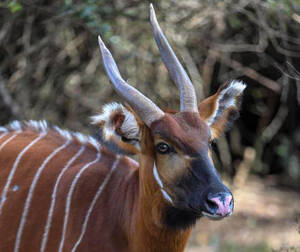
Tragelaphus eurycerus
Tragelaphus eurycerus
There are two subspecies of the eurycerus (scientific name: Tragelaphus eurycerus), and the names come from Greek. "Tragelaph···
Explore mammals from tiny bats and rodents to primates, carnivores, ungulates, whales, and elephants. Each profile connects core facts with habitat, lifespan, traits, and conservation information.

Use these shortcuts to move into more specific animal groups.
In traditional classification, "Ungulata" is a general term used to refer to mammals with hooves, including Perissodactyla and Artiodactyla. However, with the progress of molecular phylogenetic research, the traditional "ungulates" or "Ungulata" is not a strict monophyletic concept. In modern classification, whales (Cetacea) are included in even-toed ungulates and merged with even-toed ungulates (Artiodactyla) into "Cetartiodactyla". Therefore, when discussing ungulates today, they are usually broken down into two independent major living groups:
Perissodactyla: including horses, rhinos, tapirs, etc., with an odd number of toes (the middle toe bears weight).
Cetartiodactyla: integrates traditional even-toed ungulates (such as pigs, cattle, deer, camels) and cetaceans (whales, dolphins, porpoises) into a natural monophyletic group. Even-toed ungulates are characterized by an even number of toes on each foot (usually 2 or 4), while the evolution of whales shows that they are closely related to hippos.
Historically, "Ungulates" also included some extinct primitive groups (such as Callostomidae and "Obtsodontia" in a broad sense), but here we mainly focus on the two major living groups: Perissodactyla and Cetiformes.
I. Introduction to Hoofed Mammals
1. Traditional vs. Modern Classification:
Traditionally, “Ungulata” was used as a broad term to include all hoofed mammals. This encompassed horses, rhinos, tapirs (odd-toed) as well as pigs, camels, deer, cattle, and others (even-toed). However, with advances in molecular phylogenetics, it became clear that whales (Cetacea) share a close evolutionary relationship with hippopotamuses (Hippopotamidae), which are even-toed ungulates. As a result, whales have been placed within the same clade as even-toed ungulates, creating the order Cetartiodactyla. This modern grouping better reflects their evolutionary origins.
2. The Two Main Orders of “Ungulates”:
Perissodactyla (Odd-toed Ungulates): Horses, rhinos, and tapirs—characterized by having an odd number of toes (usually one or three) and bearing weight mainly on the middle toe.
Cetartiodactyla (Even-toed Ungulates + Whales): This group combines traditional Artiodactyla (even-toed ungulates like pigs, camels, deer, bovids) with Cetacea (whales, dolphins, porpoises). Even-toed ungulates typically have two or four toes, and whales are highly specialized aquatic descendants of ancient terrestrial ungulate ancestors.
II. Evolutionary History
In the Paleogene and Neogene periods (roughly 20–50 million years ago), hoofed mammals underwent extensive adaptive radiations, spreading across the globe.
Perissodactyls once included a much greater diversity, but only three families survive today. They dominated certain habitats in the past but declined due to changing climates and the rise of grasslands.
Artiodactyls diversified more extensively, giving rise to a broad range of large herbivores on land. Within the even-toed lineage, one group returned to the water, evolving into modern whales and dolphins. Molecular data confirm that whales are nested within the even-toed ungulates, closely related to hippos, leading to the modern concept of Cetartiodactyla.
III. Classification Tables
A. Perissodactyla (Odd-Toed Ungulates)
| Family | Example Genera/Species | Notes |
|---|---|---|
| Equidae (Horses, Zebras, Donkeys) | Equus (horses, zebras, donkeys) | Weight-bearing on a single central toe; adapted for running in open habitats. |
| Rhinocerotidae (Rhinoceroses) | Rhinoceros (Indian rhino), Ceratotherium (white rhino) | Thick-skinned herbivores with one or two horns, found in Africa and Asia. |
| Tapiridae (Tapirs) | Tapirus (tapirs of Central/South America, Southeast Asia) | Short, flexible proboscis; forest dwellers that feed on leaves and fruits. |
B. Cetartiodactyla (Even-Toed Ungulates + Whales)
Even-Toed Ungulates (Artiodactyla)
| Family | Example Genera/Species | Notes |
|---|---|---|
| Suidae (Pigs) | Sus (wild boar, domestic pig), Phacochoerus (warthog) | Omnivorous, often with prominent canines; Old World distribution. |
| Hippopotamidae (Hippos) | Hippopotamus amphibius | Semi-aquatic, closely related to whales at the molecular level; African. |
| Camelidae (Camels, Llamas) | Camelus (camels), Lama (llamas), Vicugna (vicuñas) | Adapted to arid and high-altitude environments in Africa, Asia, and South America. |
| Cervidae (Deer) | Cervus (red deer), Rangifer (reindeer), Muntiacus (muntjacs) | Males typically bear antlers (bone structures shed annually); widespread across Eurasia and the Americas. |
| Giraffidae (Giraffe, Okapi) | Giraffa (giraffe), Okapia (okapi) | African endemics, the giraffe is adapted to browsing high foliage. |
| Bovidae (Cattle, Sheep, Goats, Antelopes) | Bos (cattle), Ovis (sheep), Capra (goats), various antelopes | Extremely successful and diverse herbivores in Africa, Eurasia, and North America. |
Whales (Cetacea, included in Cetartiodactyla)
| Family | Example Genera/Species | Notes |
|---|---|---|
| Balaenopteridae (Rorqual Whales) | Balaenoptera (blue whale), Megaptera (humpback whale) | Baleen whales filter-feeding on krill and small fish. |
| Balaenidae (Right Whales) | Eubalaena (right whales) | Slow-moving baleen whales that feed on zooplankton. |
| Physeteridae (Sperm Whales) | Physeter (sperm whale) | Deep-diving predators of squid; have a large, oil-filled head. |
| Delphinidae (Dolphins, Orcas) | Tursiops (bottlenose dolphin), Orcinus (killer whale) | Tooth-bearing whales, highly social and widespread. |
| Phocoenidae (Porpoises) | Phocoena (harbor porpoise) | Small toothed whales with shorter beaks, found in coastal waters. |
(There are many other whale families; the above are representative examples.)
IV. Summary
The concept of “hoofed mammals” as a single order is outdated. Modern evolutionary and molecular studies have clarified their relationships, placing whales within the lineage of even-toed ungulates. Thus, today we speak of:
Perissodactyla (Odd-Toed Ungulates): Horses, rhinos, tapirs.
Cetartiodactyla (Even-Toed Ungulates + Cetaceans): Pigs, hippos, camels, deer, cattle, antelopes, and whales/dolphins.
This modern classification highlights the incredible evolutionary journey of some terrestrial herbivores that eventually took to the oceans and became fully aquatic cetaceans. By understanding these relationships, users can appreciate how modern taxonomy accurately reflects the deep evolutionary history and adaptation of hoofed mammals.
Search the animals shown on this page or narrow them by IUCN conservation code.
LC
Tragelaphus eurycerus
There are two subspecies of the eurycerus (scientific name: Tragelaphus eurycerus), and the names come from Greek. "Tragelaph···
 LC
LC
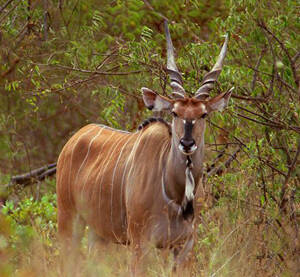
Tragelaphus derbianus
Giant Eland (scientific name: Tragelaphus derbianus) has two subspecies.Giant Eland usually gathers in small groups of about 25, b···
 LC
LC
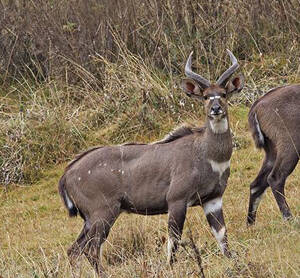
Tragelaphus buxtoni,mountain antelope, mountain antelope, alpine antelope, mountain antelope
Mountain Nyala (scientific name: Tragelaphus buxtoni) is called Mountain Nyala in foreign language, and has no subspecies.Mountain···
 LC
LC
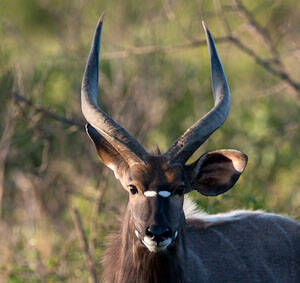
Tragelaphus angasii,White-striped antelope, white-spotted antelope, East African bushbuck, Anders's bushbuck, African bushbuck, Nyala bushbuck
Lowland Nyala (scientific name: Tragelaphus angasii) is called Lowland Nyala in foreign language, and has no subspecies.Lowland Ny···
 LC
LC
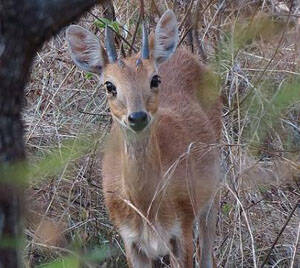
Tetracerus quadricornis
There are three subspecies of Tetracerus quadricornis.Tetracerus quadricornis do not live in groups, rarely more than two individu···
 LC
LC
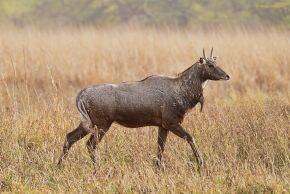
Boselaphus tragocamelus,blue antelope, blue scimitar-horned antelope, Indian antelope, blue bull
Bluebuck (scientific name: Boselaphus tragocamelus) is called Nilgai, Bluebuck in English, Nilgau in French, Nilgo in Spanish, Nil···
 LC
LC
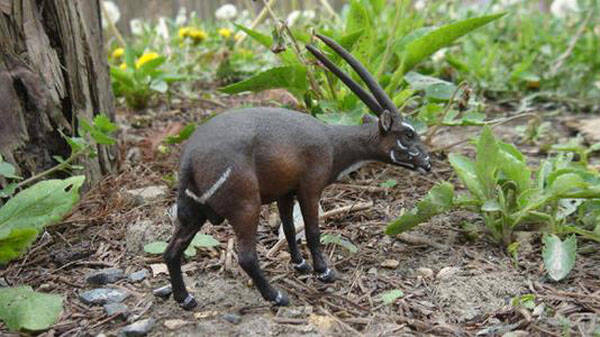
Pseudoryx nghetinhensis,Annamite antelope, Asian unicorn, Asian unicorn, Wuguang cattle, sword-horned cattle, Saura antelope
The Saola (scientific name: Pseudoryx nghetinhensis), also known as Wu Guang Niu and Asian Qilin, is a monotypic species of the ge···
 LC
LC
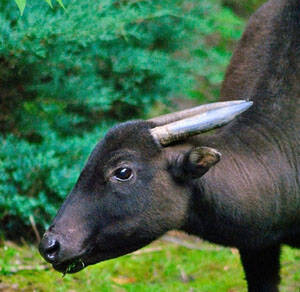
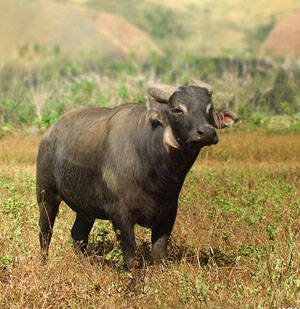
Bubalus quarlesi,Mountain buffalo, Buffalo quagga
Mountain buffalo (scientific name: Bubalus quarlesi) is called Mountain Anoa in English, Anoa de quarle, Anoa des montagnes in Fre···
 LC
LC
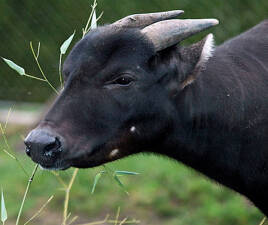
Bubalus mindorensis,Tamoro buffalo, Philippine buffalo, Mindanao buffalo, Mindoro buffalo
Mindoro buffalo (scientific name: Bubalus mindorensis) is also known as Tamaraw in foreign languages. It has no subspecies. Mindor···
 LC
LC
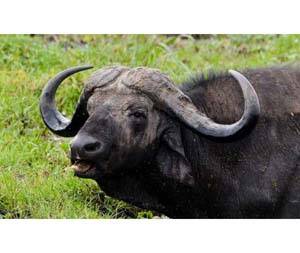
Bubalus depressicornis,Celebes buffalo, Lowland buffalo
Lowland buffalo (scientific name: Bubalus depressicornis) is called Lowland anoa in foreign language, and has no subspecies.Unlike···
 LC
LC
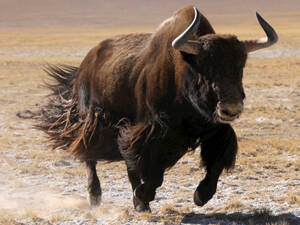
Bubalus arnee,Asian wild buffalo, Asian water buffalo, Indian wild buffalo
Wild buffalo (scientific name: Bubalus arnee) is called Wild Water Buffalo, Asian Buffalo, Asiatic Buffalo, Indian Buffalo, Indian···
 LC
LC
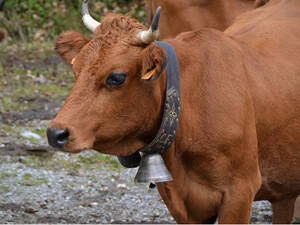
Bos grunniens
Domestic Yak (scientific name: Bos grunniens) is an artificially cultivated animal of the order Artiodactyla, family Bovidae, and ···
 LC
LC
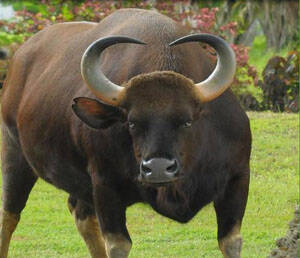
Bos taurus,Cattle, European cattle
Domestic cattle (scientific name: Bos taurus) are also known as domesticated cattle or aurochs. They are a general term for many d···
 LC
LC
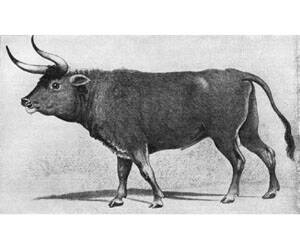
Bos sauveli,Kapolei cattle, gray cattle
Cambodian wild cattle (scientific name: Bos sauveli) English Kouprey, Grey Ox, French Boeuf gris Cambodgien, Spanish Toro Cuprey, ···
 LC
LC
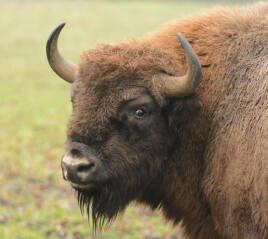
Bosprimigenius
Bosprimigenius, scientific name, is a large cattle, now extinct. Its scientific name comes from the German word Auerochse, meaning···
 LC
LC
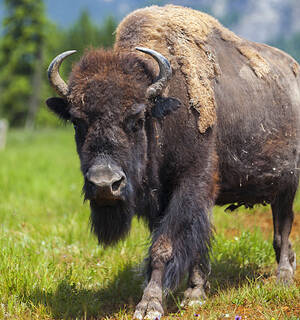
Bison bonasus
European bison (scientific name: Bison bonasus) is called European Bison, European Bison, Wisent in English, Bison d'Europe, B···
 LC
LC
Bison bison,bison, American buffalo, bison
American bison (scientific name: Bison bison) is called American Bison in English and Amerikanischer Bison in German. It has two s···
 LC
LC
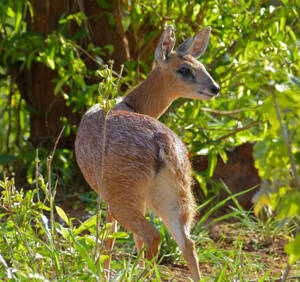
Raphicerus sharpei
Sharpe's Grysbok (scientific name: Raphicerus sharpei) is called Sharpe's Grysbok in English, Grysbok de Sharpe in French,···
 LC
LC
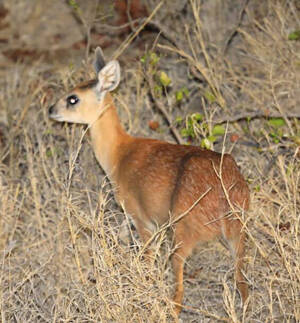
Raphicerus melanotis
Black-eared antelope (scientific name: Raphicerus melanotis) is also known as Cape Grysbok, with no subspecies.Black-eared antelop···
 LC
LC
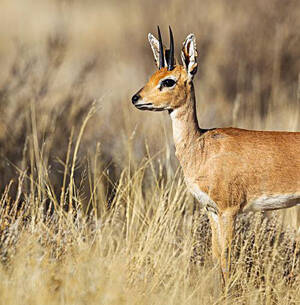
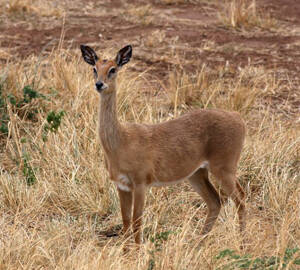
Raphicerus campestris
Raphicerus campestris (Steenbok in English, Steenbok in French, Steenbok in South Africa, Steinbockchen in German) has 4 subspecie···
 LC
LC
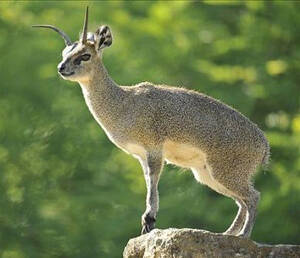
Ourebia ourebia
Orebia ourebia (scientific name: Ourebia ) is called Oribi in foreign language. It has 9 subspecies and is a medium-sized ungulate···
 LC
LC
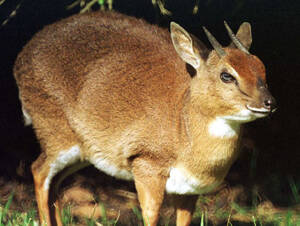
Oreotragus oreotragus (English: Klipspringer, French: Oréotrague, South African: Klipspringer, German: Klippspringer, Dutch: &quo···
 LC
LC
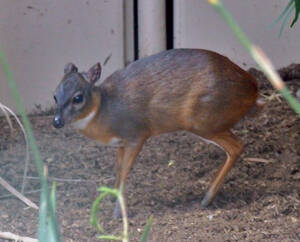
Neotragus moschatus
Neotragus moschatus (scientific name: Neotragus moschatus): It is the only species of the genus Neotragus in the order Artiodactyl···
 LC
LC
Neotragus pygmaeus
Royal Antelope (scientific name: Neotragus pygmaeus) English Royal Antelope, French Antilope royale, German Kleinstbokchen, no sub···