Skip to content
Animals Top
Home>Animals>Mammal>Ungulata
Mammal Directory

Mammals

Explore mammals from tiny bats and rodents to primates, carnivores, ungulates, whales, and elephants. Each profile connects core facts with habitat, lifespan, traits, and conservation information.

Scientific names IUCN status Lifespan
Numbat
Explore more

Browse Mammal Groups

Use these shortcuts to move into more specific animal groups.

Ungulata

In traditional classification, "Ungulata" is a general term used to refer to mammals with hooves, including Perissodactyla and Artiodactyla. However, with the progress of molecular phylogenetic research, the traditional "ungulates" or "Ungulata" is not a strict monophyletic concept. In modern classification, whales (Cetacea) are included in even-toed ungulates and merged with even-toed ungulates (Artiodactyla) into "Cetartiodactyla". Therefore, when discussing ungulates today, they are usually broken down into two independent major living groups:

  1. Perissodactyla: including horses, rhinos, tapirs, etc., with an odd number of toes (the middle toe bears weight).

  2. Cetartiodactyla: integrates traditional even-toed ungulates (such as pigs, cattle, deer, camels) and cetaceans (whales, dolphins, porpoises) into a natural monophyletic group. Even-toed ungulates are characterized by an even number of toes on each foot (usually 2 or 4), while the evolution of whales shows that they are closely related to hippos.

Historically, "Ungulates" also included some extinct primitive groups (such as Callostomidae and "Obtsodontia" in a broad sense), but here we mainly focus on the two major living groups: Perissodactyla and Cetiformes.

I. Introduction to Hoofed Mammals

1. Traditional vs. Modern Classification:
Traditionally, “Ungulata” was used as a broad term to include all hoofed mammals. This encompassed horses, rhinos, tapirs (odd-toed) as well as pigs, camels, deer, cattle, and others (even-toed). However, with advances in molecular phylogenetics, it became clear that whales (Cetacea) share a close evolutionary relationship with hippopotamuses (Hippopotamidae), which are even-toed ungulates. As a result, whales have been placed within the same clade as even-toed ungulates, creating the order Cetartiodactyla. This modern grouping better reflects their evolutionary origins.

2. The Two Main Orders of “Ungulates”:

  • Perissodactyla (Odd-toed Ungulates): Horses, rhinos, and tapirs—characterized by having an odd number of toes (usually one or three) and bearing weight mainly on the middle toe.

  • Cetartiodactyla (Even-toed Ungulates + Whales): This group combines traditional Artiodactyla (even-toed ungulates like pigs, camels, deer, bovids) with Cetacea (whales, dolphins, porpoises). Even-toed ungulates typically have two or four toes, and whales are highly specialized aquatic descendants of ancient terrestrial ungulate ancestors.


II. Evolutionary History

  • In the Paleogene and Neogene periods (roughly 20–50 million years ago), hoofed mammals underwent extensive adaptive radiations, spreading across the globe.

  • Perissodactyls once included a much greater diversity, but only three families survive today. They dominated certain habitats in the past but declined due to changing climates and the rise of grasslands.

  • Artiodactyls diversified more extensively, giving rise to a broad range of large herbivores on land. Within the even-toed lineage, one group returned to the water, evolving into modern whales and dolphins. Molecular data confirm that whales are nested within the even-toed ungulates, closely related to hippos, leading to the modern concept of Cetartiodactyla.


III. Classification Tables

A. Perissodactyla (Odd-Toed Ungulates)

FamilyExample Genera/SpeciesNotes
Equidae (Horses, Zebras, Donkeys)Equus (horses, zebras, donkeys)Weight-bearing on a single central toe; adapted for running in open habitats.
Rhinocerotidae (Rhinoceroses)Rhinoceros (Indian rhino), Ceratotherium (white rhino)Thick-skinned herbivores with one or two horns, found in Africa and Asia.
Tapiridae (Tapirs)Tapirus (tapirs of Central/South America, Southeast Asia)Short, flexible proboscis; forest dwellers that feed on leaves and fruits.

B. Cetartiodactyla (Even-Toed Ungulates + Whales)

Even-Toed Ungulates (Artiodactyla)

FamilyExample Genera/SpeciesNotes
Suidae (Pigs)Sus (wild boar, domestic pig), Phacochoerus (warthog)Omnivorous, often with prominent canines; Old World distribution.
Hippopotamidae (Hippos)Hippopotamus amphibiusSemi-aquatic, closely related to whales at the molecular level; African.
Camelidae (Camels, Llamas)Camelus (camels), Lama (llamas), Vicugna (vicuñas)Adapted to arid and high-altitude environments in Africa, Asia, and South America.
Cervidae (Deer)Cervus (red deer), Rangifer (reindeer), Muntiacus (muntjacs)Males typically bear antlers (bone structures shed annually); widespread across Eurasia and the Americas.
Giraffidae (Giraffe, Okapi)Giraffa (giraffe), Okapia (okapi)African endemics, the giraffe is adapted to browsing high foliage.
Bovidae (Cattle, Sheep, Goats, Antelopes)Bos (cattle), Ovis (sheep), Capra (goats), various antelopesExtremely successful and diverse herbivores in Africa, Eurasia, and North America.

Whales (Cetacea, included in Cetartiodactyla)

FamilyExample Genera/SpeciesNotes
Balaenopteridae (Rorqual Whales)Balaenoptera (blue whale), Megaptera (humpback whale)Baleen whales filter-feeding on krill and small fish.
Balaenidae (Right Whales)Eubalaena (right whales)Slow-moving baleen whales that feed on zooplankton.
Physeteridae (Sperm Whales)Physeter (sperm whale)Deep-diving predators of squid; have a large, oil-filled head.
Delphinidae (Dolphins, Orcas)Tursiops (bottlenose dolphin), Orcinus (killer whale)Tooth-bearing whales, highly social and widespread.
Phocoenidae (Porpoises)Phocoena (harbor porpoise)Small toothed whales with shorter beaks, found in coastal waters.

(There are many other whale families; the above are representative examples.)


IV. Summary

The concept of “hoofed mammals” as a single order is outdated. Modern evolutionary and molecular studies have clarified their relationships, placing whales within the lineage of even-toed ungulates. Thus, today we speak of:

  • Perissodactyla (Odd-Toed Ungulates): Horses, rhinos, tapirs.

  • Cetartiodactyla (Even-Toed Ungulates + Cetaceans): Pigs, hippos, camels, deer, cattle, antelopes, and whales/dolphins.

This modern classification highlights the incredible evolutionary journey of some terrestrial herbivores that eventually took to the oceans and became fully aquatic cetaceans. By understanding these relationships, users can appreciate how modern taxonomy accurately reflects the deep evolutionary history and adaptation of hoofed mammals.

Advertisement
Species directory

Browse Mammals

Search the animals shown on this page or narrow them by IUCN conservation code.

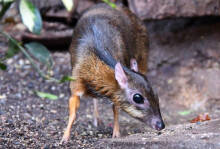
Tragulus kanchilLC

Tragulus kanchil

Tragulus kanchil,Lesser Oriental Chevrotain、Lesser Indo-Malayan Chevrotain、Lesser Malay Chevrotain、Lesser Mousedeer、Mouse Deer, Chevrotain kanchil, Petit tragul malais, Kanchil

Ungulata8-12years

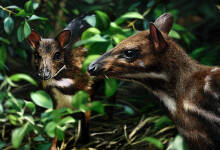
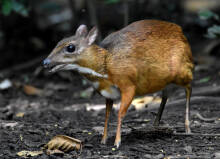
Lesser Mousedeer (scientific name: Tragulus kanchil) English Lesser Oriental Chevrotain, Lesser Indo-Malayan Chevrotain, Lesser Ma···

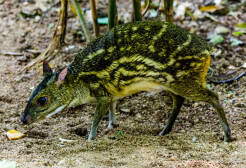
Tragulus javanicusLC

Tragulus javanicus

Tragulus javanicus,Javan Chevrotain、Java Mousedeer、Javan Mousedeer、Kanchil、Lesser Mouse Deer, Chevrotain de Java、Petit tragul malais

UngulataAbout 12 years

Javan Mousedeer (scientific name: Tragulus javanicus) English Javan Chevrotain, Java Mousedeer, Javan Mousedeer, Kanchil, Lesser M···

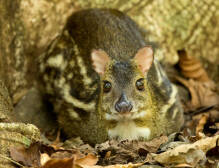
Moschiola meminnaLC

Moschiola meminna

Moschiola meminna, White-spotted Chevrotain,Chevrotain,Indian Mouse Deer,Indian Spotted Chevrotain,White-spotted Mousedeer,Tragule d'Inde, Meminna

Ungulata8-12years

Spotted Mouse Deer (scientific name: Moschiola meminna) English White-spotted Chevrotain, Chevrotain, Indian Mouse Deer, Indian Sp···

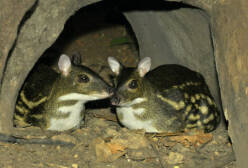
Moschiola kathygreLC

Moschiola kathygre

Moschiola kathygre

Ungulata8-12years

The yellow-striped mouse deer (scientific name: Moschiola kathygre) has no subspecies. It mainly eats fruits that fall from trees,···

Moschiola indicaLC

Moschiola indica

Moschiola indica,Indian Chevrotain、Indian Mouse Deer、Indian Mousedeer、Indian Spotted Chevrotain

Ungulata8-12years

Indian Chevrotain (scientific name: Moschiola indica) is also known as Indian Chevrotain, Indian Mouse Deer, Indian Mousedeer, Ind···

Hyemoschus aquaticusLC

Hyemoschus aquaticus

Hyemoschus aquaticus, Water Chevrotain,Chevrotain Aquatique, Antilope Amizclero Enano de Agua, Hirschferkel

Ungulata8-13years

Water Chevrotain [shuǐ xī lù] (scientific name: Hyemoschus aquaticus) English: Water Chevrotain, French: Chevrotain Aquatique, ···

Tayassu pecariLC

Tayassu pecari

Tayassu pecari

UngulataNo verification information

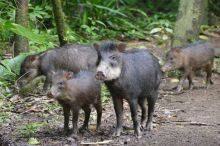
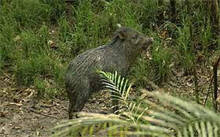
White-lipped Peccary (scientific name: Tayassu pecari) has 5 subspecies.White-lipped Peccary is active both during the day and at ···

Catagonus wagneriLC

Catagonus wagneri

Catagonus wagneri,Chacoan Peccary,Tagua

Ungulata9-18years

The Chacoan Peccary (Catagonus wagneri) has no subspecies. When it was first discovered, there were only some fossils of the Chaco···

Pecari tajacuLC

Pecari tajacu

Pecari tajacu,Collared Peccary,Collared peccary, collared pig, collared peccary

UngulataAbout 24 years

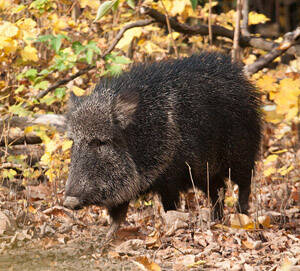
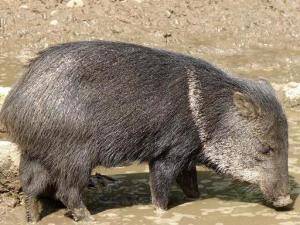
Collared Peccary (scientific name: Pecari tajacu) has 14 subspecies. Peccary, pronounced tuān, means wild boar. Peccary, as the n···

Pecari maximusLC

Pecari maximus

Pecari maximus,Pecari Gigante,Giant wild boar

Ungulata16-24years

Pecari maximus (scientific name: Pecari maximus) is also known as Pecari Gigante in English. It has no subspecies.The giant peccar···

Sus verrucosusLC

Sus verrucosus

Sus verrucosus,Javan pig、Sanglier pustule,Javan warty pig, warty wild pig

Ungulata8-14years

Javan wild boar (scientific name: Sus verrucosus) foreign name Javan pig, Sanglier pustule, there are 2 subspecies.Javan wild boar···

Sus scrofaLC

Sus scrofa

Sus scrofa, Wild Boar、Eurasian Wild Pig、Ryukyu Islands Wild Pig, Sanglier、Sanglier d'Eurasie,Jabalí, Schwarzwild、Wildschwein, Zerleg Gakhai

Ungulata20-50years

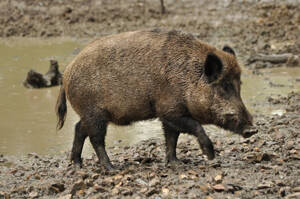
Eurasian wild boar (scientific name: Sus scrofa) English Wild Boar, Eurasian Wild Pig, Ryukyu Islands Wild Pig, French Sanglier, S···

Sus philippensisLC

Sus philippensis

Sus philippensis,Philippine Warty Pig,Philippine warthog

Ungulata10-20years

Philippine Warty Pig (scientific name: Sus philippensis) has two subspecies.Philippine Warty Pig is more active at night, but is a···

Sus oliveriLC

Sus oliveri

Sus oliveri,Oliver's Warty Pig,Mindoro Warty Pig, Oliver's Warty Pig

Ungulata10-20years

Mindoro wild boar (scientific name: Sus oliveri) is also known as Oliver's Warty Pig. There is no subspecies.There are few dir···

Sus celebensisLC

Sus celebensis

Sus celebensis,Sulawesi Warty Pig,Celebes wild boar

Ungulata10-20years

Sulawesi Warty Pig (scientific name: Sus celebensis) has three subspecies.The Sulawesi wild boar has a home range of 500-1000 hect···

Sus cebifronsLC

Sus cebifrons

Sus cebifrons,Visayan warty pig,Visayan warty pig, curly-haired wild boar

Ungulata10-18years

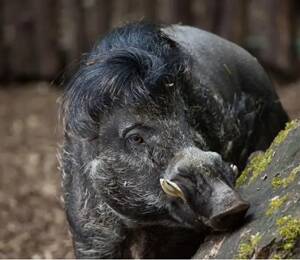
Visayan warty pig (scientific name: Sus cebifrons) is a species endemic to the Visayas Islands in the Philippines.Reports on the a···

Sus bucculentusLC

Sus bucculentus

Sus bucculentus,ndo-chinese Warty Pig、Heude's Pig、 Vietnam Warty Pig,Vietnamese wild boar, big-mouthed wild boar

UngulataNo verification information

Indochinese wild boar (scientific name: Sus bucculentus) is also known as Indo-chinese Warty Pig, Heude's Pig, Vietnam Warty P···

Porcula salvaniaLC

Porcula salvania

Porcula salvania,Pygmy Hog, Sanglier nain、Sanglier pygmée, Jabalí Enano、Jabalí Pigmeo, Nal Gahori、Takuri Borah, Sano Banel,Pygmy pig, pygmy boar

Ungulata10-12years

Porcula salvania (Pygmy Hog in English, Sanglier nain, Sanglier pygmée in French, Jabalí Enano, Jabalí Pigmeo in Spanish, Nal G···

Sus barbatusLC

Sus barbatus

Sus barbatus,Bearded Pig,Western Bearded Pig

UngulataAbout 16 years

Borneo Bearded Pig (scientific name: Sus barbatus) is also known as Bearded Pig and Western Bearded Pig in foreign languages. It h···

Sus ahoenobarbusLC

Sus ahoenobarbus

Sus ahoenobarbus,Palawan Bearded Pig

UngulataNo verification information

Palawan Bearded Pig (Sus ahoenobarbus) has no subspecies. The Palawan Bearded Pig is similar to the Borneo Bearded Pig and was onc···

Potamochoerus larvatusLC

Potamochoerus larvatus

Potamochoerus larvatus,Bushpig,Jungle Pig

UngulataAbout 20 years

Masked wild boar (scientific name: Potamochoerus larvatus) is also known as Bushpig in English. There are 6 subspecies.Masked wild···

Potamochoerus porcusLC

Potamochoerus porcus

Potamochoerus porcus,Red River Hog,West African bush pig, tufted pig, red river hog

Ungulata10-15years

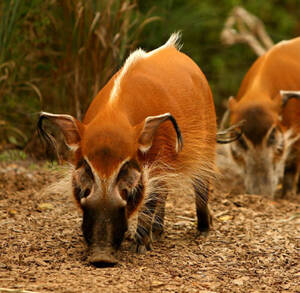
Red River Hog (scientific name: Potamochoerus porcus) is also known as Red River Hog, and has no subspecies.Red River Hog is a soc···

Hylochoerus meinertzhageniLC

Hylochoerus meinertzhageni

Hylochoerus meinertzhageni,Forest Hog

UngulataAbout 12 years

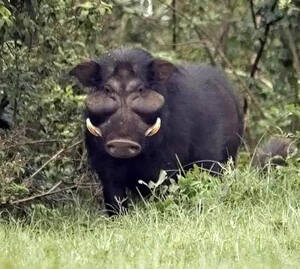
The Forest Hog (Hylochoerus meinertzhageni), also known as the Forest Hog in English, has three subspecies and is the largest pig.···

Phacochoerus africanusLC

Phacochoerus africanus

Phacochoerus africanus,Common Warthog,Common warthog, Eritrean warthog

UngulataAbout 15 years

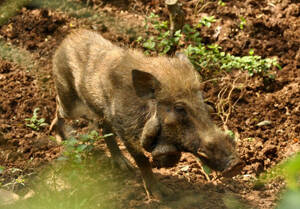
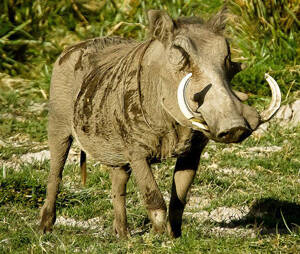
African warthog (scientific name: Phacochoerus africanus) is called Common Warthog in foreign language, and there are 4 subspecies···

No matching animals on this page.
Advertisement