Elephants stand out not only for their huge bodies and impressive tusks, but also for their enormous ears. Those ears are not just a cute or iconic feature – they are vital tools that help elephants stay cool, communicate, and even defend themselves.
Below you’ll find a clear explanation of why elephants have such big ears, how African and Asian elephants differ, and several extra curiosities about their ears.
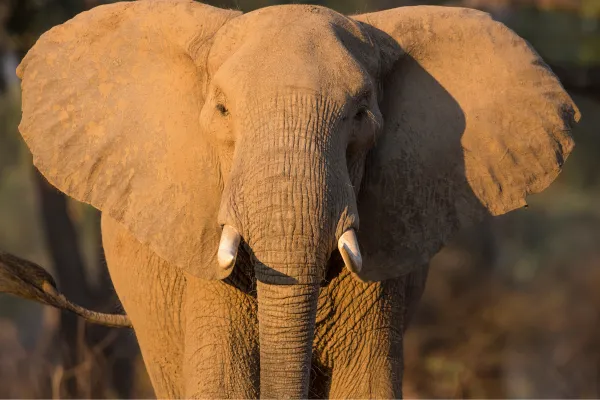
Why Do Elephants Have Big Ears? Their Role in Temperature Control
The main reason elephants have large ears is thermoregulation – helping them keep a safe, stable body temperature even under extreme heat.
Most elephants live in very hot regions, such as:
African savannas and semi-deserts
Asian forests and tropical regions
In these environments, preventing overheating is literally a matter of survival.
Elephant ears work like natural fans and radiators:
Their ears contain a dense network of blood vessels just under the skin.
When an elephant flaps its ears, the moving air cools the blood flowing through them.
That cooler blood then returns to the rest of the body and helps lower internal temperature.
The combination of:
Large skin surface (big ears)
Constant airflow created by flapping
…allows an elephant, especially an African elephant, to reduce its body temperature by several degrees.
So, big ears are not just for hearing – they’re one of the most important adaptations elephants have to survive the heat.

Why Do African Elephants Have Bigger Ears Than Asian Elephants?
If you compare both species, you’ll notice a clear difference:
African elephants → very large, wide ears
Asian elephants → smaller, more rounded ears
This is directly related to the climate each species lives in.
African elephants:
Live in hotter and drier environments such as savannas and semi-desert areas.
Temperatures can easily exceed 40 °C (104 °F).
Their huge ears (which can reach up to 2 meters in length) provide a large area to release heat.
Asian elephants:
Usually live in more humid forests and jungles, with more shade.
Temperatures are high, but generally not as extreme as in many African habitats.
Because they don’t need to dump as much heat, they can “afford” to have smaller ears.
In short, the warmer and drier the environment, the larger the ears need to be to cool the body effectively. That’s why African elephants have the biggest ears of all.

How Do Elephants Use Their Ears to Communicate?
Elephant ears are also important for body language and social communication.
Elephants are very social animals, and they use their ears to express emotions and intentions:
Ears wide open and extended
Often a sign of intimidation or warning
The elephant appears larger and more imposing to a predator or a rival
Ears flapping quickly and strongly
Can indicate irritation, nervousness or agitation
Ears relaxed and hanging down
Usually means the elephant is calm and relaxed
Within the herd, this ear language helps:
Maintain social harmony
Avoid unnecessary conflicts
Coordinate reactions when something unusual happens in the environment
So, the ears are also a key part of the elephants’ non-verbal communication system.
Do Big Ears Help Protect Elephants From Predators?
Elephant ears are not a direct weapon like tusks or powerful legs, but they do contribute to defence and protection.
When an elephant feels threatened, it may:
Raise its head
Spread its ears as wide as possible
Shake or flap them while moving forward
This posture makes the elephant look even bigger and more formidable, sending a very clear message to potential predators such as lions or hyenas:
“I am huge and strong – it’s not worth the risk.”
Big ears also act as a kind of visual alarm within the herd.
If one elephant detects danger, changes its posture and tenses its ears, the others can immediately interpret that as a sign to be alert or to retreat, especially the young.

Other Interesting Facts About Elephant Ears
Besides cooling and communication, elephant ears hide several other curiosities.
1. Do elephant ears grow throughout their lives?
Yes. Just like human ears and noses, elephant ears keep growing as the animal ages.
They are largely made of cartilage, a tissue that continues to develop over time.
Older elephants often have larger ears with worn or torn edges, marked by years of rubbing against vegetation and environmental wear.
Because of this, older individuals tend to have more impressive ears than younger ones.
2. Can you identify an elephant by its ears?
You can. Each elephant has unique ears, with:
Different shapes
Small tears and notches in the edges
Characteristic folds and patterns
For researchers, rangers and caregivers, ears work like a “fingerprint”, making it easier to:
Recognise individuals in the wild
Monitor specific elephants over time
Carry out conservation and behaviour studies
3. Do the ears help repel insects?
Yes. When elephants flap their ears, they don’t just cool down – they also:
Scare away flies, mosquitoes and other biting insects
Reduce annoyance and the risk of irritation or infection from bites
This is especially useful in humid areas or near water, where insect populations are high.
4. Do the ears also improve hearing?
Elephants already have an extremely sensitive inner ear, able to detect:
Very low-frequency sounds
Vibrations and rumbles that can travel several kilometres through the ground or air
Their large ears act like acoustic reflectors, helping:
Capture and direct sounds toward the ear canal
Better locate where a sound is coming from
Improve their ability to orient themselves using sound
This is crucial for communication over long distances and for detecting distant threats.
5. Extra curiosities about elephant ears
The ears of African elephants are often said to resemble the map of Africa, while the ears of Asian elephants are smaller and more rounded.
In a large African elephant, each ear can weigh up to 20 kg.
Elephants can move each ear independently, which gives them precise control over airflow and sound direction.
Now that you know why elephants have such big ears and what they use them for, you can see that they are much more than a simple physical trait: they are essential tools for survival, communication and social life in one of the largest land animals on Earth.
Bibliography
Elefantepedia. Elephant Ears. Available at: https://www.elefantepedia.com/las-orejas-del-elefante/
Elefantepedia. Elephant Facts. Available at: https://www.elefantepedia.com/curiosidades-de-elefantes/
Cándido. Cándido Web, Biocuriosities. Elephant Ears. Available at: https://candidoweb-biocuriosidades.blogspot.com/2015/03/las-orejas-del-elefante.html