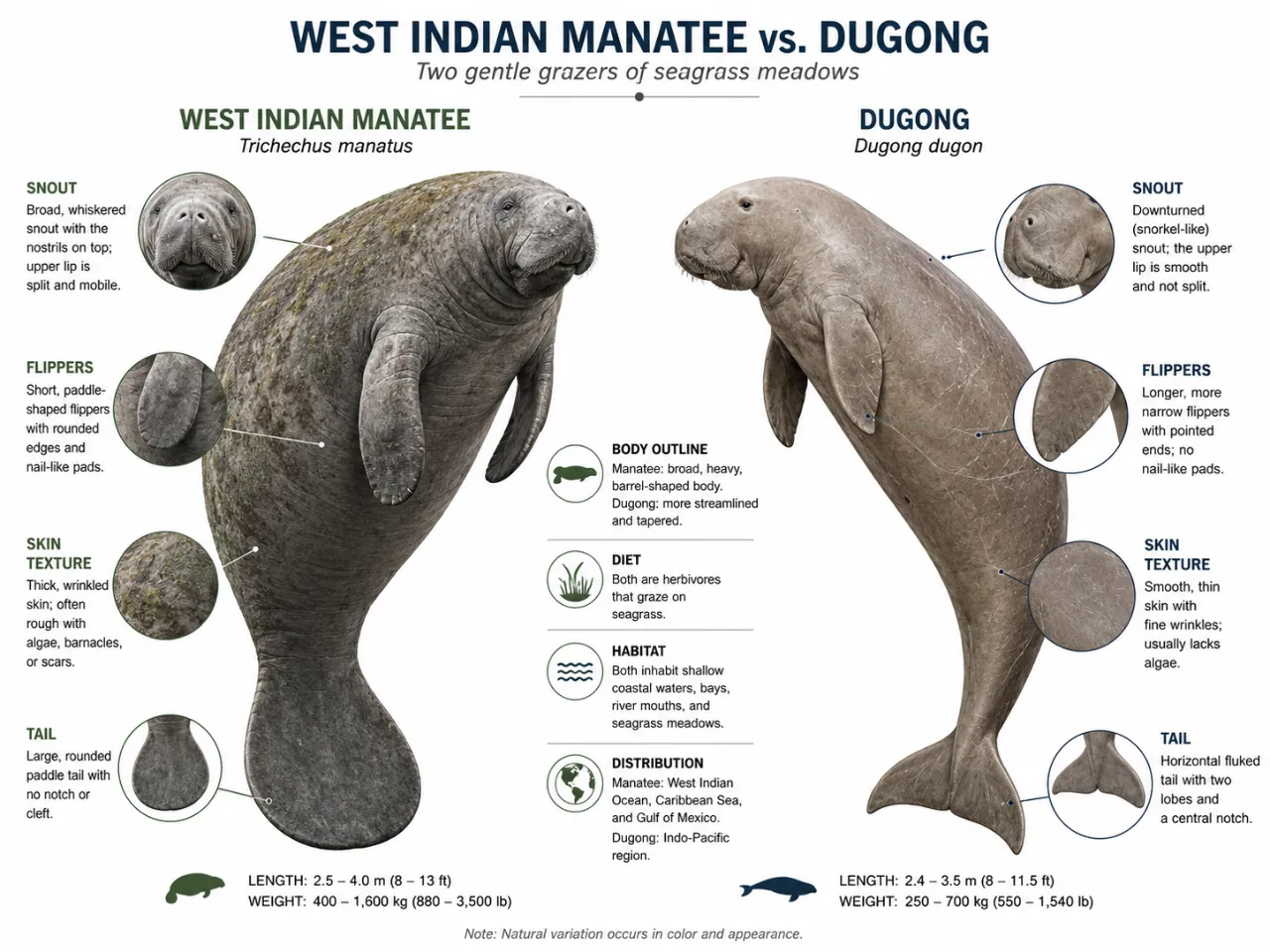
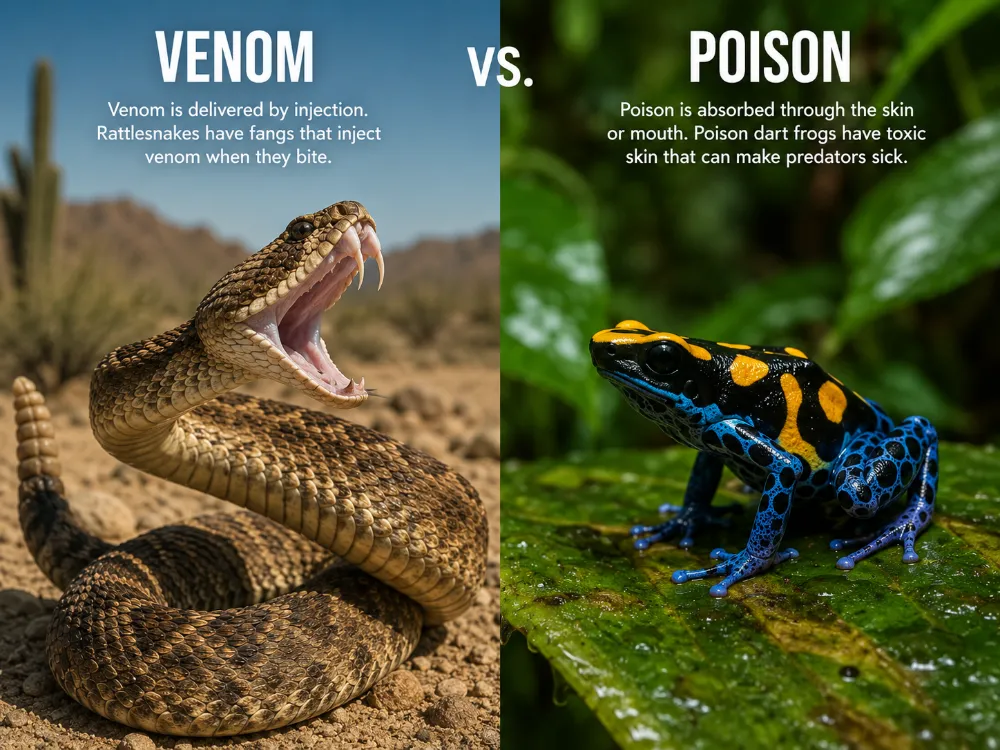
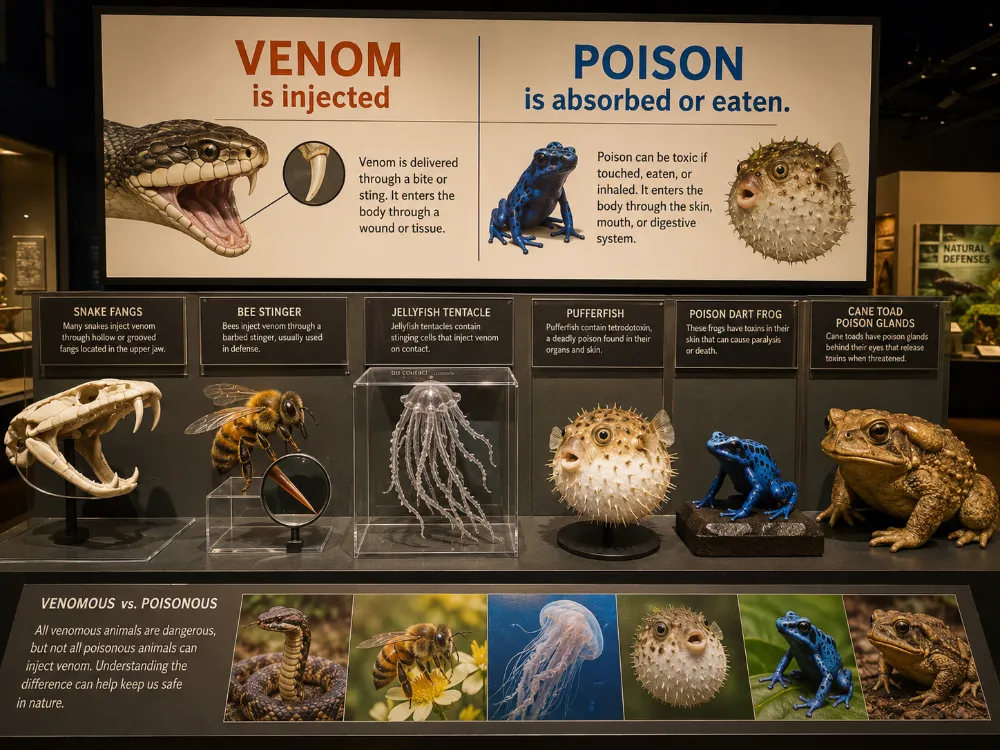
Venom and poison are both natural toxins, but they enter the body in different ways. Venom is injected by a bite, sting, spine, fang, or stinging cell. Poison causes harm when it is eaten, touched, inhaled, or absorbed. A rattlesnake uses venom; a poison dart frog carries poison. The simple rule is: venom is delivered into you, while poison is taken into your body.
| Feature | Venom | Poison | Easy Meaning |
|---|---|---|---|
| How it enters the body | Injected through a bite, sting, spine, barb, fang, or stinging cell | Eaten, touched, inhaled, licked, or absorbed | Venom is injected; poison is absorbed or swallowed. |
| Animal action | Active delivery | Often passive defense | Venom attacks or defends; poison waits. |
| Main biological purpose | Capturing prey, defense, or both | Deterring predators from eating or touching the animal | Venom helps subdue; poison helps discourage. |
| Delivery structure | Fangs, stingers, spines, barbs, harpoons, nematocysts | Skin glands, toxic tissues, organs, mucus, secretions | Venom needs a delivery tool. |
| Common animal examples | Rattlesnakes, cobras, bees, wasps, spiders, scorpions, jellyfish, cone snails | Poison dart frogs, cane toads, pufferfish, rough-skinned newts, some caterpillars | Snakes are usually venomous; toxic frogs are usually poisonous. |
| Danger from eating the animal | Not always, because many venoms are designed for injection | Often yes, if toxic tissues are swallowed | Pufferfish is dangerous mainly because it is poisonous. |
| Danger from being bitten or stung | Yes, if venom is injected | Not usually, unless the animal is also venomous or the bite causes infection | A cobra bite is venomous, not poisonous. |
| Correct adjective | Venomous | Poisonous | A venomous animal injects venom; a poisonous animal contains poison. |
What Is the Difference Between Venom and Poison?
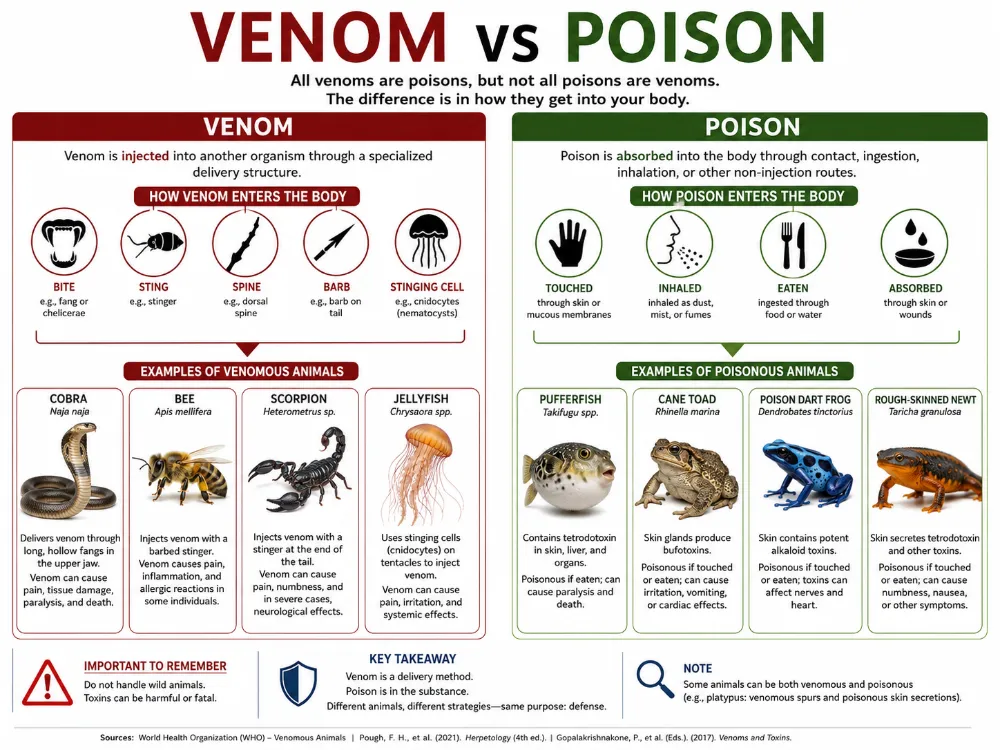
The difference between venom and poison is not about how dangerous the toxin is. Both can be mild, painful, medically serious, or deadly. The difference is how the toxin gets into the victim’s body.
Venom is a toxin that an animal actively delivers. A snake injects venom through fangs. A bee injects venom through a stinger. A jellyfish injects venom through microscopic stinging cells. A stonefish injects venom through sharp spines.
Poison is a toxin that harms when another animal eats, touches, inhales, licks, or absorbs it. A poison dart frog is dangerous because toxins are present in its skin secretions. A pufferfish is dangerous because toxic compounds may be present in its organs or tissues. A cane toad is dangerous to predators and pets because its poison glands release toxic secretions.
A useful shortcut is:
If it bites or stings you and you get sick, it is venom.
If you bite, touch, or eat it and you get sick, it is poison.
This rule is easy to remember, but nature has exceptions. Some animals can be both venomous and poisonous, and some toxins behave differently depending on how they enter the body.
What Is Venom?
Venom is a biological toxin that is actively injected into another organism. It is usually produced in a gland and delivered through a specialized structure. Venom can help an animal capture prey, defend itself, digest food, or stop a predator.
Venom is especially common in animals that need to act quickly. A snake cannot afford to wrestle dangerously with every prey animal. A spider needs to immobilize insects. A cone snail uses venom to stop fast-moving prey. A jellyfish uses stinging cells to capture small animals drifting through the water.
Common venom delivery systems include:
Snake fangs
Spider fangs
Bee stingers
Wasp and hornet stingers
Scorpion stingers
Stonefish and lionfish spines
Stingray tail barbs
Cone snail harpoon-like teeth
Jellyfish nematocysts
Venom can be extremely complex. It may contain enzymes, proteins, peptides, and other molecules that affect nerves, blood, muscles, cells, heart function, or pain pathways.
What Is Poison?
Poison is a toxin that causes harm when it is swallowed, touched, inhaled, or absorbed. Many poisonous animals use poison mainly for defense. They are not trying to inject anything. Instead, they make themselves dangerous, irritating, bitter, or deadly to predators that try to eat them.
Poison can be stored in skin, organs, mucus, glands, tissues, eggs, or secretions. Some animals produce poison themselves, while others obtain it from their diet and store it in their bodies.
Common poisonous animal examples include:
Poison dart frogs
Cane toads
Rough-skinned newts
Pufferfish
Some salamanders
Some caterpillars
Some butterflies
Some reef fish
Some sea slugs
Poisonous animals often rely on warning signals. Bright colors, strong odors, bitter taste, swelling behavior, or visible glands may warn predators that the animal is not safe to eat.
Venom vs Poison in One Simple Rule
The easiest way to explain venom vs poison is by looking at who does the action.
| Situation | Correct Term | Example |
|---|---|---|
| A snake bites a mouse and injects toxin | Venom | Rattlesnake venom |
| A person eats toxic fish tissue and becomes ill | Poison | Pufferfish poison |
| A bee stings a person | Venom | Bee venom |
| A predator bites a toxic frog and gets sick | Poison | Poison dart frog skin toxins |
| A jellyfish tentacle fires stinging cells into skin | Venom | Jellyfish venom |
| A dog mouths a cane toad and reacts to toxic secretions | Poison | Cane toad poison |
Venom is usually an active weapon. Poison is usually a passive shield. That is the core difference.
Venomous Animals
A venomous animal has a toxin and a way to inject it. The delivery system is essential. Without injection, the animal may still be toxic, but it is not venomous in the strict biological sense.
Well-known venomous animals include:
Rattlesnakes: Inject venom through long folding fangs.
Cobras: Use venom for defense and prey capture; some can spit venom toward the eyes.
Vipers: Often have powerful venom and specialized fangs.
Black widow spiders: Inject neurotoxic venom through small fangs.
Scorpions: Deliver venom with a stinger at the tail tip.
Bees and wasps: Inject venom through a stinger.
Jellyfish: Use stinging cells to inject venom into prey or skin.
Cone snails: Shoot a venomous harpoon-like tooth into prey.
Stonefish: Inject venom through sharp dorsal spines.
Not every venomous animal is equally dangerous to humans. Many venomous animals are small, shy, or produce venom that has little medical effect on people. Others can cause severe pain, tissue damage, paralysis, allergic reactions, or death.
Poisonous Animals
A poisonous animal contains toxins that harm another animal by contact, ingestion, or absorption. Many poisonous animals are not aggressive. Their defense works only if a predator touches or eats them.
Well-known poisonous animals include:
Poison dart frogs: Carry toxins in skin secretions.
Cane toads: Release toxic secretions from glands behind the eyes.
Rough-skinned newts: Contain powerful toxins in the skin.
Pufferfish: May contain dangerous toxins in organs and tissues.
Monarch butterflies: Can be toxic or distasteful to predators because of compounds from milkweed.
Some caterpillars: Have irritating or toxic hairs, spines, or body chemicals.
Some sea slugs: Store toxins from the food they eat.
Poison is often about deterrence. A predator that eats a poisonous animal may become sick, spit it out, or die. Over time, predators may learn to avoid animals with warning colors or certain smells.
Toxin, Venom, and Poison
The word “toxin” is broader than venom or poison. A toxin is a harmful substance produced by a living organism. Venom and poison are both types of toxins, but they are defined by delivery method.
| Term | Meaning | Animal Example |
|---|---|---|
| Toxin | A harmful natural substance made by a living organism | Tetrodotoxin in pufferfish, snake venom compounds, frog skin toxins |
| Venom | A toxin injected into another animal | Cobra venom, bee venom, jellyfish venom |
| Poison | A toxin that harms when eaten, touched, inhaled, or absorbed | Poison dart frog toxins, cane toad poison, pufferfish poison |
In scientific animal writing, using the correct term helps readers understand the real risk. A venomous snake is dangerous because it can inject venom. A poisonous frog is dangerous because touching or eating it may expose a predator to toxins.
Why Venom Is Usually Injected
Venom is effective because it bypasses many external barriers. Skin, scales, feathers, fur, and digestive processes can protect animals from some toxins. Injection places venom directly into tissue, blood, or body fluids, where it can act quickly.
This is useful for predators. A venomous snake can bite a rodent and let the venom weaken or kill it. A spider can bite an insect and reduce the risk of injury from struggling prey. A cone snail can paralyze prey before it escapes.
Venom also works as defense. A bee sting, scorpion sting, or stonefish spine injury can cause intense pain, teaching predators to avoid the animal in the future.
Why Poison Is Usually Defensive
Poison usually protects an animal by making it dangerous or unpleasant to eat. It is a defense that works when a predator makes contact. The poisonous animal may not need speed, armor, or a strong bite if predators learn that it is toxic.
Many poisonous animals advertise their toxicity with bright colors. This warning coloration is common in poison dart frogs, certain newts, toxic caterpillars, and some butterflies.
Poison can also be combined with other defenses:
Bright warning colors
Bad taste
Skin secretions
Inflating the body
Playing dead
Strong odors
Spines or irritating hairs
The message to predators is simple: eating this animal is not worth the risk.
Can an Animal Be Both Venomous and Poisonous?
Yes. Some animals blur the line between venom and poison. An animal can be poisonous if toxins are present in its body or skin, and venomous if it can also deliver toxins into another animal.
Some amphibians have toxic skin secretions and may use sharp body parts to force toxins into a predator’s skin. Some fish can be poisonous to eat and also have venomous spines. Some animals store toxins from prey while also using venom for hunting.
This is why the “venom is injected, poison is absorbed” rule is a starting point, not the entire story. Evolution often combines strategies when they help survival.
Is Snake Venom the Same as Poison?
No. Snake venom is not the same as poison in the strict biological sense. Most dangerous snakes are venomous because they inject toxin through fangs. The venom is produced in glands and delivered through a bite.
Snake venom may include different toxin types:
Neurotoxins: Affect nerves and may cause paralysis.
Hemotoxins: Affect blood, clotting, or blood vessels.
Cytotoxins: Damage cells and local tissues.
Myotoxins: Damage muscles.
Enzymes: Help spread venom and begin tissue breakdown.
Calling a cobra or rattlesnake “poisonous” is common in casual speech, but “venomous” is more accurate. The danger comes from a bite that injects venom, not from touching or eating the snake under normal circumstances.
Is Frog Poison the Same as Venom?
No. Frog poison is usually not venom because most frogs do not inject toxins. Poison dart frogs, for example, have toxic skin secretions. A predator may be harmed if it bites or eats the frog, or if toxin contacts sensitive tissue.
In the wild, some poison dart frogs get toxin-related chemicals from their diet, especially small arthropods. In captivity, many become much less toxic because they no longer eat the same wild foods.
That makes poison dart frogs classic examples of poisonous animals, not venomous ones.
Is Jellyfish Venom or Poison?
Jellyfish are venomous. Their tentacles contain tiny stinging cells called nematocysts. When triggered, these cells fire microscopic structures that inject venom into prey or into human skin.
People often say “poisonous jellyfish,” but the more accurate term is venomous jellyfish. The toxin is not just sitting on the surface waiting to be eaten. It is delivered by a specialized injection system.
Some jellyfish stings are mild. Others can cause severe pain, systemic illness, or life-threatening reactions depending on the species, amount of contact, and location of the sting.
Is Pufferfish Venom or Poison?
Pufferfish are mainly poisonous. The danger comes from toxins that may be present in organs and tissues, especially if the fish is eaten or prepared incorrectly. The toxin is not injected through a bite or sting.
This is very different from a stonefish or lionfish, which are venomous because they deliver venom through spines. A pufferfish is dangerous because of ingestion; a stonefish is dangerous because of puncture and venom injection.
Venomous Fish vs Poisonous Fish
Fish provide excellent examples of the difference between venom and poison. Some fish are dangerous to step on or handle because they inject venom. Others are dangerous to eat because their tissues contain poison.
| Fish | Venom or Poison? | How It Harms |
|---|---|---|
| Stonefish | Venom | Venom is injected through sharp spines. |
| Lionfish | Venom | Venom is delivered by fin spines. |
| Stingray | Venom | Venom is associated with the tail barb injury. |
| Pufferfish | Poison | Toxins may be dangerous when eaten. |
| Some reef fish | Poison | Toxins may accumulate in tissues and cause illness after consumption. |
This is why “dangerous fish” is not specific enough. A dangerous fish may be venomous, poisonous, or dangerous for another reason entirely.
How Venom Affects the Body
Venom can affect the body in many different ways. The effect depends on the species, venom dose, delivery method, victim size, bite location, immune response, and speed of medical care.
Possible effects of venom include:
Sharp pain
Swelling
Bruising
Tissue damage
Bleeding problems
Nerve effects
Muscle weakness
Paralysis
Nausea or vomiting
Changes in heart rhythm
Difficulty breathing
Allergic reaction
Some venoms act mainly near the bite or sting site. Others can spread through the body and affect major organs. In serious cases, professional medical care is essential.
How Poison Affects the Body
Poison can also affect the body in many ways. The result depends on the toxin, dose, route of exposure, and the species exposed. A poison that is harmless to one animal may be dangerous to another.
Possible effects of poison include:
Mouth irritation
Drooling
Vomiting
Diarrhea
Burning sensation
Weakness
Seizures
Heart rhythm problems
Paralysis
Organ failure
Death in severe cases
Pets are often at risk from poisonous animals because they may lick, bite, or mouth them. Dogs that mouth toxic toads, for example, may show sudden drooling, pawing at the mouth, vomiting, tremors, or collapse.
Can Venom Be Poisonous If Swallowed?
Venom is designed to work best when injected, but that does not mean swallowing venom is safe. Many venoms contain proteins and peptides that may be broken down by digestion, making them less effective when swallowed than when injected. However, venom can still be dangerous if it contacts cuts, ulcers, gums, eyes, or damaged tissue.
No one should taste, swallow, or handle venom casually. The biological distinction between venom and poison is not a safety recommendation. Real venom exposure should always be treated seriously.
Can Poison Be Injected?
Some poisons could be dangerous if injected artificially, but that is not how a poisonous animal naturally uses them. In biology, poison and venom are defined by the animal’s normal delivery method.
A poison dart frog is poisonous because its toxins are in the skin and harm predators through contact or ingestion. It does not have fangs or a stinger to inject toxin. A rattlesnake is venomous because it has specialized venom glands and fangs that inject venom into prey or threats.
Why Bright Colors Often Signal Poison
Many poisonous animals use bright warning colors. This is called aposematic coloration. It tells predators that the animal may be toxic, distasteful, or dangerous to eat.
Examples include:
Bright blue or yellow poison dart frogs
Orange and black monarch butterflies
Boldly colored newts
Some toxic caterpillars
Some brightly colored sea slugs
Warning colors are not limited to poisonous animals. Venomous animals such as wasps, hornets, and coral snakes may also use strong color patterns. However, poison and warning coloration are especially common together because the animal benefits when predators recognize the warning before attacking.
Why Some Venomous Animals Do Not Look Dangerous
Not all venomous animals are brightly colored. Many snakes, spiders, scorpions, and marine animals rely on camouflage instead. A venomous animal may prefer to avoid detection until it strikes prey or escapes danger.
For predators, camouflage helps with hunting. For prey animals, camouflage helps avoid being eaten. Venom and camouflage can work together because the animal can stay hidden but still defend itself if threatened.
This is why color alone is never a safe way to judge whether an animal is dangerous. Some bright animals are harmless mimics. Some dull-colored animals are medically important venomous species.
Venom and Poison in Evolution
Venom and poison evolved because toxins help animals survive. Venom can make hunting more efficient. Poison can make predators avoid eating the animal. Both strategies reduce risk.
Venom is especially useful for animals that hunt prey that fights back, moves fast, or hides in narrow spaces. Poison is especially useful for small or slow animals that need a strong defense without chasing or fighting.
Over millions of years, these toxin systems became highly specialized. Snake fangs, bee stingers, jellyfish stinging cells, poison frog skin secretions, and pufferfish toxins are all examples of different evolutionary solutions to survival.
Medical Importance of Venom
Venomous bites and stings can be medically important. Some require only local care, while others require urgent treatment. In some cases, antivenom may be used. Antivenom is a medical product designed to neutralize specific venoms or groups of venoms.
Venom-related emergencies may involve:
Snakebite
Scorpion sting
Severe bee, wasp, or hornet allergy
Box jellyfish sting
Stonefish spine injury
Cone snail sting
Serious spider bite
Anyone bitten or stung by a potentially dangerous species should seek medical advice quickly. Do not cut the wound, suck out venom, apply ice directly to serious snakebites, or use unsafe folk remedies.
Medical Importance of Poison
Poison exposure is different from venom exposure. Treatment depends on what was touched, eaten, inhaled, or absorbed. Poison exposure may involve toxic amphibians, poisonous fish, toxic insects, poisonous plants, fungi, or contaminated food.
Animal-related poison risks include:
Eating improperly prepared pufferfish
Handling toxic amphibians and touching the eyes or mouth
Dogs mouthing cane toads
Predators eating toxic newts
Eating fish contaminated with natural marine toxins
Touching irritating caterpillar hairs or toxic secretions
For suspected poisoning, contact a medical professional, veterinarian, or poison control service as appropriate. Bring information about the animal or substance involved, but do not risk another exposure trying to capture the animal.
Venom vs Poison and Pets
Pets can be harmed by both venom and poison. A dog may be bitten by a venomous snake, stung by a bee, or exposed to a venomous spider. A cat may be stung by a wasp or injured by a scorpion. Pets can also be poisoned if they mouth a toxic toad, chew a poisonous insect, or eat a toxic animal.
Warning signs after venom or poison exposure in pets may include:
Sudden swelling
Yelping or pain
Drooling
Pawing at the mouth
Vomiting
Weakness
Tremors
Difficulty breathing
Collapse
Seizures
Pet owners should seek urgent veterinary care if a pet is bitten by a snake, stung repeatedly, mouths a toxic toad, collapses, has trouble breathing, or shows severe neurological signs.
Common Mistakes When Using Venom and Poison
The most common mistake is calling every dangerous animal “poisonous.” In casual speech, people often say “poisonous snake,” “poisonous spider,” or “poisonous jellyfish.” In scientific writing, those animals are usually venomous.
| Casual Phrase | More Accurate Phrase | Reason |
|---|---|---|
| Poisonous snake | Venomous snake | The toxin is injected through fangs. |
| Poisonous spider | Venomous spider | The toxin is injected through fangs. |
| Poisonous bee | Venomous bee | The toxin is injected through a stinger. |
| Poisonous jellyfish | Venomous jellyfish | The toxin is injected by stinging cells. |
| Venomous pufferfish | Poisonous pufferfish | The main danger is eating toxic tissue. |
| Venomous poison dart frog | Poisonous poison dart frog | The toxin is in skin secretions, not injected. |
Using the correct term makes animal information clearer and more accurate.
Safe Behavior Around Venomous Animals
Most venomous animals do not want to attack humans. Many bites and stings happen because the animal is stepped on, handled, trapped, or surprised. Respecting space is the best prevention.
Safety tips include:
Do not handle wild snakes, spiders, scorpions, jellyfish, or unknown marine animals.
Watch where you place hands and feet in rocky, grassy, or wooded areas.
Wear shoes outdoors in areas with scorpions, snakes, or venomous arthropods.
Shake out shoes, gloves, and stored clothing in scorpion regions.
Do not swim near jellyfish blooms.
Avoid touching reef fish or marine animals while diving or snorkeling.
Teach children to admire wildlife from a distance.
Safe Behavior Around Poisonous Animals
Poisonous animals usually cause harm when touched, eaten, or mouthed. The safest rule is simple: do not handle unfamiliar wild animals and never eat wild animals unless they are known to be safe and legally prepared.
Safety tips include:
Do not touch brightly colored frogs, newts, salamanders, or caterpillars.
Do not let dogs mouth toads or unfamiliar wildlife.
Wash hands after handling amphibians, even captive ones.
Do not eat unknown fish, amphibians, insects, or marine animals.
Keep children from touching unfamiliar animals outdoors.
Learn local toxic species if you live in a high-risk area.
Final Takeaway
Venom and poison are both toxins, but they work in different ways. Venom is injected through a bite, sting, spine, barb, fang, or stinging cell. Poison causes harm when it is eaten, touched, inhaled, or absorbed.
Rattlesnakes, cobras, bees, wasps, spiders, scorpions, jellyfish, cone snails, and stonefish are venomous. Poison dart frogs, cane toads, rough-skinned newts, pufferfish, and some toxic caterpillars are poisonous.
The easiest way to remember the difference is this: venom is delivered into the victim, while poison is taken into the body. Venom is usually an active weapon; poison is usually a passive defense.
FAQs About Venom vs Poison
What is the main difference between venom and poison?
The main difference is delivery. Venom is injected through a bite, sting, fang, spine, barb, or stinging cell. Poison causes harm when it is eaten, touched, inhaled, or absorbed.
Is venom a type of poison?
In casual language, people may call venom a kind of poison, but in biology the terms are separated by delivery method. Venom is injected, while poison is absorbed, swallowed, inhaled, or contacted.
Is snake venom poison?
Snake venom is a toxin, but it is more accurately called venom because dangerous snakes inject it through fangs. “Venomous snake” is more accurate than “poisonous snake.”
Are frogs venomous or poisonous?
Most toxic frogs are poisonous, not venomous. Poison dart frogs have toxins in their skin secretions, but they do not inject venom through fangs or stingers.
Are spiders venomous or poisonous?
Spiders are venomous. They inject venom through fangs. Most spiders are not dangerous to humans, but some species can cause medically important bites.
Are bees venomous or poisonous?
Bees are venomous because they inject venom through a stinger. Wasps, hornets, yellow jackets, and many ants are also venomous.
Are jellyfish venomous or poisonous?
Jellyfish are venomous. Their tentacles contain stinging cells that inject venom into prey or human skin.
Is pufferfish venomous or poisonous?
Pufferfish are poisonous because the main danger comes from eating toxic tissues or organs. They do not inject venom through a bite or sting.
Can an animal be both venomous and poisonous?
Yes. Some animals can contain toxins that are dangerous when touched or eaten and also have a way to deliver toxins into another animal. These cases are less common but do exist.
Why do people say poisonous snake?
People often use “poisonous” to mean dangerous or toxic. Scientifically, most dangerous snakes are venomous because they inject venom with fangs.
Is venom dangerous if swallowed?
Venom is most dangerous when injected, but swallowing or tasting venom is not safe. It may still be risky if it contacts cuts, ulcers, gums, eyes, or damaged tissue.
What is a toxin?
A toxin is a harmful substance produced by a living organism. Venom and poison are both toxins, but they differ in how they enter another body.
What is antivenom?
Antivenom is a medical treatment designed to neutralize specific venoms or groups of venoms. It is used for some serious snakebites, scorpion stings, and other venom emergencies.
Are poisonous animals usually aggressive?
Most poisonous animals are not aggressive. Their toxins usually work as a passive defense when a predator touches or eats them.
Are venomous animals always deadly?
No. Many venomous animals have mild venom or rarely bite humans. Others can be medically serious. Danger depends on the species, venom amount, victim size, bite location, and medical response.