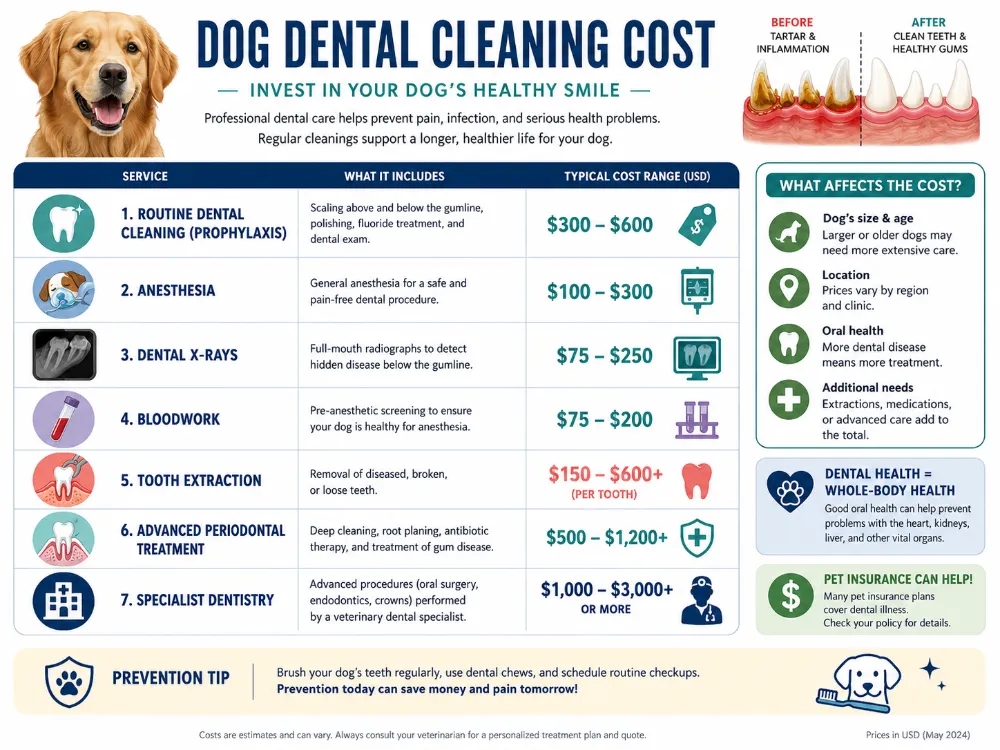
Dog dental cleaning usually costs about $300 to $700 for a routine professional cleaning under anesthesia, but the total can range from $200 to $1,500 or more depending on your dog’s size, age, dental disease, X-rays, extractions, anesthesia needs, and location. Complicated dental procedures with multiple extractions or specialist care may cost $2,000 to $4,000+.
| Dog Dental Service | Typical Cost Range | What It Usually Includes | Cost Level |
|---|---|---|---|
| Routine dental exam | $50–$150 | Oral check during a veterinary visit | Low |
| Routine dental cleaning under anesthesia | $300–$700 | Scaling, polishing, anesthesia, basic monitoring | Moderate |
| Dental cleaning with bloodwork | $400–$900 | Cleaning plus pre-anesthetic blood tests | Moderate |
| Dental cleaning with X-rays | $500–$1,200 | Cleaning plus dental radiographs to check tooth roots and bone | Moderate to high |
| Cleaning with simple tooth extraction | $700–$1,500 | Cleaning, anesthesia, X-rays, and one or a few extractions | High |
| Cleaning with multiple extractions | $1,000–$3,000+ | Advanced dental disease treatment and longer anesthesia time | High |
| Board-certified veterinary dentist | $1,500–$4,000+ | Complex oral surgery, root canal, jaw disease, advanced dental care | Very high |
| Anesthesia-free cosmetic cleaning | $100–$400 | Visible tartar removal while the dog is awake | Low to moderate |
What Is the Average Cost of Dog Dental Cleaning?
The average cost of dog dental cleaning is usually around $300 to $700 for a routine cleaning under anesthesia at a general veterinary clinic. This is the most common type of professional dental cleaning recommended for dogs because it allows the veterinary team to clean below the gumline, examine the mouth thoroughly, take dental X-rays if needed, and safely treat painful teeth.
However, the final bill can be much higher if your dog has periodontal disease, loose teeth, infected roots, broken teeth, abscesses, oral masses, or needs multiple extractions. A simple dental cleaning may be a moderate expense, but dental disease treatment can become one of the more expensive routine veterinary procedures for dog owners.
The most important point is this: a “dog dental cleaning” is not always the same service from one clinic to another. One estimate may include anesthesia, monitoring, polishing, and basic medication, while another may also include bloodwork, IV fluids, dental X-rays, nerve blocks, extractions, and follow-up care.
What Is Usually Included in a Professional Dog Dental Cleaning?
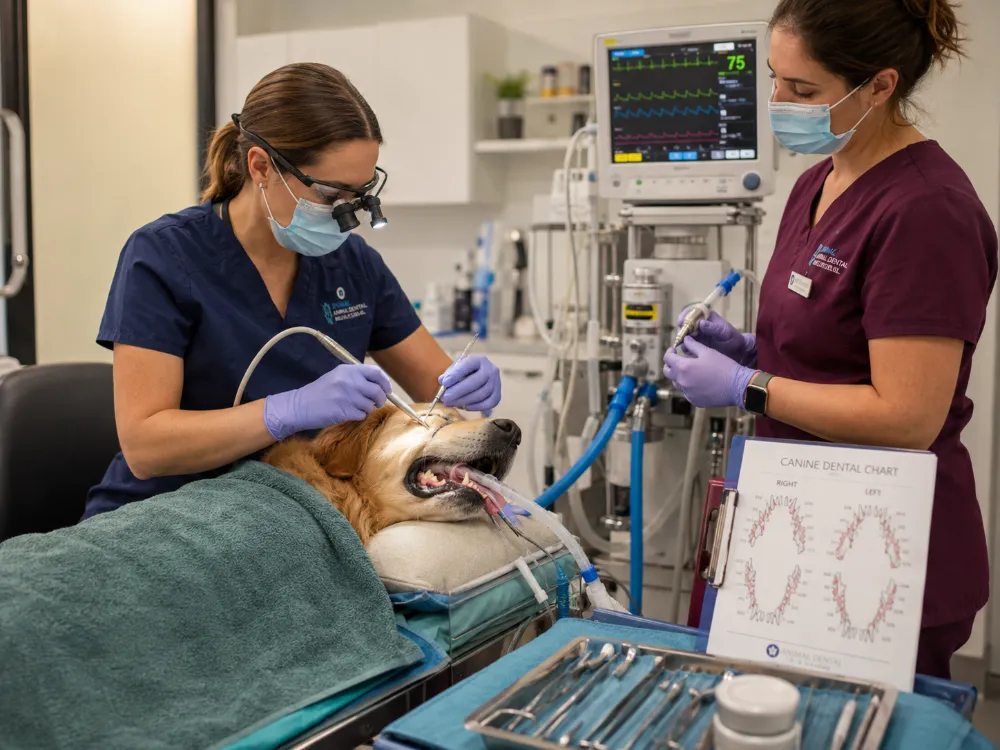
A professional dog dental cleaning is more than scraping visible tartar from the teeth. A proper veterinary dental cleaning usually includes anesthesia, scaling, polishing, and a careful oral examination. Many clinics also recommend dental X-rays because much of dental disease is hidden below the gumline.
A typical dog dental cleaning estimate may include:
Pre-surgical physical exam
Pre-anesthetic bloodwork
IV catheter placement
IV fluids during anesthesia
General anesthesia
Anesthesia monitoring
Ultrasonic scaling above the gumline
Cleaning below the gumline
Dental polishing
Dental charting
Dental X-rays when recommended
Pain medication if needed
Antibiotics when medically necessary
Extractions if diseased teeth are found
Recovery monitoring
Home-care instructions
When comparing prices, ask whether the quote includes dental X-rays, bloodwork, fluids, pain medication, and extractions. A cheaper estimate may become more expensive later if several necessary items are billed separately.
Why Dog Dental Cleaning Requires Anesthesia
Most professional dog dental cleanings are performed under general anesthesia. This is not only for convenience. It allows the veterinarian to clean below the gumline, examine every tooth, take dental X-rays, remove diseased teeth safely, and protect the dog’s airway from water, bacteria, and debris during the procedure.
Dogs do not understand that dental tools are meant to help them. Even a calm dog may move suddenly, bite from fear, swallow fluid, or become stressed during a deep oral cleaning. Anesthesia lets the veterinary team perform a complete and safer dental procedure.
Anesthesia is also one of the main reasons dental cleaning costs more than a human dental cleaning. It requires drugs, equipment, monitoring, trained staff, recovery care, and extra safety steps, especially for senior dogs or dogs with health problems.
Anesthesia-Free Dental Cleaning vs Veterinary Dental Cleaning
Anesthesia-free dental cleaning is sometimes advertised as a cheaper alternative. It may remove some visible tartar from the tooth surface while the dog is awake. However, it is not the same as a complete veterinary dental cleaning.
| Feature | Anesthesia-Free Cleaning | Veterinary Dental Cleaning Under Anesthesia |
|---|---|---|
| Dog is awake | Yes | No |
| Cleans below gumline | Limited or not effective | Yes |
| Dental X-rays possible | No | Yes |
| Extractions possible | No | Yes |
| Treats hidden periodontal disease | No | Yes |
| Main benefit | Cosmetic visible tartar removal | True medical dental care |
Anesthesia-free cleaning may make teeth look cleaner, but it can miss disease under the gums. A dog can have white-looking teeth and still have painful root infection, bone loss, loose teeth, or periodontal disease. For this reason, it should not replace veterinary dental care when a dog has bad breath, red gums, pain, loose teeth, or obvious dental disease.
Why Dog Dental Cleaning Cost Varies So Much
Dog dental cleaning prices vary because every dog’s mouth is different. Two dogs may both be scheduled for “teeth cleaning,” but one may need a short routine cleaning while the other needs X-rays, oral surgery, and several extractions.
The biggest cost factors include:
Dog size: Larger dogs usually need more anesthesia and medication.
Age: Senior dogs may need more pre-anesthetic testing and careful monitoring.
Dental disease severity: Mild tartar is much cheaper to treat than advanced periodontal disease.
Extractions: Removing teeth increases time, medication, supplies, and surgical complexity.
Dental X-rays: X-rays help find hidden disease but add to the total cost.
Location: Veterinary prices are often higher in large cities and high-cost-of-living areas.
Clinic type: General practices, emergency hospitals, and veterinary dental specialists have different fee structures.
Anesthesia risk: Dogs with heart, kidney, liver, or breathing problems may need extra care.
Procedure length: The longer the cleaning and surgery take, the more expensive it becomes.
How Dog Size Affects Dental Cleaning Cost
Dog size can affect dental cleaning cost because medication and anesthesia are often weight-based. A small dog usually needs less anesthetic medication than a giant breed. However, small dogs are not always cheaper overall because many toy and small breeds are prone to dental disease.
Small dogs such as Chihuahuas, Yorkshire Terriers, Dachshunds, Maltese, Pomeranians, and Toy Poodles often develop tartar, gum disease, and tooth crowding earlier in life. Their mouths are small, their teeth may be crowded, and plaque can build up quickly. Even though they are small, they may need more frequent dental care and extractions.
Large dogs may have higher anesthesia and medication costs, but some large breeds have less crowding and may not need extractions as often if home care is good. Breed, genetics, chewing behavior, diet, and brushing habits all matter.

How Age Affects Dog Dental Cleaning Cost
Older dogs often need dental cleaning because periodontal disease becomes more common with age. However, senior dogs may also need extra safety steps before anesthesia. This can increase the cost but may reduce medical risk.
Senior dogs may need:
Complete blood count
Blood chemistry panel
Urinalysis
Blood pressure check
Chest X-rays if heart or lung disease is suspected
ECG screening in some cases
IV fluids
More detailed anesthesia monitoring
Age alone does not mean a dog cannot have dental cleaning. Many older dogs do well under anesthesia when properly evaluated and monitored. In fact, dental disease can cause chronic pain, infection, and poor appetite, so avoiding needed dental treatment just because a dog is old may reduce quality of life.
When Tooth Extractions Increase the Bill
Tooth extractions are one of the most common reasons a dental cleaning becomes expensive. A veterinarian may not know how many teeth need removal until the dog is under anesthesia and dental X-rays are taken.
Extractions may be needed when a tooth is:
Loose
Broken
Infected
Painful
Dead or dying
Severely affected by periodontal disease
Surrounded by bone loss
Associated with an abscess
Causing crowding or trauma to nearby tissue
Simple extractions may add a modest amount to the bill. Complicated extractions, especially large multi-rooted teeth, can add much more because they may require gum flaps, tooth sectioning, sutures, nerve blocks, and longer anesthesia time.
Why Dental X-Rays Matter
Dental X-rays are one of the most valuable parts of veterinary dentistry. Many painful dental problems are hidden under the gums. A tooth can look acceptable from the outside but have root infection, bone loss, fracture, resorption, or abscess below the surface.
Dental X-rays help the veterinarian decide whether a tooth can stay or should be removed. They also help confirm that the entire root was removed after extraction. Without X-rays, some dental disease may be missed.
If your dog has bad breath, loose teeth, red gums, swelling under the eye, chewing pain, bleeding gums, or a history of dental disease, dental X-rays are especially important.
Signs Your Dog May Need Dental Cleaning
Many dogs hide oral pain. They may continue eating even when their teeth and gums hurt. Owners should not wait until a dog stops eating before asking about dental care.
Common signs of dental disease include:
Bad breath
Yellow or brown tartar
Red or swollen gums
Bleeding gums
Loose teeth
Broken teeth
Drooling
Pawing at the mouth
Chewing on one side
Dropping food
Reluctance to eat hard food
Face swelling
Eye-area swelling from tooth root abscess
Behavior change or irritability
Bad breath is one of the most common early signs. “Dog breath” is not always normal. Persistent bad odor often means bacteria, plaque, tartar, and gum inflammation are present.
Is Dog Dental Cleaning Worth the Cost?
Dog dental cleaning is often worth the cost when it prevents pain, infection, tooth loss, and more expensive dental disease later. A clean mouth is not only cosmetic. Dental disease can affect eating comfort, behavior, and overall health.
Professional cleaning is especially worth considering if your dog has visible tartar, inflamed gums, bad breath, loose teeth, or breed-related dental risk. Early cleaning may cost less than waiting until the dog needs many extractions.
However, the timing should be based on a veterinary exam. Some dogs need annual dental cleanings. Others may go longer with excellent home care. Dogs with severe dental disease may need treatment sooner rather than later.
How Often Should Dogs Get Dental Cleaning?
Many dogs benefit from professional dental cleaning about once a year, but the ideal schedule varies. Some small breeds and dogs with periodontal disease may need more frequent dental care. Larger dogs with healthy mouths and good home brushing may need less frequent cleanings.
Factors that affect cleaning frequency include:
Breed
Age
Tooth crowding
Gum health
Diet
Chewing habits
Daily brushing
Previous dental disease
Genetics
Your veterinarian can grade your dog’s dental disease and recommend a cleaning schedule. The goal is to clean the teeth before infection and severe bone loss develop.
Does Pet Insurance Cover Dog Dental Cleaning?
Most accident-and-illness pet insurance plans do not automatically cover routine dental cleaning because it is considered preventive care. Some wellness add-ons may reimburse part of the cost of dental cleaning, but the benefit is often limited.
Dental illness coverage is different. Some accident-and-illness plans may cover dental disease, broken teeth, oral surgery, or extractions if the condition is not pre-existing and meets the policy rules. Coverage varies widely, so owners should read the policy carefully.
Before buying pet insurance, ask these questions:
Is routine dental cleaning covered?
Is dental illness covered?
Are tooth extractions covered?
Are dental X-rays covered?
Are broken teeth covered?
Are periodontal disease treatments covered?
Are there annual dental limits?
Does the plan require annual dental exams?
How to Reduce Dog Dental Cleaning Cost Safely
The best way to reduce dental cleaning cost is to slow plaque and tartar buildup before the mouth becomes diseased. Preventive care is usually cheaper than oral surgery.
Safe ways to reduce long-term cost include:
Brush your dog’s teeth daily: This is one of the most effective home-care methods.
Use dog-safe toothpaste: Never use human toothpaste because it may contain ingredients unsafe for dogs.
Start slowly: Let your dog get used to mouth handling before full brushing.
Use dental chews carefully: Choose products appropriate for your dog’s size and chewing style.
Ask about VOHC-accepted products: These products have been evaluated for plaque or tartar control.
Schedule regular oral exams: Early disease is usually cheaper to treat.
Do not wait for loose teeth: Severe disease often means higher extraction costs.
Compare itemized estimates: For non-emergency dental care, prices can vary by clinic.
Use low-cost dental clinics carefully: Make sure anesthesia monitoring and medical standards are appropriate.
Keep your dog at a healthy weight: Healthy dogs are often better anesthesia candidates.
What to Ask Before Approving a Dental Cleaning Estimate
Before scheduling a dental cleaning, ask for an itemized estimate. Dental estimates often show a range because the veterinarian may not know whether extractions are needed until the dog is anesthetized and X-rays are taken.
Useful questions include:
Is anesthesia included?
Is pre-anesthetic bloodwork included?
Are IV fluids included?
Are dental X-rays included?
Is polishing included after scaling?
Are pain medications included?
How much does each extraction cost?
Will you call me before extracting teeth?
What monitoring is used during anesthesia?
Will my dog need antibiotics?
Is a recheck included?
What could make the final bill higher?
A good dental estimate should help you understand both the expected cost and the possible maximum cost if hidden disease is found.
What Happens During a Dog Dental Cleaning?
A professional dog dental cleaning usually starts with a pre-anesthetic exam and review of the dog’s medical history. Bloodwork may be recommended, especially for older dogs or dogs with health concerns.
Once the dog is safely anesthetized, the veterinary team examines the mouth, charts the teeth, removes plaque and tartar, cleans below the gumline, polishes the teeth, and takes dental X-rays if included. If diseased teeth are found, the veterinarian may remove them or discuss the findings with the owner first, depending on the clinic’s policy.
After the procedure, the dog is monitored during recovery. Most dogs go home the same day, although dogs with major oral surgery may need additional monitoring, medication, or a soft-food plan.
Recovery After Dog Dental Cleaning
Many dogs recover quickly after routine dental cleaning. They may be sleepy for the rest of the day because of anesthesia. Mild gum tenderness can occur, especially if there was heavy tartar or gingivitis.
If extractions were performed, recovery may take longer. Your veterinarian may recommend soft food, pain medication, restricted chewing, and a follow-up visit. Dogs should not chew hard bones, antlers, hooves, or very hard toys after oral surgery unless the veterinarian says it is safe.
Call your veterinarian if your dog has heavy bleeding, severe swelling, refusal to eat, repeated vomiting, difficulty breathing, extreme weakness, or signs of severe pain after a dental procedure.
Home Dental Care After Cleaning
Professional cleaning removes existing plaque and tartar, but new plaque begins forming quickly. Home care is what helps protect the results.
Good home care may include:
Daily tooth brushing
Dog-safe toothpaste
Dental chews approved for your dog’s size
Dental diets when recommended
Water additives if approved by your veterinarian
Regular oral checks at home
Routine veterinary dental exams
Tooth brushing works best when introduced gradually. Start by touching your dog’s muzzle and lips, then rubbing the gums with your finger, then using a finger brush or soft dog toothbrush. Keep sessions short and positive.
Final Takeaway
Dog dental cleaning usually costs a few hundred dollars for a routine professional cleaning, but the price can rise quickly when X-rays, extractions, advanced periodontal disease, or specialist care are needed. The cheapest option is not always the safest or most complete option.
For most dogs, proper dental care is worth the cost because it can reduce pain, infection, tooth loss, and expensive oral surgery later. The best approach is to combine regular veterinary dental exams, professional cleaning when needed, and consistent home care.
If your dog has bad breath, tartar, red gums, loose teeth, or trouble chewing, schedule a veterinary dental exam. Early dental care is usually easier, safer, and less expensive than waiting until the mouth becomes painful and infected.
FAQs About Dog Dental Cleaning Cost
How much does dog dental cleaning cost?
Dog dental cleaning usually costs about $300 to $700 for a routine professional cleaning under anesthesia. The total may be lower or higher depending on location, dog size, anesthesia, dental X-rays, bloodwork, and whether extractions are needed.
Why is dog dental cleaning so expensive?
Dog dental cleaning is expensive because it usually requires anesthesia, trained veterinary staff, monitoring equipment, scaling, polishing, dental charting, recovery care, and sometimes X-rays, medication, and tooth extractions.
How much does dog teeth cleaning cost with extractions?
Dog teeth cleaning with extractions commonly costs about $700 to $3,000 or more. The price depends on how many teeth are removed, whether the extractions are simple or surgical, and how long the dog needs to stay under anesthesia.
Is anesthesia necessary for dog dental cleaning?
For a complete medical dental cleaning, anesthesia is usually necessary. It allows cleaning below the gumline, dental X-rays, safe extractions, airway protection, and a complete oral exam without pain or stress for the dog.
Is anesthesia-free dog teeth cleaning worth it?
Anesthesia-free cleaning may remove visible tartar, but it does not replace a veterinary dental cleaning. It cannot properly clean below the gumline, take X-rays, or treat infected and painful teeth.
How often should dogs get dental cleaning?
Many dogs need professional dental cleaning about once a year, but some need it more or less often. Small breeds, senior dogs, and dogs with periodontal disease may need more frequent dental care.
Does pet insurance cover dog dental cleaning?
Routine dental cleaning is usually not covered by standard accident-and-illness pet insurance unless a wellness add-on includes dental benefits. Dental illness, broken teeth, or extractions may be covered by some policies if they are not pre-existing.
Can I clean my dog’s teeth at home instead?
Home brushing can reduce plaque and slow tartar buildup, but it cannot remove hardened tartar under the gumline or treat advanced dental disease. Home care is best used to prevent problems between professional cleanings.
What happens if I never clean my dog’s teeth?
Untreated dental disease can lead to bad breath, gum inflammation, tooth pain, loose teeth, abscesses, difficulty eating, and expensive oral surgery. Many dogs hide dental pain until the disease is advanced.
What is the cheapest way to care for a dog’s teeth?
The cheapest long-term strategy is prevention: daily brushing with dog-safe toothpaste, regular veterinary exams, appropriate dental chews, and early professional cleaning before severe periodontal disease develops.