Yes, birds are dinosaurs. Modern birds are the only surviving branch of dinosaurs and evolved from small, feathered theropod ancestors during the Mesozoic Era. Scientific evidence from fossils, skeletal anatomy, feathers, eggs, and evolutionary relationships establishes that birds belong within the dinosaur family tree. Chickens, pigeons, eagles, and penguins are all living dinosaurs in the evolutionary sense. However, birds did not evolve directly from Tyrannosaurus rex, and not all extinct dinosaurs had feathers or could fly.
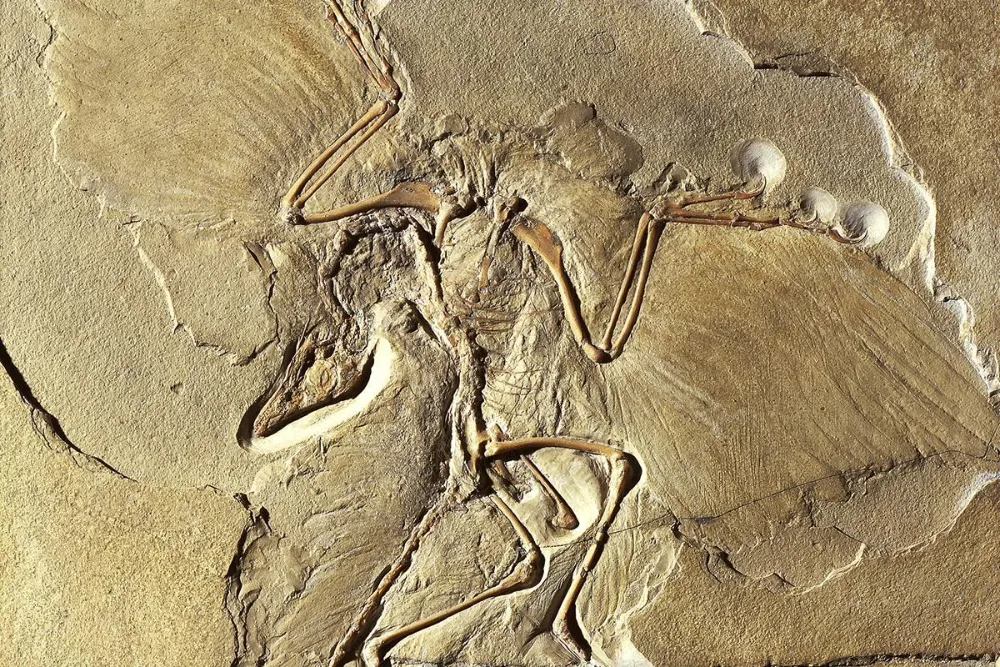
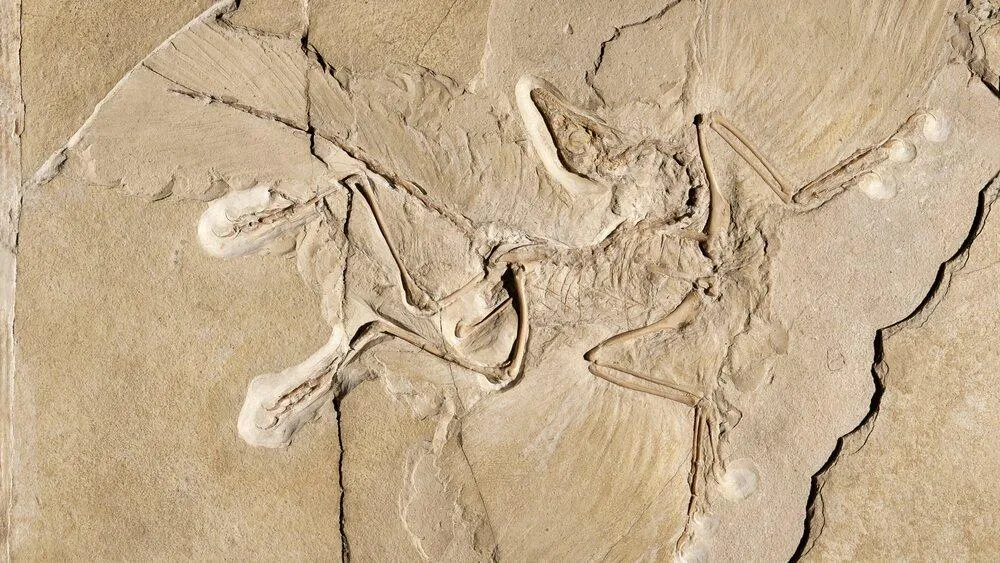
Fossils such as Archaeopteryx preserve a combination of traits associated with early birds and their dinosaurian relatives.
Are Birds Really Dinosaurs?
Yes. Birds belong to the dinosaur lineage.
This is not simply a comparison based on appearance.
It is a conclusion supported by evolutionary systematics, comparative anatomy, and the fossil record.
Dinosaurs form an evolutionary group called Dinosauria.
Within Dinosauria, one major branch includes the theropods, a diverse group that also contains animals such as Allosaurus, Velociraptor, and Tyrannosaurus rex.
Birds evolved within the theropod lineage.
Because a descendant remains part of the evolutionary branch from which it originated, birds are classified as living dinosaurs.
Scientists therefore distinguish between avian dinosaurs, which include living birds, and non-avian dinosaurs, such as Triceratops and T. rex.
Why Do Scientists Classify Birds as Dinosaurs?
Modern biological classification increasingly reflects shared evolutionary ancestry.
Scientists use a method called phylogenetic analysis to investigate relationships among species.
They compare inherited characteristics and construct evolutionary trees that best explain the observed evidence.
Birds share many detailed skeletal features with certain theropod dinosaurs.
Fossils also preserve intermediate combinations of characteristics linking extinct non-avian theropods with early birds.
These connections establish that birds are part of the theropod dinosaur lineage.
The American Museum of Natural History explains that recognizing birds as dinosaurs follows the same evolutionary principle used to classify humans as mammals and primates.
Our ancestry determines membership in an evolutionary group even when descendants develop distinctive new characteristics.
What Kind of Dinosaurs Did Birds Evolve From?
Birds evolved from small, feathered theropod dinosaurs.
Theropoda includes many extinct carnivorous dinosaurs, but not every theropod was large or a specialized meat eater.
Several smaller theropod groups possessed complex feathers and bird-like skeletal characteristics.
Birds are nested within a branch of theropods called maniraptorans.
This group includes several dinosaur lineages closely related to birds, such as dromaeosaurids and troodontids.
However, birds did not evolve from every member of those groups.
Modern birds and the extinct non-avian relatives share ancestors that lived millions of years ago.
Evolution is a branching process, not a straight sequence in which one familiar dinosaur species necessarily turns into another.
Did Birds Evolve From Tyrannosaurus Rex?
No. Modern birds did not evolve directly from Tyrannosaurus rex.
T. rex belonged to Theropoda, the larger dinosaur group that also includes the ancestors of birds.
However, its particular lineage was separate from the branch that produced modern birds.
Both lineages inherited features from earlier theropod ancestors.
This makes birds evolutionary relatives of T. rex, not direct descendants of the individual species.
The Smithsonian Institution notes that birds and T. rex share several anatomical features, including hollow bones and parts of the respiratory system.
However, their last common ancestor lived much earlier than T. rex itself.
Tyrannosaurus rex lived near the end of the Cretaceous Period, long after bird-like dinosaurs had already appeared.
Are Chickens Dinosaurs?
Yes. Chickens are living dinosaurs in the evolutionary sense.
The domestic chicken (Gallus gallus domesticus) belongs to the modern bird group.
Since all birds are members of Dinosauria, chickens are also members of Dinosauria.
However, chickens are not miniature Tyrannosaurus rex animals.
They belong to a distinct bird lineage with its own long evolutionary history.
Their ancestors share deep evolutionary roots with extinct theropod dinosaurs.
Features such as egg laying, bipedal movement, and feathered bodies can help illustrate those connections, although no single feature proves dinosaur ancestry by itself.
Are All Modern Birds Dinosaurs?
Yes. Every living bird species belongs to the surviving dinosaur lineage.
This includes:
Chickens and turkeys
Pigeons and doves
Eagles and hawks
Owls
Penguins
Ostriches and emus
Ducks and geese
Parrots and songbirds
The great differences among these birds reflect millions of years of evolutionary diversification.
A penguin adapted for swimming and a hummingbird adapted for hovering are both descendants of the same deeper avian dinosaur lineage.
Being a dinosaur does not mean that an animal must be enormous, carnivorous, or covered in scales.
What Fossil Evidence Connects Birds to Dinosaurs?
Several fossil discoveries provide especially important evidence.
These include Archaeopteryx, feathered non-avian theropods, and dinosaur skeletons displaying bird-like anatomical features.
Some fossils preserve impressions of feathers.
Others show skeletal features associated with the shoulder, wrist, hips, or feet.
Still others reveal reproductive behaviors resembling those of living birds.
The American Museum of Natural History describes fossil nesting dinosaurs positioned over eggs in a bird-like brooding posture.
Such evidence demonstrates that several traits associated with living birds existed in non-avian dinosaurs.
The bird-dinosaur connection is therefore supported by multiple independent lines of evidence.
What Is Archaeopteryx?
Archaeopteryx is an early bird-like dinosaur known from Late Jurassic fossils discovered in Germany.
Its fossils are more than 150 million years old.
Archaeopteryx possessed well-developed feathers and wings.
However, it also retained several characteristics absent from most living birds.
These included teeth, clawed fingers, and a long bony tail.
The combination of features makes it especially important for understanding the early evolution of birds.
Archaeopteryx is often described as a transitional fossil, meaning that it preserves a mixture of inherited and more recently evolved features.
However, scientists do not need to assume that Archaeopteryx was the direct ancestor of every modern bird.
It can provide valuable evolutionary evidence even if it belonged to a related branch rather than a direct ancestral line.
Did Dinosaurs Have Feathers?
Some non-avian dinosaurs definitely had feathers.
Fossils from China and elsewhere preserve feather-like filaments and more elaborate plumage associated with several theropod dinosaurs.
One famous example is Sinosauropteryx, whose fossils preserve filamentous body covering.
Other discoveries show complex feathers in animals closely related to birds.
These findings support the evolutionary connection between modern birds and extinct theropods.
However, feathers were not necessarily present in every dinosaur lineage.
The Natural History Museum in London notes that preserved skin from several unrelated dinosaur groups shows scaly coverings.
The evolutionary distribution and earliest origin of feathers remain topics of research.
Did All Dinosaurs Have Feathers?
No. There is no evidence that every dinosaur was feathered.
Strong feather evidence is especially concentrated among certain theropod lineages.
Large herbivorous dinosaurs such as many sauropods, ceratopsians, and armored dinosaurs are not generally reconstructed with extensive bird-like plumage.
Some extinct dinosaur groups had scaly skin impressions.
However, fossil preservation is incomplete.
The absence of preserved feathers in a particular fossil does not prove that the animal had none anywhere on its body.
Scientists therefore distinguish confirmed feather evidence from speculative reconstructions.
For example, adult Tyrannosaurus rex is not currently known from direct fossils showing extensive body feathers, although smaller relatives and some other tyrannosauroids had feather-like coverings.
What Did Sinosauropteryx Teach Scientists?
Sinosauropteryx was a small theropod dinosaur discovered in northeastern China.
Its fossils preserve filamentous structures associated with the body.
These discoveries helped demonstrate that feather-like coverings existed outside the group traditionally recognized as birds.
Before the discovery of well-preserved feathered non-avian dinosaurs, many dinosaur reconstructions emphasized a generally reptilian appearance.
The fossils showed that at least some non-avian theropods had body coverings more closely resembling the origins of feathers.
They provided strong physical support for the evolutionary relationship between birds and dinosaurs.
Researchers have also investigated preserved pigment-related structures to infer aspects of coloration in some feathered dinosaur fossils.
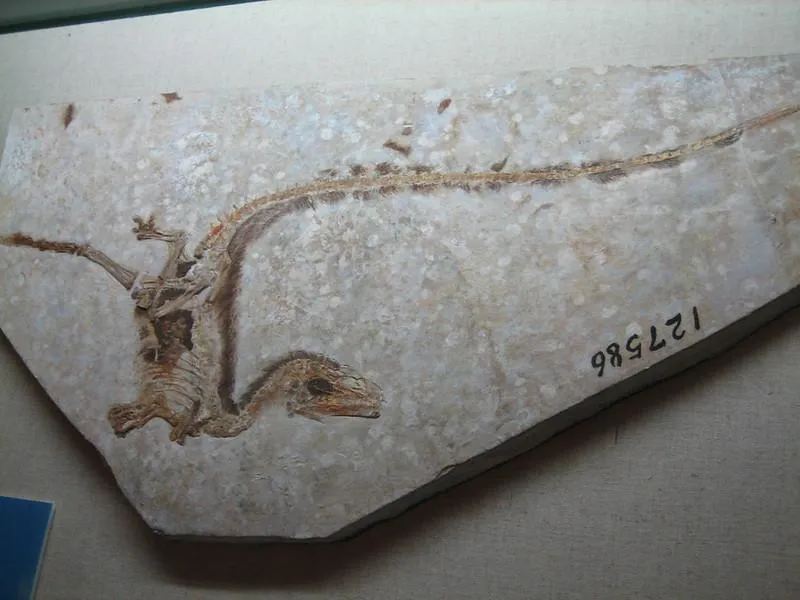
Feathered theropod fossils reveal that plumage existed among non-avian dinosaurs before modern birds evolved.
What Skeletal Features Do Birds Share With Dinosaurs?
Birds share a number of detailed skeletal features with theropod dinosaurs.
Examples include modifications of the pelvis, hind limbs, wrists, shoulders, and vertebral column.
Many theropods walked on two hind legs.
Several possessed three principal weight-bearing toes.
Many had hollow or air-filled bones associated with respiratory structures.
The furcula, also called the wishbone, occurs in birds and several non-avian theropods.
However, these traits did not appear simultaneously in one species.
They evolved across different branches and stages of theropod evolution.
Scientists examine the full combination of anatomical traits to reconstruct relationships.
Did Dinosaurs Have Wishbones?
Yes. Fossil evidence shows that some non-avian theropod dinosaurs had a furcula, or wishbone.
The furcula consists of fused clavicular elements.
It is a familiar component of the shoulder region in many modern birds.
The presence of similar structures in theropod dinosaurs adds to the anatomical evidence linking the groups.
However, the precise shape and mechanical role of the furcula changed during evolution.
The existence of a wishbone in an extinct dinosaur does not mean that it could fly.
Several bird-like skeletal features originated before the evolution of powered avian flight.
Did Dinosaurs Have Hollow Bones?
Many theropod dinosaurs possessed air-filled spaces within parts of their skeletons.
In modern birds, skeletal pneumaticity is associated with an extensive respiratory system containing air sacs.
Evidence of similar skeletal structures occurs in several extinct dinosaur groups.
The Smithsonian notes that birds and Tyrannosaurus rex shared hollow bones and respiratory air-sac adaptations.
However, not every dinosaur bone was hollow, and the degree of pneumaticity varied among lineages.
The feature is part of a broader anatomical pattern rather than a simple yes-or-no trait.
Did Dinosaurs Lay Eggs Like Birds?
Dinosaurs reproduced by laying eggs.
Fossil eggs and nests have been discovered for several non-avian dinosaur groups.
Some fossils preserve embryos, while others preserve adults associated with nests.
One famous discovery involves an oviraptorosaur positioned over a clutch of eggs in a brooding posture.
The American Museum of Natural History highlights these fossils as evidence of bird-like reproductive behavior in non-avian dinosaurs.
Modern birds retain egg laying as part of their reproductive system.
However, dinosaur eggs varied in shape, shell structure, nesting arrangement, and parental care.
Not every extinct dinosaur species necessarily behaved like a modern chicken.
Did Dinosaurs Care for Their Young?
Some non-avian dinosaurs showed evidence of parental behaviors.
Fossil nests, associations between adults and eggs, and growth-stage assemblages can provide clues.
In particular, brooding fossils of oviraptorosaurs suggest that some theropods remained with their clutches.
These behaviors are consistent with the evolutionary development of reproductive traits seen in modern birds.
However, parental care was not necessarily identical across all dinosaurs.
Many species are known from incomplete fossils that provide little direct evidence of nesting behavior.
Therefore, it is inaccurate to assume that every dinosaur incubated eggs in a bird-like manner.
Did Birds Evolve Before Dinosaurs Became Extinct?
Yes. Bird-like dinosaurs evolved long before the end-Cretaceous mass extinction.
Archaeopteryx lived more than 150 million years ago during the Late Jurassic.
The famous end-Cretaceous extinction event occurred about 66 million years ago.
This means that early birds and many non-avian dinosaurs coexisted for tens of millions of years.
By the end of the Cretaceous, several distinct avian lineages existed.
However, not all early birds survived the extinction event.
The modern bird lineage represents only a surviving portion of the much broader diversity of ancient avian dinosaurs.
Are Dinosaurs Extinct?
Non-avian dinosaurs are extinct, but dinosaurs as a whole are not.
Modern birds are living dinosaurs.
The extinction event approximately 66 million years ago eliminated all non-avian dinosaur lineages.
It also affected many other organisms, including several groups of early birds.
However, some avian lineages survived and later diversified.
This is why scientists often say that dinosaurs never completely disappeared.
Every living bird represents an evolutionary continuation of Dinosauria.
Why Did Birds Survive the Dinosaur Extinction?
The survival of birds through the end-Cretaceous extinction is an active research topic.
A large asteroid impact caused severe global environmental disruption around 66 million years ago.
Changes in climate, sunlight, food webs, and habitats affected many organisms.
Scientists have proposed that small body size, dietary flexibility, ecological habits, and other traits contributed to the survival of some bird lineages.
However, not every bird-like dinosaur survived.
The Natural History Museum emphasizes that survival probably depended on a combination of characteristics rather than one universal adaptation.
Exactly why particular avian branches survived while others disappeared remains an important evolutionary question.
Did All Flying Dinosaurs Survive?
No. Flight alone did not guarantee survival.
Many early bird groups disappeared during the end-Cretaceous extinction.
Other flying animals, including pterosaurs, also became extinct.
Furthermore, pterosaurs were not dinosaurs.
They were closely related flying reptiles belonging to a separate evolutionary lineage.
Modern birds descend from a subset of avian dinosaurs that survived the extinction event.
This distinction is important because the ability to fly was not sufficient to protect every lineage from environmental disruption.
Are Pterodactyls Dinosaurs?
No. The animals commonly called pterodactyls were pterosaurs, not dinosaurs.
Pterosaurs belonged to a separate reptile lineage that evolved powered flight independently of birds.
They were close evolutionary relatives of dinosaurs.
However, they were not members of Dinosauria.
This means that a pterosaur is not an early bird, and a bird is not a surviving pterosaur.
Both groups evolved flight, but their wings developed through different anatomical pathways.
Are Birds Reptiles?
Under evolutionary classification, birds belong within the reptile lineage.
Traditional school classifications often place birds in Aves and non-avian reptiles in Reptilia.
However, modern phylogenetic classification seeks to include all descendants of a common ancestor within the same evolutionary group.
Birds evolved within Dinosauria, which belongs to the archosaur lineage of reptiles.
Crocodilians are the closest living non-avian relatives of birds.
Therefore, birds are reptiles in the broad evolutionary sense, even though their feathers, metabolism, and other features make them highly specialized.
Are Birds More Closely Related to Crocodiles or Lizards?
Birds are more closely related to crocodilians than to lizards.
Birds and crocodilians are living members of Archosauria.
Squamates, including lizards and snakes, belong to a different reptile branch.
This evolutionary relationship helps explain why birds and crocodilians share certain features of their anatomy and development.
However, crocodiles are not descended from birds, and birds are not descended from modern crocodiles.
Both groups share earlier archosaur ancestors.
Birds vs. Non-Avian Dinosaurs
| Feature | Modern Birds | Non-Avian Dinosaurs |
|---|---|---|
| Part of Dinosauria | Yes | Yes |
| Living today | Yes | No |
| Feathers | Present | Present in some lineages |
| Egg laying | Yes | Yes |
| Powered flight | Present in many species, lost in others | Not established for most non-avian groups |
| Teeth | Absent in living species | Present in many, absent in some |
| Long bony tail | Absent in living species | Present in many groups |
| Major evolutionary lineage | Avian theropods | Multiple dinosaur lineages |
The extinct dinosaur group was extremely diverse, so these comparisons represent broad patterns rather than descriptions of every species.
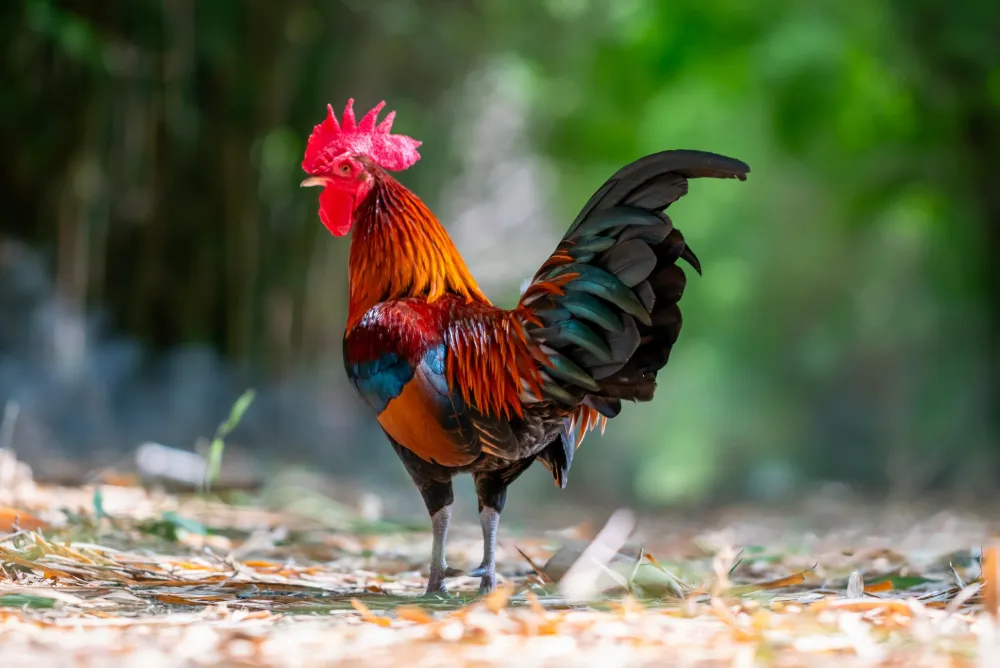
Living birds such as the red junglefowl retain the evolutionary ancestry of theropod dinosaurs, despite their very different modern appearance.
What Makes a Bird Different From an Extinct Dinosaur?
Living birds have evolved a combination of specialized features.
These include modern feather arrangements, modified forelimbs, highly specialized respiratory systems, and distinctive skull and tail structures.
Most modern birds also lack teeth and possess beaks.
However, several of these traits began evolving among extinct theropods before modern birds appeared.
For example, feathers and wishbones existed in some non-avian dinosaurs.
The major differences between a chicken and a Tyrannosaurus are therefore the result of evolutionary divergence within a larger shared lineage.
How Do Scientists Know Birds Did Not Evolve From Lizards?
Birds and lizards share distant reptilian ancestry, but their more recent evolutionary relationships differ.
Birds belong within Theropoda and Archosauria.
Lizards belong within Squamata.
Comparative anatomy and fossil evidence support this branching pattern.
Although some reptiles have scales, a scaly appearance is not sufficient to determine ancestry.
Feathers, skeletal features, fossil chronology, and detailed phylogenetic analyses all place birds within theropod dinosaurs.
Scientists therefore do not classify modern lizards as direct ancestors of birds.
Could Dinosaurs Evolve Again?
Birds already demonstrate that the dinosaur lineage continues today.
However, the exact reappearance of an extinct species such as Tyrannosaurus rex through ordinary evolution is extraordinarily unlikely.
Evolution does not follow a predetermined path toward recreating past organisms.
Species change in response to inherited variation, ecological conditions, and evolutionary history.
Future birds may evolve new adaptations, but those changes would occur within their existing evolutionary lineages.
They would not recreate an extinct dinosaur species merely because birds share dinosaur ancestry.
Why Does the Bird-Dinosaur Connection Matter?
The evolutionary relationship between birds and dinosaurs helps scientists investigate ancient anatomy, behavior, and physiology.
Living birds provide opportunities to study structures that have evolutionary roots among extinct theropods.
Researchers can examine feather development, skeletal growth, respiratory mechanics, and reproductive behavior.
However, modern birds are not perfect copies of their ancient ancestors.
They have undergone extensive evolutionary changes.
Scientists therefore combine living-animal research with fossil evidence rather than treating a chicken as an unchanged model of a Jurassic dinosaur.
Frequently Asked Questions
Are birds dinosaurs?
Yes. Modern birds belong to the theropod dinosaur lineage and are the only living dinosaurs.
Are chickens dinosaurs?
Yes. Chickens are modern birds, and all living birds belong within Dinosauria.
Did birds evolve from dinosaurs?
Yes. Birds evolved from small, feathered theropod dinosaur ancestors during the Mesozoic Era.
Are birds related to T. rex?
Yes. Birds and Tyrannosaurus rex share theropod ancestry, but birds did not evolve directly from T. rex.
Are dinosaurs still alive?
Avian dinosaurs are alive today as birds. Non-avian dinosaurs became extinct approximately 66 million years ago.
Did all dinosaurs have feathers?
No. Several non-avian theropod lineages had feathers, but extensive feather coverings are not established for every dinosaur group.
What was the first bird?
Scientists do not know one universally agreed first bird species. Archaeopteryx is among the most famous early bird-like fossils.
Was Archaeopteryx a dinosaur?
Yes. Archaeopteryx belongs to the avian side of the theropod dinosaur evolutionary tree.
Are penguins dinosaurs?
Yes. Penguins are living birds and therefore members of the surviving dinosaur lineage.
Are ostriches dinosaurs?
Yes. Ostriches are modern birds and remain classified within Dinosauria even though they cannot fly.
Are birds reptiles?
In modern evolutionary classification, birds belong within the reptile lineage as specialized archosaurs.
Are crocodiles dinosaurs?
No. Crocodilians are close living relatives of dinosaurs but belong to a separate archosaur branch.
Were pterodactyls dinosaurs?
No. Pterodactyls were pterosaurs, a separate lineage of flying reptiles related to dinosaurs.
Why did birds survive the dinosaur extinction?
Scientists think survival involved several factors, potentially including body size, diet, and ecological flexibility. The full explanation remains under investigation.
The Bottom Line
Birds are dinosaurs because they evolved within the theropod dinosaur lineage.
Fossil feathers, skeletal similarities, nesting evidence, and evolutionary analyses all support this conclusion.
Modern birds are the surviving avian branch of Dinosauria, while all non-avian dinosaur lineages became extinct around 66 million years ago.
Therefore, chickens, pigeons, eagles, penguins, and every other living bird are part of the dinosaur family tree.
The discovery that birds are living dinosaurs changes how we understand the past: dinosaurs are not only ancient fossils in museums. They are also the birds living around us today.
Sources & Further Reading
Natural History Museum — Why Are Birds the Only Surviving Dinosaurs?. Explains theropod ancestry, early birds, and survival through the end-Cretaceous extinction.
American Museum of Natural History — Ask a Scientist About Dinosaurs. Discusses fossil evidence, evolutionary classification, and bird-like dinosaur anatomy.
Natural History Museum — The First Dinosaurs Probably Didn't Have Feathers. Reviews feather evidence and the limits of reconstructing dinosaur skin coverings.
Smithsonian Institution — Tyrannosaurus rex. Describes the shared evolutionary and anatomical features of birds and theropods.
Natural History Museum — The Seven Greatest Dinosaur Discoveries of the Last 200 Years. Explains the discoveries of Deinonychus and Sinosauropteryx and their importance to bird evolution.
American Museum of Natural History — First Ever Fossil of Sleeping Dinosaur Found in China. Documents a dinosaur resting posture resembling that of modern birds.