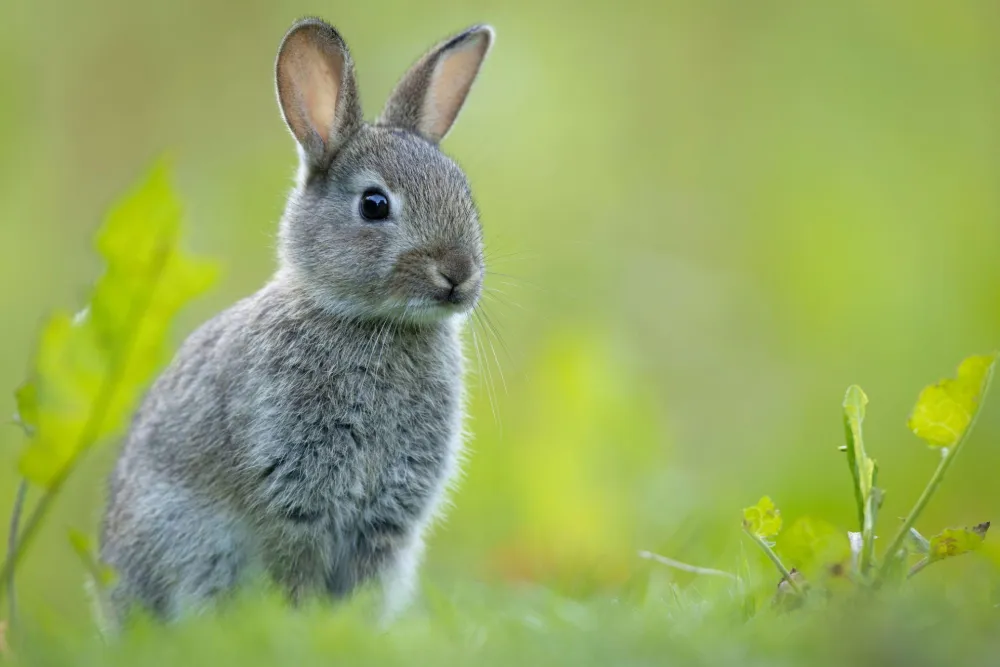
Rabbits make several different sounds, including soft grunts, honks, squeaks, growls, screams, and gentle tooth-grinding noises often called purring. They are usually much quieter than dogs or cats, and they communicate through body language as well as sound. A soft honk may occur during excitement or courtship, while a grunt can be a warning. Quiet tooth purring can accompany relaxation, but loud grinding may indicate pain. Rabbits also thump their hind feet against the ground to produce an alarm signal, although thumping is not a vocal sound.
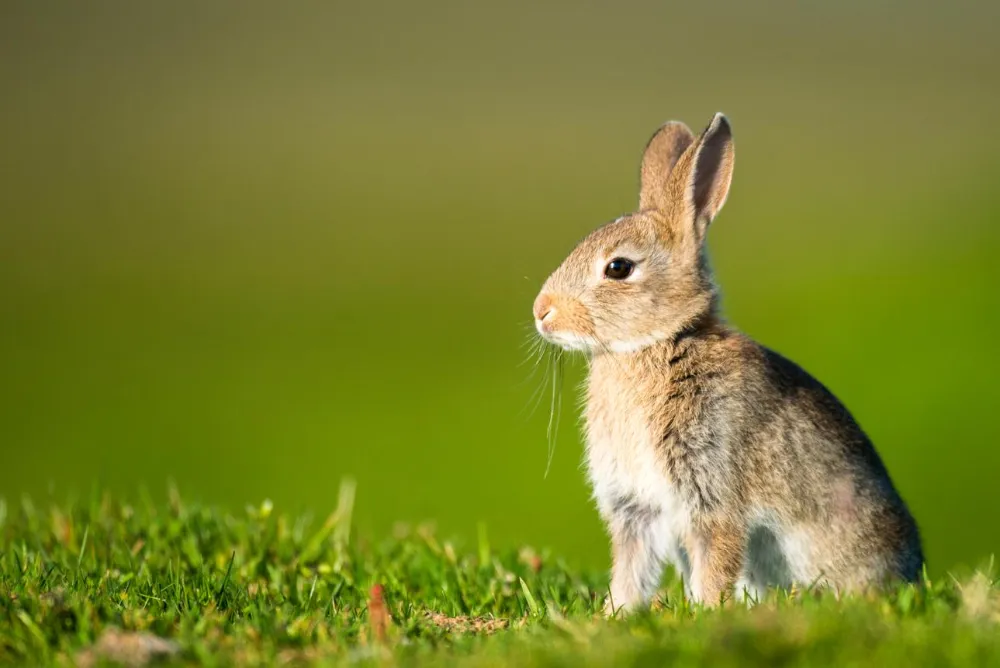
Rabbits are relatively quiet mammals, but they communicate through a combination of vocal sounds, tooth noises, foot thumping, and body language.
What Sound Does a Rabbit Make?
Unlike some animals that are strongly associated with a familiar sound, rabbits do not have one universal call comparable to a dog's bark or a cow's moo.
Instead, rabbits produce a range of relatively subtle sounds.
Some are true vocalizations produced through the respiratory and vocal system.
Others are mechanical sounds produced by the teeth or feet.
The most commonly described rabbit sounds include:
Grunting: A short, low sound often associated with annoyance, defense, or intense social interaction.
Honking or humming: A soft nasal-sounding call frequently associated with courtship or excitement.
Growling: A low warning sound associated with defensive behavior.
Squeaking or whimpering: A higher-pitched vocalization that can occur during discomfort or stressful interactions.
Screaming: A rare, piercing vocalization associated with extreme fear or severe distress.
Tooth purring: Quiet, gentle tooth movements that may accompany relaxed behavior.
Loud tooth grinding: A harsher sound that can occur when a rabbit is in pain.
Thumping: A percussive warning produced by striking the ground with a hind foot.
These labels are descriptions used by people rather than a scientifically standardized language in which each sound has one fixed translation.
The context of the sound matters as much as the sound itself.
Do Rabbits Make Noise?
Yes. Rabbits can make noise, but many of their everyday signals are quiet.
A rabbit may spend long periods feeding, grooming, resting, and moving without producing an obvious vocalization.
In other situations, it may grunt, honk, squeal, or produce an intense scream.
Domestic rabbits can also produce audible sounds by grinding their teeth, digging, running, or thumping their feet.
Some of these signals are more likely to be noticed than others.
A soft honk may be difficult to hear unless the observer is nearby.
A forceful hind-foot thump, by contrast, can be remarkably loud.
This is why the simple statement that rabbits are silent is incorrect.
Why Are Rabbits Usually So Quiet?
Rabbits are prey animals that depend on detecting and avoiding danger.
Their communication system includes subtle visual, tactile, chemical, and acoustic signals.
Ears, body posture, facial expression, scent marking, and movement can all convey information without requiring a loud call.
Remaining relatively inconspicuous can also be useful in environments where predators are present.
However, the statement that rabbits are quiet only because predators might hear them is an oversimplification.
Communication patterns are influenced by social behavior, environment, sensory abilities, and evolutionary history.
Wild European rabbits live in social groups and use more than one form of communication.
The sounds that humans notice are only part of that system.
What Does It Mean When a Rabbit Grunts?
Grunting is a low, short vocalization that often occurs during strong social arousal.
In domestic rabbits, a grunt may accompany territorial behavior or an attempt to discourage an unwanted interaction.
For example, a rabbit may grunt when another animal approaches a valued resource or when a person reaches toward it in a way the rabbit dislikes.
Grunting can also appear during courtship-related interactions.
Therefore, it does not always mean aggression.
The surrounding behavior helps determine the likely interpretation.
A rabbit that grunts while lunging, flattening its ears, or displaying a tense posture is showing a different behavioral pattern from one that makes a soft sound while circling another rabbit.
RSPCA guidance recommends considering body language rather than translating a single noise in isolation.
Why Do Rabbits Honk or Hum?
Some rabbits make soft sounds described as honking, humming, or oinking.
These vocalizations can occur during courtship, excitement, or social interactions.
They are often reported when a rabbit circles another rabbit or a familiar person.
However, a honking sound is not automatically a sign of affection.
It may also be associated with reproductive motivation or heightened arousal.
The National Academies' rabbit behavioral ethogram includes honking and oinking among documented rabbit vocalizations.
These sounds are usually quieter than people expect from the word honk.
They do not necessarily resemble the loud call of a goose.
Why Does a Rabbit Growl?
A low growl can be a warning that a rabbit is uncomfortable with a situation.
Growling may accompany defensive body language, including tense posture or attempts to keep another animal at a distance.
However, the exact acoustic distinction between a growl and a grunt can be difficult for casual observers.
Different sources may use the words somewhat differently.
It is therefore more useful to pay attention to what the rabbit is doing than to insist that every sound belongs to a precise category.
A rabbit showing repeated defensive behavior may be experiencing fear, social conflict, or stress.
Recognizing the entire behavioral pattern is more informative than interpreting a single growl.
Do Rabbits Squeak?
Yes. Rabbits can produce high-pitched squeaks or whimpering sounds.
These may occur during uncomfortable social encounters or other stressful circumstances.
A rabbit that squeaks when handled may be communicating distress or reluctance.
However, the meaning of a squeak depends on the animal and the situation.
A brief, isolated high-pitched sound should not be assigned a universal meaning without additional evidence.
It is important to distinguish occasional vocalizations from abnormal breathing noises, which may have a medical cause.
What Sound Does a Rabbit Make When It Is Scared?
A frightened rabbit may remain quiet, hide, thump its hind feet, grunt, or show other defensive responses.
The exact behavior depends on the intensity of the threat.
At the most extreme end, a rabbit may produce a piercing scream.
However, most fearful rabbits do not scream every time they are frightened.
Body posture often provides more useful information.
A frightened rabbit may crouch tightly, flatten its ears, become unusually still, or attempt to escape.
RSPCA guidance describes these posture changes as important indicators of fear and stress.
Do Rabbits Scream?
Yes. Rabbits are capable of producing a loud, high-pitched scream.
This is not a normal everyday social call.
Scientific behavioral descriptions associate screaming with severe fear, injury, or extreme distress.
A rabbit scream can be startling because the animal may otherwise be quiet.
It should not be interpreted as an ordinary request for attention.
If a domestic rabbit screams, especially in connection with an injury, collapse, difficulty breathing, or other concerning signs, prompt veterinary attention is appropriate.
However, a single sound alone cannot establish the precise medical cause.
What Does a Rabbit Scream Sound Like?
A rabbit scream is often described as a very high-pitched, piercing cry.
Some observers compare it with a shriek rather than a typical animal grunt.
The intensity can make it sound very different from the quieter vocalizations rabbits normally use.
Because screaming is associated with severe distress, it should not be provoked for the purpose of obtaining a recording.
Educational information about this behavior is best obtained from reputable animal welfare or veterinary sources rather than demonstrations that deliberately frighten animals.
Do Rabbits Purr Like Cats?
Rabbits can make a soft sound commonly called purring, but they do not produce it in the same way as cats.
Rabbit purring is generally associated with gentle movements of the teeth.
When a rabbit is relaxed, it may move or lightly grind its teeth, creating a quiet vibration or chattering sound.
This is sometimes called tooth purring.
The RSPCA identifies gentle tooth grinding as a possible sign of contentment when the rabbit's overall posture is relaxed.
However, loud or forceful tooth grinding can be associated with pain.
This difference is crucial.
The word purring should not lead people to assume that every tooth sound is a positive signal.
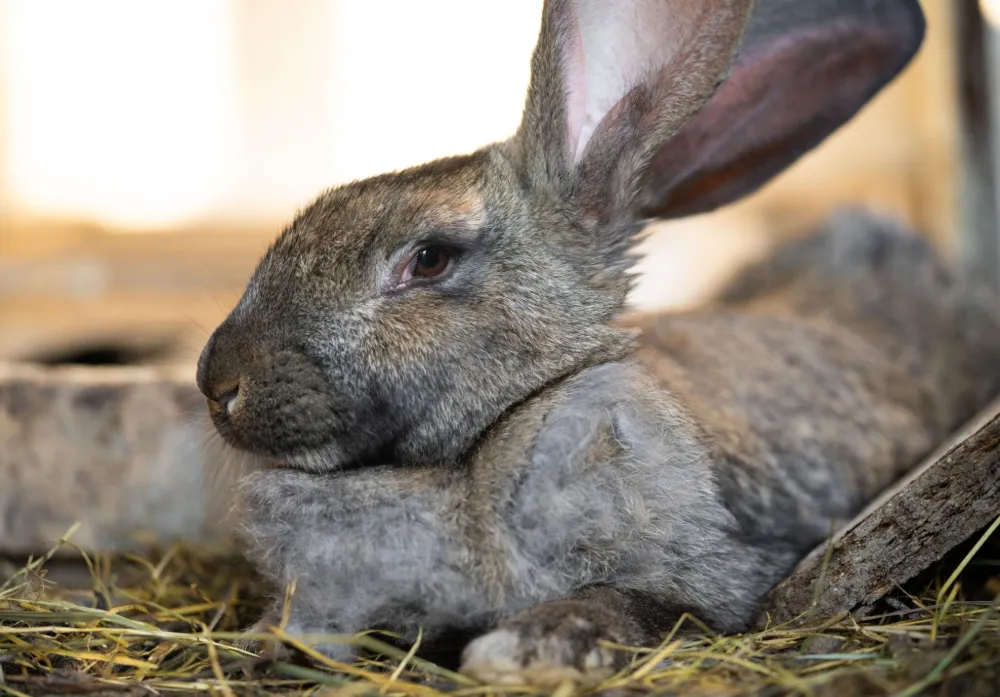
Soft tooth purring may accompany relaxed behavior, but body posture and other signs are essential when interpreting rabbit sounds.
How Can You Tell Happy Tooth Purring From Painful Grinding?
Soft tooth purring usually occurs in a relaxed behavioral context.
A comfortable rabbit may rest with its body extended or tucked into a loose, natural position.
Its eyes may be partly closed, and the teeth may make a gentle, quiet sound.
Pain-associated grinding is more likely to be loud or forceful and may occur alongside other concerning signs.
These can include a hunched posture, reduced movement, decreased appetite, or unusual withdrawal.
However, the distinction cannot always be made reliably from sound alone.
A 2021 study developing the Bristol Rabbit Pain Scale included vocalization and tooth grinding among several observations used in assessing rabbit pain.
The scale takes multiple behaviors into account rather than depending on one sound.
What Is the Bristol Rabbit Pain Scale?
The Bristol Rabbit Pain Scale is a structured assessment developed to help evaluate pain in domestic rabbits.
It considers several observable indicators, including posture, movement, behavior, and reactions to the surrounding environment.
Vocalizations and tooth grinding are among the signs that can contribute to assessment.
However, the scale is not a simple translation chart in which a particular noise always equals a particular level of pain.
Its purpose is to combine multiple observations into a more consistent assessment.
The research reflects an important principle in animal welfare: rabbits may show pain subtly, and observers need to consider the whole animal.
Why Do Rabbits Thump Their Feet?
Rabbits sometimes strike the ground with one or both hind feet, producing a noticeable thumping sound.
Thumping commonly occurs when a rabbit detects a possible threat or becomes alarmed.
It may help alert nearby rabbits.
Domestic rabbits may also thump in situations involving frustration or irritation.
The RSPCA describes both warning thumps and what it informally calls grump thumps.
Thumping is not a vocalization because the sound is produced through impact with the ground rather than by the vocal system.
Nevertheless, it is an important part of rabbit acoustic communication.
Can Rabbits Warn Other Rabbits by Thumping?
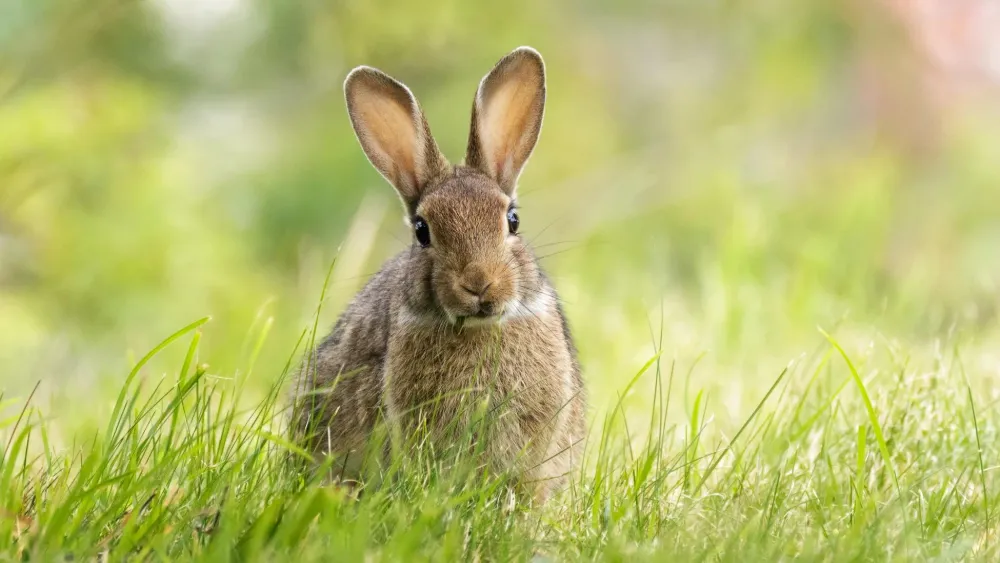
Yes. Hind-foot thumping can function as an alarm signal.
Wild European rabbits live in social systems where warning behavior can be valuable.
A strong thump can be detected by nearby animals through sound and potentially ground vibration.
Other rabbits may respond by becoming alert or moving toward shelter.
However, not every thump means that a predator is present.
In domestic settings, thumping can also occur when a rabbit reacts to unfamiliar sounds, disturbances, or unwanted interactions.
Therefore, the signal should be interpreted according to context.
Do Rabbits Make Sounds When They Are Happy?
Some rabbit sounds occur during comfortable or positively arousing situations.
Gentle tooth purring is one example.
Soft honking may accompany excitement or courtship.
However, positive welfare cannot be determined from vocalizations alone.
Relaxed body posture, comfortable movement, grooming, exploration, and normal feeding behavior provide useful additional information.
The RSPCA also describes a behavior called a binky, in which a rabbit leaps into the air and twists its body.
A binky is primarily a movement rather than a vocal sound.
Nevertheless, it can help demonstrate why understanding rabbits requires observing body language as well as listening.
Do Rabbits Make Sounds When They Are Angry?
A rabbit that is highly aroused or defensive may grunt or growl.
Such sounds can occur alongside tense posture, lunging, or attempts to move away.
However, anger is a human emotional label and may not capture all the underlying causes.
Fear, frustration, resource guarding, or social conflict can produce similar outward behavior.
It is more accurate to describe the visible signs and the situation than to assign a single emotion based on one noise.
Why Does My Rabbit Make Noise While Circling?
Some rabbits produce soft honking or humming sounds while circling another rabbit or a familiar person.
This behavior is often associated with reproductive or courtship-related motivation.
However, circling can occur in several contexts, and different rabbits may show different patterns.
A rabbit's reproductive status, social environment, and body posture can all influence the interpretation.
The presence of honking does not automatically mean the rabbit is expressing affection toward a human.
Observers should consider the full behavioral sequence.
Why Does a Rabbit Make Clicking Noises?
Clicking sounds can arise from gentle tooth contact or other oral movements.
Some behavioral descriptions include clicking among the sounds that occur during relaxed or rewarding interactions.
However, clicking can also be confused with louder tooth grinding or unusual respiratory sounds.
It is therefore important not to assign a positive meaning to every click.
If a new clicking sound occurs with changes in eating, drooling, abnormal jaw movement, or signs of discomfort, veterinary assessment may be needed.
Why Is My Rabbit Making Snorting or Sneezing Sounds?
Snorting, sneezing, and other nasal sounds may have different causes from ordinary social vocalizations.
Some rabbits make brief nasal noises during excitement or interaction.
However, repeated sneezing, persistent noisy breathing, nasal discharge, or obvious respiratory effort can indicate a health problem.
These signs should not simply be interpreted as the rabbit trying to talk.
The RSPCA identifies changes in breathing and discharge around the nose as reasons to seek veterinary advice.
A rabbit with breathing difficulty requires prompt professional attention.
Do Baby Rabbits Make Sounds?
Yes. Young rabbits can produce vocalizations.
However, the sounds, situations, and frequency of vocal behavior can differ from those of adults.
Very young rabbits are vulnerable animals, and distress calls may be associated with discomfort or threatening conditions.
It is not appropriate to generalize every high-pitched sound made by a young rabbit as harmless squeaking.
Developmental stage and the animal's condition matter.
Scientific observations of rabbit vocal behavior should also distinguish wild young rabbits from domesticated juveniles raised under human care.
Do Wild Rabbits Make Different Sounds From Pet Rabbits?
Domestic rabbits descend from the European rabbit (Oryctolagus cuniculus).
They share many basic behavioral and communication abilities with their wild relatives.
However, the contexts in which signals are produced can differ.
A wild rabbit may use an alarm thump in response to a predator near its burrow.
A domestic rabbit may thump in response to an unfamiliar noise or disruption in its surroundings.
Domestic breeding, individual differences, and past experiences can also influence behavior.
It would be inaccurate to claim that wild and domestic rabbits use entirely separate sound systems.
How Do Rabbits Communicate Without Making Sounds?
Much rabbit communication is nonvocal.
Examples include:
Ear position: Ears can change position with alertness, relaxation, or defensive behavior.
Body posture: A relaxed sprawl differs from a tense crouch.
Facial and eye cues: Eye position and muscle tension may provide additional information.
Grooming: Social grooming is an important interaction among bonded rabbits.
Scent marking: Rabbits use glands and other chemical signals to mark areas and communicate.
Movement: Running, jumping, approaching, withdrawing, and thumping convey behavioral information.
The RSPCA emphasizes that behavior must be interpreted using multiple signals rather than one isolated gesture.
For example, ears held backward may occur during relaxation or stress depending on how they are positioned and what the rest of the body is doing.
How Can You Understand Rabbit Sounds?
A useful approach is to observe both the sound and the surrounding behavior.
Consider these questions:
What happened immediately before the sound?
Was the rabbit feeding, resting, moving, or interacting?
Did the body appear relaxed or tense?
Were the ears upright, flattened, or loosely resting?
Did the rabbit continue its normal activities afterward?
Is the sound familiar for that individual or completely new?
These observations provide more reliable information than assuming a noise has one exact meaning.
Sudden changes in behavior, eating, breathing, or activity require particular attention.
Rabbit Sounds and Their Possible Meanings
| Sound | Possible Meaning | Important Caution |
|---|---|---|
| Soft honk or hum | Courtship, excitement, social arousal | Not automatically affection |
| Grunt | Warning, frustration, social arousal | Interpret with posture |
| Growl | Defensive or warning response | May overlap with grunting |
| Quiet tooth purring | Possible relaxation or contentment | Check the whole animal |
| Loud tooth grinding | Possible pain or discomfort | Assess alongside appetite and posture |
| Squeak or whimper | Possible discomfort or stress | Meaning depends on context |
| Scream | Extreme fear or severe distress | Requires urgent attention to the situation |
| Hind-foot thump | Alarm, disturbance, or frustration | Not a vocalization |
| Repeated noisy breathing | Possible respiratory abnormality | Not ordinary rabbit conversation |
Do Rabbits Have Vocal Cords?
Rabbits are mammals and possess a larynx and associated structures involved in producing vocal sounds.
Their ability to grunt, squeal, and scream demonstrates that they can generate true vocalizations.
However, not every sound associated with a rabbit is produced by the larynx.
Tooth purring comes from movements of the teeth.
Thumping comes from impact between the hind foot and the ground.
Recognizing these different sound-producing mechanisms is helpful when explaining rabbit communication accurately.
Can Rabbits Hear Better Than Humans?
Rabbits have highly developed auditory abilities and large external ears that can be moved to monitor their surroundings.
The shape and position of the ears help collect sound information.
This is particularly important for an animal that must remain alert to possible predators.
However, hearing ability varies with frequency and sound intensity.
It is misleading to claim that rabbits hear better than humans in every possible acoustic condition.
Rabbit communication involves both producing signals and detecting sounds made by other animals.
Are Rabbits Silent Because They Are Afraid?
No. A quiet rabbit is not necessarily frightened.
Many rabbits remain quiet during normal feeding, grooming, and rest.
Fear may also produce silence or reduced movement, but the sound level alone is insufficient to distinguish fear from relaxation.
For example, a relaxed rabbit might lie comfortably with loosely positioned ears and produce no sound.
A frightened rabbit may remain equally silent while crouched tensely and watching a possible threat.
Body posture and environmental context are necessary to interpret the difference.
Frequently Asked Questions
What sound does a rabbit make?
Rabbits can grunt, honk, hum, growl, squeak, scream, and make soft tooth-purring sounds. They also thump their hind feet as a nonvocal warning.
Do rabbits make noise at all?
Yes. Rabbits are relatively quiet but are not silent animals.
What sound does a happy rabbit make?
A relaxed rabbit may make gentle tooth-purring sounds. Soft honking can also occur during excitement, but the context is important.
Why do rabbits grunt?
Grunting often occurs during defensive behavior, frustration, courtship, or other intense social interactions.
Why do rabbits honk?
Honking or humming can accompany courtship and social excitement, including circling behavior.
Why do rabbits scream?
A piercing scream is associated with extreme fear, severe distress, or injury and should not be regarded as a normal everyday sound.
Do rabbits purr?
Yes. Quiet tooth grinding is often called rabbit purring, although it is produced differently from a cat's purr.
What does rabbit tooth grinding mean?
Gentle grinding during relaxation may indicate contentment. Loud or forceful grinding, especially with other abnormal signs, may indicate pain.
Why do rabbits thump their feet?
Thumping commonly acts as an alarm signal and can also occur in situations involving frustration or disturbance.
Do rabbits squeak when scared?
Some rabbits produce squeaks or other vocalizations during stressful situations, but others remain silent or thump their feet.
Do baby rabbits make sounds?
Yes. Young rabbits can vocalize, although their behavior and the circumstances in which they produce sounds differ from those of adults.
Do wild rabbits make the same sounds as pet rabbits?
Wild European rabbits and domestic rabbits share many communication behaviors, but their environments and the contexts of sound production differ.
Are rabbits louder at night?
Rabbit activity often increases around dawn and dusk, but individual sound patterns vary. Unexpected loud noises at night may result from thumping, movement, or other behavior.
Can rabbit noises mean something is wrong?
Yes. Loud tooth grinding, screaming, persistent noisy breathing, or new sounds accompanied by unusual posture, reduced appetite, or other changes can indicate a problem requiring veterinary assessment.
The Bottom Line
Rabbits are relatively quiet animals, but they produce a surprisingly varied range of sounds.
These include grunts, honks, growls, squeaks, screams, and gentle tooth-purring noises. They also communicate by thumping their hind feet, even though thumping is not a vocal sound.
The same general type of sound can occur in different situations, so context matters.
To understand rabbit communication, it is important to observe posture, activity, ear position, and other signs instead of translating each noise into one fixed human emotion.
This combination of subtle sounds and expressive body language helps rabbits communicate while remaining relatively inconspicuous in their environment.
Sources & Further Reading
The following animal welfare resources and scientific references support the descriptions of rabbit sounds, body language, communication, and the distinction between relaxed tooth purring and potentially painful grinding.
RSPCA — Natural Behaviours of Pet Rabbits. Explains thumping, soft and loud tooth grinding, play behavior, and signs of stress.
RSPCA — Understanding Rabbit Body Language. Describes relaxed, worried, and defensive rabbit postures.
National Academies — Recognition and Alleviation of Distress in Laboratory Animals. Includes a rabbit ethogram describing purring, honking, squealing, and other signals.
Development of the Bristol Rabbit Pain Scale (2021). Peer-reviewed study on behavioral and vocal indicators used in rabbit pain assessment.
RSPCA — How to Keep Your Rabbit Healthy. Explains why tooth grinding, unusual respiratory sounds, and changes in normal behavior require attention.
House Rabbit Society. Educational information about domestic rabbit behavior and welfare.