A snake is a reptile, not an amphibian. Snakes belong to the reptile lineage and are classified within the order Squamata, which also includes lizards. Their bodies are covered with keratinized scales, they breathe air using lungs, and they reproduce as amniotes. Amphibians, such as frogs, salamanders, and caecilians, belong to a different evolutionary group. Although some snakes live in water or resemble legless amphibians, their anatomy, reproduction, and ancestry clearly identify them as reptiles.
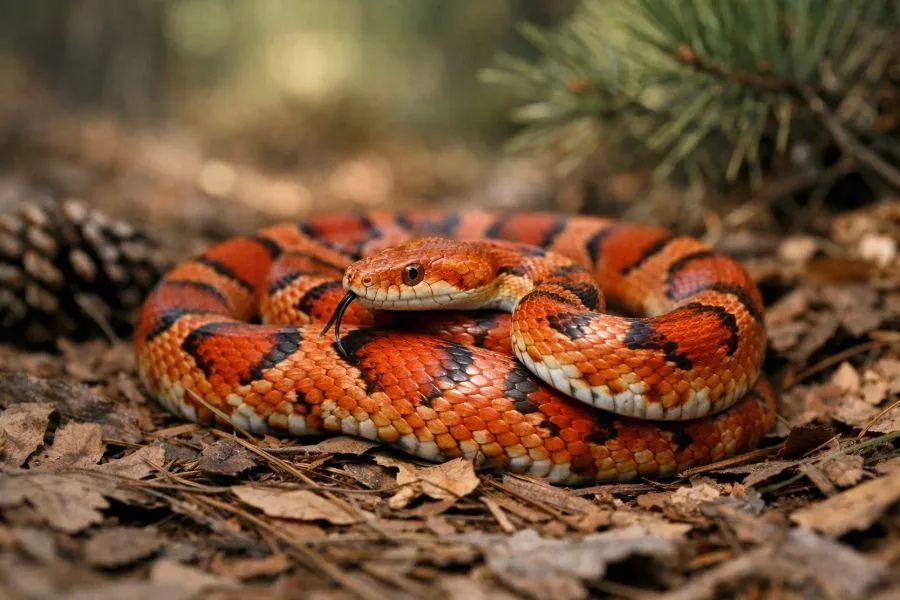
Snakes are reptiles belonging to the squamate lineage, a group that also includes lizards.
Is a Snake a Reptile or an Amphibian?
All living snakes are reptiles.
They belong to a group of vertebrate animals that includes lizards, turtles, crocodilians, and other reptiles.
Under modern evolutionary classification, birds also belong within the broader reptile lineage, although everyday usage often treats birds separately.
Snakes are particularly closely related to lizards.
Both belong to the order Squamata.
Amphibians form a different branch of the vertebrate evolutionary tree.
Living amphibians include frogs, toads, salamanders, newts, and caecilians.
The distinction is based on evolutionary relationships and inherited biological characteristics, not simply appearance or habitat.
What Class Does a Snake Belong To?
In conventional zoological classification, snakes belong to the class Reptilia.
Their broader classification can be summarized as follows:
| Taxonomic Rank | Snake Classification |
|---|---|
| Kingdom | Animalia |
| Phylum | Chordata |
| Subphylum | Vertebrata |
| Clade | Amniota |
| Class | Reptilia |
| Order | Squamata |
| Lineage | Serpentes |
The exact taxonomic rank assigned to Serpentes can differ among classification systems, but its placement within Squamata is firmly established.
Snakes are therefore not classified within Amphibia.
Modern classification also emphasizes evolutionary clades, which do not always correspond neatly to the traditional ranks used in school textbooks.
Why Are Snakes Classified as Reptiles?
Snakes share important anatomical and evolutionary characteristics with other reptiles.
These include:
Keratinized scales covering the skin
Lungs used for breathing air
Internal fertilization
Reproduction within the amniote evolutionary lineage
Characteristic skull, vertebral, and other skeletal features
An evolutionary relationship with lizards
Not every individual characteristic is exclusive to reptiles.
For example, mammals also breathe through lungs and use internal fertilization.
The scientific classification of snakes depends on the full combination of inherited characteristics and their evolutionary ancestry.
The American Museum of Natural History includes snakes and lizards together in its Tree of Life educational resources.
What Is the Difference Between Reptiles and Amphibians?
Reptiles and amphibians are both vertebrates, but they represent different evolutionary branches.
They differ in skin structure, reproductive biology, breathing mechanisms, and development.
Reptiles generally have skin protected by keratinized scales or related structures.
Living amphibians generally have thin, glandular skin that plays an important role in water balance and, in many species, gas exchange.
Many amphibians lay eggs in water or other moist environments.
Reptiles belong to the amniote lineage, whose reproductive adaptations reduce dependence on an aquatic environment for embryonic development.
However, these are broad patterns with important exceptions.
Some reptiles give birth to live young, and some amphibians have specialized forms of terrestrial development or live birth.
Snakes vs. Amphibians: Main Differences
| Feature | Snakes | Typical Amphibians |
|---|---|---|
| Major group | Reptilia | Amphibia |
| Skin | Keratinized scales | Usually moist and glandular |
| Breathing | Lungs | Lungs, skin, gills, or combinations depending on species and stage |
| Fertilization | Internal | Internal or external depending on the group |
| Egg type | Amniotic development; eggs in some species, live birth in others | Non-amniotic development |
| Metamorphosis | No typical amphibian larval metamorphosis | Common but not universal |
| Closest familiar relatives | Lizards | Frogs, salamanders, and caecilians |
This comparison describes general biological patterns rather than every exception in each group.
Do Snakes Have Scales?
Yes. Snakes have specialized scales covering their bodies.
These scales are formed from the outer layers of the skin and contain keratinized tissue.
The scales provide a protective surface and contribute to the mechanical interaction between the snake's body and its environment.
The underside of many snakes has enlarged belly scales, often called ventral scutes.
These help the animal interact with surfaces during movement.
Scale arrangement differs among species and can be useful in identification.
The American Museum of Natural History describes scaly skin as a defining feature of snakes and lizards.
However, snake scales are not the same as fish scales.
The two structures differ in development and anatomy.
Do Snakes Have Dry Skin?
Snake skin is generally less permeable than the thin skin of many amphibians.
Its keratinized outer layers help protect the body and reduce uncontrolled water loss.
This is one reason snakes can occupy dry terrestrial environments.
However, snakes still need water and can become dehydrated.
The phrase dry skin should not be interpreted as meaning that snakes never become wet or that their skin contains no moisture.
A snake swimming in water still has reptilian skin.
Skin structure is more informative for classification than whether an animal happens to be wet.
Why Do Snakes Shed Their Skin?
Snakes periodically shed the outer layer of their skin through a process called ecdysis.
This helps replace the old outer covering as the animal grows and its skin undergoes normal renewal.
Many snakes shed the outer skin in a relatively continuous piece.
Before shedding, the eyes may look cloudy because the transparent scales covering them are involved in the shedding process.
After the old skin separates, the clear eye covering is renewed.
Snakes do not have movable eyelids like humans.
The American Museum of Natural History identifies periodic skin shedding as a characteristic feature of lizards and snakes.
Shedding itself does not mean the animal is an amphibian.
Do Amphibians Have Scales?
Most familiar amphibians, including frogs and salamanders, do not have the dry keratinized scale covering typical of snakes.
Instead, their skin contains glands and can participate directly in water and gas exchange.
However, there is an important exception.
Many caecilians possess small dermal scales embedded within their skin.
These structures are anatomically different from the external keratinized scales that cover snakes.
Therefore, the statement that absolutely no amphibian has any kind of scale would be incorrect.
Skin anatomy remains a useful distinction, but the details matter.
How Do Snakes Breathe?
Snakes breathe atmospheric oxygen through lungs.
They take air in through their nostrils and respiratory passages.
The structure and function of the lungs vary among snake groups.
In many species, the right lung is the principal functional lung, while the left lung is greatly reduced or absent.
Some snakes retain a more substantial left lung.
This variation reflects the evolutionary diversity of the group.
Snakes do not normally extract oxygen from water using gills.
Even aquatic snakes must obtain oxygen through the respiratory system.
How Do Amphibians Breathe?
Amphibian respiratory biology is highly diverse.
Many frogs and salamanders can exchange gases through moist skin.
Some also use lungs.
Many aquatic larvae possess gills, and certain amphibians retain gills into adulthood.
Other species, including lungless salamanders, depend heavily on gas exchange through the skin and tissues lining the mouth.
The Smithsonian National Zoo emphasizes the importance of moist amphibian skin in respiration.
However, not every amphibian follows the simple textbook pattern of a gilled tadpole changing into a lung-breathing adult.
Do Snakes Lay Eggs Like Reptiles?
Many snakes lay eggs, but others give birth to live young.
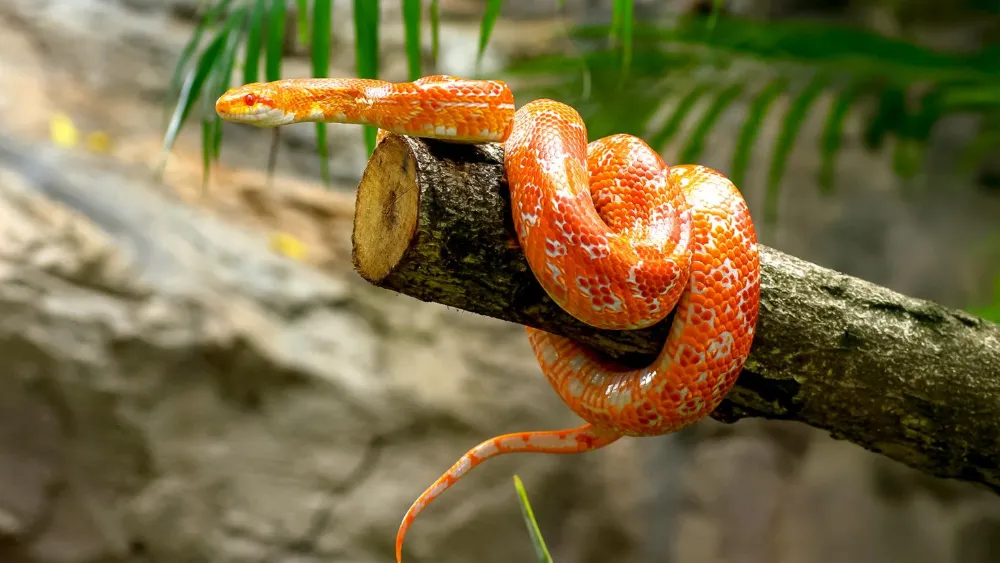
Egg-laying snakes include many familiar species, such as corn snakes and numerous pythons.
Other snakes retain developing embryos within the mother's body until birth.
Both strategies occur within the reptile lineage.
Therefore, laying eggs is not a requirement for being classified as a reptile.
Snake reproductive biology differs among species and is shaped by evolutionary history and environmental conditions.
Some reptiles also provide parental care, although the amount and form of care vary widely.
What Is an Amniotic Egg?
An amniotic egg is associated with the evolutionary group known as Amniota.
Amniotes include reptiles, birds, and mammals.
The developing embryo is associated with specialized membranes, including the amnion.
These structures helped make reproduction less dependent on laying eggs directly in open water.
Many reptiles produce shelled eggs, but some species have evolved live birth.
In mammals, the reproductive system has undergone additional major evolutionary changes.
Amphibians are not part of the amniote lineage.
The distinction between amniotes and non-amniotes is one of the central evolutionary differences between snakes and modern amphibians.
Do Snakes Go Through Metamorphosis?
Snakes do not undergo the characteristic larval metamorphosis familiar from many frogs.
A snake hatching from an egg is already recognizably snake-shaped.
It may be much smaller than an adult, but it has the basic body form and respiratory organization of a snake.
It grows through feeding and development rather than transforming from a water-breathing tadpole into a different adult form.
However, amphibian development is more diverse than the familiar frog life cycle.
Some amphibians develop directly into small versions of adults without a free-living tadpole stage.
Metamorphosis is therefore a useful comparison but not an absolute rule covering every amphibian.
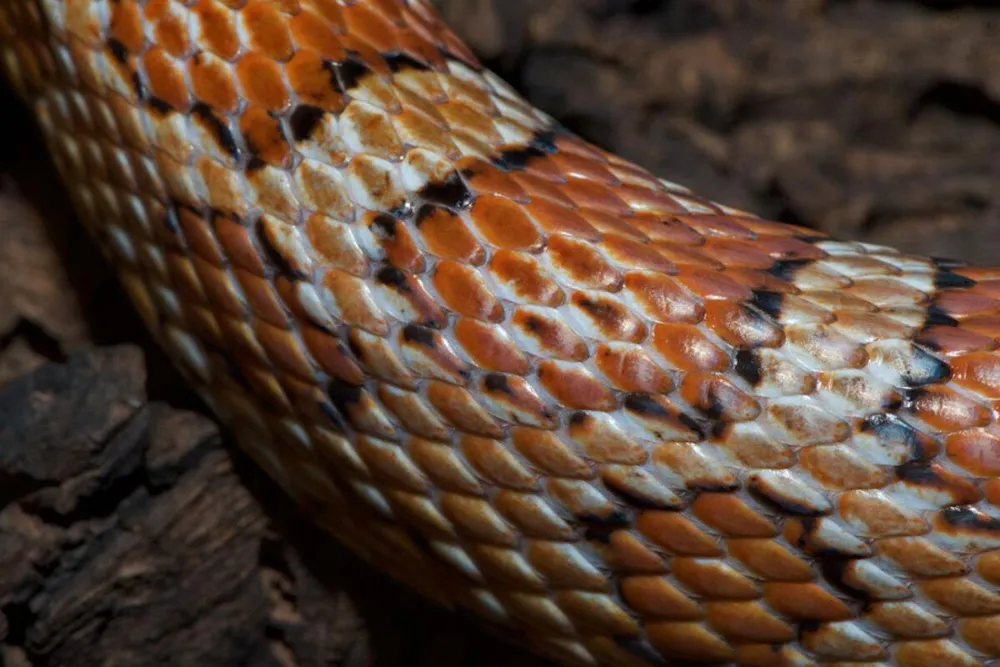
Keratinized scales are among the most recognizable features distinguishing snakes from most amphibians.
Are Water Snakes Amphibians?
No. Water snakes are reptiles.
Many snakes spend substantial amounts of time in rivers, lakes, marshes, or coastal habitats.
Some are highly adapted to aquatic life.
However, where an animal lives does not determine whether it is a reptile or amphibian.
A water snake retains the evolutionary ancestry and anatomical characteristics of snakes.
It has scales, uses lungs, and belongs to the squamate lineage.
Likewise, a frog that spends much of its adult life on land remains an amphibian.
Are Sea Snakes Reptiles?
Yes. Sea snakes are marine reptiles.
They are highly adapted to life in ocean environments.
Many have laterally compressed tails that improve propulsion through water.
They also retain important reptilian characteristics, including keratinized skin and pulmonary breathing.
Sea snakes must obtain oxygen from the air, although some species can also take up a limited amount of oxygen through the skin while submerged.
This additional capacity does not make them amphibians.
They remain members of the snake lineage within Squamata.
Can Snakes Live on Land and in Water?
Yes. Some snake species use both terrestrial and aquatic habitats.
However, living in two environments does not make an animal an amphibian.
The word amphibian is often associated with a dual land-and-water lifestyle, but scientific classification does not depend solely on habitat use.
Some amphibians are almost entirely terrestrial.
Others remain aquatic throughout adulthood.
Similarly, some reptiles live mainly on land, while others spend most of their lives in water.
Evolutionary ancestry and anatomy provide a much more reliable basis for classification.
Are Snakes Related to Lizards?
Yes. Snakes and lizards share a relatively close evolutionary relationship within Squamata.
Snakes evolved from reptilian ancestors within the squamate lineage.
Their long bodies and loss or extreme reduction of limbs are evolutionary modifications rather than evidence of amphibian ancestry.
Some living lizards are also legless or have highly reduced limbs.
This similarity can make identification confusing.
However, not every legless lizard is a snake.
Researchers distinguish these animals using combinations of skull anatomy, eye structures, ear openings, and evolutionary relationships.
Why Don't Snakes Have Legs?
Modern snakes are characterized by elongated bodies and the loss of external walking limbs in most species.
The evolutionary history of limb reduction in snakes is complex.
Fossil and developmental evidence indicates that snake ancestors underwent changes in body organization and limb development.
Some living snake groups, such as boas and pythons, retain small external pelvic spurs associated with vestigial hind-limb structures.
These structures are not functional walking legs.
The loss of limbs does not connect snakes specifically with amphibians.
Leglessness has evolved independently in several different animal groups.
Are Caecilians Snakes?
No. Caecilians are amphibians, even though many resemble snakes or large earthworms.
They belong to the amphibian order Gymnophiona, also called Apoda in some classifications.
Most caecilians have elongated, limbless bodies and are adapted for burrowing or aquatic life.
Some have ring-like body grooves that give them a segmented appearance.
Their evolutionary ancestry differs from that of snakes.
Caecilians also have characteristic skull structures and specialized sensory tentacles.
Many possess a pair of sensory tentacles between the eyes and nostrils, a feature not found in snakes.
The American Museum of Natural History identifies caecilians as amphibians and snakes as reptiles despite their superficially similar body shapes.
Snake vs. Caecilian: How Can You Tell?
| Feature | Snake | Caecilian |
|---|---|---|
| Scientific group | Squamata, Serpentes | Amphibia, Gymnophiona |
| Outer skin | Covered with keratinized scales | Usually glandular, with ring-like grooves |
| Sensory tentacles | Absent | Present in most species |
| Breathing | Lungs | Varies; lungs and skin gas exchange in many species |
| Reproductive lineage | Amniote | Non-amniote |
| Body shape | Elongated, generally limbless | Elongated, limbless |
External appearance alone is not always enough to identify an unfamiliar animal safely or accurately.
Are Snakes Cold-Blooded?
Snakes are ectothermic animals.
This means they depend substantially on environmental heat sources to regulate their body temperature.
They may bask in sunlight, move between warm and cool places, or shelter underground to avoid temperature extremes.
Many amphibians are also ectothermic.
Therefore, ectothermy does not distinguish snakes from amphibians.
The everyday phrase cold-blooded can be misleading because a snake's body temperature is not always cold.
Its temperature changes with its environment and behavior.
What Other Animals Are Reptiles?
Examples of living non-avian reptiles include snakes, lizards, turtles, tortoises, crocodiles, alligators, and tuataras.
These animals differ greatly in body shape, locomotion, habitat, and reproductive strategies.
However, they share evolutionary relationships within the broader reptile lineage.
Modern phylogenetic classification also recognizes birds as descendants within this lineage.
This is why the traditional division between reptiles and birds is more complicated than older schoolbook classifications suggest.
What Animals Are Amphibians?
Living amphibians are commonly divided into three major groups:
Frogs and toads: Order Anura.
Salamanders and newts: Order Urodela, also called Caudata.
Caecilians: Order Gymnophiona.
Amphibians occupy diverse freshwater and terrestrial habitats.
Many have permeable skin that helps them exchange gases and water with the environment.
Some undergo dramatic developmental changes, while others have specialized reproductive and developmental strategies.
None of these living amphibian groups includes snakes.
Why Do People Confuse Snakes With Amphibians?
Several common misconceptions contribute to the confusion.
First, both reptiles and amphibians are often described as cold-blooded.
Second, many species from both groups can be found near water.
Third, some amphibians, especially caecilians, have long, legless bodies resembling snakes.
Fourth, everyday language sometimes uses amphibious to describe an animal that lives on land and in water.
However, amphibious behavior is not the same as belonging to the biological class Amphibia.
The best way to avoid confusion is to consider evolutionary ancestry, skin anatomy, breathing, and reproduction together.
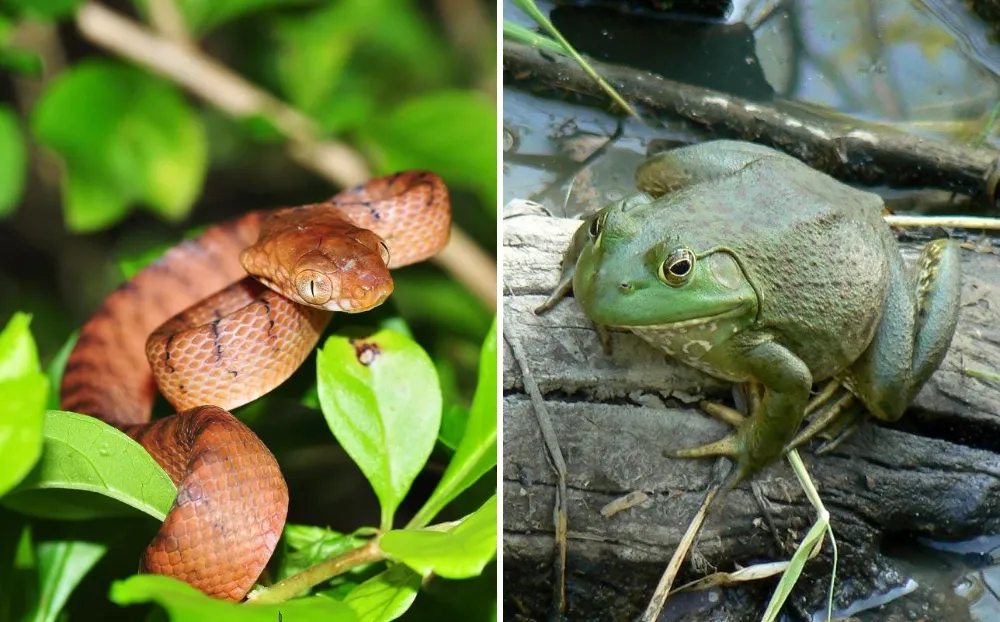
Snakes and frogs belong to different vertebrate groups, with important differences in their skin and reproductive biology.
Why Is Correct Animal Classification Important?
Scientific classification helps researchers understand evolutionary relationships and biological diversity.
Knowing that snakes are reptiles helps explain their anatomy, physiology, and relationship to other squamates.
Distinguishing reptiles from amphibians is also useful in ecology and conservation.
Amphibians often face particular risks associated with their permeable skin and dependence on suitable moisture conditions.
Snakes may face different challenges involving habitat loss, persecution, prey availability, and environmental temperature.
These categories are broad, and the conservation needs of individual species still differ.
Accurate classification provides a foundation for asking more specific biological questions.
Frequently Asked Questions
Is a snake a reptile or amphibian?
A snake is a reptile. All living snakes belong to the squamate reptile lineage, not Amphibia.
Why is a snake a reptile?
Snakes have reptilian evolutionary ancestry, keratinized scales, lungs, and amniote reproductive biology.
What class does a snake belong to?
In traditional zoological classification, snakes belong to Reptilia.
Are snakes amphibians because they swim?
No. Swimming or living near water does not determine whether an animal is an amphibian.
Is a water snake a reptile?
Yes. Water snakes are reptiles, even when they spend much of their time in aquatic habitats.
Is a sea snake a reptile?
Yes. Sea snakes are highly specialized marine reptiles that breathe air through lungs.
Are snakes related to lizards?
Yes. Snakes and lizards both belong to the order Squamata.
Do snakes have scales?
Yes. Snakes have keratinized scales that protect the skin and contribute to movement.
Do snakes breathe through their skin?
Snakes use lungs for respiration. They do not rely on the extensive skin-based gas exchange typical of many amphibians, although limited cutaneous gas exchange occurs in some aquatic snakes.
Do snakes lay eggs?
Many snakes lay eggs, but others give birth to live young. Both reproductive strategies occur among reptiles.
Are snakes cold-blooded?
Snakes are ectothermic, meaning environmental heat sources play an important role in regulating their body temperature.
Are caecilians snakes?
No. Caecilians are legless amphibians. Their resemblance to snakes results from similar body shapes, not membership in the same evolutionary group.
What is the main difference between reptiles and amphibians?
Reptiles belong to the amniote lineage and generally have keratinized outer skin. Modern amphibians are non-amniotes, usually with moist glandular skin and different reproductive adaptations.
Are snakes closer to frogs or lizards?
Snakes are much more closely related to lizards because both belong to Squamata.
The Bottom Line
Snakes are reptiles, not amphibians.
Their scaly skin, lung-based respiration, amniote reproductive ancestry, and close evolutionary relationship with lizards clearly establish their classification.
Although some snakes live in water and some legless amphibians resemble snakes, habitat and body shape alone do not determine an animal's scientific group.
Understanding the differences between reptiles and amphibians provides a clearer picture of how these remarkable vertebrates evolved and adapted to life on Earth.
Sources & Further Reading
The following museum and zoological resources explain snake classification, reptile anatomy, amphibian characteristics, and evolutionary relationships.
American Museum of Natural History — Lizards and Snakes. Describes the squamate lineage, scaly skin, and the biological characteristics of snakes and lizards.
American Museum of Natural History — Ask a Scientist About Cuba's Reptiles and Amphibians. Explains major differences between reptiles and amphibians.
Smithsonian's National Zoo — Happy Amphibian Week 2025. Explains amphibian skin and the importance of cutaneous respiration.
University of Michigan Animal Diversity Web — Reptilia. Describes reptile biology, amniotic reproduction, and evolutionary relationships.
American Museum of Natural History — Tree of Life. Illustrates evolutionary relationships among major animal lineages.
Smithsonian National Museum of Natural History — Amphibians & Reptiles. Provides scientific background on systematics and the study of these vertebrates.