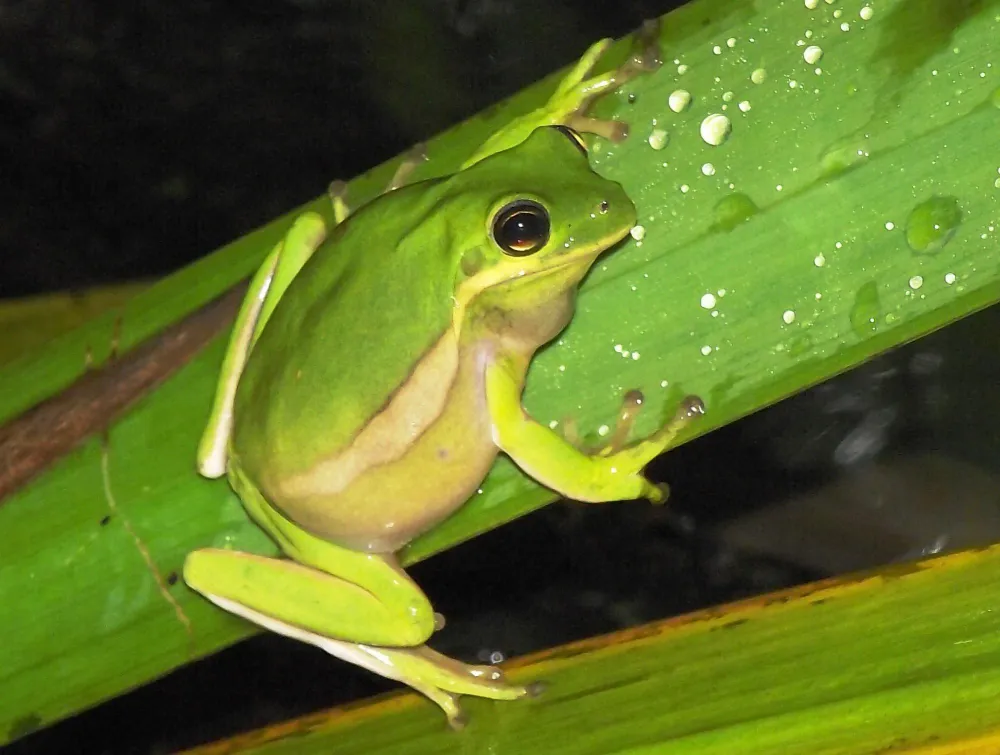
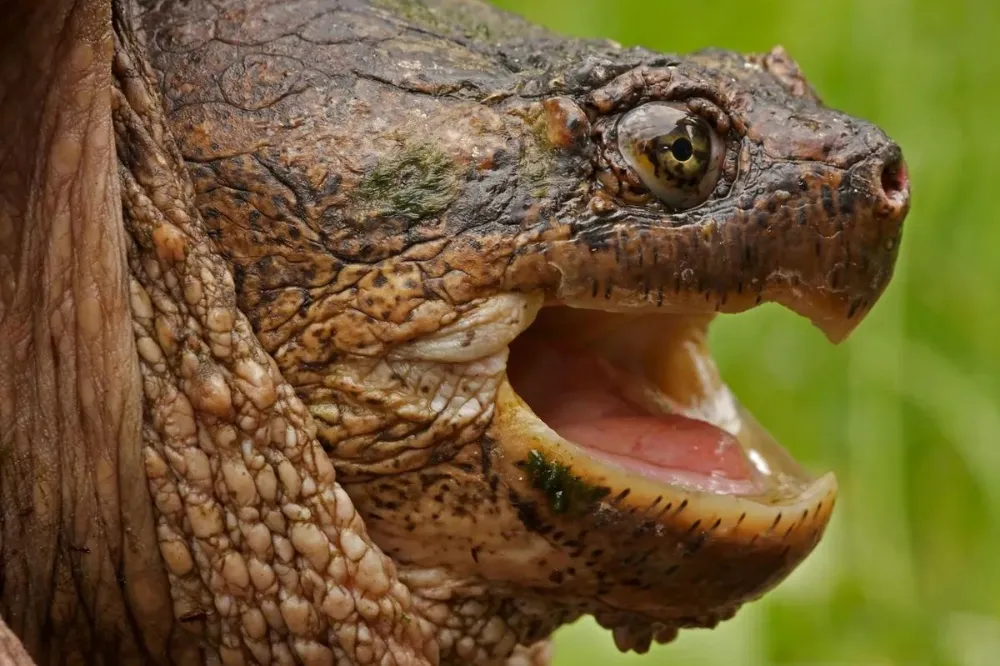
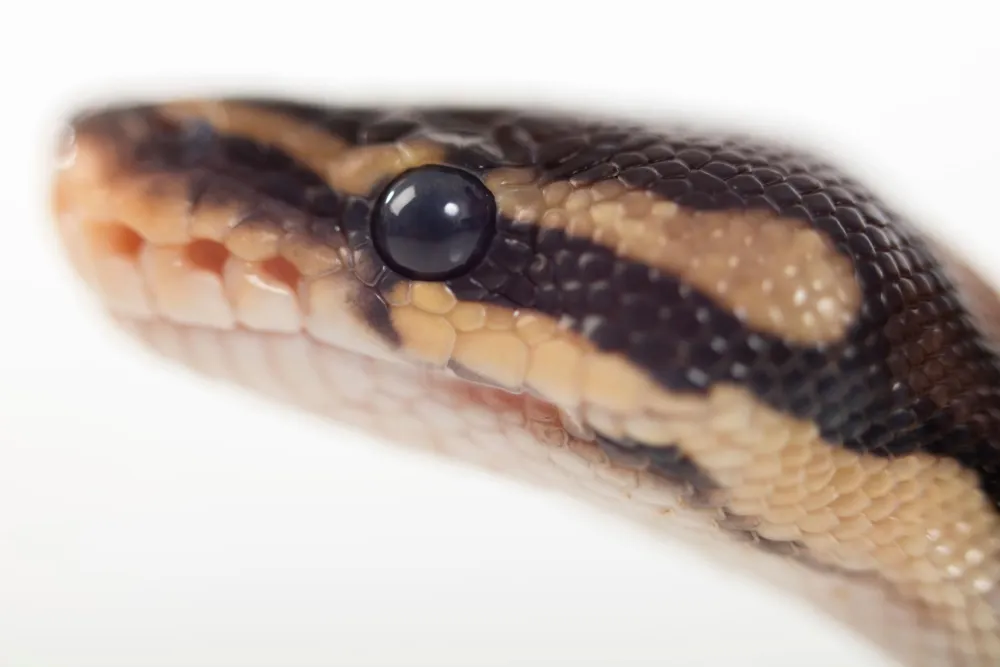
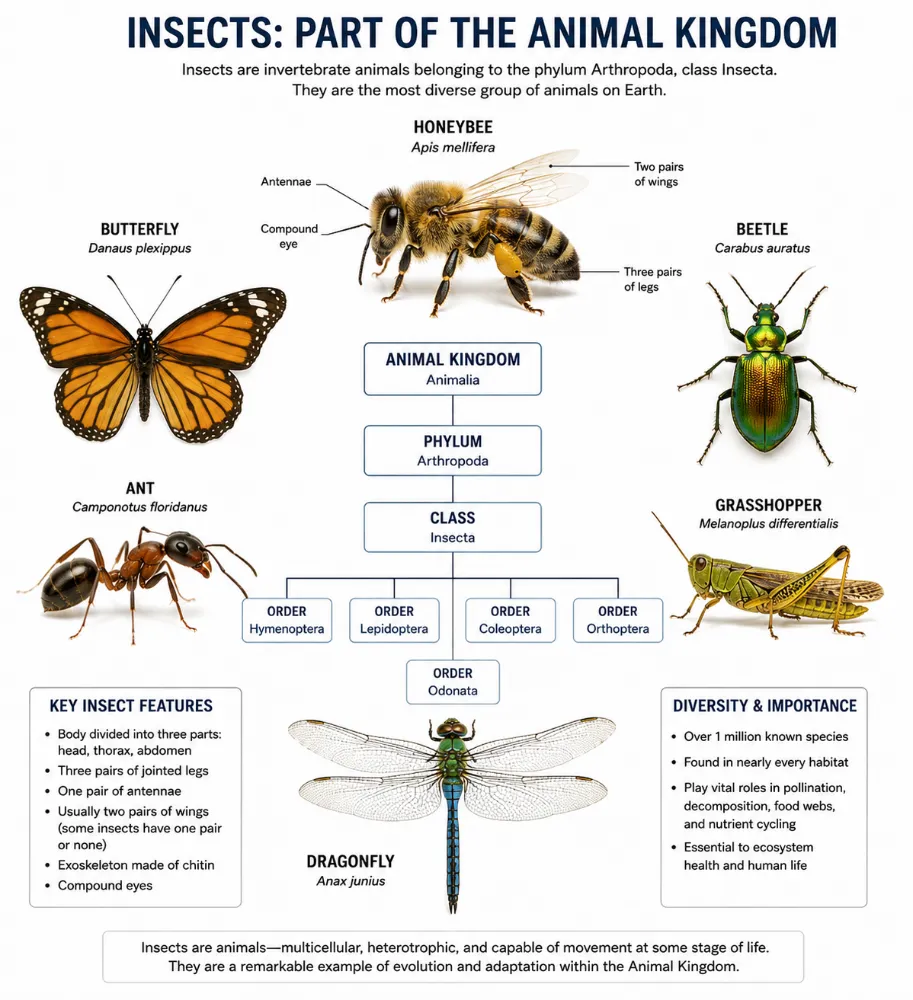
Yes, insects are animals. Insects belong to the animal kingdom, Animalia, because they are multicellular living organisms that eat organic matter, move during at least part of their life cycle, develop from embryos, and have specialized body systems. More specifically, insects are invertebrate animals, arthropods, and members of the class Insecta. A butterfly, ant, bee, beetle, mosquito, grasshopper, and fly are all animals.
Quick Answer Table
| Question | Answer |
|---|---|
| Are insects animals? | Yes, insects are animals. |
| Animal kingdom | Animalia |
| Major group | Invertebrates |
| Phylum | Arthropoda |
| Class | Insecta |
| Body plan | Head, thorax, abdomen |
| Legs | Six legs as adults |
| Skeleton type | External skeleton, called an exoskeleton |
| Are insects mammals? | No, mammals are a different animal group. |
| Are all bugs insects? | No. Some “bugs” are insects, but many small creatures called bugs are not true insects. |
Why Insects Are Animals
Insects are animals because they meet the biological requirements for membership in the animal kingdom. Animals are multicellular organisms that must get energy by consuming other organisms or organic material. They are not plants, fungi, bacteria, or single-celled protists.
Insects fit this definition clearly. They have bodies made of many specialized cells. They eat plant material, nectar, blood, fungi, decaying matter, other insects, or other organic food depending on the species. They move, respond to their environment, reproduce, and develop through complex life cycles.
The fact that insects are small, have exoskeletons, and look very different from mammals does not make them less animal. A beetle is just as much an animal as a dog, bird, frog, fish, or whale. It simply belongs to a different branch of the animal kingdom.
What Is an Animal?
In biology, an animal is a member of the kingdom Animalia. Animals are living organisms with several shared features. They are multicellular, meaning their bodies are made of many cells. They are heterotrophic, meaning they get food by consuming other organisms or organic material. They usually have the ability to move during at least part of their life cycle.
Animals also develop from embryos and have cells without rigid cell walls. This separates them from plants, which have cell walls and make their own food through photosynthesis. It also separates them from fungi, which absorb nutrients and have different cell structures.
Because insects have animal-type cells, eat organic material, move, reproduce, and develop from embryos, they are scientifically classified as animals.
Where Insects Fit in Animal Classification
Insects belong to a very large branch of the animal kingdom. Their classification shows exactly where they fit.
| Classification Level | Insects |
|---|---|
| Kingdom | Animalia |
| Major body type | Invertebrate animals |
| Phylum | Arthropoda |
| Subphylum | Hexapoda |
| Class | Insecta |
This means insects are animals first, invertebrates second, arthropods third, and insects more specifically. Their closest relatives include other arthropods such as spiders, scorpions, mites, crabs, shrimp, millipedes, and centipedes, although not all of these are insects.
Insects Are Invertebrate Animals
Insects are invertebrates, meaning they do not have a backbone. This is one reason people sometimes forget they are animals. Many people casually associate the word “animal” with mammals, birds, reptiles, amphibians, or fish. Those animals are vertebrates because they have backbones.
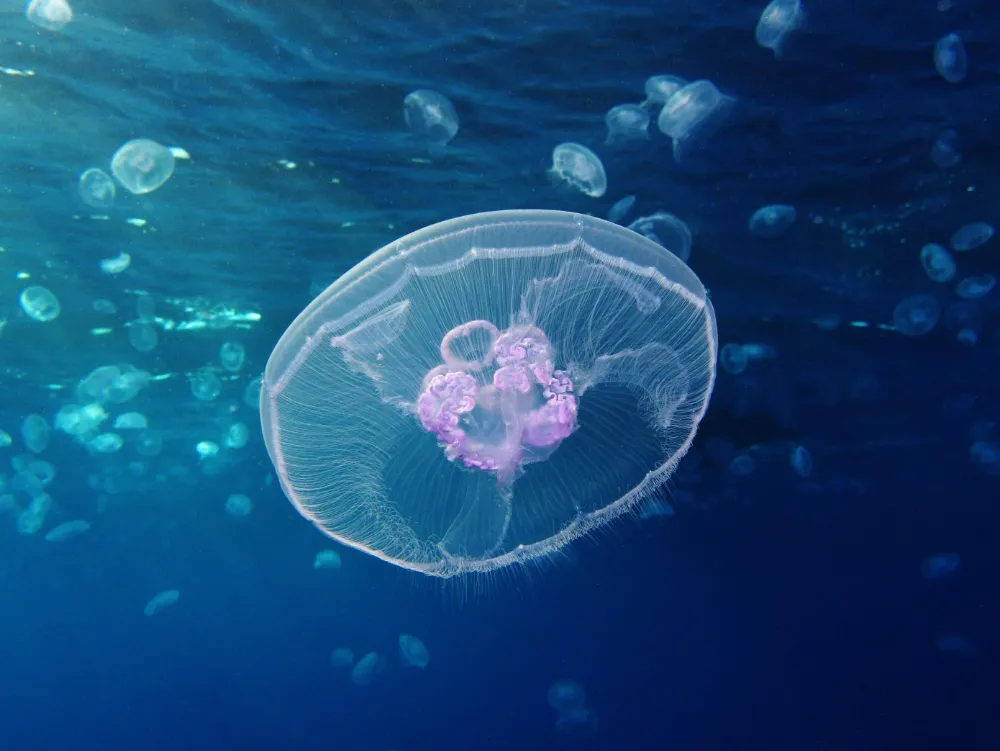
However, most animal species on Earth are invertebrates. This huge category includes insects, spiders, worms, snails, clams, octopuses, jellyfish, corals, sea stars, and many other animals without backbones.
So the absence of a backbone does not mean an organism is not an animal. It simply means it is not a vertebrate.
Insects Are Arthropods
Insects are also arthropods. Arthropods are animals with segmented bodies, jointed legs, and hard external skeletons called exoskeletons. The name “arthropod” means “jointed foot,” which describes one of the group’s most important features.
Other arthropods include spiders, scorpions, crabs, lobsters, shrimp, centipedes, and millipedes. These animals all have exoskeletons and jointed appendages, but they are not all insects.
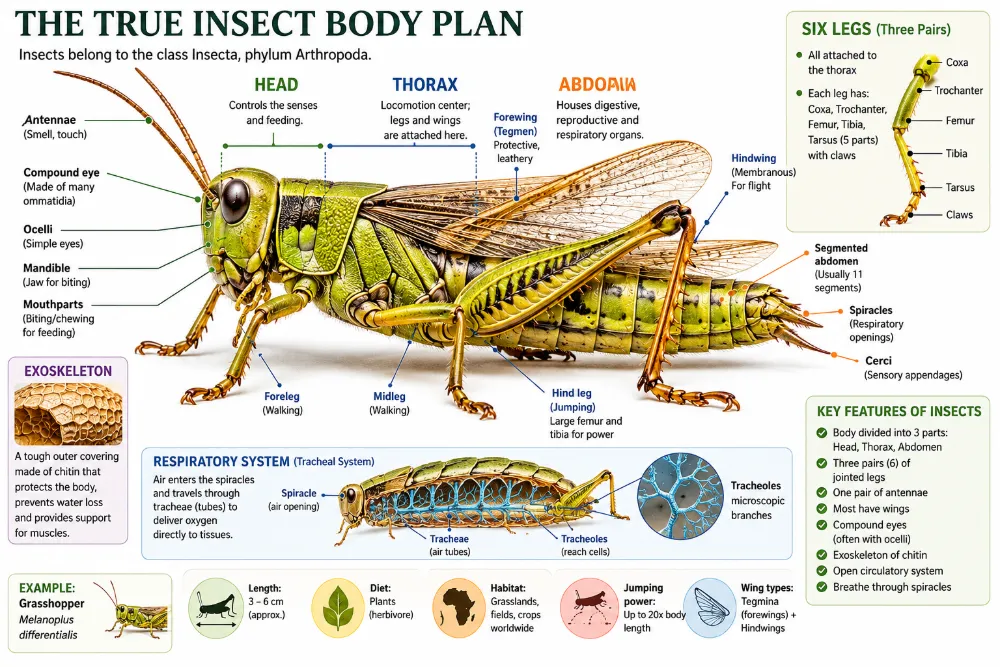
Insects are the six-legged arthropods. Their adult body plan usually includes three main body sections: head, thorax, and abdomen. This body plan is one of the easiest ways to recognize an insect.
What Makes an Insect an Insect?
Not every tiny crawling animal is an insect. A true insect has a specific body plan. Adult insects usually have three body regions: the head, thorax, and abdomen. They also have six legs attached to the thorax.
Most adult insects have one pair of antennae. Many also have compound eyes, simple eyes, wings, and specialized mouthparts. Some insects chew, some suck, some pierce, some lap liquids, and some feed only as larvae and do not eat as adults.
The basic insect checklist is simple: three body parts, six legs, one pair of antennae, and an exoskeleton. Wings are common but not required, because some insects are wingless.
Are Spiders Insects?
No, spiders are not insects, but they are animals. Spiders are arachnids, another group of arthropods. They have eight legs, two main body sections, no antennae, and no wings.
Insects have six legs, three main body sections, and one pair of antennae. This makes them different from spiders, scorpions, ticks, and mites.
A good rule is: insects have six legs; spiders have eight legs. Both are animals, but only insects belong to the class Insecta.
Are Worms Insects?
No, worms are not insects, but many worms are animals. Earthworms, for example, are annelids. They have soft segmented bodies but no legs, no exoskeleton, and no insect-style head, thorax, and abdomen.
Some insect larvae may look worm-like. Caterpillars, maggots, and grubs are young insects, even though they do not yet look like adult insects. A caterpillar is the larval stage of a butterfly or moth. A maggot is the larval stage of a fly. A grub is often the larval stage of a beetle.
This is why life cycle matters. Some animals that look like worms are actually immature insects.
Are Bugs and Insects the Same?
In everyday language, people often use “bug” to mean almost any small crawling or flying animal. They may call spiders, centipedes, mites, ticks, beetles, flies, and even tiny crustaceans “bugs.” In casual speech, that is common.
Scientifically, however, “true bugs” are a specific group of insects in the order Hemiptera. True bugs include aphids, cicadas, shield bugs, stink bugs, water striders, assassin bugs, and bed bugs. They usually have piercing-sucking mouthparts.
So all true bugs are insects, but not all insects are true bugs. Beetles, butterflies, bees, ants, grasshoppers, flies, and dragonflies are insects, but they are not true bugs in the strict scientific sense.
Are Insects Animals or Something Else?
Insects are animals, not plants, fungi, or bacteria. They do not make their own food from sunlight like plants. They do not absorb nutrients the way fungi do. They are not single-celled organisms like bacteria.
Insects eat, move, sense, breathe, grow, molt, reproduce, and interact with ecosystems as animals. They may look very different from familiar pets or wildlife, but their classification is clear.
A butterfly is an animal. A cockroach is an animal. A honeybee is an animal. A mosquito is an animal. A beetle is an animal. Their small size does not change their biological identity.
How Insects Breathe
Insects do not breathe with lungs like mammals. Instead, they breathe through a network of tiny tubes called tracheae. Air enters the body through openings called spiracles, usually located along the sides of the body.
Oxygen travels through the tracheal system directly to tissues. This breathing system works very well for small animals, but it also helps explain why insects cannot simply grow to the size of elephants. Their body design is adapted to small size.
This unusual breathing system is one reason insects seem so different from mammals. But different does not mean non-animal. It simply shows that animal bodies can be built in many ways.
How Insects Grow
Insects have exoskeletons, which means their hard support structure is on the outside of the body. This exoskeleton protects them, supports their muscles, and helps prevent water loss.
Because the exoskeleton cannot stretch much, insects must molt as they grow. During molting, the insect sheds its old outer covering and forms a larger new one. This process is risky because the insect is soft and vulnerable until the new exoskeleton hardens.
Some insects change gradually as they grow. Others undergo complete metamorphosis, transforming from egg to larva to pupa to adult. Butterflies, beetles, flies, ants, bees, and wasps all undergo complete metamorphosis.
Insect Life Cycles
Insects have some of the most fascinating life cycles in the animal kingdom. A butterfly begins as an egg, becomes a caterpillar, forms a chrysalis, and emerges as a winged adult. A beetle may begin as a grub, pupate underground or in wood, and later emerge with hardened wing covers.
Other insects, such as grasshoppers and cockroaches, develop through incomplete metamorphosis. Their young, called nymphs, look somewhat like smaller versions of the adults. They grow through molts until they become mature.
These life cycles are animal development, not plant growth. An insect egg, larva, pupa, nymph, and adult are all stages of an animal’s life.
Why People Think Insects Are Not Animals
Many people think of animals mainly as mammals, birds, reptiles, amphibians, and fish. These animals are easier to relate to because they have faces, bones, organs, and behaviors that seem more familiar to humans.
Insects can feel different because they are small, have exoskeletons, many legs, compound eyes, antennae, and unusual life cycles. Some people also use the word “animal” in everyday language to mean “large animal” or “wild mammal.”
Biology uses the word more broadly. In science, animals include both vertebrates and invertebrates. That means insects are animals, even if they do not look like dogs, cats, deer, or birds.
Are Insects the Most Common Animals?
Insects are among the most diverse and abundant animals on Earth. There are more described insect species than any other animal group, and many more species remain undiscovered or undescribed.
Beetles alone represent an enormous number of species. Flies, wasps, bees, ants, butterflies, moths, grasshoppers, termites, and true bugs also add huge diversity. Insects live in forests, deserts, grasslands, caves, freshwater habitats, farms, cities, mountains, and even polar regions during warmer seasons.
Although tiny individually, insects are one of the dominant forms of animal life on the planet.
Why Insects Matter in Ecosystems
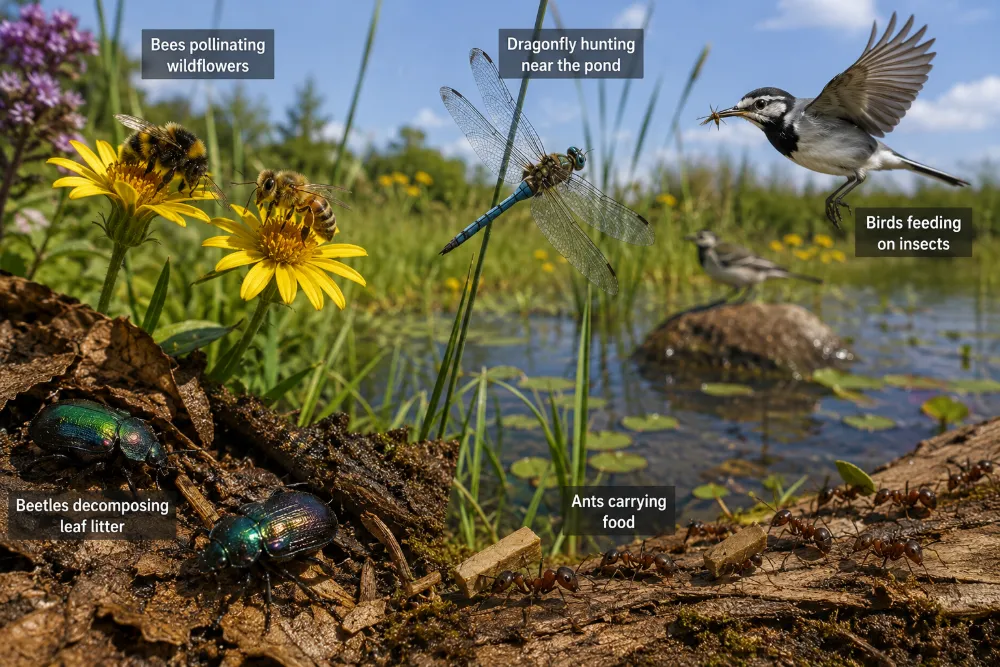
Insects are essential to ecosystems. Many pollinate flowering plants, including crops and wildflowers. Bees, butterflies, moths, beetles, flies, and wasps all contribute to pollination in different ways.
Other insects decompose dead plants, dead animals, dung, and fallen leaves. Termites, beetles, ants, and fly larvae help recycle nutrients back into soil. Without decomposer insects, ecosystems would be much less efficient at breaking down organic matter.
Insects are also food for countless animals. Birds, bats, fish, frogs, lizards, spiders, rodents, primates, and many other creatures depend on insects as prey. Insects are small animals that support much larger food webs.
Are Insects Sentient?
Insects have nervous systems and can sense their environment. They respond to light, smell, touch, vibration, temperature, chemicals, food, mates, and predators. Many insects show complex behaviors such as navigation, communication, learning, nest building, and social cooperation.
Whether insects experience pain or consciousness in the same way vertebrates do is a complex scientific question. It is safest to say that insects are not simple machines. They are living animals with nervous systems and behavior shaped by evolution.
For ethical and scientific reasons, insects should be treated as living animals, even though their inner experiences may differ greatly from those of mammals or birds.
Examples of Insects That Are Animals
| Insect | Why It Is an Animal |
|---|---|
| Honeybee | Multicellular, moves, eats nectar and pollen, has organs and a nervous system |
| Butterfly | Develops from egg to caterpillar to pupa to adult, feeds and reproduces |
| Ant | Social animal with complex behavior, movement, feeding, and communication |
| Beetle | Has a segmented animal body, six legs, exoskeleton, and complete life cycle |
| Dragonfly | Predatory insect with compound eyes, wings, legs, and aquatic young |
| Grasshopper | Plant-eating insect with jointed legs, antennae, and animal-type development |
| Mosquito | Small flying insect with animal tissues, organs, movement, and reproduction |
Insects vs Mammals
Insects and mammals are both animals, but they are very different kinds of animals. Mammals have backbones, internal skeletons, hair or fur, lungs, warm-blooded bodies, and mothers that produce milk for their young.
Insects have no backbone, no bones, no milk glands, no hair in the mammal sense, and no lungs like ours. They have exoskeletons, six legs, antennae, compound eyes, and tracheal breathing systems.
The difference is not animal versus non-animal. The difference is invertebrate animal versus vertebrate animal. Insects and mammals are both part of Animalia, but they represent very different evolutionary designs.
Insects vs Plants
Insects are sometimes found on plants, feed on plants, or look leaf-like, but they are not plants. Plants make their own food using sunlight, carbon dioxide, and water. They have cell walls and chloroplasts.
Insects must eat organic material. They do not photosynthesize. Even insects that look like leaves, sticks, bark, or flowers are still animals. Their plant-like appearance is camouflage, not plant biology.
A leaf insect may look like a leaf, but it walks, feeds, molts, senses, and reproduces like an animal.
Insects vs Fungi
Insects are not fungi. Fungi include mushrooms, molds, yeasts, and related organisms. Fungi absorb nutrients from their surroundings and have cell walls made largely of chitin.
Interestingly, insects also use chitin in their exoskeletons, but that does not make them fungi. Chitin is a material used by different organisms in different ways.
Insects are active animals with muscles, nerves, digestive systems, and reproductive organs. Fungi have a completely different body organization and way of obtaining food.
Simple Classification Checklist
| Question | Insect Answer |
|---|---|
| Is it multicellular? | Yes |
| Does it eat organic material? | Yes |
| Does it belong to Animalia? | Yes |
| Does it have a backbone? | No |
| Is it an invertebrate? | Yes |
| Is it an arthropod? | Yes |
| Does an adult insect have six legs? | Yes |
| Is it a mammal? | No |
| Is it still an animal? | Yes |
Final Verdict: Are Insects Animals?
Insects are absolutely animals. They belong to the kingdom Animalia, the phylum Arthropoda, and the class Insecta. They are invertebrate animals with six legs, three main body regions, antennae, exoskeletons, and complex life cycles.
The confusion usually comes from everyday language. Many people use “animal” to mean mammals or large vertebrates, but science uses the word more broadly. Insects may be small and strange-looking, but they are among the most successful, diverse, and ecologically important animals on Earth.
FAQs About Insects and Animals
Are insects considered animals?
Yes. Insects are animals. They belong to the animal kingdom, Animalia.
Why are insects animals?
Insects are animals because they are multicellular organisms that eat organic matter, move, reproduce, develop from embryos, and have specialized body systems.
Are insects mammals?
No. Insects are not mammals. Mammals are vertebrate animals with hair or fur and milk-producing mothers. Insects are invertebrate arthropods.
Are insects invertebrates?
Yes. Insects are invertebrates because they do not have backbones.
Are insects arthropods?
Yes. Insects are arthropods. They have jointed legs, segmented bodies, and external skeletons.
Are spiders insects?
No. Spiders are not insects. They are arachnids. Spiders have eight legs, while insects have six legs.
Are bugs animals?
Yes, true bugs are animals because they are insects. In casual language, many small creatures called “bugs” are also animals, but not all are true insects.
Are butterflies animals?
Yes. Butterflies are insects, and insects are animals.
Are ants animals?
Yes. Ants are social insects and therefore animals.
Are bees animals?
Yes. Bees are insects, so they are animals. They are also important pollinators in many ecosystems.
Are mosquitoes animals?
Yes. Mosquitoes are insects and therefore animals, even though they are very small.
What is the difference between insects and animals?
There is no strict opposition between insects and animals because insects are animals. The better comparison is insects versus mammals, insects versus spiders, or insects versus other animal groups.