What is a bioactive terrarium? A bioactive terrarium is an animal enclosure that uses living soil, plants, microorganisms and small invertebrates to help recycle organic waste. Instead of relying entirely on artificial decorations and frequently replaced bedding, it incorporates some of the biological processes found in natural ecosystems.
One of the most interesting features is the clean-up crew: tiny animals such as springtails and isopods that feed on decaying organic material.
But does this mean you never need to clean a bioactive terrarium?
No. A bioactive terrarium can reduce certain cleaning tasks, but it is not completely self-cleaning. Waste removal, water changes, plant care, temperature monitoring and general hygiene remain essential.
Understanding how a bioactive enclosure works is the first step toward building one that benefits the animals living inside it.
What Does a Bioactive Terrarium Look Like?
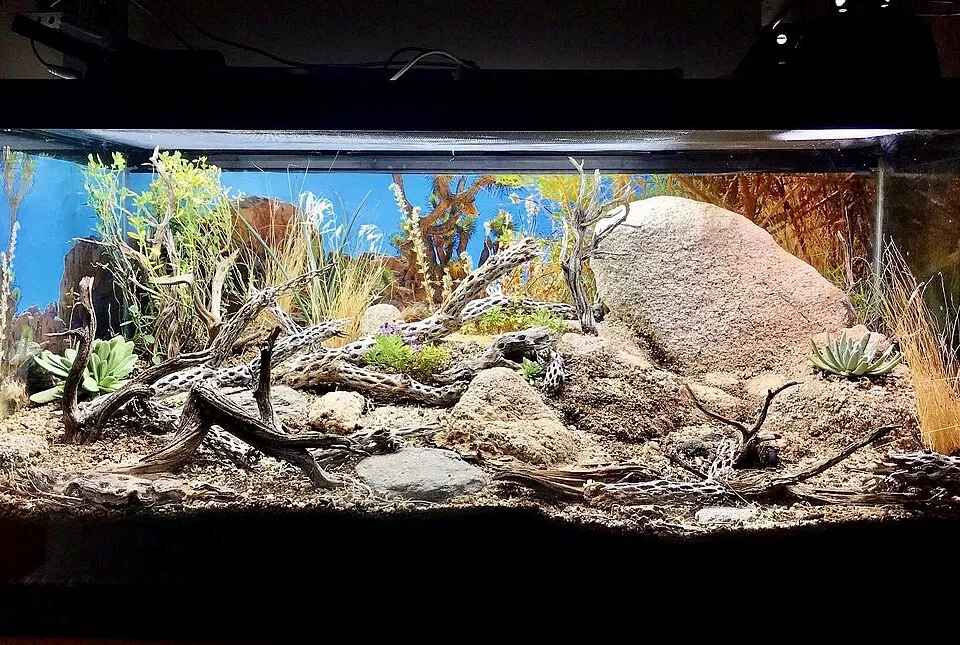
Bioactive arid vivarium designed for leopard geckos. Photo: Connor Long / Wikimedia Commons, CC BY-SA 4.0. The enclosure contains live plants and microfauna.
This photograph shows a bioactive enclosure designed for a relatively dry environment.
Notice the combination of soil, rocks, branches, live vegetation and areas where small organisms can live beneath the surface.
Unlike a decorative terrarium containing only plastic plants, a functioning bioactive habitat includes living organisms that interact with one another.
The goal is not simply to create an attractive display. It is to provide a suitable habitat for the main animal while supporting biological processes in the enclosure.
How Does a Bioactive Terrarium Work?
A successful bioactive system depends on several interconnected components.
| Component | Main Function |
|---|---|
| Living substrate | Supports roots, microorganisms and decomposer animals. |
| Live plants | Provide shelter, absorb nutrients and contribute to the enclosure's environment. |
| Springtails | Feed on fungal growth, microorganisms and decomposing organic matter. |
| Isopods | Consume leaf litter and other organic material. |
| Bacteria and fungi | Help break down organic matter and recycle nutrients. |
| Lighting and moisture | Support suitable conditions for plants, microorganisms and the primary animal. |
| Primary animal | Uses the enclosure as its habitat and contributes organic waste to the system. |
When leaves fall, plant material decays or animal waste enters the substrate, decomposers and microorganisms help break some of that material down.
The resulting nutrients may become available to plants and other organisms.
However, the system is not completely closed. Food, light, water and maintenance are still provided from outside.
A bioactive terrarium is best understood as a managed miniature ecosystem, not a maintenance-free replacement for responsible animal care.
What Is a Bioactive Clean-Up Crew?
A clean-up crew, often abbreviated CUC, is a collection of small organisms that consume and process organic material inside the enclosure.
Springtails and terrestrial isopods are among the most frequently used animals.
They perform different but complementary ecological roles.
Springtails: Tiny Animals That Help Control Fungal Growth
Springtails belong to the group Collembola. They are tiny six-legged arthropods, generally classified separately from true insects.
Many springtails feed on fungi, microorganisms and decomposing plant material.
Because they can consume some fungal growth, they are often valuable in moist terrarium substrates.
One species commonly used in captive cultures is Folsomia candida, a small, pale springtail.
Springtails need suitable moisture and shelter. Completely dry conditions can cause populations of many commonly kept species to decline.
They also cannot solve every mold or hygiene problem. Persistent excessive fungal growth may indicate poor ventilation, excessive moisture or too much decaying material.
Isopods: Small Crustaceans That Recycle Organic Matter
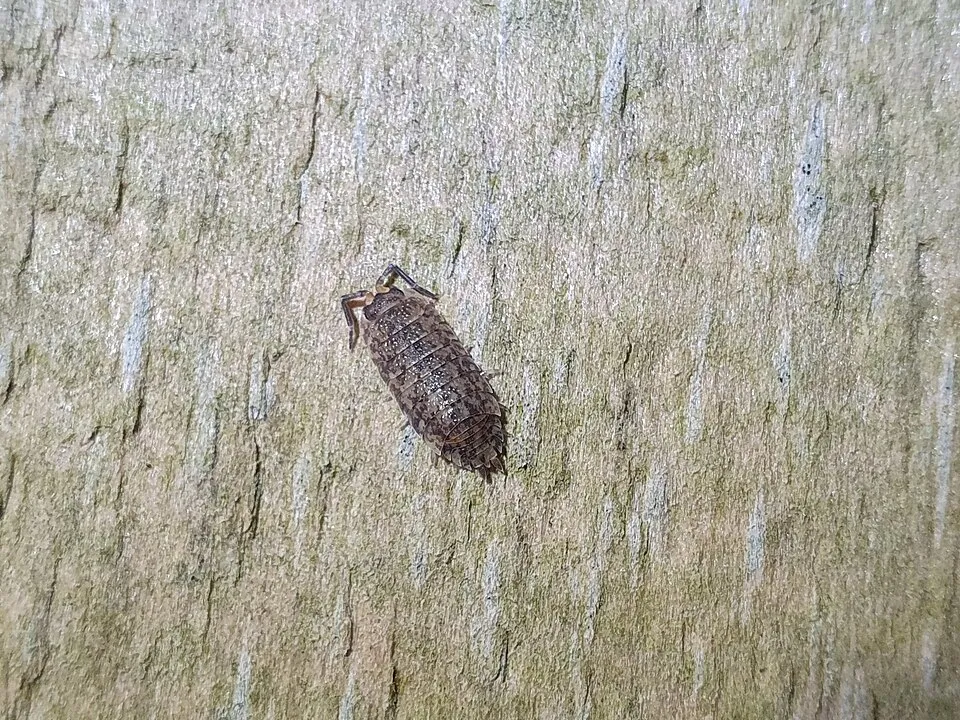
Common rough woodlouse (Porcellio scaber). Photo: Jaco Grundling / Wikimedia Commons, CC0 1.0. This is a species photograph, not a picture taken inside a bioactive terrarium.
Isopods are crustaceans related to shrimp and crabs.
Common names include woodlice, sowbugs, pillbugs and roly-polies, although these names refer to different groups of terrestrial isopods.
Many species feed on dead plant material and other organic debris, helping fragment larger pieces into smaller material that microorganisms can process.
Isopods also need appropriate moisture conditions. Even species adapted to relatively dry habitats usually require access to moist microhabitats.
Not every isopod species is suitable for every enclosure.
Some species may reproduce rapidly, disturb plants or occasionally cause problems for vulnerable small reptiles and amphibians. Species selection matters.
Springtails vs. Isopods: What's the Difference?
| Feature | Springtails | Isopods |
|---|---|---|
| Animal group | Collembola, small hexapod arthropods | Crustaceans, order Isopoda |
| Typical size | Often around 1–3 mm in common cultures | Often several millimeters to over 1 cm |
| Main food | Fungi and decomposing organic material | Leaf litter and other organic debris |
| Moisture needs | Generally need damp microhabitats | Need moisture, with requirements varying by species |
| Main contribution | Helps process fine organic material and fungal growth | Helps break down larger pieces of organic matter |
| Can replace cleaning? | No | No |
Using both groups can help process a broader range of organic material.
However, the correct organisms depend on the temperature, humidity, substrate and animals living in the enclosure.
Are Bioactive Terrariums Really Self-Cleaning?
Only partially.
A healthy clean-up crew may process small pieces of organic waste and fallen leaves, but it cannot guarantee removal of every contaminant.
Some waste can accumulate faster than decomposers can process it.
Food scraps may rot, water dishes can become contaminated, and harmful microorganisms or parasites may still be present.
Reptile husbandry specialists emphasize that bioactive enclosures still need regular monitoring and maintenance.
What the Clean-Up Crew Can Help With
Breaking down fallen leaves and decaying plant material.
Processing some small pieces of animal waste.
Consuming certain fungi and microorganisms.
Supporting nutrient recycling within the substrate.
What You Still Need to Do
Remove large droppings and uneaten food promptly.
Wash and refill the water dish regularly.
Check for excessive mold, pests and unusual odors.
Monitor humidity, temperatures and ventilation.
Prune or replace unhealthy plants.
Inspect the clean-up crew and substrate condition.
Seek veterinary advice if the resident animal appears ill.
A useful principle is that the clean-up crew should support hygiene, not replace it.
Bioactive vs. Traditional Terrariums
| Feature | Bioactive | Traditional |
|---|---|---|
| Substrate | Living substrate with microorganisms | Paper, bark, fiber or other selected bedding |
| Plants | Usually live plants | Live or artificial plants |
| Decomposers | Present as part of the system | Not deliberately maintained |
| Waste management | Partial biological processing plus manual care | Mostly manual cleaning and substrate replacement |
| Initial setup | More complex | Often simpler |
| Health monitoring | Some waste or parasites can be harder to observe | Often easier with simple substrate |
| Maintenance | Ongoing biological and equipment management | Regular cleaning and bedding maintenance |
Neither approach is automatically better for every animal.
For example, a temporary quarantine enclosure may benefit from easily replaceable paper substrate because droppings and signs of illness are easier to inspect.
The ideal enclosure depends on the animal's biological needs and health, rather than the popularity of a particular style.
What Does a Tropical Bioactive Vivarium Look Like?
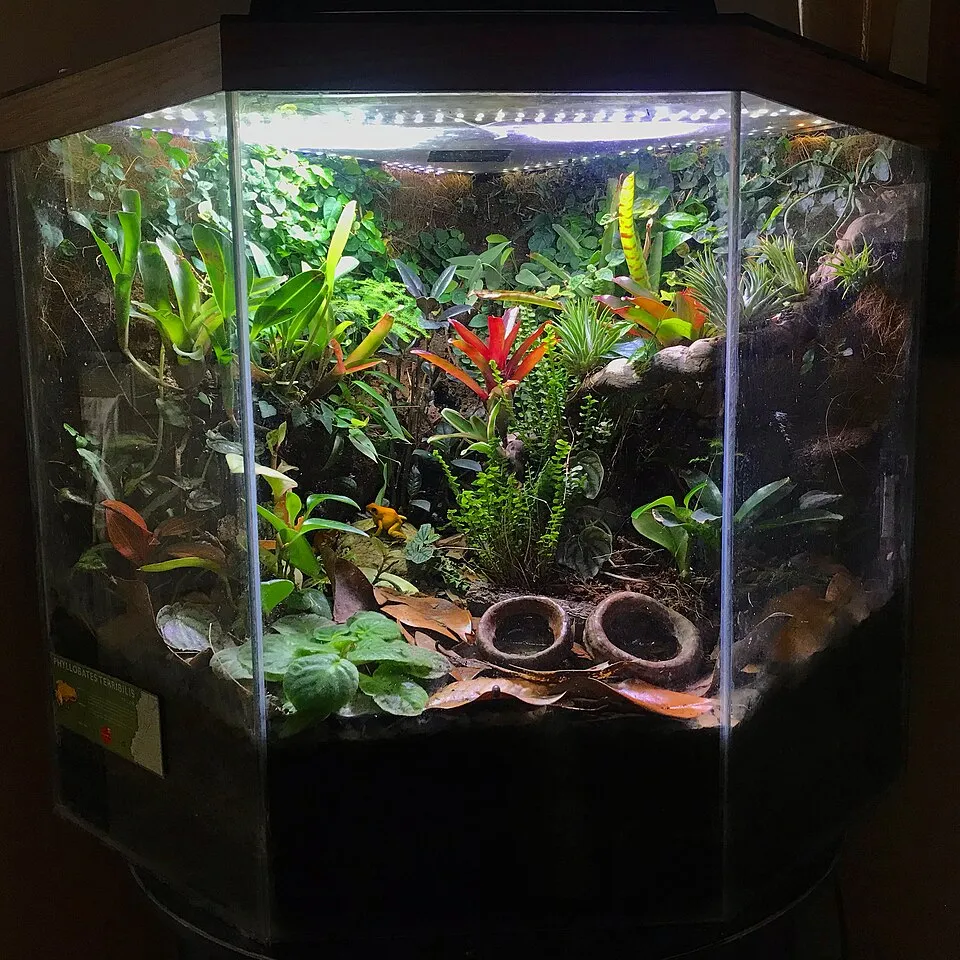
Bioactive vivarium housing golden poison frogs (Phyllobates terribilis). Photo: Connor Long / Wikimedia Commons, CC BY-SA 4.0.
This photograph shows a tropical-style bioactive enclosure with dense live plants, branches, leaf litter and a humid environment.
It looks very different from the arid vivarium shown earlier.
The difference is intentional. Species from tropical forests have different environmental requirements from animals adapted to relatively dry habitats.
A tropical enclosure may require moisture-retaining substrate, appropriate drainage, live plants and careful ventilation.
A dry-climate enclosure may instead need less overall moisture while still providing suitable humid refuges for the animal and its decomposers.
Never copy another terrarium's humidity or temperature settings without checking the needs of the species you intend to keep.
Which Animals Can Live in Bioactive Terrariums?
Bioactive enclosures can be designed for various reptiles and amphibians, but suitability depends on the species and its health.
Examples of animals sometimes housed in suitable bioactive environments include:
| Animal | Potential Habitat Style | Important Consideration |
|---|---|---|
| Crested gecko | Planted, vertically structured enclosure | Climbing space, ventilation and species-appropriate humidity |
| Leopard gecko | Arid or semi-arid bioactive setup | Thermal gradient, suitable substrate and humid shelter |
| Corn snake | Naturalistic planted enclosure | Secure housing, hides, proper temperature and moisture |
| Some dart frogs | Tropical planted vivarium | Species-specific humidity, water and hygiene requirements |
| Some bearded dragons | Appropriately designed dry habitat | High-quality lighting, thermal gradients and safe plants |
These are examples, not universal setup instructions. The specific animal's needs must determine the enclosure design.
For general reptile biology and care topics, explore our Reptile Pets guides.
You can also read our Corn Snake Care Guide for a broader discussion of enclosure security, heating, hides and husbandry.
How to Plan a Bioactive Terrarium Safely
Before buying plants, soil or clean-up crew animals, decide which reptile or amphibian the enclosure is intended to house.
Step 1: Research the Primary Animal
Identify its temperature range, humidity requirements, UVB and lighting needs, space requirements, dietary needs and normal behavior.
Use veterinary or specialist husbandry resources rather than copying an attractive enclosure from social media.
Step 2: Choose a Suitable Enclosure
Provide sufficient floor area or climbing height for the species.
The enclosure must also be secure, ventilated and able to maintain appropriate environmental conditions.
Step 3: Plan the Substrate
Select a substrate appropriate to the resident animal and the organisms that will live in it.
Some tropical enclosures benefit from a drainage system, while other habitats may be better designed without a conventional drainage layer.
A drainage layer does not eliminate the need to monitor excess water.
Step 4: Add Safe Plants and Furnishings
Choose plants compatible with the species and the enclosure's lighting, temperature and moisture conditions.
Avoid toxic plants and materials contaminated with pesticides or unsuitable fertilizers.
Provide hides, branches and other structures appropriate to the animal's natural behavior.
Step 5: Introduce a Suitable Clean-Up Crew
Springtails and isopods should be selected according to the habitat conditions and the resident animal.
Provide leaf litter, shelter and moisture conditions that allow them to survive.
Do not release unwanted cultured organisms into the wild.
Step 6: Allow the System to Establish
Give plants time to root and decomposer populations time to adapt before introducing the primary animal.
There is no single establishment period that applies to every system.
Test temperatures, humidity, ventilation and other conditions regularly during this period.
Step 7: Continue Routine Care
After the animal is introduced, maintain the same careful health monitoring required in any other enclosure.
Bioactive does not mean you can stop checking equipment, cleaning water dishes or examining the animal's condition.
Why Do Some Bioactive Terrariums Fail?
Even carefully designed systems can develop problems.
| Problem | Possible Causes | What to Check |
|---|---|---|
| Clean-up crew disappears | Inappropriate moisture, temperature or insufficient food and shelter | Microhabitats, leaf litter and species suitability |
| Persistent excessive mold | Too much moisture, poor ventilation or accumulated food | Airflow, waste and watering practices |
| Plants die | Lighting, substrate or water conditions are unsuitable | Plant requirements and possible damage from the resident animal |
| Bad odors develop | Decaying material or poor substrate conditions | Remove waste and investigate moisture accumulation |
| Substrate stays saturated | Overwatering or inadequate drainage | Watering, drainage and habitat requirements |
| Resident animal shows signs of illness | Various possible environmental or medical causes | Contact a qualified reptile or amphibian veterinarian |
Small amounts of fungal growth can occur naturally in soil ecosystems, but persistent, expanding mold and unhealthy environmental conditions should not be ignored.
If the resident animal becomes sick, a veterinarian may recommend temporary housing in a simple, easily cleaned enclosure.
Can Bioactive Substrate Carry Parasites or Bacteria?
Yes. A living substrate contains microorganisms, and not all organisms are beneficial.
Bioactive systems can support desirable decomposition, but they are not sterile and do not eliminate the risk of infection.
Veterinary guidance emphasizes the importance of hygiene, quarantine and appropriate enclosure cleaning for captive reptiles.
Newly acquired or sick animals may need an enclosure with simple substrate so that feces, abnormal discharges or other clinical signs can be monitored more easily.
Do not assume that adding springtails or isopods will destroy disease-causing organisms.
Good animal care depends on appropriate hygiene practices, not just the presence of decomposers.
Do Bioactive Terrariums Need UVB Lighting?
Bioactive substrate does not replace an animal's lighting requirements.
Many reptiles require suitable ultraviolet lighting, including UVB exposure, to support normal vitamin D metabolism and calcium balance.
Lighting requirements vary between species, and plants may also need appropriate visible light for growth.
The correct system should be designed around the primary animal first, with plant lighting arranged so that it does not create unsafe temperatures or interfere with the animal's normal light cycle.
Are Bioactive Terrariums Good for Beginners?
They can be rewarding, but a fully bioactive enclosure is often more complex than a simple conventional setup.
A beginner must learn about the resident animal, soil ecology, plant care, decomposer populations, moisture management and equipment maintenance.
Someone keeping their first reptile may find it easier to learn the animal's daily needs in a simpler enclosure before experimenting with a bioactive system.
A bioactive setup should be adopted because it is appropriate for the animal, not simply because it looks more natural.
Frequently Asked Questions
What is the difference between a terrarium and a bioactive terrarium?
A terrarium is an enclosure that may contain plants or animals. A bioactive terrarium deliberately incorporates living substrate, microorganisms and decomposers to help process organic material.
Is a bioactive terrarium completely self-cleaning?
No. Decomposers can process some organic matter, but manual waste removal, water cleaning and environmental monitoring remain necessary.
Do springtails really eat mold?
Many springtails consume fungi and related microorganisms. They can help process some fungal growth, but they cannot correct every moisture or mold problem.
Are isopods insects?
No. Isopods are crustaceans related to shrimp and crabs. Terrestrial isopods include woodlice, pillbugs and sowbugs.
Can you keep only springtails in a bioactive terrarium?
Springtails can form part of the decomposer community, but whether additional organisms are appropriate depends on the enclosure and its intended ecological functions.
Do bioactive terrariums smell bad?
A properly maintained enclosure should not routinely develop strong foul odors. Persistent unpleasant smells may indicate accumulated waste, excess moisture or unsuitable substrate conditions.
Can a leopard gecko live in a bioactive terrarium?
Yes, some leopard geckos can be housed in properly designed arid or semi-arid bioactive enclosures. The habitat must still provide correct temperatures, safe substrate, suitable hides and appropriate moisture conditions.
Do bioactive terrariums need water changes?
Yes. Drinking water must remain clean and safe. A biological clean-up crew does not replace the need to clean and refill water containers.
Can bioactive terrariums have mites?
Yes. A living substrate can contain different small arthropods, including mites. Some are harmless decomposers, while others may be problematic. Identification and management depend on the organisms present.
How long does a bioactive terrarium last?
A well-managed system may operate for years, but it still requires plant care, substrate monitoring and periodic maintenance. There is no guaranteed lifespan for all bioactive enclosures.
The Bottom Line
A bioactive terrarium is a managed living ecosystem, not a box that cleans itself automatically.
Plants, microorganisms, springtails and isopods can help recycle organic material and create a more complex habitat.
But the health of the resident animal must always come first.
The best bioactive enclosure is not necessarily the one with the most plants or the most impressive appearance. It is the one that consistently meets the animal's biological needs while allowing safe, practical maintenance.
Scientific and Animal Care Sources
MSD Veterinary Manual — Management and Husbandry of Reptiles
Merck Veterinary Manual — Providing a Home for a Reptile
Zoo Med — Bioactive Education and Clean-Up Crew
Reptile & Rescue — The Clean-Up Crew
ReptiFiles — Bioactive Vivarium Maintenance
Westchester Veterinary Center — Reptile Substrate and Health Considerations
Photo Credits
Bioactive Arid Vivarium — Connor Long, CC BY-SA 4.0